Ding Wenyan, Xu Shaohang, Zhou Baojin, Zhou Ruo, Liu Peng, Hui Xiangyi, Long Yun, Su Longxiang
Department of Critical Care Medicine, Peking Union Medical College Hospital, Peking Union Medical College, Chinese Academy of Medical Sciences, Beijing 100730, China.
Deepxomics Co., Ltd., Shenzhen 518000, China.
J Pers Med. 2022 Nov 3;12(11):1838. doi: 10.3390/jpm12111838.
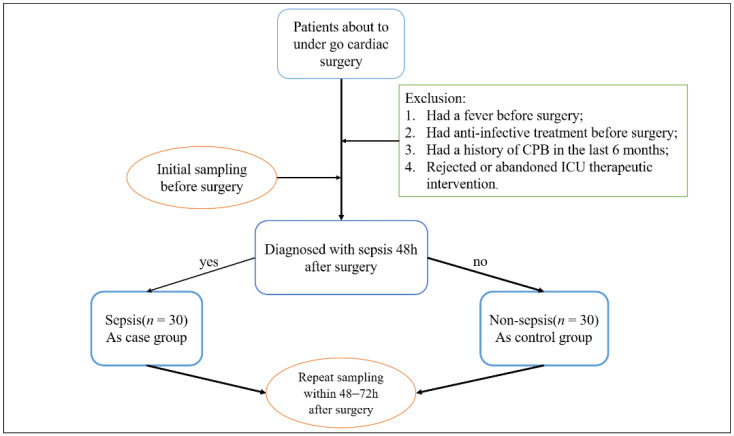
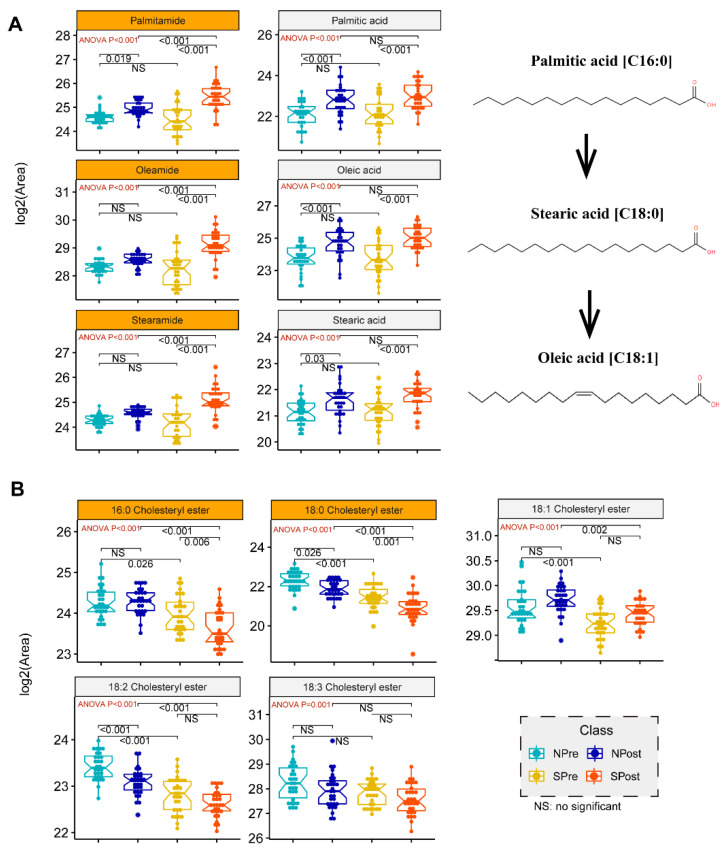
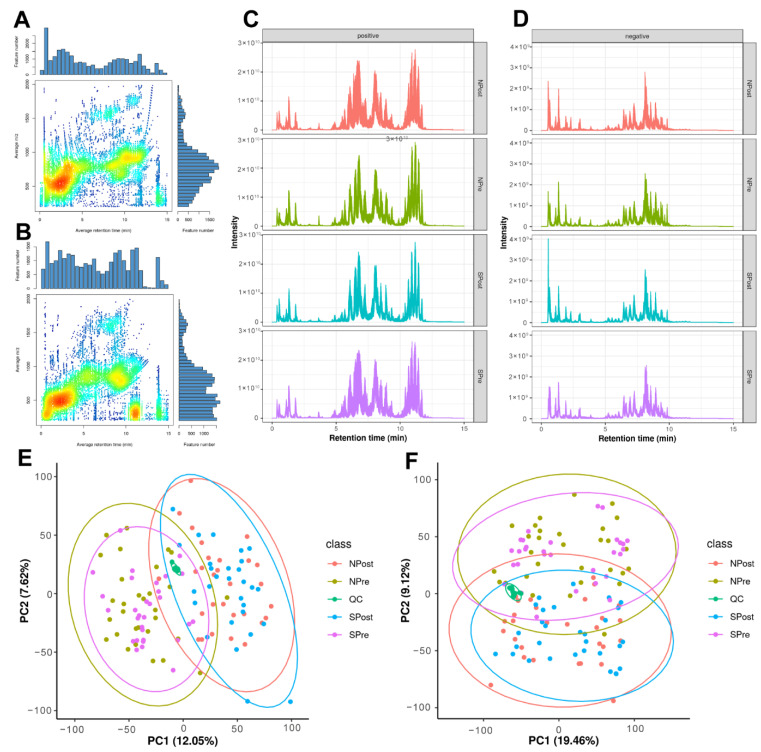
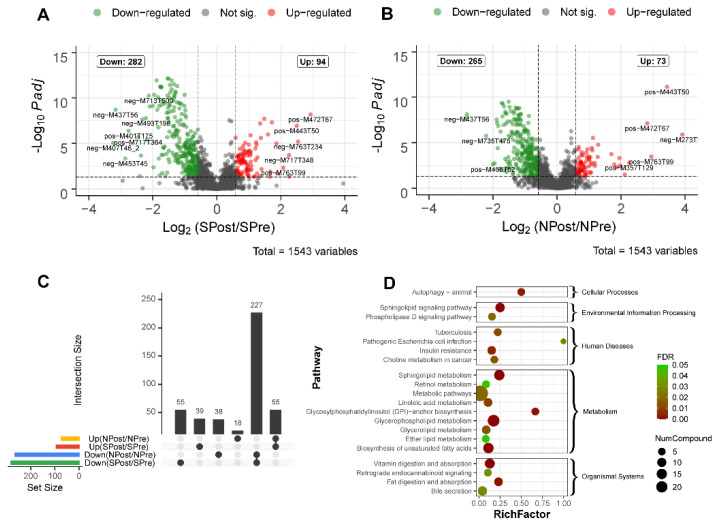
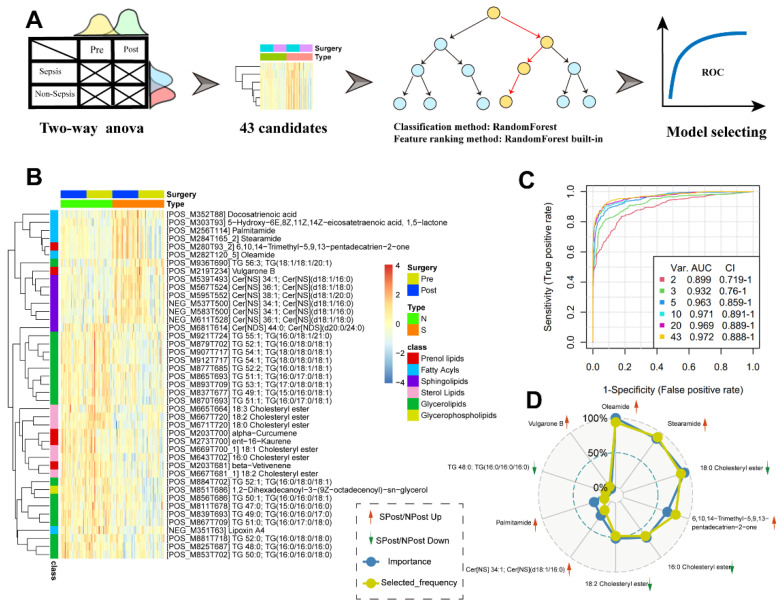
Background: Sepsis in patients after cardiovascular surgery with cardiopulmonary bypass (CPB) has a high rate of mortality. We sought to determine whether changes in lipidomics can predict sepsis after cardiac surgery. Methods: We used high-performance liquid chromatography coupled to tandem mass spectrometry to explore global lipidome changes in samples from a prospective case-control cohort (30 sepsis vs. 30 nonsepsis) hospitalized with cardiovascular surgery. All patients were sampled before and within 48−72 h after surgery. A bioinformatic pipeline was applied to acquire reliable features and MS/MS-driven identifications. Furthermore, a multiple-step machine learning framework was performed for signature discovery and performance evaluation. Results: Compared with preoperative samples, 94 features were upregulated and 282 features were downregulated in the postoperative samples of the sepsis group, and 73 features were upregulated and 265 features were downregulated in the postoperative samples of the nonsepsis group. “Autophagy”, “pathogenic Escherichia coli infection” and “glycosylphosphatidylinositol-anchor biosynthesis” pathways were significantly enriched in the pathway enrichment analysis. A multistep machine learning framework further confirmed that two cholesterol esters, CE (18:0) and CE (16:0), were significantly decreased in the sepsis group (p < 0.05). In addition, oleamide and stearamide were increased significantly in the postoperative sepsis group (p < 0.001). Conclusions: This study revealed characteristic lipidomic changes in the plasma of septic patients before and after cardiac surgery with CPB. We discovered two cholesterol esters and two amides from peripheral blood that could be promising signatures for sepsis within a dynamic detection between the preoperative and postoperative groups.
体外循环(CPB)心脏手术后患者发生脓毒症的死亡率很高。我们试图确定脂质组学的变化是否可以预测心脏手术后的脓毒症。方法:我们使用高效液相色谱-串联质谱法,探索来自接受心脏手术住院的前瞻性病例对照队列(30例脓毒症患者与30例非脓毒症患者)样本中的整体脂质组变化。所有患者在手术前以及手术后48 - 72小时内进行采样。应用生物信息学流程来获取可靠的特征和基于串联质谱的鉴定结果。此外,采用多步骤机器学习框架进行特征发现和性能评估。结果:与术前样本相比,脓毒症组术后样本中有94个特征上调,282个特征下调;非脓毒症组术后样本中有73个特征上调,265个特征下调。在通路富集分析中,“自噬”、“致病性大肠杆菌感染”和“糖基磷脂酰肌醇锚定生物合成”通路显著富集。多步骤机器学习框架进一步证实,脓毒症组中两种胆固醇酯CE(18:0)和CE(16:0)显著降低(p < 0.05)。此外,术后脓毒症组中油酰胺和硬脂酰胺显著增加(p < 0.001)。结论:本研究揭示了CPB心脏手术前后脓毒症患者血浆中脂质组学的特征性变化。我们从外周血中发现了两种胆固醇酯和两种酰胺,它们可能是术前和术后组动态检测脓毒症的有前景的特征标志物。