Department of Critical Care Medicine, Yantai Yuhuangding Hospital, Yantai, 264000, Shandong, China.
School of Medicine, University of California, San Diego, CA, 92103, USA.
BMC Med. 2020 Apr 15;18(1):83. doi: 10.1186/s12916-020-01546-5.
Sepsis is a leading cause of death in intensive care units (ICUs), but outcomes of individual patients are difficult to predict. The recently developed clinical metabolomics has been recognized as a promising tool in the clinical practice of critical illness. The objective of this study was to identify the unique metabolic biomarkers and their pathways in the blood of sepsis nonsurvivors and to assess the prognostic value of these pathways.
We searched PubMed, EMBASE, Cochrane, Web of Science, CNKI, Wangfang Data, and CQVIP from inception until July 2019. Eligible studies included the metabolomic analysis of blood samples from sepsis patients with the outcome. The metabolic pathway was assigned to each metabolite biomarker. The meta-analysis was performed using the pooled fold changes, area under the receiver operating characteristic curve (AUROC), and vote-counting of metabolic pathways. We also conducted a prospective cohort metabolomic study to validate the findings of our meta-analysis.
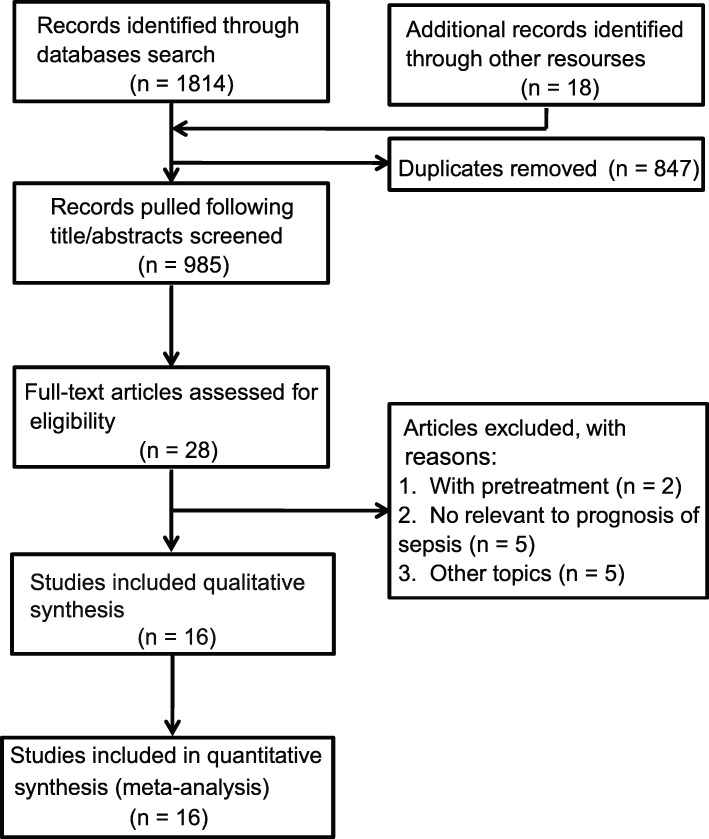
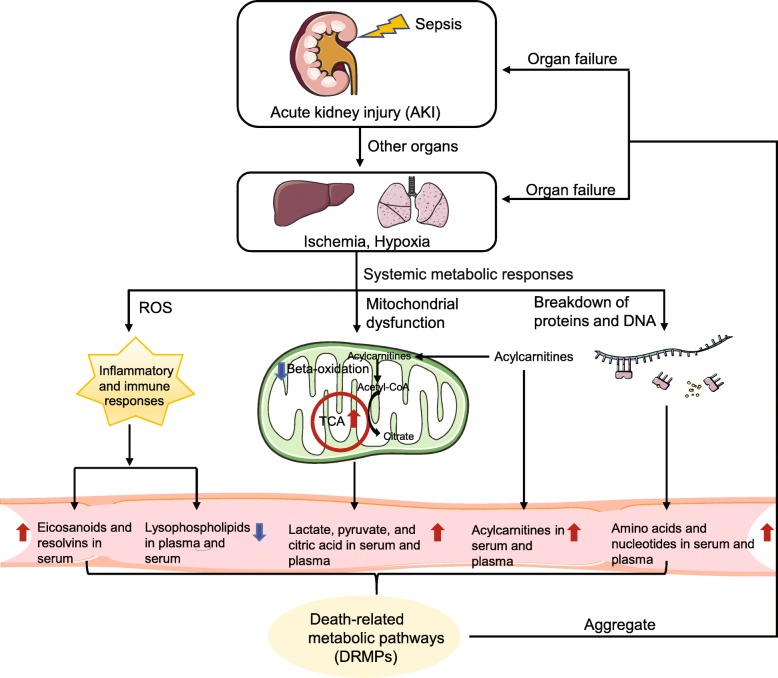
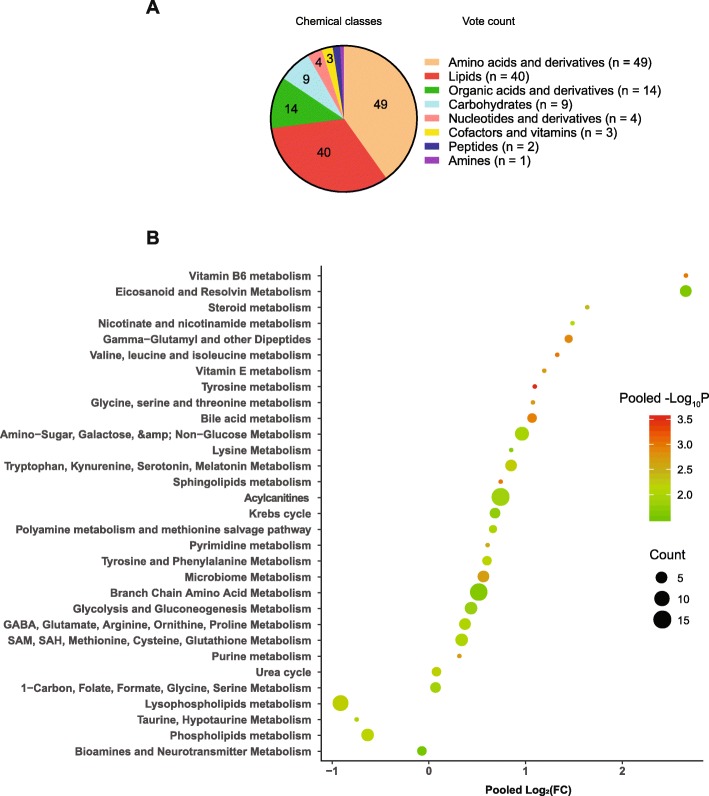
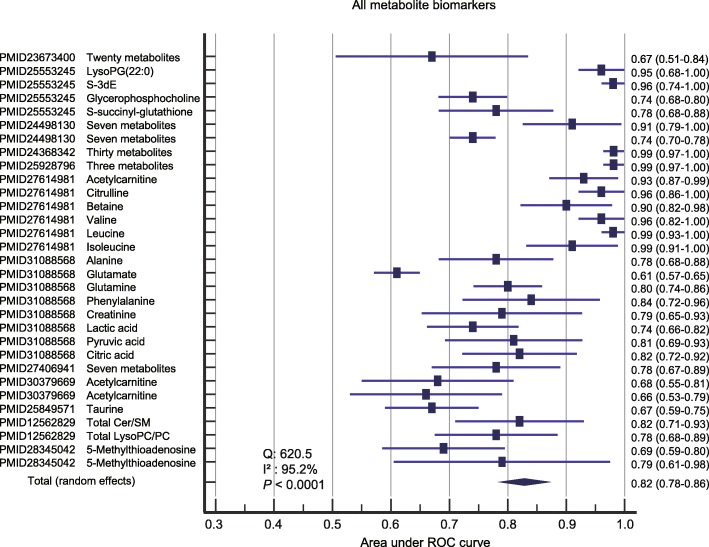
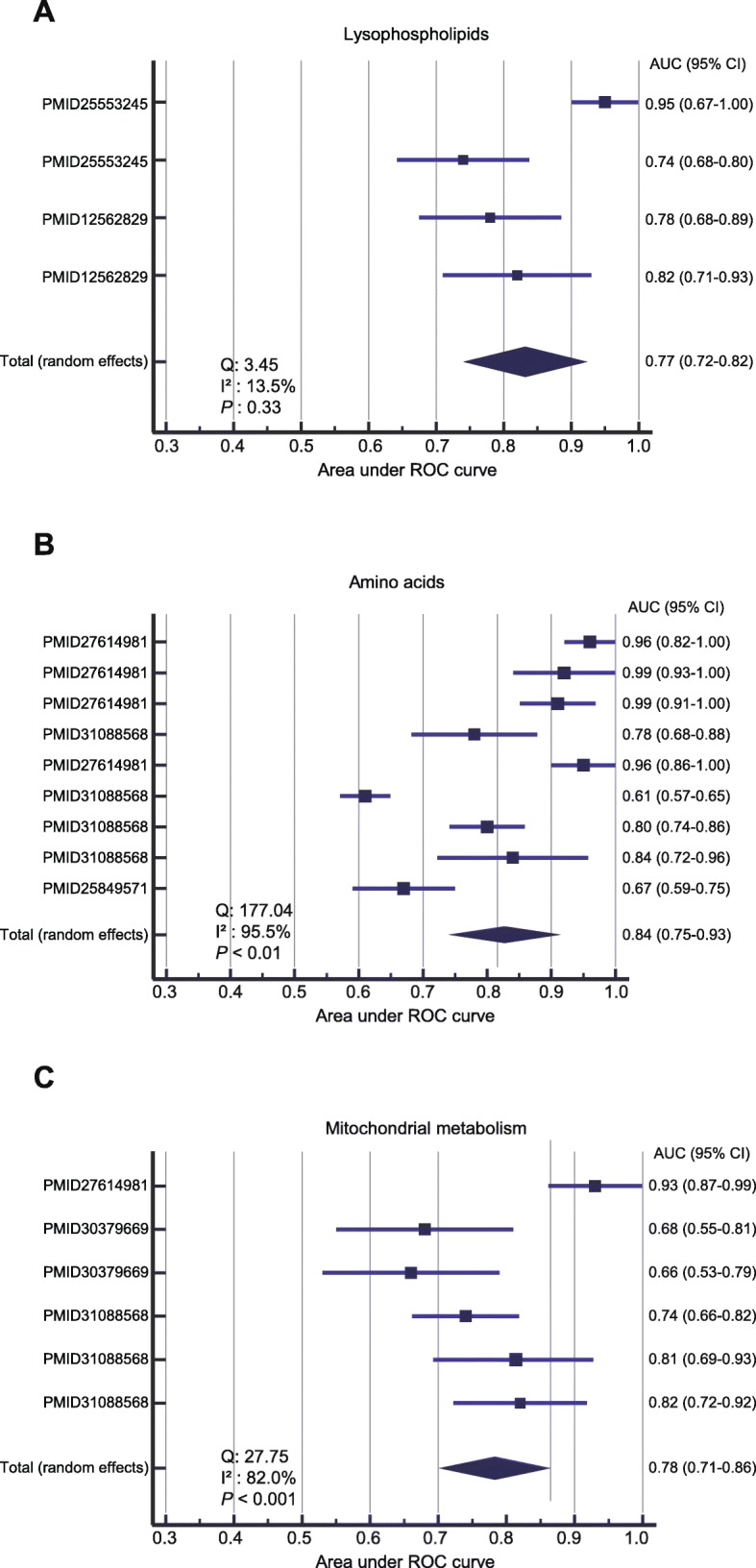
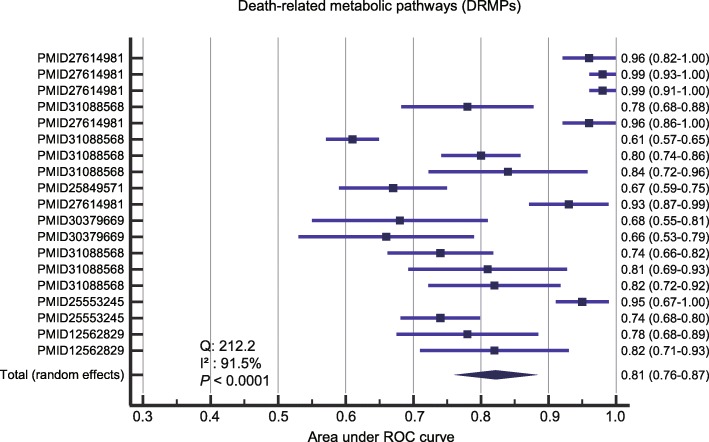
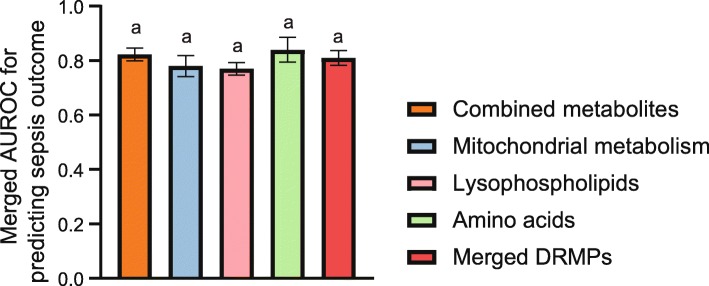
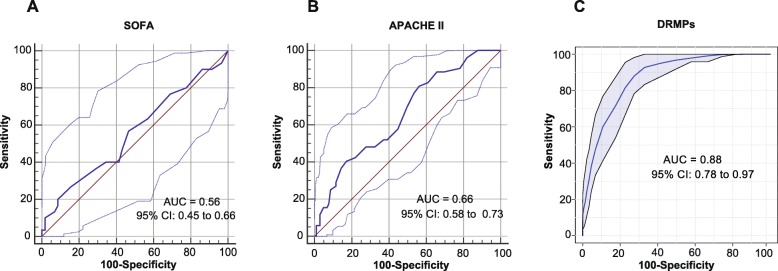
The meta-analysis included 21 cohorts reported in 16 studies with 2509 metabolite comparisons in the blood of 1287 individuals. We found highly limited overlap of the reported metabolite biomarkers across studies. However, these metabolites were enriched in several death-related metabolic pathways (DRMPs) including amino acids, mitochondrial metabolism, eicosanoids, and lysophospholipids. Prediction of sepsis death using DRMPs yielded a pooled AUROC of 0.81 (95% CI 0.76-0.87), which was similar to the combined metabolite biomarkers with a merged AUROC of 0.82 (95% CI 0.78-0.86) (P > 0.05). A prospective metabolomic analysis of 188 sepsis patients (134 survivors and 54 nonsurvivors) using the metabolites from DRMPs produced an AUROC of 0.88 (95% CI 0.78-0.97). The sensitivity and specificity for the prediction of sepsis death were 80.4% (95% CI 66.9-89.4%) and 78.8% (95% CI 62.3-89.3%), respectively.
DRMP analysis minimizes the discrepancies of results obtained from different metabolomic methods and is more practical than blood metabolite biomarkers for sepsis mortality prediction.
The meta-analysis was registered on OSF Registries, and the prospective cohort study was registered on the Chinese Clinical Trial Registry (ChiCTR1800015321).
脓毒症是重症监护病房(ICU)死亡的主要原因,但个体患者的预后很难预测。最近发展起来的临床代谢组学已被认为是危重病临床实践中很有前途的工具。本研究的目的是确定脓毒症死亡患者血液中独特的代谢生物标志物及其途径,并评估这些途径的预后价值。
我们从开始到 2019 年 7 月在 PubMed、EMBASE、Cochrane、Web of Science、CNKI、Wangfang Data 和 CQVIP 上进行了搜索。合格的研究包括对脓毒症患者血液样本进行代谢组学分析,并对结果进行分析。将代谢途径分配给每个代谢物生物标志物。使用合并的折叠变化、接收器操作特征曲线下面积(AUROC)和代谢途径的票数计数进行荟萃分析。我们还进行了一项前瞻性队列代谢组学研究,以验证荟萃分析的结果。
荟萃分析包括 16 项研究中的 21 项队列研究,涉及 1287 名个体的 2509 个血液代谢物比较。我们发现,研究之间报告的代谢生物标志物的高度重叠非常有限。然而,这些代谢物在几个与死亡相关的代谢途径(DRMPs)中富集,包括氨基酸、线粒体代谢、类二十烷酸和溶血磷脂。使用 DRMPs 预测脓毒症死亡的合并 AUROC 为 0.81(95%CI 0.76-0.87),与合并代谢物生物标志物的合并 AUROC 0.82(95%CI 0.78-0.86)相似(P>0.05)。对 188 例脓毒症患者(134 例存活和 54 例死亡)进行前瞻性代谢组学分析,使用 DRMP 中的代谢物,AUROC 为 0.88(95%CI 0.78-0.97)。预测脓毒症死亡的敏感性和特异性分别为 80.4%(95%CI 66.9-89.4%)和 78.8%(95%CI 62.3-89.3%)。
DRMP 分析最大限度地减少了不同代谢组学方法获得的结果差异,并且比血液代谢物生物标志物更适合预测脓毒症死亡率。
荟萃分析在 OSF 注册处注册,前瞻性队列研究在中国临床试验注册中心(ChiCTR1800015321)注册。