Department of Physics and Astronomy, Institute of Applied Physics, Seoul National University, Seoul, Republic of Korea.
Department of Biological Sciences, Korea Advanced Institute of Science and Technology, Daejeon, Republic of Korea.
Nucleic Acids Res. 2023 Jan 11;51(1):337-348. doi: 10.1093/nar/gkac1200.
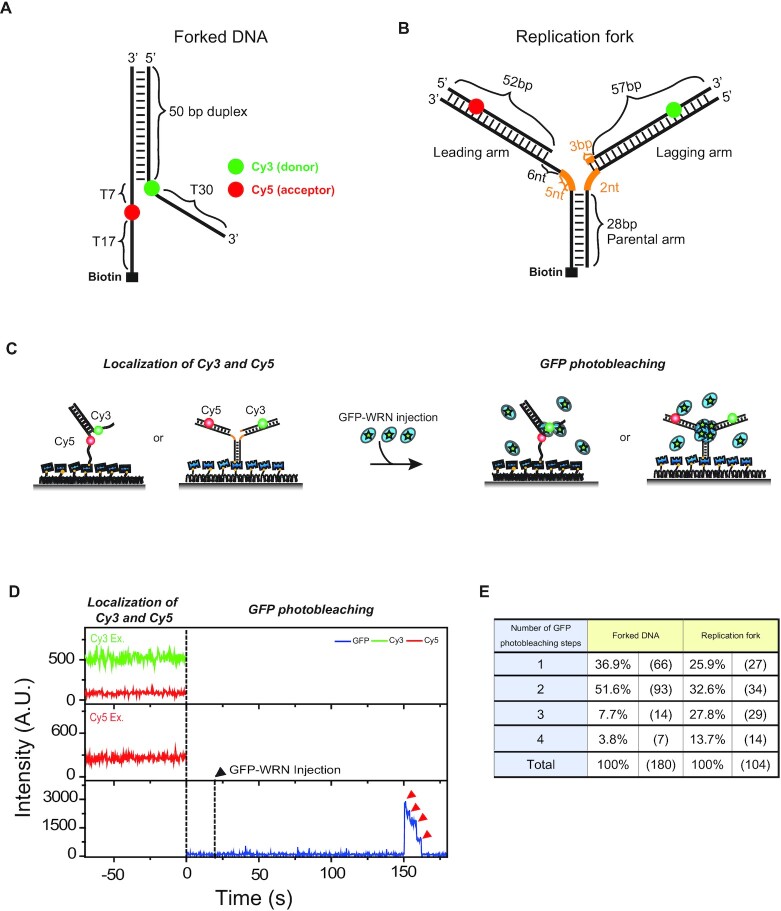
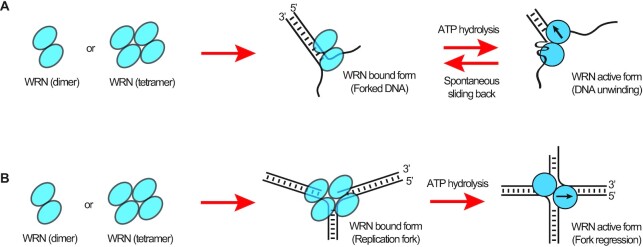
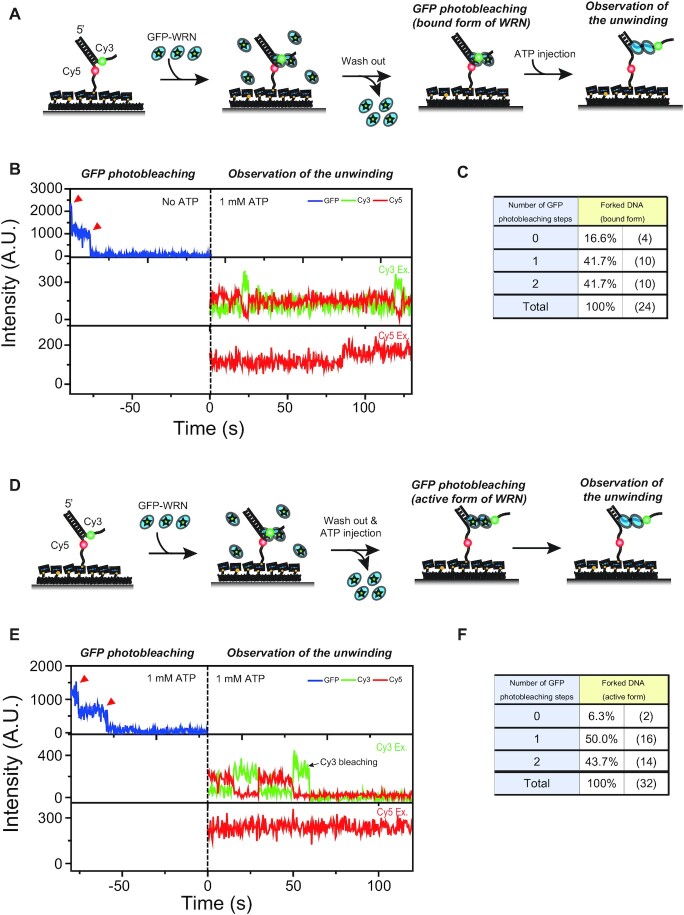
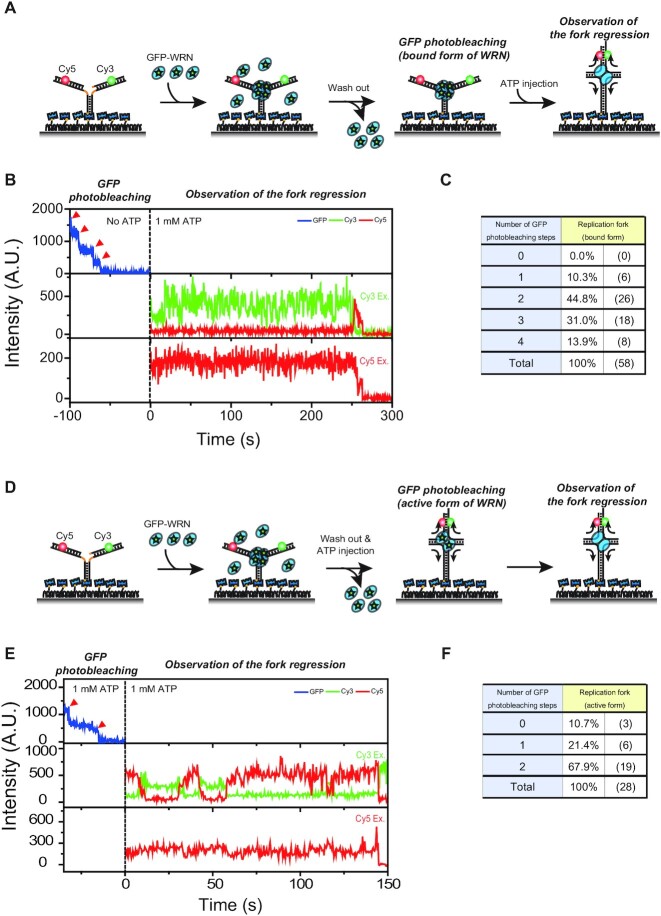
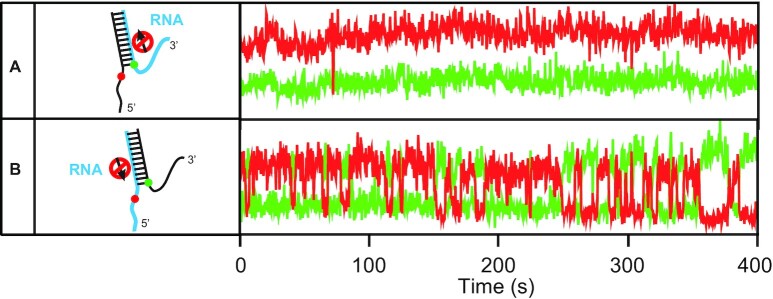
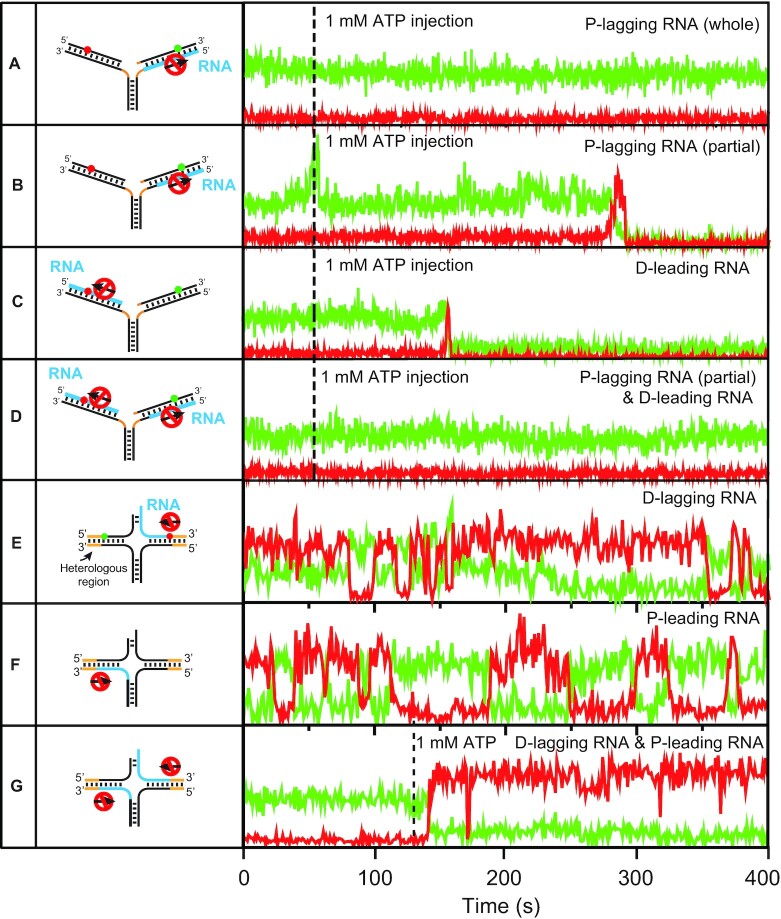
The determination of the oligomeric state of functional enzymes is essential for the mechanistic understanding of their catalytic activities. RecQ helicases have diverse biochemical activities, but it is still unclear how their activities are related to their oligomeric states. We use single-molecule multi-color fluorescence imaging to determine the oligomeric states of Werner syndrome protein (WRN) during its unwinding and replication fork regression activities. We reveal that WRN binds to a forked DNA as a dimer, and unwinds it without any change of its oligomeric state. In contrast, WRN binds to a replication fork as a tetramer, and is dimerized during activation of replication fork regression. By selectively inhibiting the helicase activity of WRN on specific strands, we reveal how the active dimers of WRN distinctly use the energy of ATP hydrolysis for repetitive unwinding and replication fork regression.
确定功能性酶的寡聚状态对于理解其催化活性的机制至关重要。RecQ 解旋酶具有多种生化活性,但它们的活性如何与其寡聚状态相关仍不清楚。我们使用单分子多色荧光成像技术来确定 Werner 综合征蛋白 (WRN) 在解旋和复制叉回归活性过程中的寡聚状态。我们揭示了 WRN 作为二聚体结合分叉 DNA,并在其寡聚状态没有任何变化的情况下将其解开。相比之下,WRN 作为四聚体结合复制叉,并在复制叉回归的激活过程中二聚化。通过选择性地抑制 WRN 在特定链上的解旋酶活性,我们揭示了 WRN 的活性二聚体如何利用 ATP 水解的能量进行重复解旋和复制叉回归。