Sun Luxi, Nakajima Satoshi, Teng Yaqun, Chen Hao, Yang Lu, Chen Xiukai, Gao Boya, Levine Arthur S, Lan Li
School of Medicine, Tsinghua University, No.1 Tsinghua Yuan, Haidian District, Beijing 100084, China.
University of Pittsburgh Cancer Institute, University of Pittsburgh School of Medicine, 5117 Centre Avenue, Pittsburgh, PA 15213, USA.
Nucleic Acids Res. 2017 Apr 20;45(7):3844-3859. doi: 10.1093/nar/gkx065.
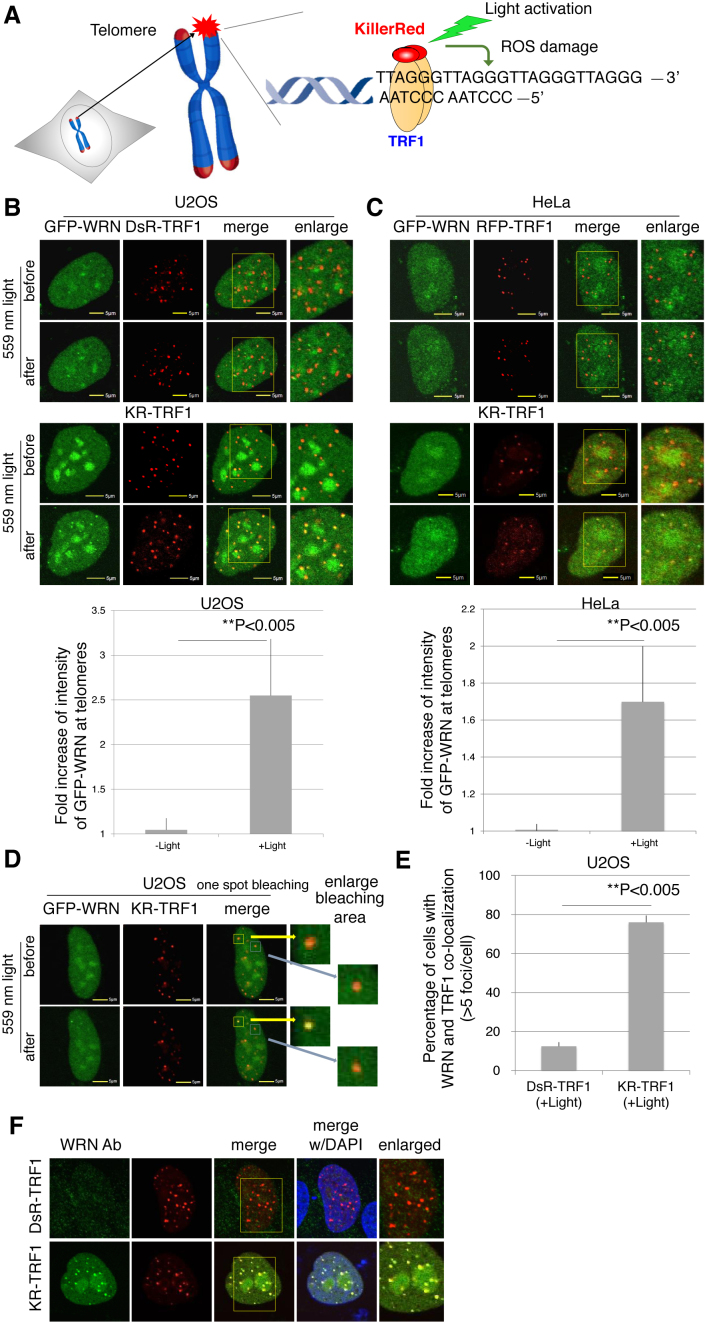
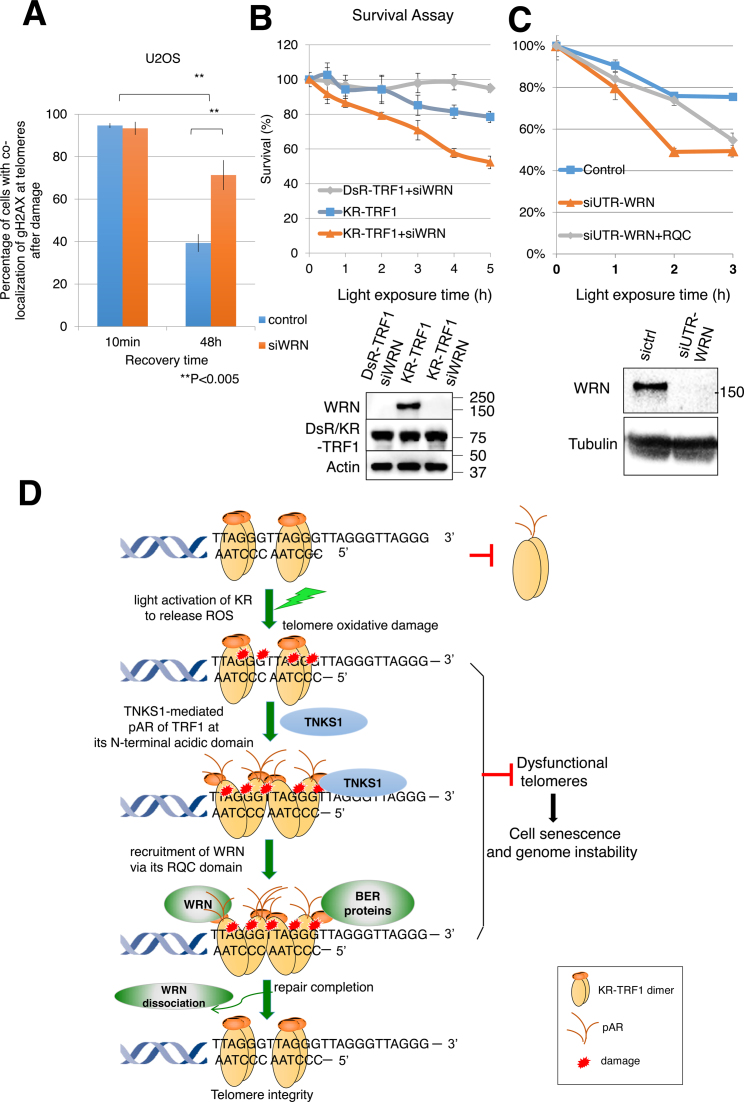
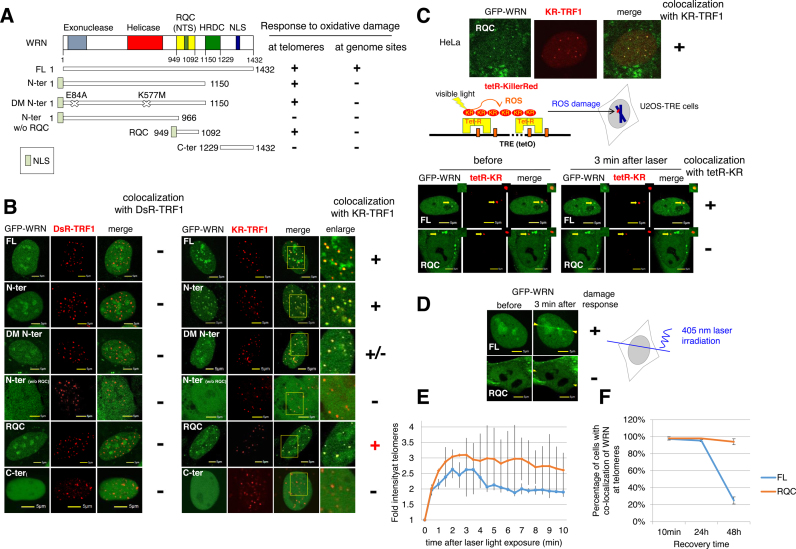
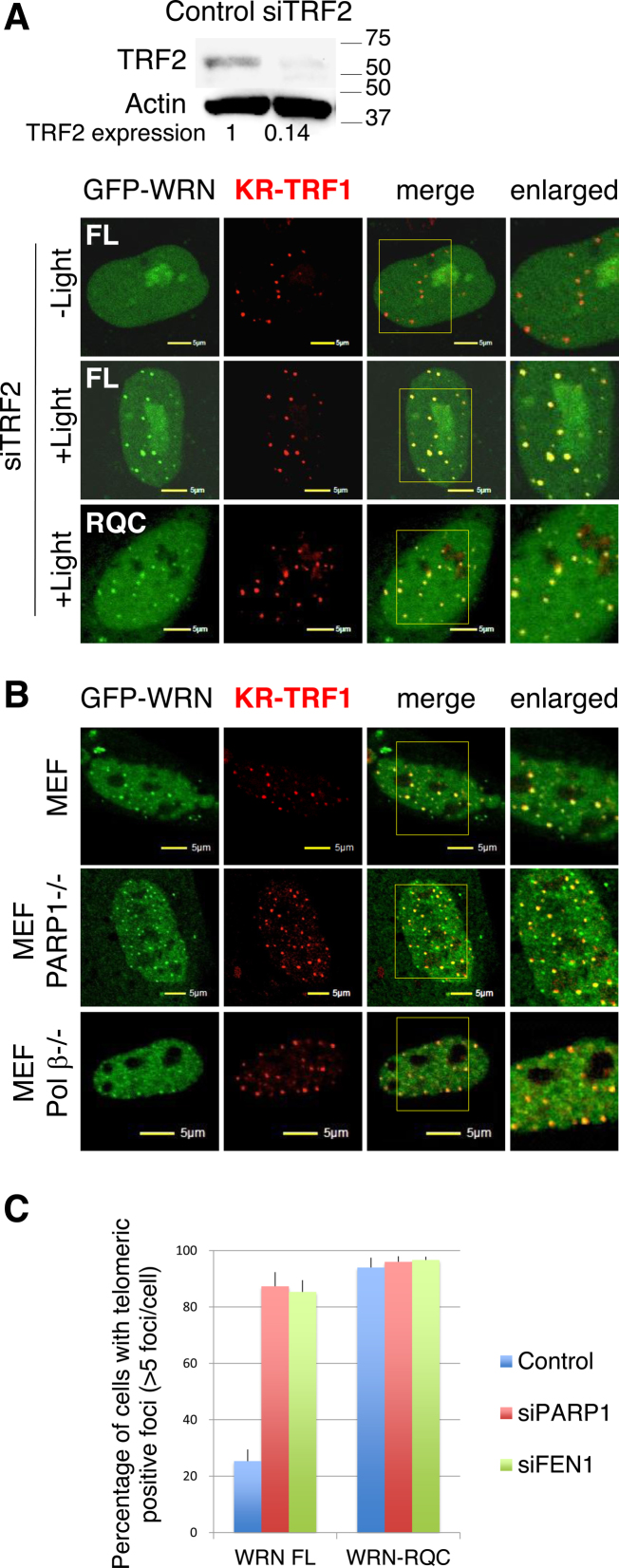
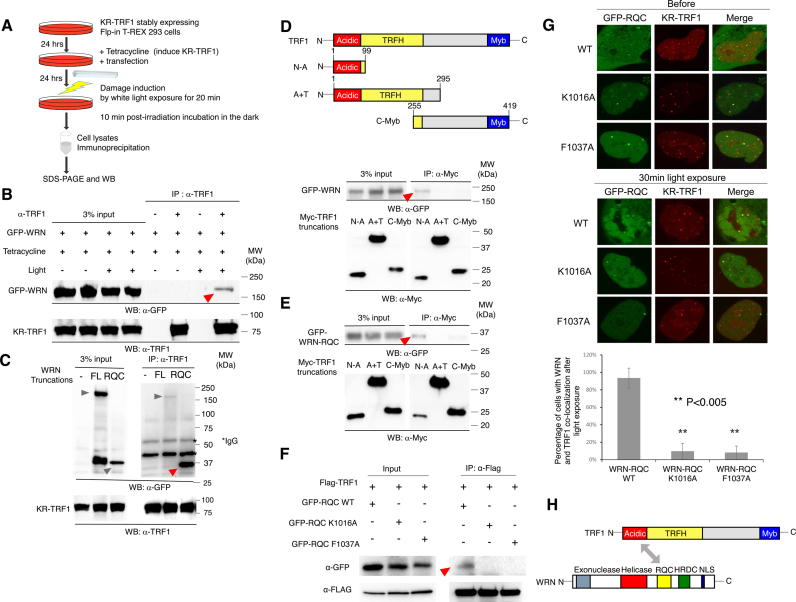
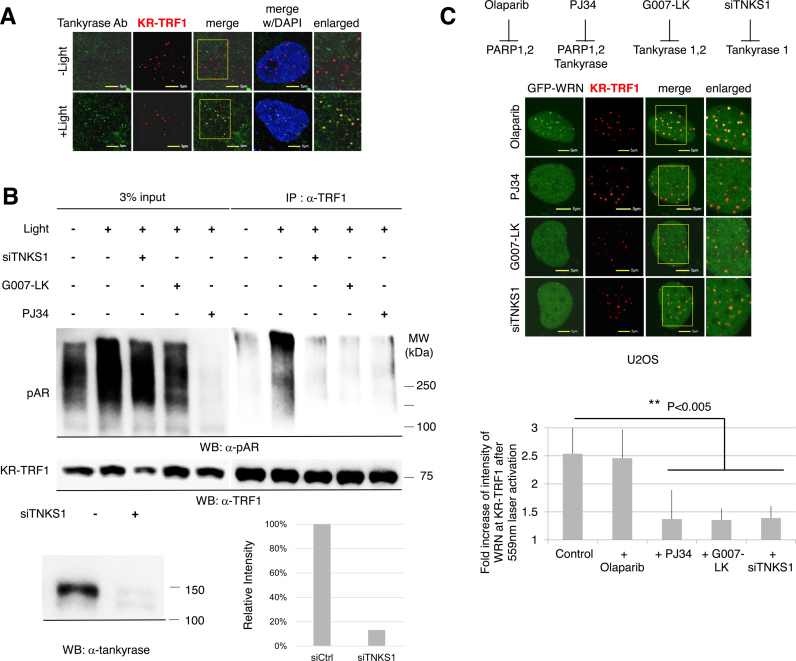
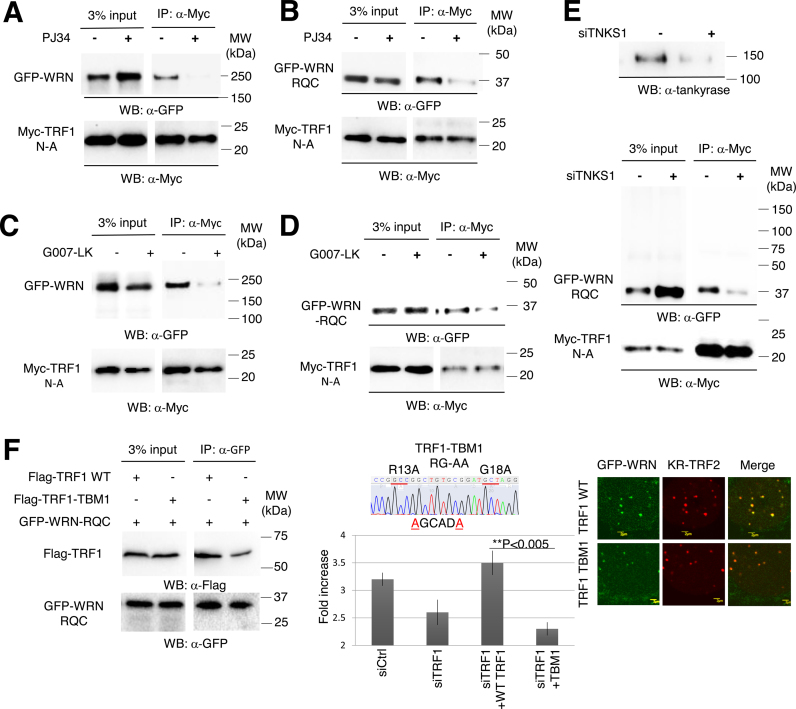
Werner syndrome (WS) is a progeroid-like syndrome caused by WRN gene mutations. WS cells exhibit shorter telomere length compared to normal cells, but it is not fully understood how WRN deficiency leads directly to telomere dysfunction. By generating localized telomere-specific DNA damage in a real-time fashion and a dose-dependent manner, we found that the damage response of WRN at telomeres relies on its RQC domain, which is different from the canonical damage response at genomic sites via its HRDC domain. We showed that in addition to steady state telomere erosion, WRN depleted cells are also sensitive to telomeric damage. WRN responds to site-specific telomeric damage via its RQC domain, interacting at Lysine 1016 and Phenylalanine1037 with the N-terminal acidic domain of the telomere shelterin protein TRF1 and demonstrating a novel mechanism for WRN's role in telomere protection. We also found that tankyrase1-mediated poly-ADP-ribosylation of TRF1 is important for both the interaction between WRN and TRF1 and the damage recruitment of WRN to telomeres. Mutations of potential tankyrase1 ADP-ribosylation sites within the RGCADG motif of TRF1 strongly diminish the interaction with WRN and the damage response of WRN only at telomeres. Taken together, our results reveal a novel mechanism as to how WRN protects telomere integrity from damage and telomere erosion.
沃纳综合征(WS)是一种由WRN基因突变引起的类早衰综合征。与正常细胞相比,WS细胞的端粒长度较短,但目前尚不完全清楚WRN缺陷如何直接导致端粒功能障碍。通过实时、剂量依赖性地产生局部端粒特异性DNA损伤,我们发现WRN在端粒处的损伤反应依赖于其RQC结构域,这与通过其HRDC结构域在基因组位点的经典损伤反应不同。我们发现,除了稳态端粒侵蚀外,WRN缺失的细胞对端粒损伤也很敏感。WRN通过其RQC结构域对位点特异性端粒损伤作出反应,在赖氨酸1016和苯丙氨酸1037处与端粒保护蛋白TRF1的N端酸性结构域相互作用,揭示了WRN在端粒保护中作用的新机制。我们还发现,端粒酶1介导的TRF1多聚ADP核糖基化对于WRN与TRF1之间的相互作用以及WRN向端粒的损伤募集都很重要。TRF1的RGCADG基序内潜在的端粒酶1 ADP核糖基化位点突变强烈削弱了与WRN的相互作用以及WRN仅在端粒处的损伤反应。综上所述,我们的结果揭示了WRN如何保护端粒完整性免受损伤和端粒侵蚀的新机制。