Department of Biochemistry, Institute of Cell Differentiation and Aging, College of Medicine, Hallym University, Chuncheon, Republic of Korea.
FrontBio Inc, Gangwon-do, Republic of Korea.
Cancer Biol Ther. 2023 Dec 31;24(1):20-32. doi: 10.1080/15384047.2022.2161803.
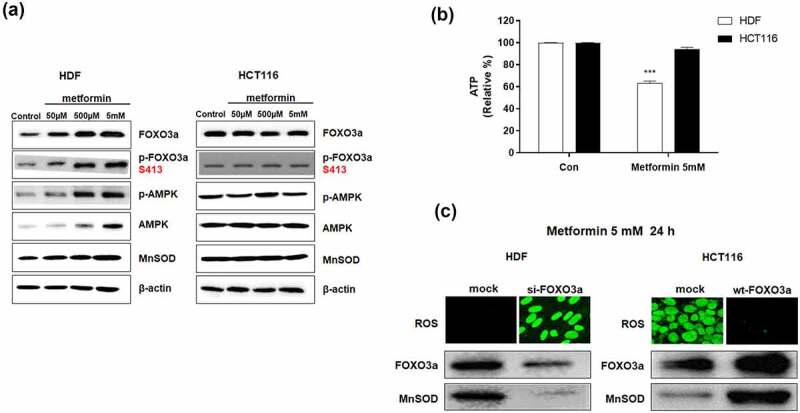
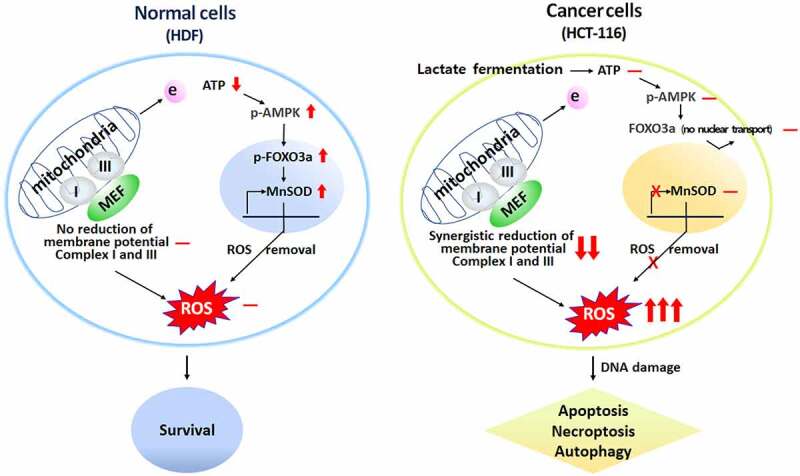
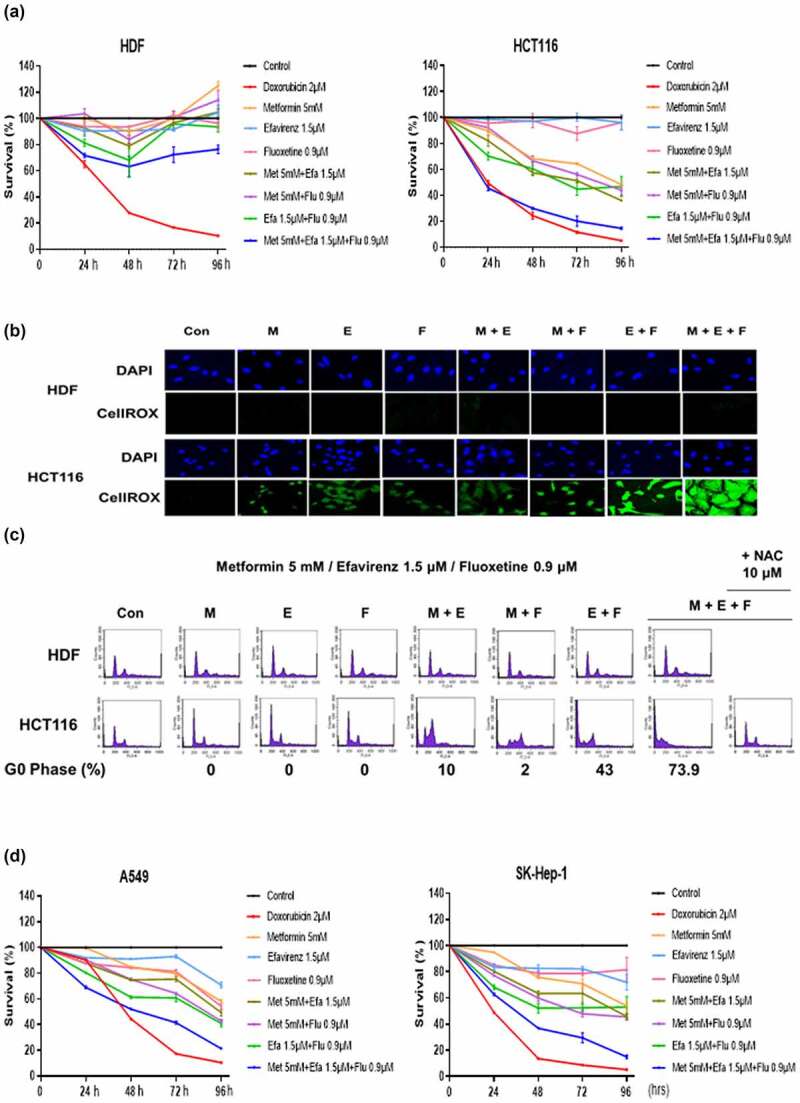
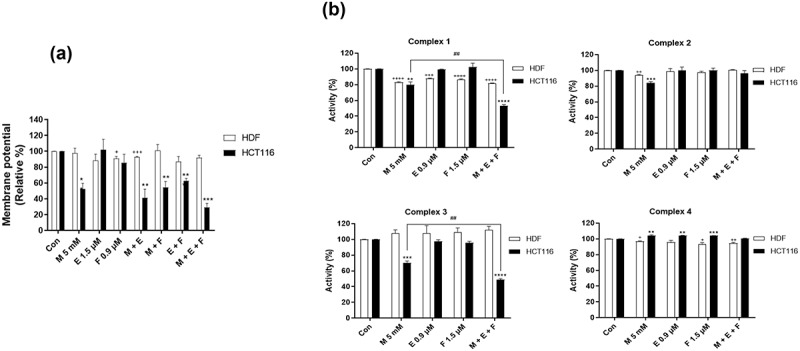
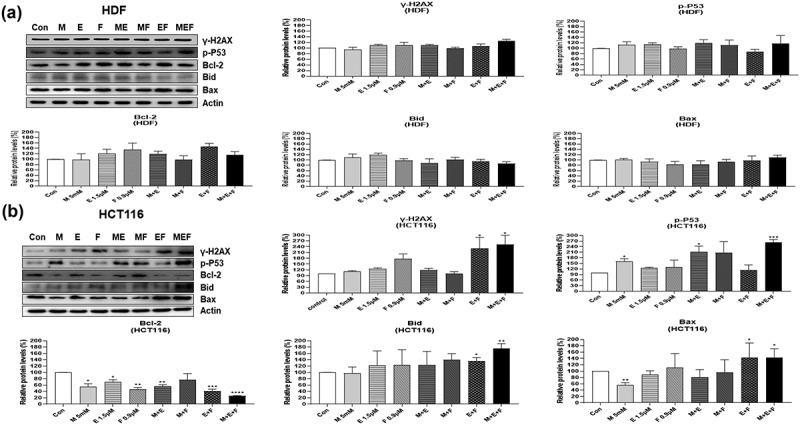
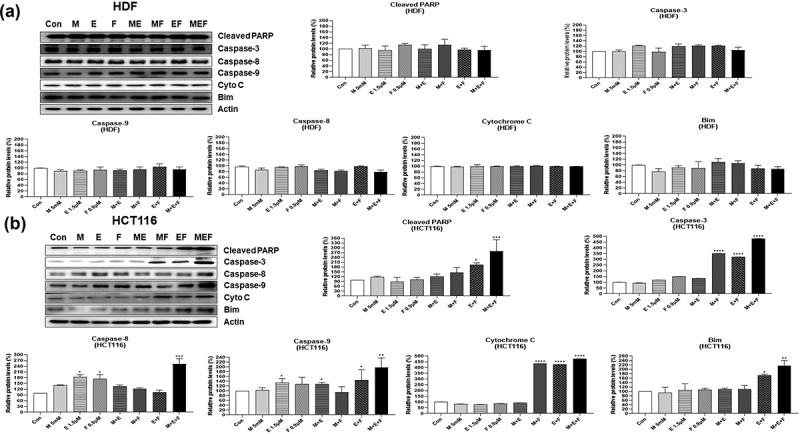
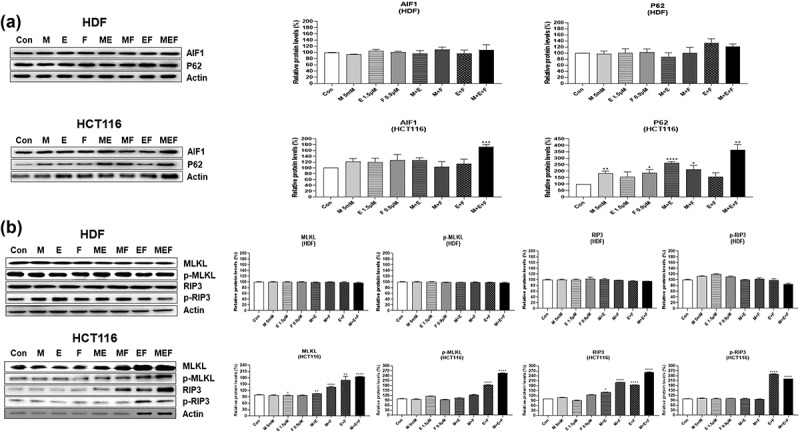
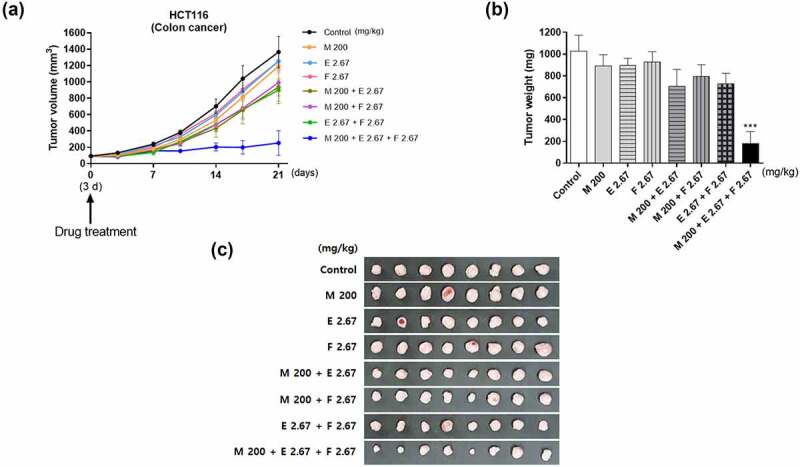
The possible anticancer activity of combination (M + E + F) of metformin (M), efavirenz (E), and fluoxetine (F) was investigated in normal HDF cells and HCT116 human colon cancer cells. Metformin increased cellular FOXO3a, p-FOXO3a, AMPK, p-AMPK, and MnSOD levels in HDFs but not in HCT116 cells. Cellular ATP level was decreased only in HDFs by metformin. Metformin increased ROS level only in HCT116 cells. Transfection of si-FOXO3a into HCT116 reversed the metformin-induced cellular ROS induction, indicating that FOXO3a/MnSOD is the key regulator for cellular ROS level. Viability readout with M, E, and F alone decreased slightly, but the combination of three drugs dramatically decreased cell survival in HCT116, A549, and SK-Hep-1 cancer cells but not in HDF cells. ROS levels in HCT116 cells were massively increased by M + E + F combination, but not in HDF cells. Cell cycle analysis showed that of M + E + F combination caused cell death only in HCT116 cells. The combination of M + E + F reduced synergistically mitochondrial membrane potential and mitochondrial electron transport chain complex I and III activities in HCT116 cells when compared with individual treatments. Western blot analysis indicated that DNA damage, apoptosis, autophagy, and necroptosis-realated factors increased in M + E + F-treated HCT116 cells. Oral administration with M + E + F combination for 3 weeks caused dramatic reductions in tumor volume and weight in HCT116 xenograft model of nude mice when compared with untreated ones. Our results suggest that M + E + F have profound anticancer activity both and via a cancer cell-specific ROS amplification (CASRA) through ROS-induced DNA damage, apoptosis, autophagy, and necroptosis.
研究了二甲双胍(M)、依非韦伦(E)和氟西汀(F)联合(M+E+F)对正常 HDF 细胞和人结肠癌细胞 HCT116 的可能抗癌活性。二甲双胍增加了 HDF 中的 FOXO3a、p-FOXO3a、AMPK、p-AMPK 和 MnSOD 水平,但在 HCT116 细胞中没有。只有在 HDF 中,二甲双胍才会降低细胞内的 ATP 水平。只有在 HCT116 细胞中,二甲双胍才会增加 ROS 水平。将 si-FOXO3a 转染到 HCT116 中逆转了二甲双胍诱导的细胞 ROS 诱导,表明 FOXO3a/MnSOD 是细胞 ROS 水平的关键调节因子。单独使用 M、E 和 F 进行细胞活力检测,细胞活力略有下降,但三种药物的组合在 HCT116、A549 和 SK-Hep-1 癌细胞中显著降低了细胞存活率,但在 HDF 细胞中没有。M+E+F 联合用药后,HCT116 细胞中的 ROS 水平大量增加,但 HDF 细胞中没有。细胞周期分析表明,M+E+F 联合用药仅导致 HCT116 细胞死亡。与单独治疗相比,M+E+F 联合用药协同降低了 HCT116 细胞中线粒体膜电位和线粒体电子传递链复合物 I 和 III 的活性。Western blot 分析表明,M+E+F 处理的 HCT116 细胞中与 DNA 损伤、细胞凋亡、自噬和坏死相关的因子增加。与未治疗的肿瘤相比,M+E+F 联合用药 3 周后,裸鼠 HCT116 移植瘤模型的肿瘤体积和重量显著减小。我们的研究结果表明,M+E+F 通过 ROS 诱导的 DNA 损伤、细胞凋亡、自噬和坏死导致细胞死亡,具有显著的抗癌活性,且通过 ROS 放大(CASRA)具有肿瘤细胞特异性。