• 文献检索
  • 文档翻译
  • 深度研究
  • 学术资讯
  • Suppr Zotero 插件Zotero 插件
  • 邀请有礼
  • 套餐&价格
  • 历史记录
应用&插件
Suppr Zotero 插件Zotero 插件浏览器插件Mac 客户端Windows 客户端微信小程序
定价
高级版会员购买积分包购买API积分包
服务
文献检索文档翻译深度研究API 文档MCP 服务
关于我们
关于 Suppr公司介绍联系我们用户协议隐私条款
关注我们

Suppr 超能文献

核心技术专利:CN118964589B侵权必究
粤ICP备2023148730 号-1Suppr @ 2026

文献检索

告别复杂PubMed语法,用中文像聊天一样搜索,搜遍4000万医学文献。AI智能推荐,让科研检索更轻松。

立即免费搜索

文件翻译

保留排版,准确专业,支持PDF/Word/PPT等文件格式,支持 12+语言互译。

免费翻译文档

深度研究

AI帮你快速写综述,25分钟生成高质量综述,智能提取关键信息,辅助科研写作。

立即免费体验

基于自注意力神经网络和迁移学习从组蛋白修饰预测基因表达

Predicting gene expression from histone modifications with self-attention based neural networks and transfer learning.

作者信息

Chen Yuchi, Xie Minzhu, Wen Jie

机构信息

College of Information Science and Engineering, Hunan Normal University, Changsha, China.

出版信息

Front Genet. 2022 Dec 14;13:1081842. doi: 10.3389/fgene.2022.1081842. eCollection 2022.

DOI:10.3389/fgene.2022.1081842
PMID:36588793
原文链接:https://pmc.ncbi.nlm.nih.gov/articles/PMC9797047/
Abstract

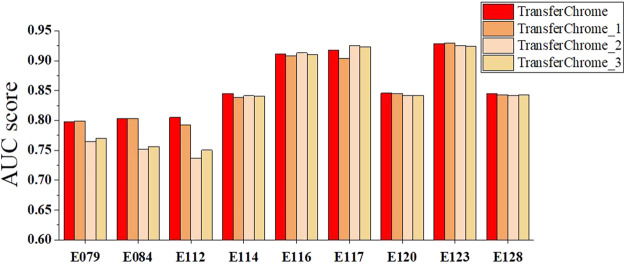
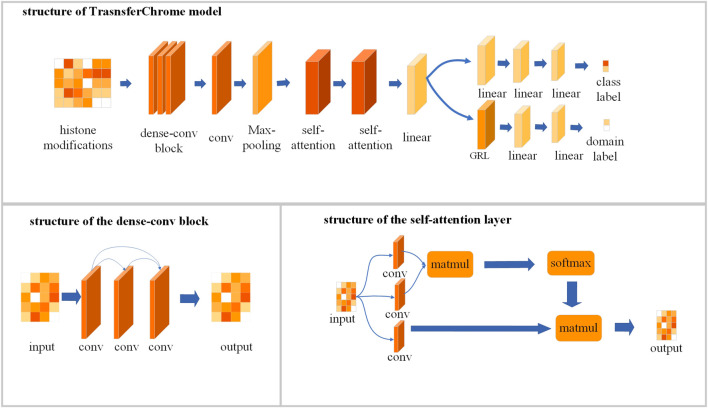
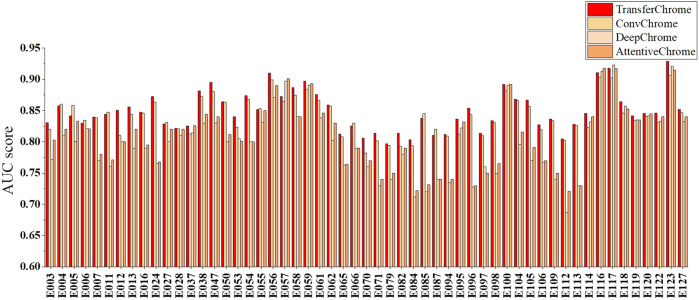
It is well known that histone modifications play an important part in various chromatin-dependent processes such as DNA replication, repair, and transcription. Using computational models to predict gene expression based on histone modifications has been intensively studied. However, the accuracy of the proposed models still has room for improvement, especially in cross-cell lines gene expression prediction. In the work, we proposed a new model TransferChrome to predict gene expression from histone modifications based on deep learning. The model uses a densely connected convolutional network to capture the features of histone modifications data and uses self-attention layers to aggregate global features of the data. For cross-cell lines gene expression prediction, TransferChrome adopts transfer learning to improve prediction accuracy. We trained and tested our model on 56 different cell lines from the REMC database. The experimental results show that our model achieved an average Area Under the Curve (AUC) score of 84.79%. Compared to three state-of-the-art models, TransferChrome improves the prediction performance on most cell lines. The experiments of cross-cell lines gene expression prediction show that TransferChrome performs best and is an efficient model for predicting cross-cell lines gene expression.

摘要

众所周知,组蛋白修饰在各种依赖染色质的过程中发挥着重要作用,如DNA复制、修复和转录。基于组蛋白修饰使用计算模型预测基因表达已得到深入研究。然而,所提出模型的准确性仍有提升空间,尤其是在跨细胞系基因表达预测方面。在这项工作中,我们提出了一种新的模型TransferChrome,用于基于深度学习从组蛋白修饰预测基因表达。该模型使用密集连接卷积网络来捕捉组蛋白修饰数据的特征,并使用自注意力层来聚合数据的全局特征。对于跨细胞系基因表达预测,TransferChrome采用迁移学习来提高预测准确性。我们在来自REMC数据库的56种不同细胞系上对我们的模型进行了训练和测试。实验结果表明,我们的模型平均曲线下面积(AUC)得分达到了84.79%。与三种最先进的模型相比,TransferChrome在大多数细胞系上提高了预测性能。跨细胞系基因表达预测实验表明,TransferChrome表现最佳,是一种预测跨细胞系基因表达的有效模型。

https://cdn.ncbi.nlm.nih.gov/pmc/blobs/47e0/9797047/ee980c9cd57c/fgene-13-1081842-g006.jpg
https://cdn.ncbi.nlm.nih.gov/pmc/blobs/47e0/9797047/cddb016c772b/fgene-13-1081842-g001.jpg
https://cdn.ncbi.nlm.nih.gov/pmc/blobs/47e0/9797047/c2f4adee980b/fgene-13-1081842-g002.jpg
https://cdn.ncbi.nlm.nih.gov/pmc/blobs/47e0/9797047/28a0b33ef983/fgene-13-1081842-g003.jpg
https://cdn.ncbi.nlm.nih.gov/pmc/blobs/47e0/9797047/8721e7985dc8/fgene-13-1081842-g004.jpg
https://cdn.ncbi.nlm.nih.gov/pmc/blobs/47e0/9797047/c19be957091e/fgene-13-1081842-g005.jpg
https://cdn.ncbi.nlm.nih.gov/pmc/blobs/47e0/9797047/ee980c9cd57c/fgene-13-1081842-g006.jpg
https://cdn.ncbi.nlm.nih.gov/pmc/blobs/47e0/9797047/cddb016c772b/fgene-13-1081842-g001.jpg
https://cdn.ncbi.nlm.nih.gov/pmc/blobs/47e0/9797047/c2f4adee980b/fgene-13-1081842-g002.jpg
https://cdn.ncbi.nlm.nih.gov/pmc/blobs/47e0/9797047/28a0b33ef983/fgene-13-1081842-g003.jpg
https://cdn.ncbi.nlm.nih.gov/pmc/blobs/47e0/9797047/8721e7985dc8/fgene-13-1081842-g004.jpg
https://cdn.ncbi.nlm.nih.gov/pmc/blobs/47e0/9797047/c19be957091e/fgene-13-1081842-g005.jpg
https://cdn.ncbi.nlm.nih.gov/pmc/blobs/47e0/9797047/ee980c9cd57c/fgene-13-1081842-g006.jpg

相似文献

1
Predicting gene expression from histone modifications with self-attention based neural networks and transfer learning.基于自注意力神经网络和迁移学习从组蛋白修饰预测基因表达
Front Genet. 2022 Dec 14;13:1081842. doi: 10.3389/fgene.2022.1081842. eCollection 2022.
2
DeepChrome: deep-learning for predicting gene expression from histone modifications.深度铬:用于从组蛋白修饰预测基因表达的深度学习
Bioinformatics. 2016 Sep 1;32(17):i639-i648. doi: 10.1093/bioinformatics/btw427.
3
Opening up the blackbox: an interpretable deep neural network-based classifier for cell-type specific enhancer predictions.打开黑箱:一种基于可解释深度神经网络的细胞类型特异性增强子预测分类器。
BMC Syst Biol. 2016 Aug 1;10 Suppl 2(Suppl 2):54. doi: 10.1186/s12918-016-0302-3.
4
DeepDiff: DEEP-learning for predicting DIFFerential gene expression from histone modifications.DeepDiff:基于深度学习的组蛋白修饰差异基因表达预测方法。
Bioinformatics. 2018 Sep 1;34(17):i891-i900. doi: 10.1093/bioinformatics/bty612.
5
Prediction of Transcription Factor Binding Sites With an Attention Augmented Convolutional Neural Network.基于注意力增强卷积神经网络的转录因子结合位点预测
IEEE/ACM Trans Comput Biol Bioinform. 2022 Nov-Dec;19(6):3614-3623. doi: 10.1109/TCBB.2021.3126623. Epub 2022 Dec 8.
6
Differential Gene Expression Prediction by Ensemble Deep Networks on Histone Modification Data.基于组蛋白修饰数据的集成深度网络进行差异基因表达预测
IEEE/ACM Trans Comput Biol Bioinform. 2023 Jan-Feb;20(1):340-351. doi: 10.1109/TCBB.2021.3139634. Epub 2023 Feb 3.
7
TransPhos: A Deep-Learning Model for General Phosphorylation Site Prediction Based on Transformer-Encoder Architecture.TransPhos:基于 Transformer-Encoder 架构的通用磷酸化位点预测深度学习模型。
Int J Mol Sci. 2022 Apr 12;23(8):4263. doi: 10.3390/ijms23084263.
8
Adapt-Kcr: a novel deep learning framework for accurate prediction of lysine crotonylation sites based on learning embedding features and attention architecture.Adapt-Kcr:一种基于学习嵌入特征和注意力架构的新型深度学习框架,用于准确预测赖氨酸巴豆酰化位点。
Brief Bioinform. 2022 Mar 10;23(2). doi: 10.1093/bib/bbac037.
9
Enhancer prediction with histone modification marks using a hybrid neural network model.基于组蛋白修饰标记的增强子预测的混合神经网络模型。
Methods. 2019 Aug 15;166:48-56. doi: 10.1016/j.ymeth.2019.03.014. Epub 2019 Mar 21.
10
Enhancer recognition and prediction during spermatogenesis based on deep convolutional neural networks.基于深度卷积神经网络的精子发生过程中增强子识别与预测。
Mol Omics. 2020 Oct 1;16(5):455-464. doi: 10.1039/d0mo00031k. Epub 2020 Jun 22.

引用本文的文献

1
Histone Modifications as Individual-Specific Epigenetic Regulators: Opportunities for Forensic Genetics and Postmortem Analysis.组蛋白修饰作为个体特异性表观遗传调节因子:法医遗传学和死后分析的机遇
Genes (Basel). 2025 Aug 7;16(8):940. doi: 10.3390/genes16080940.
2
Integrating Artificial Intelligence in Next-Generation Sequencing: Advances, Challenges, and Future Directions.将人工智能整合到下一代测序中:进展、挑战与未来方向。
Curr Issues Mol Biol. 2025 Jun 19;47(6):470. doi: 10.3390/cimb47060470.
3
Predicting gene expression changes upon epigenomic drug treatment.

本文引用的文献

1
Integrated Analysis Reveals the Potential Significance of HDAC Family Genes in Lung Adenocarcinoma.综合分析揭示了HDAC家族基因在肺腺癌中的潜在意义。
Front Genet. 2022 Aug 22;13:862977. doi: 10.3389/fgene.2022.862977. eCollection 2022.
2
Completing Single-Cell DNA Methylome Profiles Transfer Learning Together With KL-Divergence.结合KL散度的迁移学习完成单细胞DNA甲基化组图谱分析
Front Genet. 2022 Jul 22;13:910439. doi: 10.3389/fgene.2022.910439. eCollection 2022.
3
Histone Modifications, Internucleosome Dynamics, and DNA Stresses: How They Cooperate to "Functionalize" Nucleosomes.
预测表观基因组药物治疗后的基因表达变化。
F1000Res. 2025 May 2;12:1089. doi: 10.12688/f1000research.140273.3. eCollection 2023.
4
Machine learning on multiple epigenetic features reveals H3K27Ac as a driver of gene expression prediction across patients with glioblastoma.基于多种表观遗传特征的机器学习揭示了H3K27Ac是胶质母细胞瘤患者基因表达预测的驱动因素。
bioRxiv. 2024 Jun 28:2024.06.25.600585. doi: 10.1101/2024.06.25.600585.
5
Machine learning unveils RNA polymerase II binding as a predictor for SMAD2-dependent transcription dynamics in response to Actvin signalling.机器学习揭示了 RNA 聚合酶 II 结合作为响应激活素信号的 SMAD2 依赖性转录动力学的预测因子。
IET Syst Biol. 2024 Feb;18(1):14-22. doi: 10.1049/syb2.12085. Epub 2024 Jan 9.
6
Predicting the effect of CRISPR-Cas9-based epigenome editing.预测基于CRISPR-Cas9的表观基因组编辑效果。
bioRxiv. 2025 Feb 28:2023.10.03.560674. doi: 10.1101/2023.10.03.560674.
7
Transformer Architecture and Attention Mechanisms in Genome Data Analysis: A Comprehensive Review.基因组数据分析中的Transformer架构与注意力机制:全面综述
Biology (Basel). 2023 Jul 22;12(7):1033. doi: 10.3390/biology12071033.
组蛋白修饰、核小体间动力学与DNA应激:它们如何协同作用使核小体“功能化”
Front Genet. 2022 Apr 28;13:873398. doi: 10.3389/fgene.2022.873398. eCollection 2022.
4
HerbKG: Constructing a Herbal-Molecular Medicine Knowledge Graph Using a Two-Stage Framework Based on Deep Transfer Learning.草药知识图谱:基于深度迁移学习的两阶段框架构建草药-分子医学知识图谱
Front Genet. 2022 Apr 27;13:799349. doi: 10.3389/fgene.2022.799349. eCollection 2022.
5
Effective gene expression prediction from sequence by integrating long-range interactions.通过整合长程相互作用,从序列中有效预测基因表达。
Nat Methods. 2021 Oct;18(10):1196-1203. doi: 10.1038/s41592-021-01252-x. Epub 2021 Oct 4.
6
DNABERT: pre-trained Bidirectional Encoder Representations from Transformers model for DNA-language in genome.DNABERT:用于基因组中DNA语言的基于变换器的预训练双向编码器表征模型。
Bioinformatics. 2021 Aug 9;37(15):2112-2120. doi: 10.1093/bioinformatics/btab083.
7
Integrating distal and proximal information to predict gene expression via a densely connected convolutional neural network.通过密集连接卷积神经网络整合远端和近端信息来预测基因表达。
Bioinformatics. 2020 Jan 15;36(2):496-503. doi: 10.1093/bioinformatics/btz562.
8
Attend and Predict: Understanding Gene Regulation by Selective Attention on Chromatin.参与并预测:通过对染色质的选择性关注理解基因调控
Adv Neural Inf Process Syst. 2017 Dec;30:6785-6795.
9
DeepChrome: deep-learning for predicting gene expression from histone modifications.深度铬:用于从组蛋白修饰预测基因表达的深度学习
Bioinformatics. 2016 Sep 1;32(17):i639-i648. doi: 10.1093/bioinformatics/btw427.
10
Using epigenomics data to predict gene expression in lung cancer.利用表观基因组学数据预测肺癌中的基因表达。
BMC Bioinformatics. 2015;16 Suppl 5(Suppl 5):S10. doi: 10.1186/1471-2105-16-S5-S10. Epub 2015 Mar 18.