Bai Dong, Li Delin, Zhao Chaosen, Wang Zixu, Shao Mingchao, Guo Bingfu, Liu Yadong, Wang Qi, Li Jindong, Guo Shiyu, Wang Ruizhen, Li Ying-Hui, Qiu Li-Juan, Jin Xiuliang
The National Key Facility for Crop Gene Resources and Genetic Improvement (NFCRI)/Key Laboratory of Crop Gene Resource and Germplasm Enhancement (MOA)/Key Laboratory of Soybean Biology (Beijing) (MOA), Institute of Crop Science, Chinese Academy of Agricultural Sciences, Beijing, China.
Nanchang Branch of National Center of Oil Crops Improvement, Jiangxi Province Key Laboratory of Oil Crops Biology, Crops Research Institute of Jiangxi Academy of Agricultural Sciences, Nanchang, China.
Front Plant Sci. 2022 Dec 13;13:1012293. doi: 10.3389/fpls.2022.1012293. eCollection 2022.
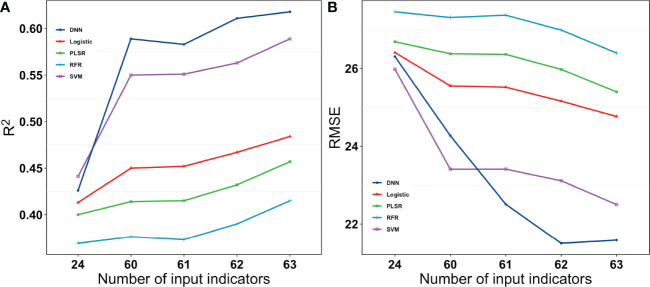
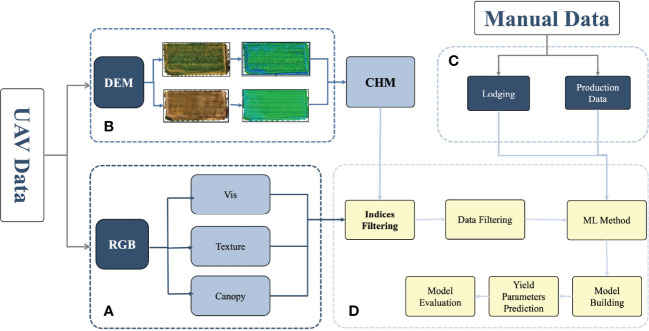
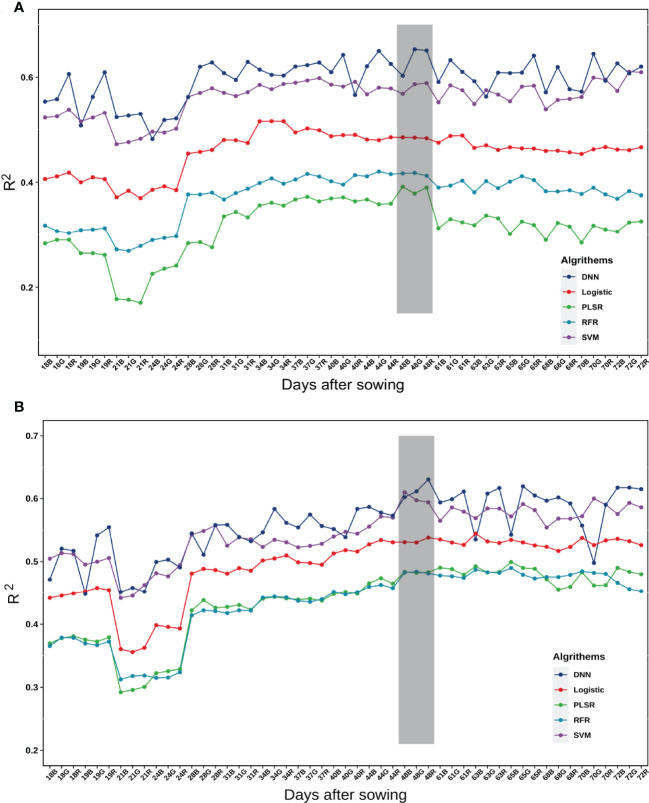
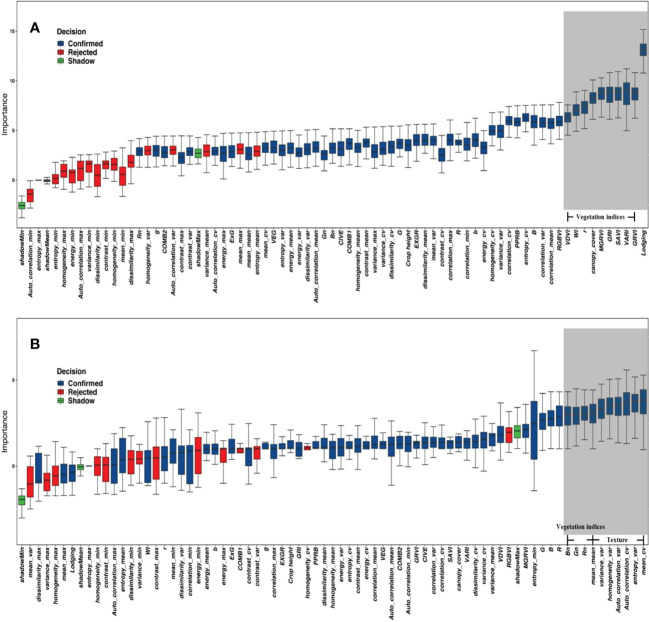
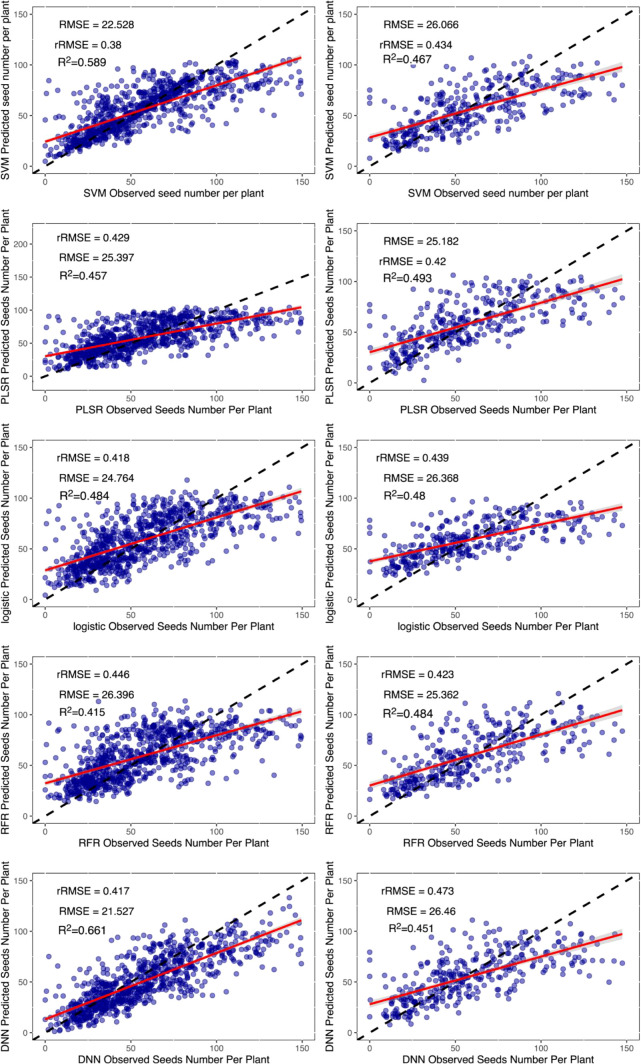
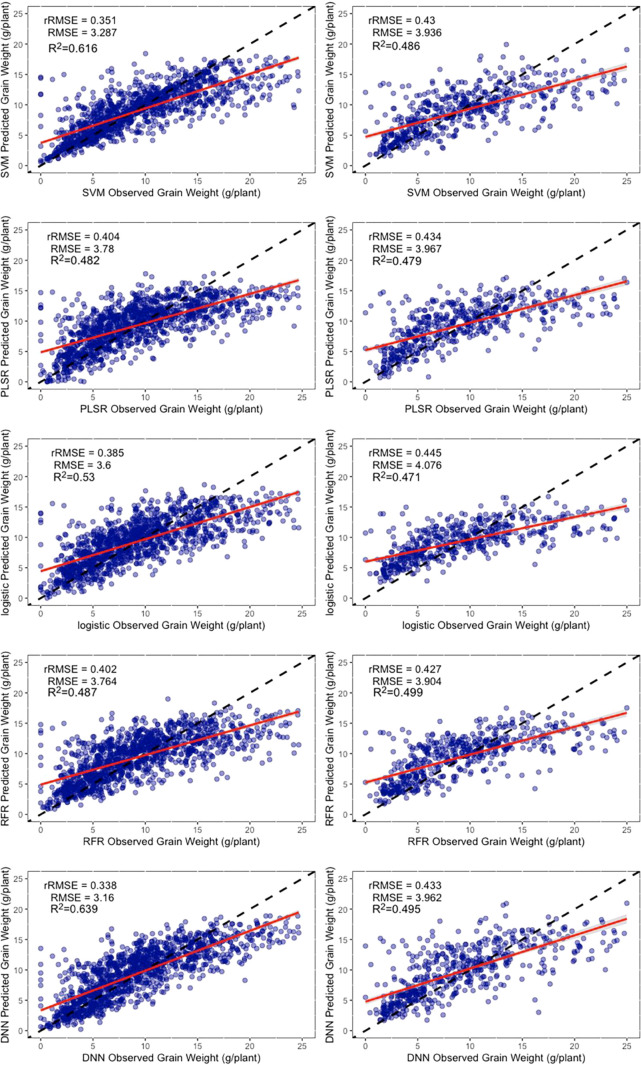
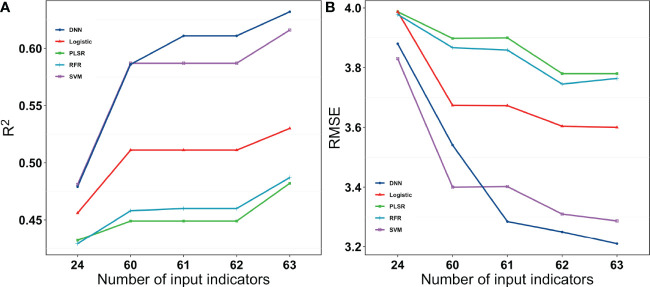
The estimation of yield parameters based on early data is helpful for agricultural policymakers and food security. Developments in unmanned aerial vehicle (UAV) platforms and sensor technology help to estimate yields efficiency. Previous studies have been based on less cultivars (<10) and ideal experimental environments, it is not available in practical production. Therefore, the objective of this study was to estimate the yield parameters of soybean (Glycine max (L.) Merr.) under lodging conditions using RGB information. In this study, 17 time point data throughout the soybean growing season in Nanchang, Jiangxi Province, China, were collected, and the vegetation index, texture information, canopy cover, and crop height were obtained by UAV-image processing. After that, partial least squares regression (PLSR), logistic regression (Logistic), random forest regression (RFR), support vector machine regression (SVM), and deep learning neural network (DNN) were used to estimate the yield parameters. The results can be summarized as follows: (1) The most suitable time point to estimate the yield was flowering stage (48 days), which was when most of the soybean cultivars flowered. (2) The multiple data fusion improved the accuracy of estimating the yield parameters, and the texture information has a high potential to contribute to the estimation of yields, and (3) The DNN model showed the best accuracy of training (R=0.66 rRMSE=32.62%) and validation (R=0.50, rRMSE=43.71%) datasets. In conclusion, these results provide insights into both best estimate period selection and early yield estimation under lodging condition when using remote sensing.
基于早期数据估算产量参数有助于农业政策制定者和粮食安全。无人机(UAV)平台和传感器技术的发展有助于提高产量估算效率。以往的研究基于较少的品种(<10个)和理想的实验环境,在实际生产中并不适用。因此,本研究的目的是利用RGB信息估算倒伏条件下大豆(Glycine max (L.) Merr.)的产量参数。本研究收集了中国江西省南昌市大豆整个生长季的17个时间点的数据,并通过无人机图像处理获得了植被指数、纹理信息、冠层覆盖度和作物高度。之后,使用偏最小二乘回归(PLSR)、逻辑回归(Logistic)、随机森林回归(RFR)、支持向量机回归(SVM)和深度学习神经网络(DNN)来估算产量参数。结果总结如下:(1)估算产量的最合适时间点是开花期(48天),此时大多数大豆品种开花。(2)多数据融合提高了产量参数估算的准确性,但纹理信息具有较高的产量估算潜力,(3)DNN模型在训练数据集(R=0.66,rRMSE=32.62%)和验证数据集(R=0.50,rRMSE=43.71%)上显示出最佳的准确性。总之,这些结果为利用遥感技术在倒伏条件下选择最佳估算期和早期产量估算提供了参考。