Chown Steven L, Janion-Scheepers Charlene, Marshall Angus, Aitkenhead Ian J, Hallas Rebecca, Amy Liu W P, Phillips Laura M
School of Biological Sciences, Monash University, Victoria 3800, Australia.
Securing Antarctica's Environmental Future, Monash University, Victoria 3800, Australia.
Curr Res Insect Sci. 2022 Dec 9;3:100051. doi: 10.1016/j.cris.2022.100051. eCollection 2023.
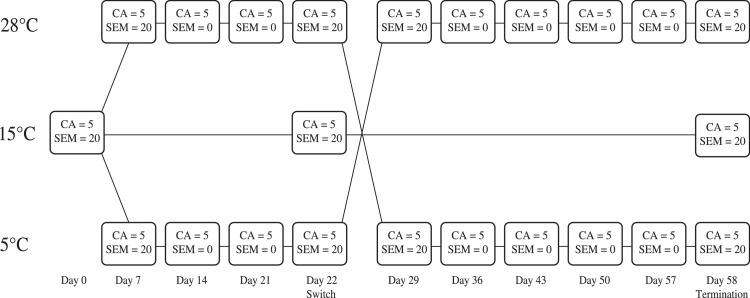
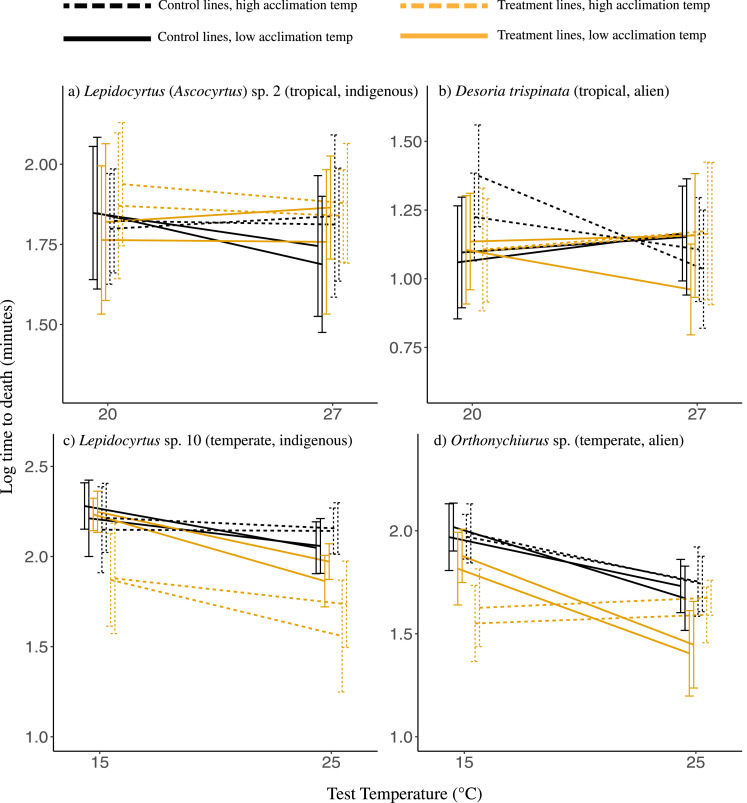
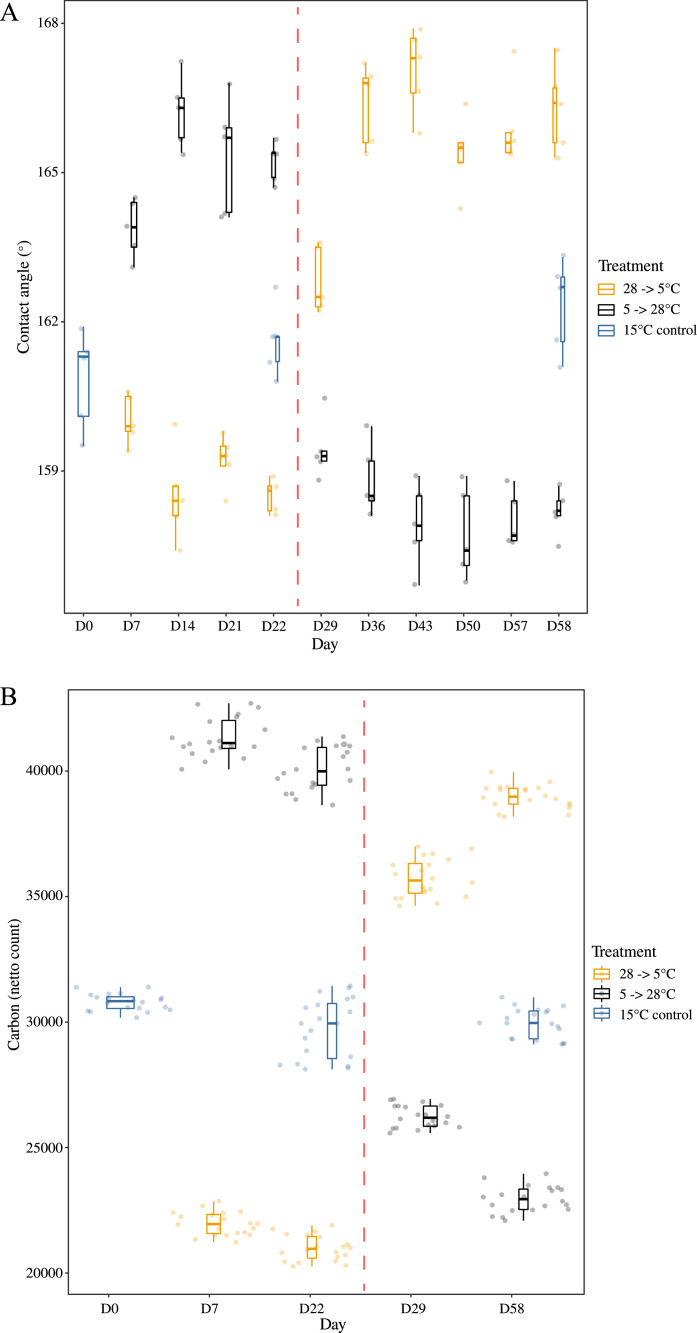
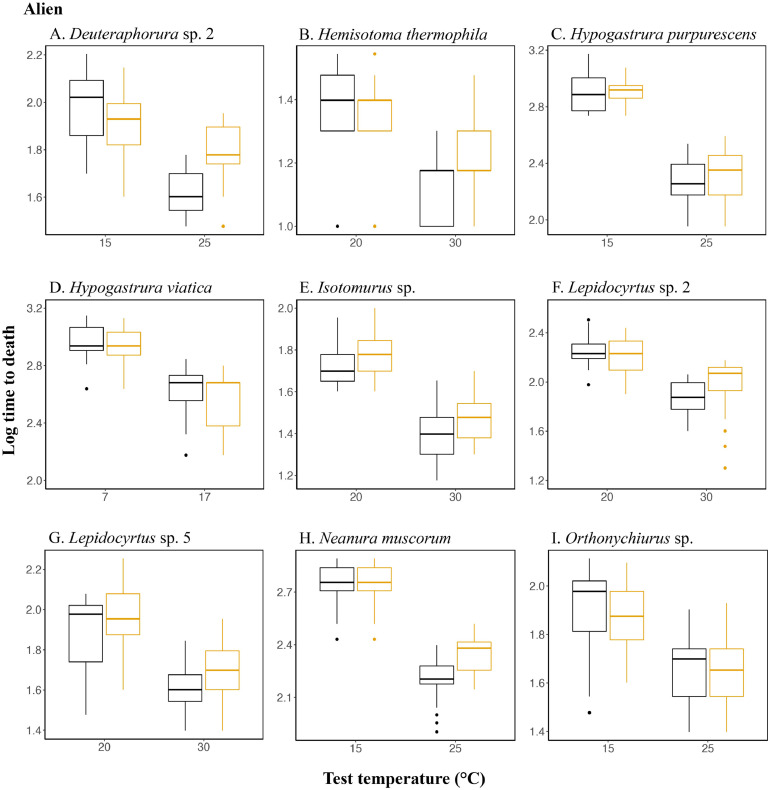
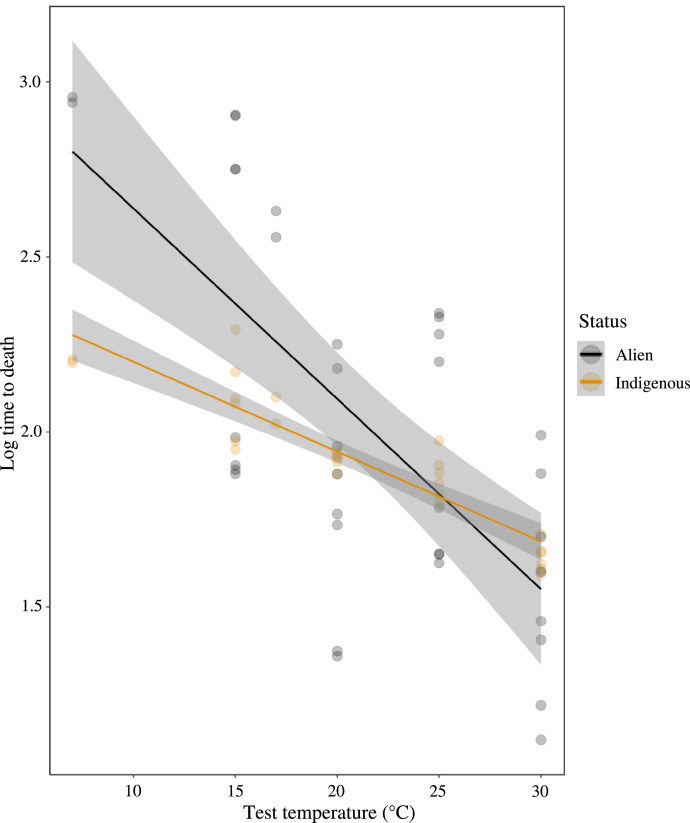
Biological invasions have significant ecological and economic impacts. Much attention is therefore focussed on predicting establishment and invasion success. Trait-based approaches are showing much promise, but are mostly restricted to investigations of plants. Although the application of these approaches to animals is growing rapidly, it is rare for arthropods and restricted mostly to investigations of thermal tolerance. Here we study the extent to which desiccation tolerance and its phenotypic plasticity differ between introduced (nine species) and indigenous (seven species) Collembola, specifically testing predictions of the 'ideal weed' and 'phenotypic plasticity' hypotheses of invasion biology. We do so on the F2 generation of adults in a full factorial design across two temperatures, to elicit desiccation responses, for the phenotypic plasticity trials. We also determine whether basal desiccation resistance responds to thermal laboratory natural selection. We first show experimentally that acclimation to different temperatures elicits changes to cuticular structure and function that are typically associated with water balance, justifying our experimental approach. Our main findings reveal that basal desiccation resistance differs, on average, between the indigenous and introduced species, but that this difference is weaker at higher temperatures, and is driven by particular taxa, as revealed by phylogenetic generalised least squares approaches. By contrast, the extent or form of phenotypic plasticity does not differ between the two groups, with a 'hotter is better' response being most common. Beneficial acclimation is characteristic of only a single species. Laboratory natural selection had little influence on desiccation resistance over 8-12 generations, suggesting that environmental filtering rather than adaptation to new environments may be an important factor influencing Collembola invasions.
生物入侵具有重大的生态和经济影响。因此,人们将大量注意力集中在预测生物的定殖和入侵成功上。基于性状的方法显示出很大的前景,但大多局限于对植物的研究。尽管这些方法在动物研究中的应用正在迅速增加,但在节肢动物中却很少见,并且大多局限于耐热性研究。在这里,我们研究了引入的弹尾目动物(9种)和本地弹尾目动物(7种)之间的耐干性及其表型可塑性的差异程度,特别检验了入侵生物学中“理想杂草”和“表型可塑性”假说的预测。我们在全因子设计中,针对成年F2代,在两个温度下进行了表型可塑性试验,以引发干燥反应。我们还确定了基础抗干燥性是否对热实验室自然选择有反应。我们首先通过实验表明,适应不同温度会引发表皮结构和功能的变化,这些变化通常与水平衡有关,这证明了我们的实验方法是合理的。我们的主要发现表明,本地物种和引入物种之间的基础抗干燥性平均存在差异,但这种差异在较高温度下较弱,并且是由特定分类群驱动的,系统发育广义最小二乘法揭示了这一点。相比之下,两组之间表型可塑性的程度或形式没有差异,最常见的反应是“越热越好”。有益的适应性仅在单一物种中表现出来。实验室自然选择在8至12代中对抗干燥性几乎没有影响,这表明环境过滤而非对新环境的适应可能是影响弹尾目动物入侵的一个重要因素。