Boston University School of Medicine, E5 Arthritis Center, Boston, Massachusetts, USA
Univ. Lille, U1286 - INFINITE - Institute for Translational Research in Inflammation, Lille, France.
Ann Rheum Dis. 2023 Mar;82(3):365-373. doi: 10.1136/ard-2022-223237. Epub 2022 Dec 5.
To mine the serum proteome of patients with systemic sclerosis-associated pulmonary arterial hypertension (SSc-PAH) and to detect biomarkers that may assist in earlier and more effective diagnosis and treatment.
Patients with limited cutaneous SSc, no extensive interstitial lung disease and no PAH-specific therapy were included. They were classified as cases if they had PAH confirmed by right heart catheterisation (RHC) and serum collected on the same day as RHC; and as controls if they had no clinical evidence of PAH.
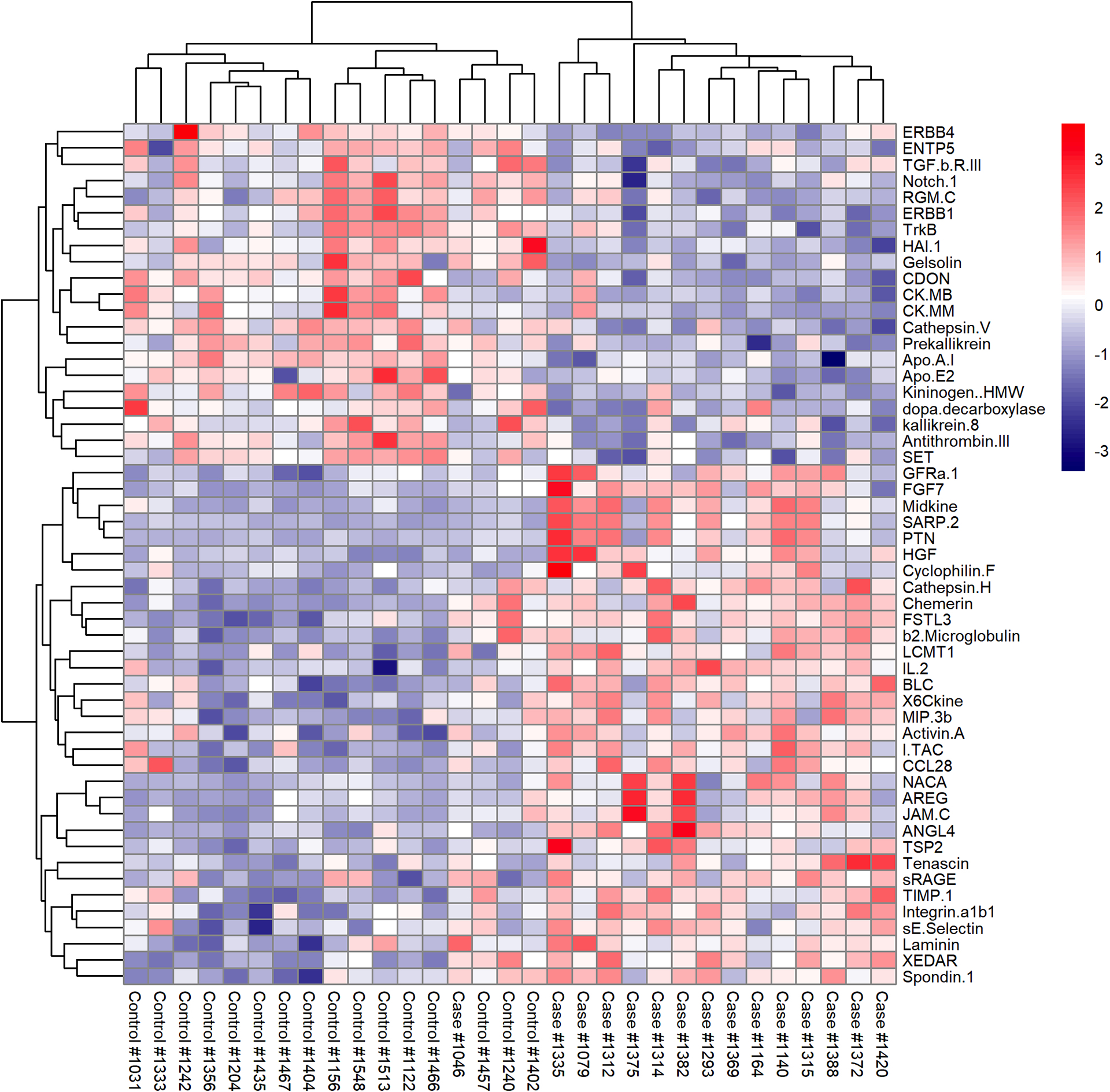
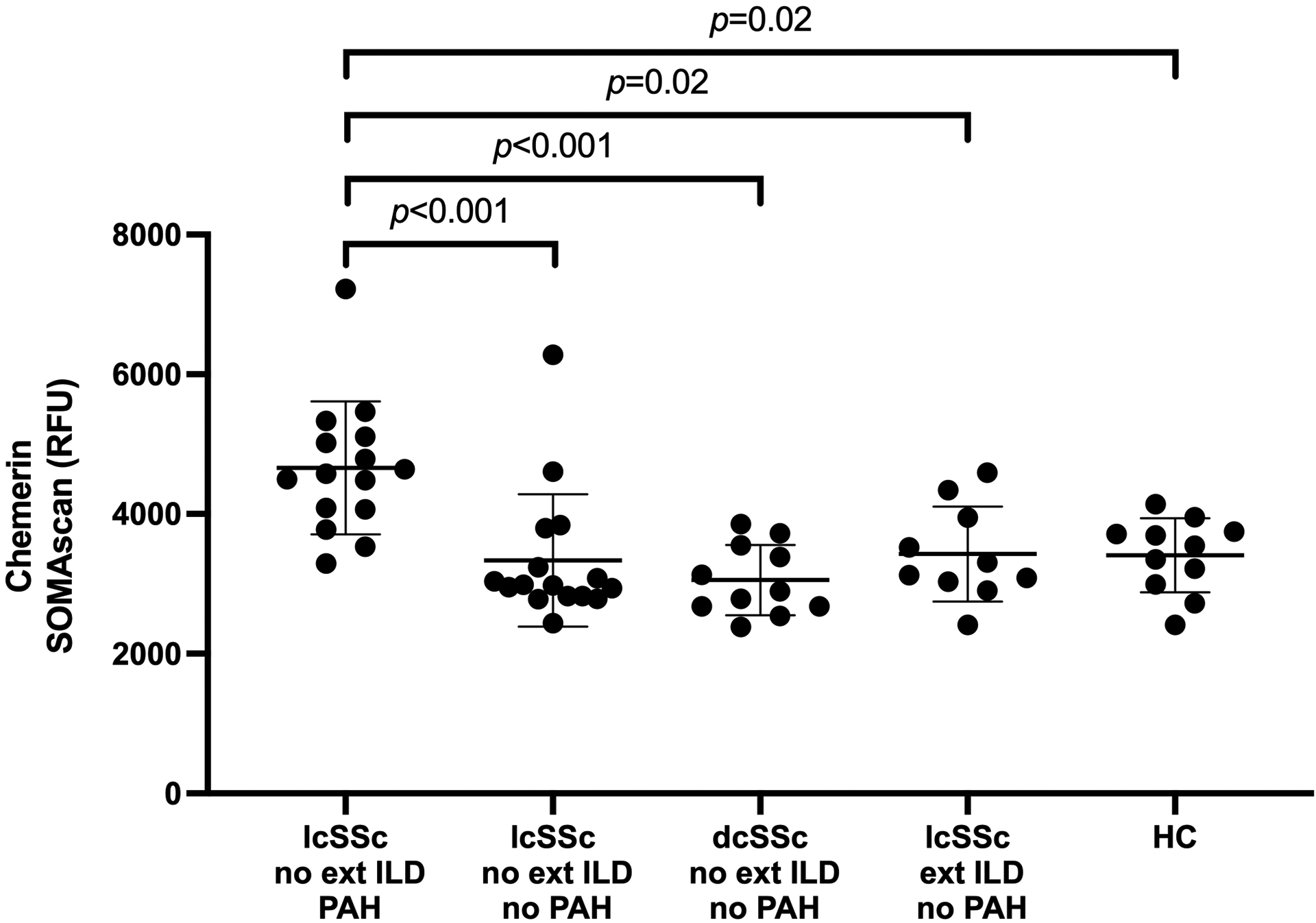
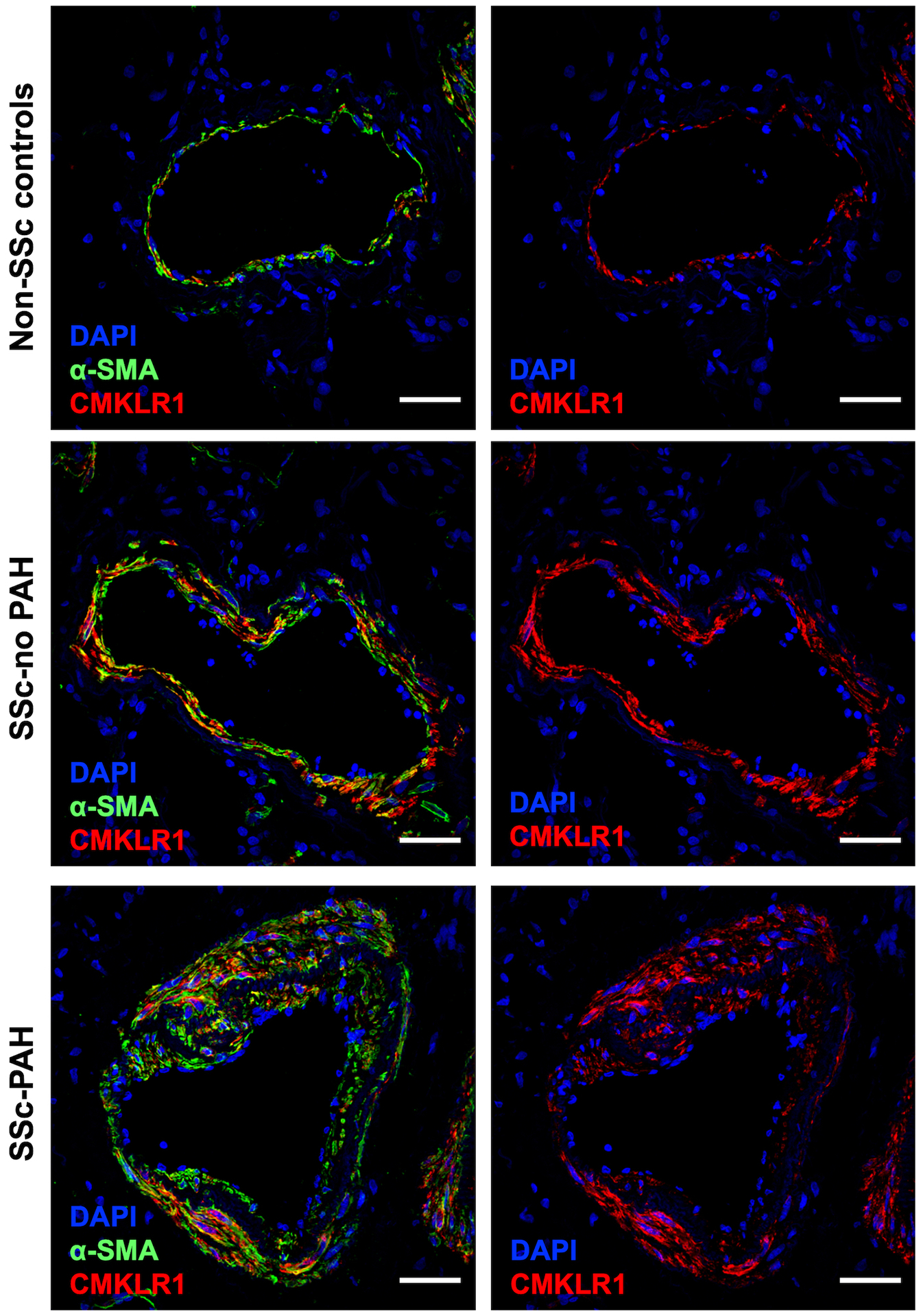
Patients were mostly middle-aged females with anticentromere-associated SSc. Among 1129 proteins assessed by a high-throughput proteomic assay (SOMAscan), only 2 were differentially expressed and correlated significantly with pulmonary vascular resistance (PVR) in SSc-PAH patients (n=15): chemerin (=0.62, p=0.01) and SET (=0.62, p=0.01). To validate these results, serum levels of chemerin were measured by ELISA in an independent cohort. Chemerin levels were confirmed to be significantly higher (p=0.01) and correlate with PVR (=0.42, p=0.04) in SSc-PAH patients (n=24). Chemerin mRNA expression was detected in fibroblasts, pulmonary artery smooth muscle cells (PA-SMCs)/pericytes and mesothelial cells in SSc-PAH lungs by single-cell RNA-sequencing. Confocal immunofluorescence revealed increased expression of a chemerin receptor, CMKLR1, on SSc-PAH PA-SMCs. SSc-PAH serum seemed to induce higher PA-SMC proliferation than serum from SSc patients without PAH. This difference appeared neutralised when adding the CMKLR1 inhibitor α-NETA.
Chemerin seems an interesting surrogate biomarker for PVR in SSc-PAH. Increased chemerin serum levels and CMKLR1 expression by PA-SMCs may contribute to SSc-PAH pathogenesis by inducing PA-SMC proliferation.
挖掘系统性硬皮病相关肺动脉高压(SSc-PAH)患者的血清蛋白质组,以检测可能有助于更早、更有效的诊断和治疗的生物标志物。
纳入局限性皮肤型 SSc、无广泛间质性肺病且无肺动脉高压特异性治疗的患者。如果他们通过右心导管检查(RHC)证实有肺动脉高压,且血清是在 RHC 当天采集的,则将其分类为病例;如果他们没有肺动脉高压的临床证据,则将其分类为对照。
患者主要为中年女性,患有抗着丝点相关 SSc。在通过高通量蛋白质组学检测(SOMAscan)评估的 1129 种蛋白质中,只有 2 种在 SSc-PAH 患者中差异表达且与肺血管阻力(PVR)显著相关(n=15):趋化素(=0.62,p=0.01)和 SET(=0.62,p=0.01)。为了验证这些结果,通过 ELISA 在独立队列中测量了趋化素的血清水平。趋化素水平在 SSc-PAH 患者(n=24)中被证实显著升高(p=0.01)且与 PVR 相关(=0.42,p=0.04)。通过单细胞 RNA 测序在 SSc-PAH 肺中的成纤维细胞、肺动脉平滑肌细胞(PA-SMCs)/周细胞和间皮细胞中检测到趋化素 mRNA 表达。共聚焦免疫荧光显示 SSc-PAH 的 PA-SMC 上的趋化素受体 CMKLR1 表达增加。与 SSc 无肺动脉高压患者的血清相比,SSc-PAH 血清似乎诱导更高的 PA-SMC 增殖。当添加 CMKLR1 抑制剂α-NETA 时,这种差异似乎被中和。
趋化素似乎是 SSc-PAH 中 PVR 的一个有趣的替代生物标志物。PA-SMC 中趋化素血清水平的升高和 CMKLR1 表达的增加可能通过诱导 PA-SMC 增殖而导致 SSc-PAH 的发病机制。