Division of Immunobiology.
Center for Inflammation and Tolerance.
J Clin Invest. 2023 Feb 15;133(4):e162190. doi: 10.1172/JCI162190.
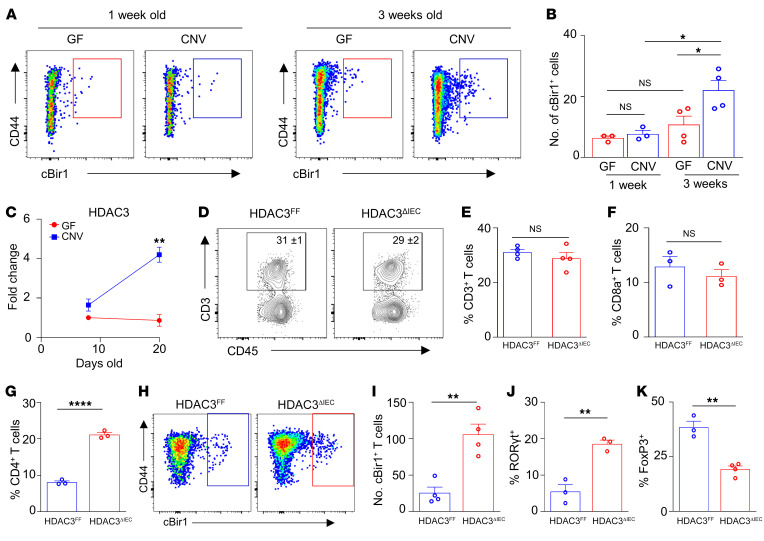
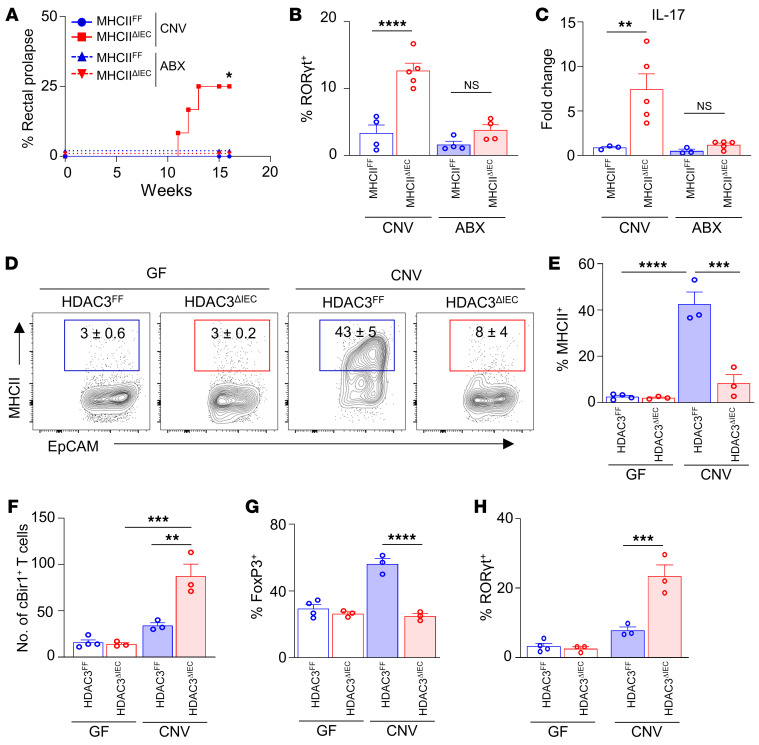
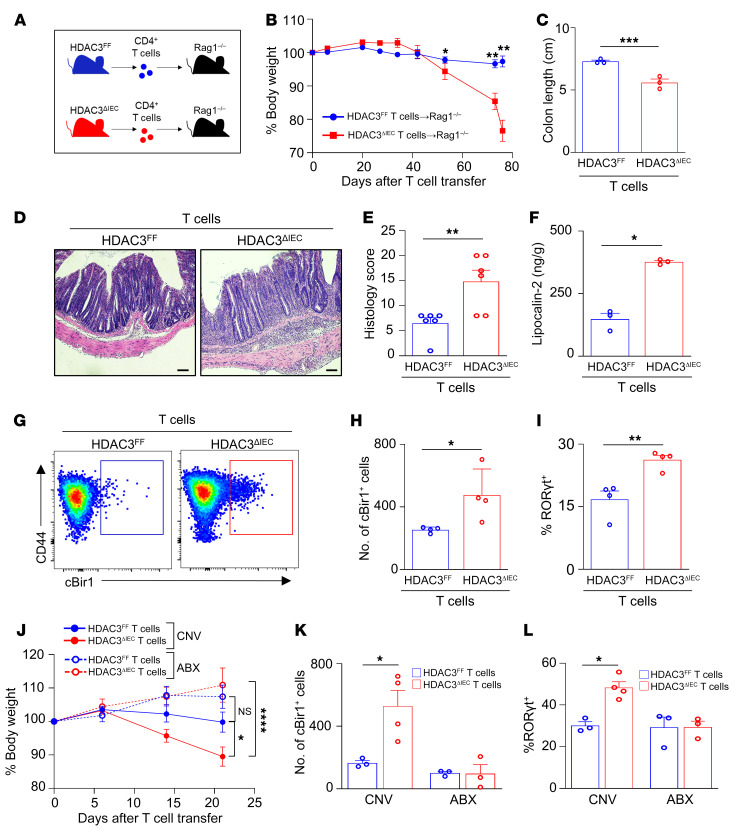
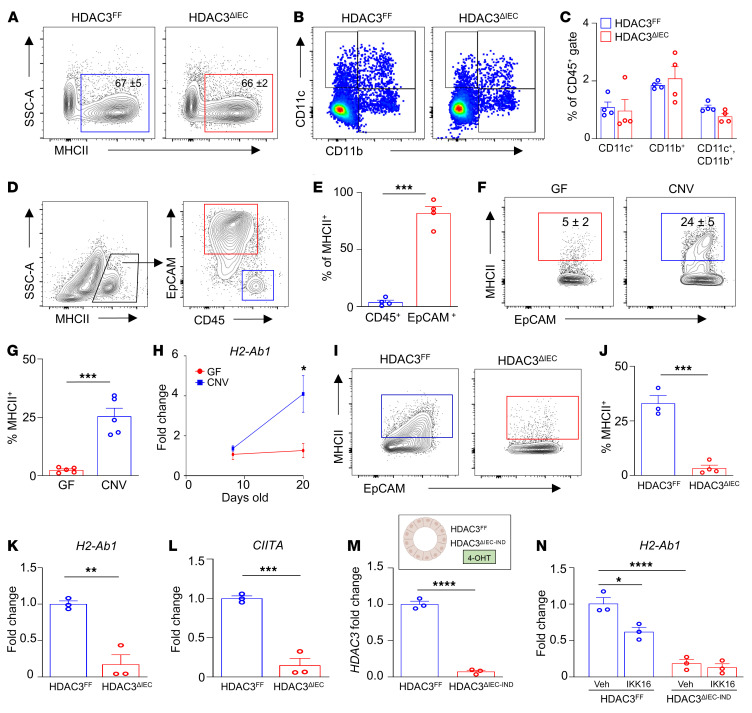
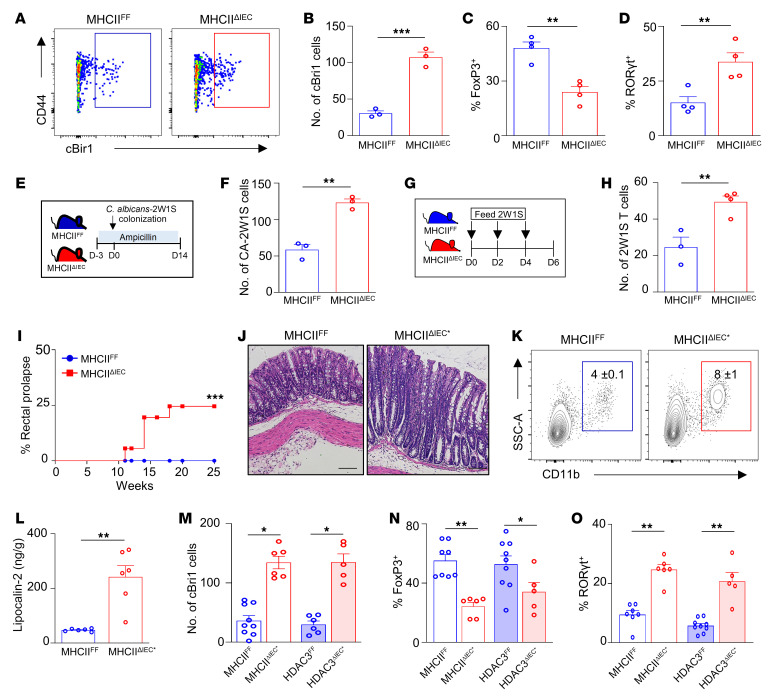
Aberrant immune responses to resident microbes promote inflammatory bowel disease and other chronic inflammatory conditions. However, how microbiota-specific immunity is controlled in mucosal tissues remains poorly understood. Here, we found that mice lacking epithelial expression of microbiota-sensitive histone deacetylase 3 (HDAC3) exhibited increased accumulation of commensal-specific CD4+ T cells in the intestine, provoking the hypothesis that epithelial HDAC3 may instruct local microbiota-specific immunity. Consistent with this, microbiota-specific CD4+ T cells and epithelial HDAC3 expression were concurrently induced following early-life microbiota colonization. Further, epithelium-intrinsic ablation of HDAC3 decreased commensal-specific Tregs, increased commensal-specific Th17 cells, and promoted T cell-driven colitis. Mechanistically, HDAC3 was essential for NF-κB-dependent regulation of epithelial MHC class II (MHCII). Epithelium-intrinsic MHCII dampened local accumulation of commensal-specific Th17 cells in adult mice and protected against microbiota-triggered inflammation. Remarkably, HDAC3 enabled the microbiota to induce MHCII expression on epithelial cells and limit the number of commensal-specific T cells in the intestine. Collectively, these data reveal a central role for an epithelial histone deacetylase in directing the dynamic balance of tissue-intrinsic CD4+ T cell subsets that recognize commensal microbes and control inflammation.
异常的免疫反应对常驻微生物促进炎症性肠病和其他慢性炎症性疾病。然而,黏膜组织中微生物特异性免疫是如何控制的仍然知之甚少。在这里,我们发现缺乏上皮细胞表达的微生物敏感组蛋白去乙酰化酶 3 (HDAC3) 的小鼠在肠道中积累了更多的共生特异性 CD4+T 细胞,这就提出了一个假设,即上皮细胞 HDAC3 可能指导局部微生物特异性免疫。与此一致的是,共生特异性 CD4+T 细胞和上皮细胞 HDAC3 的表达在早期生活的微生物定植后同时被诱导。此外,上皮细胞固有 HDAC3 的缺失减少了共生特异性 Tregs,增加了共生特异性 Th17 细胞,并促进了 T 细胞驱动的结肠炎。在机制上,HDAC3 是 NF-κB 依赖性调节上皮细胞 MHC II (MHCII)所必需的。上皮细胞 MHCII 抑制了成年小鼠中共生特异性 Th17 细胞在局部的积累,并防止了微生物触发的炎症。值得注意的是,HDAC3 使微生物能够在上皮细胞上诱导 MHCII 的表达,并限制肠道中共生特异性 T 细胞的数量。总的来说,这些数据揭示了上皮组蛋白去乙酰化酶在指导识别共生微生物和控制炎症的组织固有 CD4+T 细胞亚群的动态平衡方面的核心作用。