Division of Infectious Diseases, Center for Inflammation and Tolerance, Cincinnati Children's Hospital Medical Center, University of Cincinnati College of Medicine, Cincinnati, OH 45229, USA; Immunobiology Graduate Program, Cincinnati Children's Hospital Medical Center, University of Cincinnati College of Medicine, Cincinnati, OH 45229, USA.
Molecular Microbiology and Immunology Department, Brown University, Providence, RI 02912, USA.
Cell Rep. 2022 May 17;39(7):110837. doi: 10.1016/j.celrep.2022.110837.
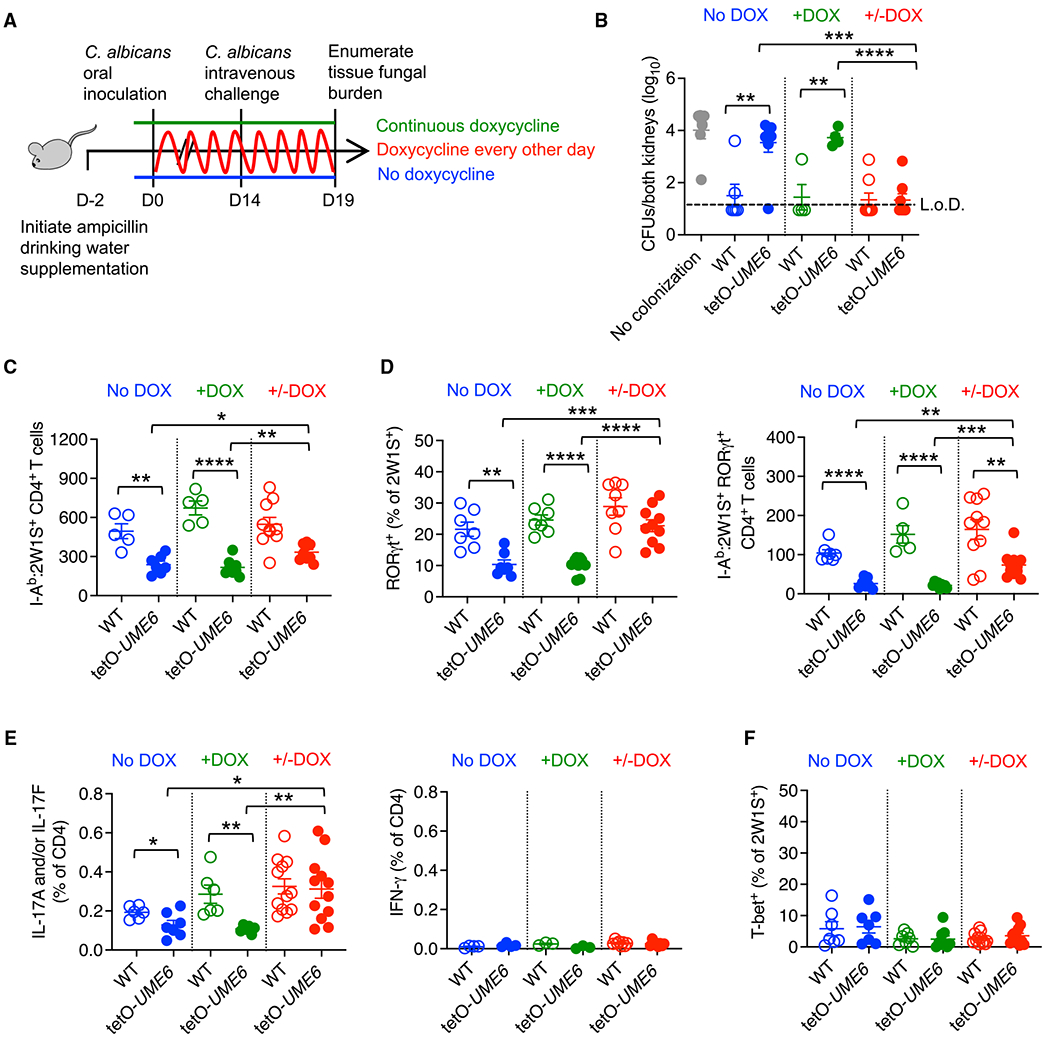
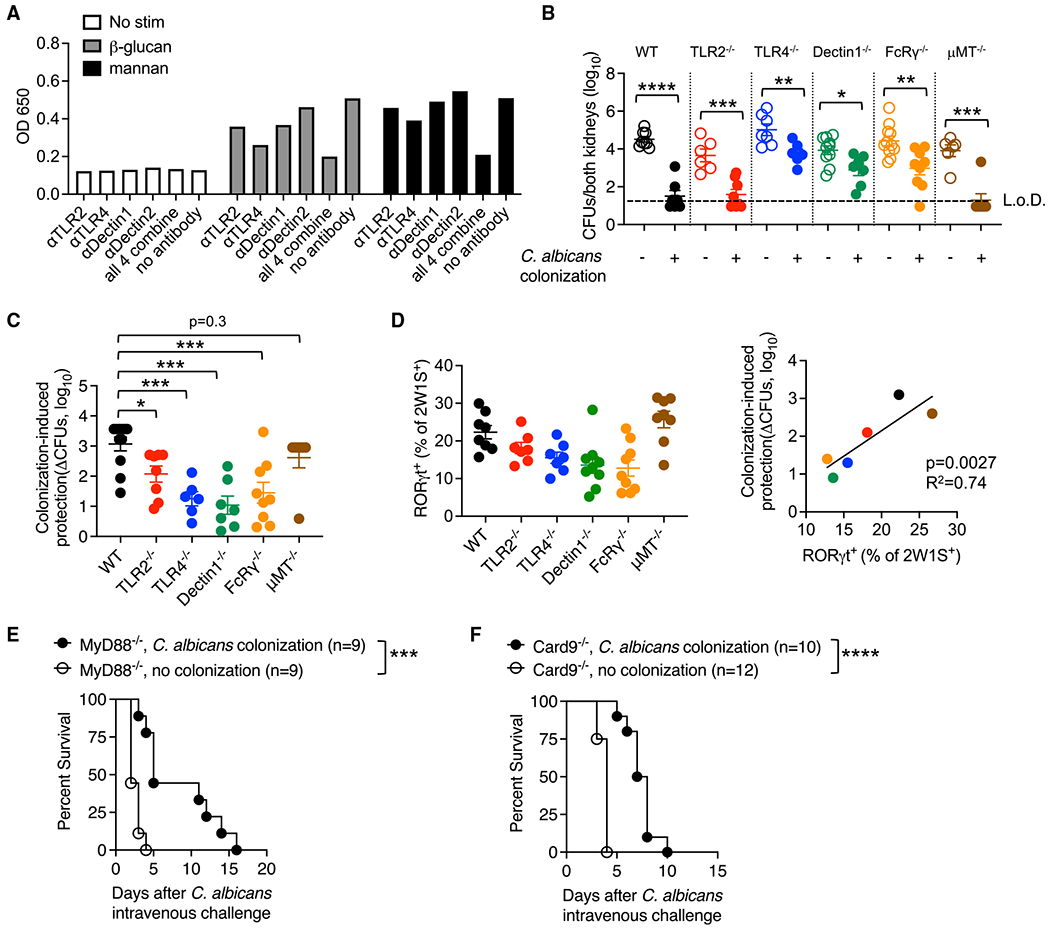
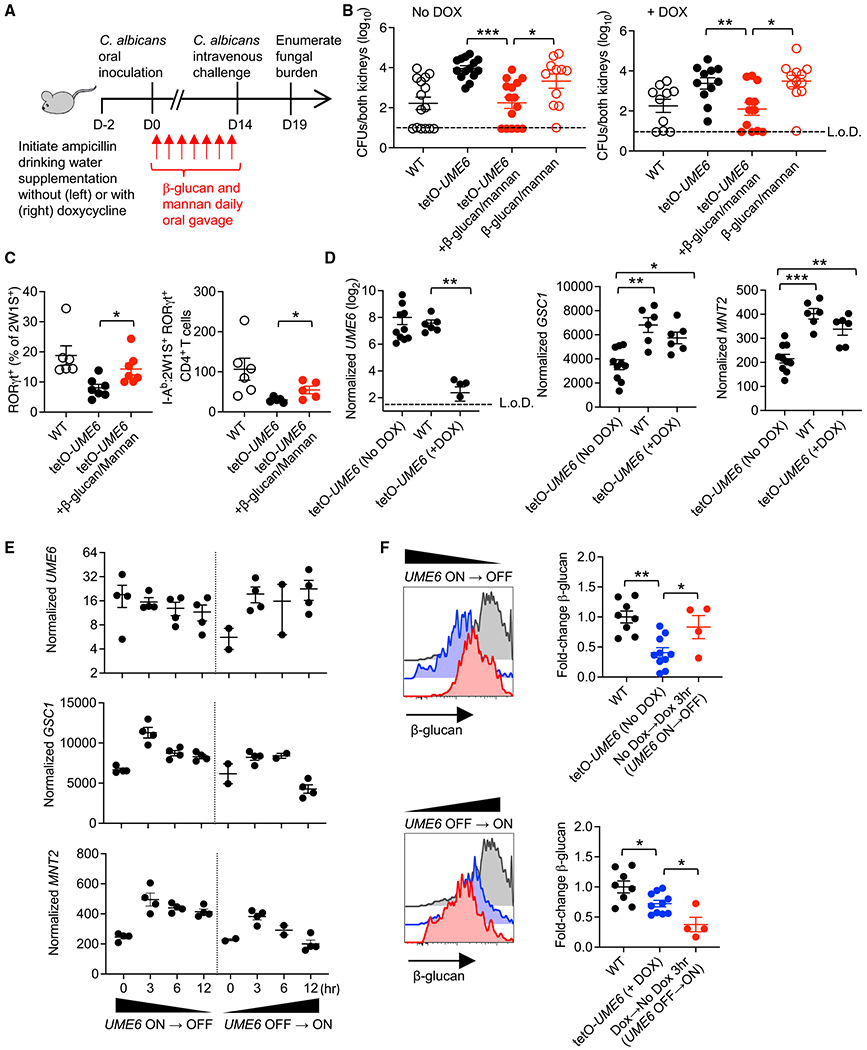
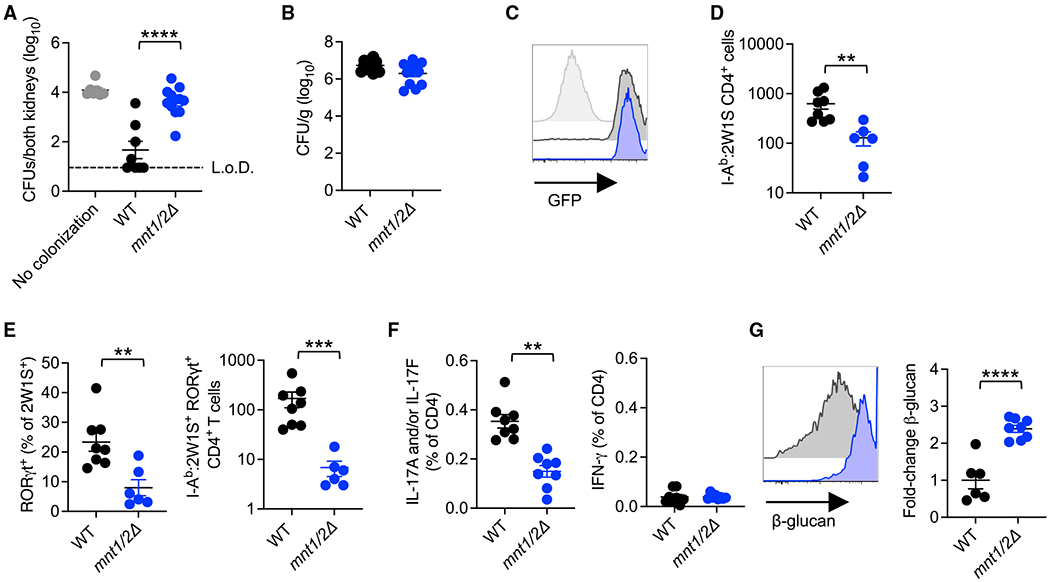
Systemic immunity is stringently regulated by commensal intestinal microbes, including the pathobiont Candida albicans. This fungus utilizes various transcriptional and morphological programs for host adaptation, but how this heterogeneity affects immunogenicity remains uncertain. We show that UME6, a transcriptional regulator of filamentation, is essential for intestinal C. albicans-primed systemic Th17 immunity. UME6 deletion and constitutive overexpression strains are non-immunogenic during commensal colonization, whereas immunogenicity is restored by C. albicans undergoing oscillating UME6 expression linked with β-glucan and mannan production. In turn, intestinal reconstitution with these fungal cell wall components restores protective Th17 immunity to mice colonized with UME6-locked variants. These fungal cell wall ligands and commensal C. albicans stimulate Th17 immunity through multiple host pattern recognition receptors, including Toll-like receptor 2 (TLR2), TLR4, Dectin-1, and Dectin-2, which work synergistically for colonization-induced protection. Thus, dynamic gene expression fluctuations by C. albicans during symbiotic colonization are essential for priming host immunity against disseminated infection.
肠道共生微生物(包括条件致病菌白念珠菌)严格调控着系统性免疫。该真菌利用多种转录和形态学程序进行宿主适应,但这种异质性如何影响免疫原性尚不清楚。我们发现,丝状生长转录调控因子UME6 对于肠道白念珠菌引发的系统性 Th17 免疫至关重要。UME6 缺失和组成型过表达菌株在共生定植期间无免疫原性,而通过与β-葡聚糖和甘露聚糖产生相关的 UME6 表达波动,可恢复其免疫原性。反过来,用这些真菌细胞壁成分对定植 UME6 锁定变体的小鼠进行肠道重建,可恢复保护性 Th17 免疫。这些真菌细胞壁配体和共生白念珠菌通过多种宿主模式识别受体(包括 Toll 样受体 2(TLR2)、TLR4、Dectin-1 和 Dectin-2)刺激 Th17 免疫,这些受体协同作用以诱导定植诱导的保护。因此,共生定植过程中白念珠菌的动态基因表达波动对于启动宿主对播散性感染的免疫至关重要。