Department of Translational Research and Cellular Therapeutics, Arthur Riggs Diabetes and Metabolism Research Institute, City of Hope, Duarte, CA.
Integrative Genomics Core, City of Hope, Duarte, CA.
Diabetes. 2023 May 1;72(5):575-589. doi: 10.2337/db22-0506.
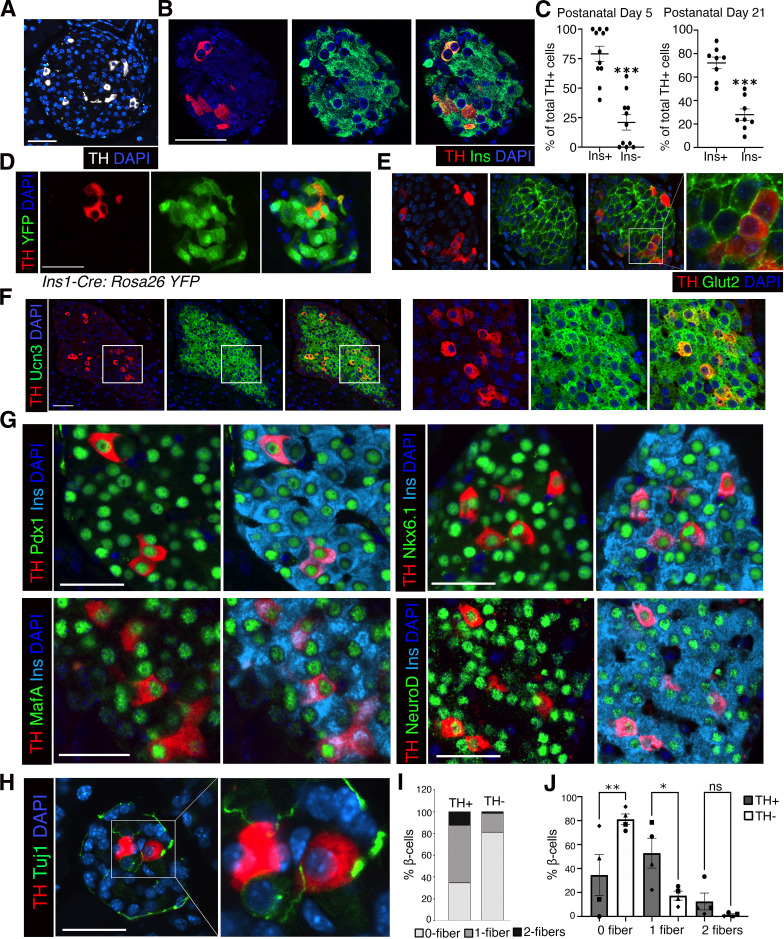
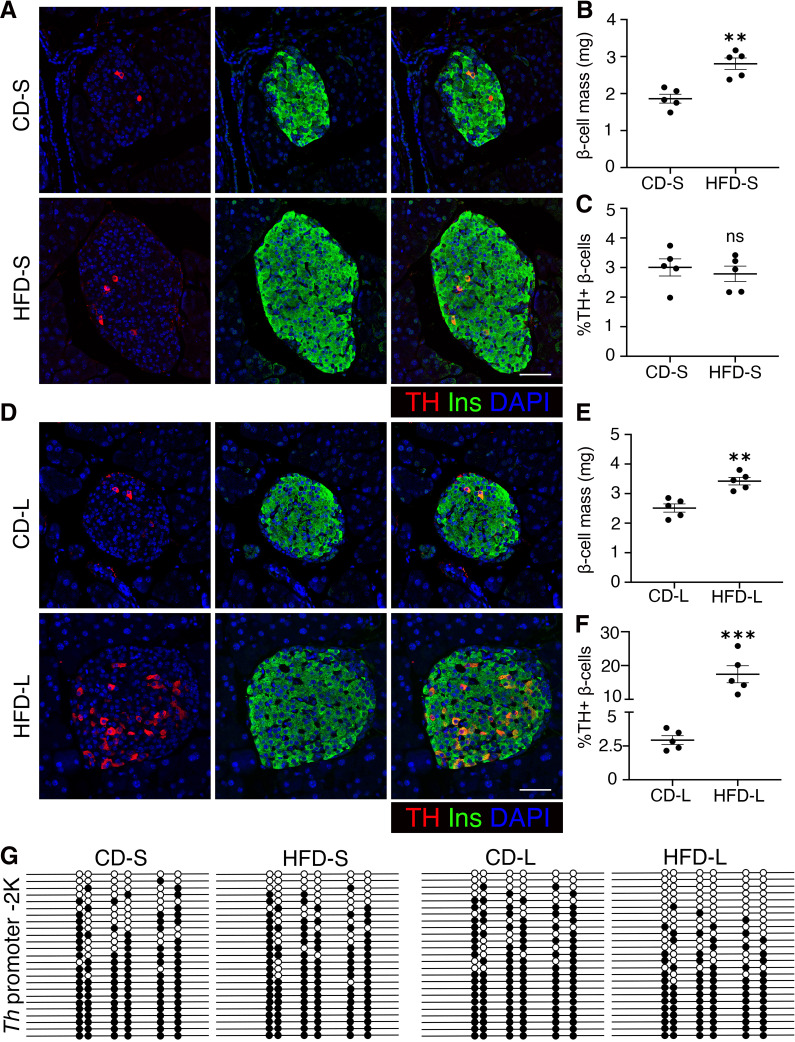
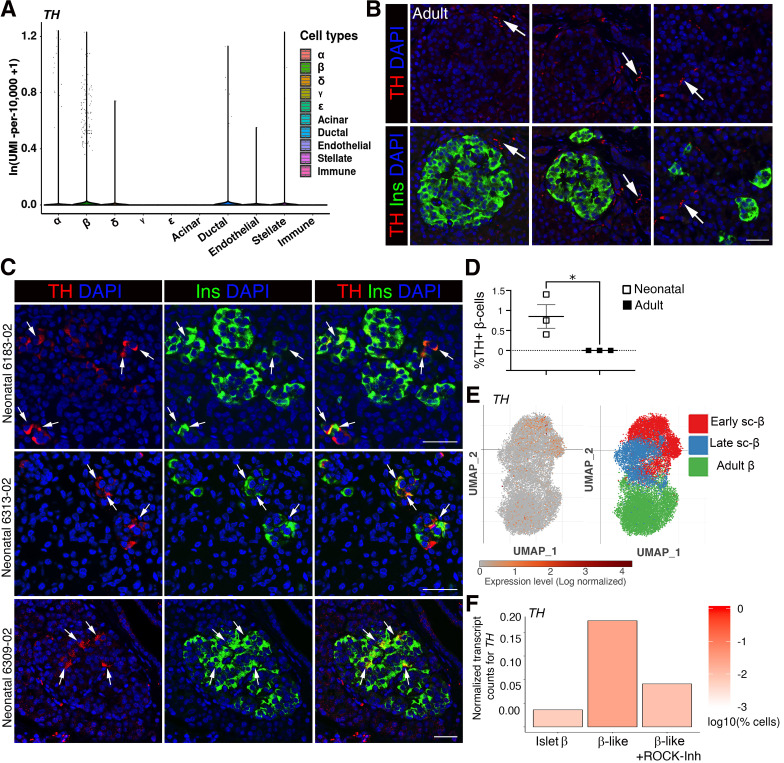
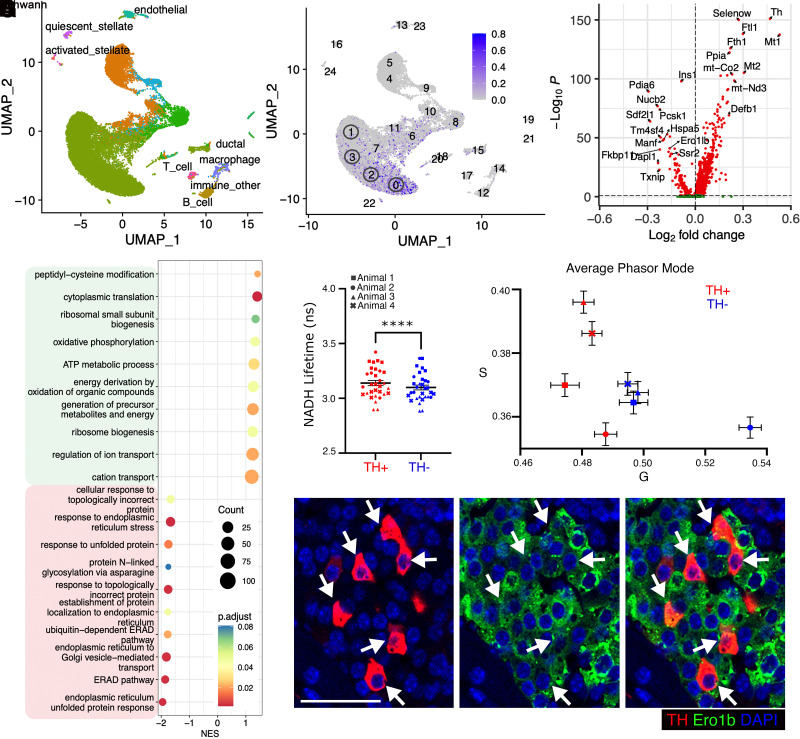
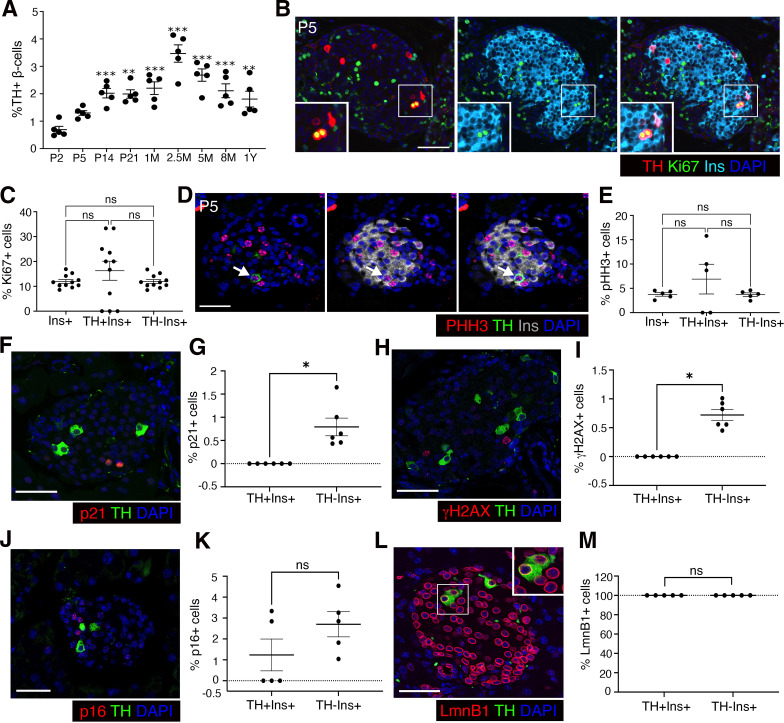
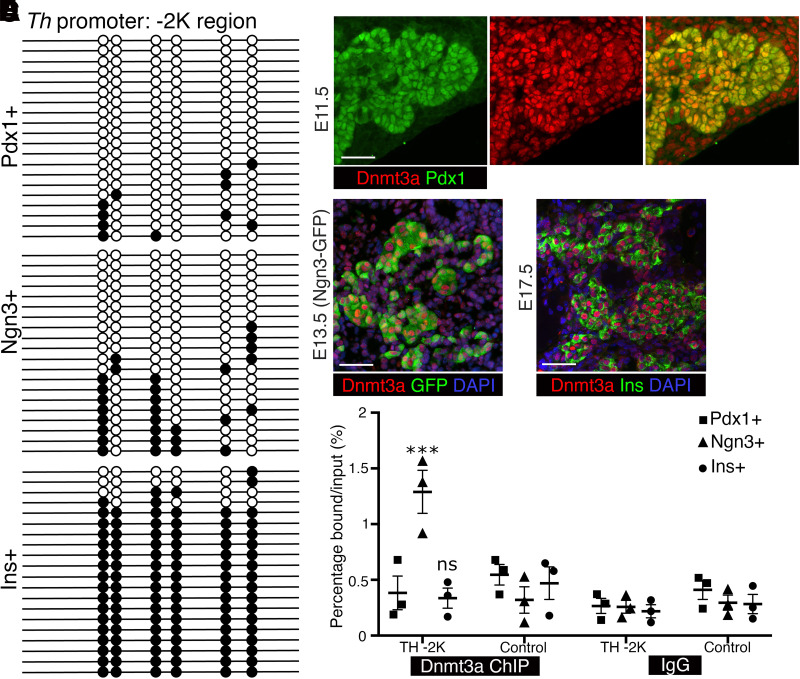
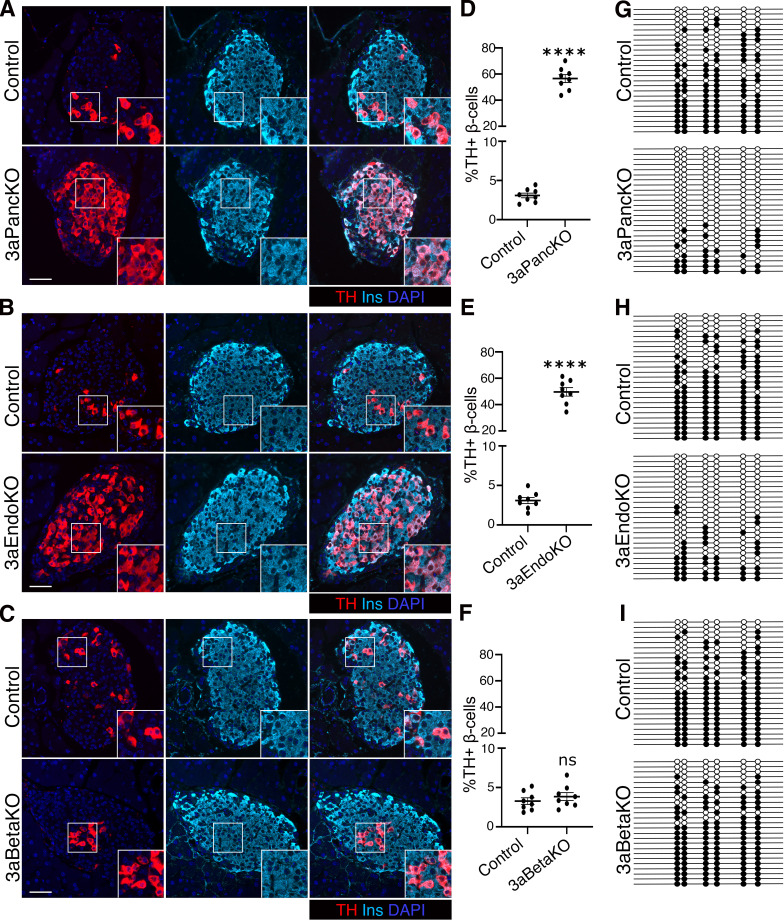
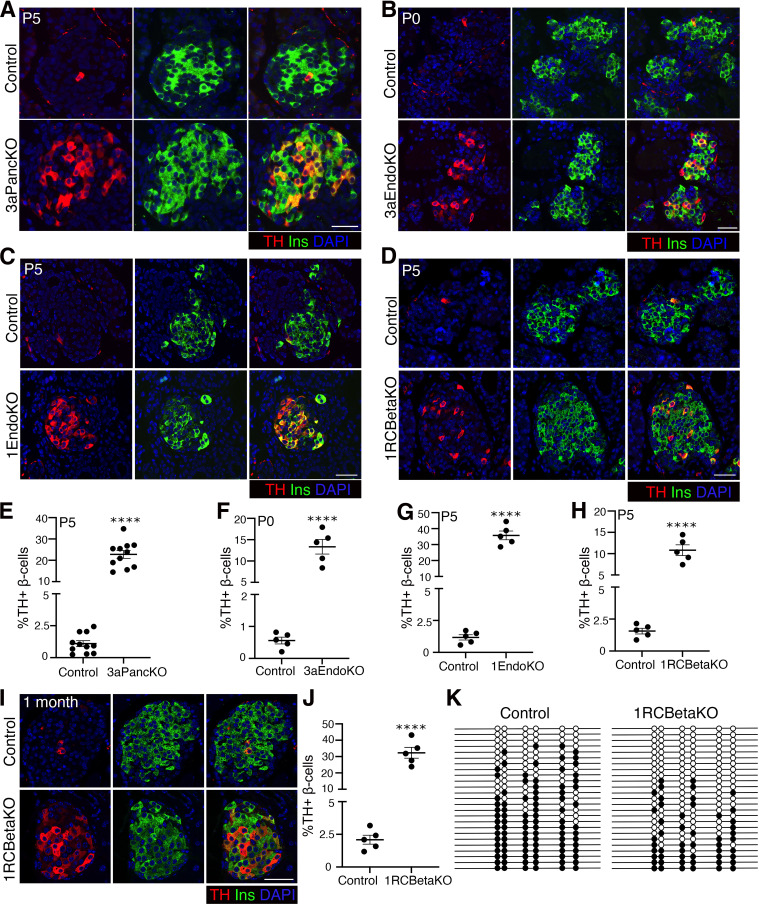
The molecular and functional heterogeneity of pancreatic β-cells is well recognized, but the underlying mechanisms remain unclear. Pancreatic islets harbor a subset of β-cells that co-express tyrosine hydroxylase (TH), an enzyme involved in synthesis of catecholamines that repress insulin secretion. Restriction of the TH+ β-cells within islets is essential for appropriate function in mice, such that a higher proportion of these cells corresponds to reduced insulin secretion. Here, we use these cells as a model to dissect the developmental control of β-cell heterogeneity. We define the specific molecular and metabolic characteristics of TH+ β-cells and show differences in their developmental restriction in mice and humans. We show that TH expression in β-cells is restricted by DNA methylation during β-cell differentiation. Ablation of de novo DNA methyltransferase Dnmt3a in the embryonic progenitors results in a dramatic increase in the proportion of TH+ β-cells, whereas β-cell-specific ablation of Dnmt3a does not. We demonstrate that maintenance of Th promoter methylation is essential for its continued restriction in postnatal β-cells. Loss of Th promoter methylation in response to chronic overnutrition increases the number of TH+ β-cells, corresponding to impaired β-cell function. These results reveal a regulatory role of DNA methylation in determining β-cell heterogeneity.
胰腺 β 细胞的分子和功能异质性是众所周知的,但潜在的机制仍不清楚。胰岛中存在一组同时表达酪氨酸羟化酶 (TH)的 β 细胞,TH 是参与儿茶酚胺合成的酶,可抑制胰岛素分泌。TH+β 细胞在胰岛内的限制对于小鼠的适当功能至关重要,因此这些细胞的比例较高对应于胰岛素分泌减少。在这里,我们使用这些细胞作为模型来剖析 β 细胞异质性的发育控制。我们定义了 TH+β 细胞的特定分子和代谢特征,并显示了它们在小鼠和人类中的发育限制存在差异。我们表明,在 β 细胞分化过程中,TH 表达受到 DNA 甲基化的限制。胚胎祖细胞中从头 DNA 甲基转移酶 Dnmt3a 的缺失导致 TH+β 细胞的比例显著增加,而 β 细胞特异性缺失 Dnmt3a 则不会。我们证明,Th 启动子甲基化的维持对于其在出生后 β 细胞中的持续限制是必要的。慢性营养过剩导致 Th 启动子甲基化丢失会增加 TH+β 细胞的数量,对应于β 细胞功能受损。这些结果揭示了 DNA 甲基化在决定 β 细胞异质性中的调节作用。