Tri-institutional Center for Translational Research in Neuroimaging and Data Science (TReNDS), Georgia State University, Georgia Institute of Technology, and Emory University, Atlanta, Georgia, USA.
School of Computer & Information Technology, Shanxi University, Taiyuan, China.
Hum Brain Mapp. 2023 Apr 15;44(6):2158-2175. doi: 10.1002/hbm.26200. Epub 2023 Jan 11.
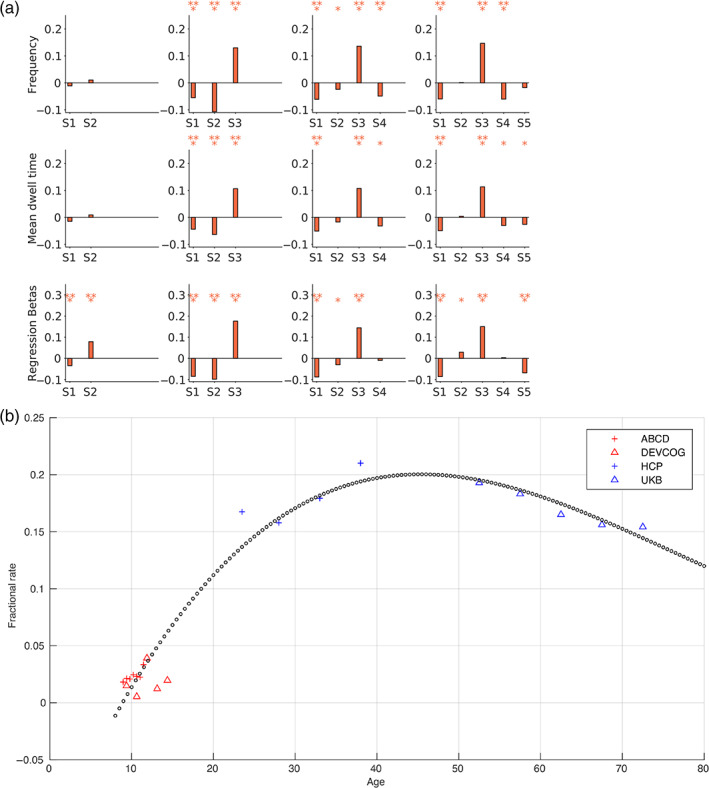
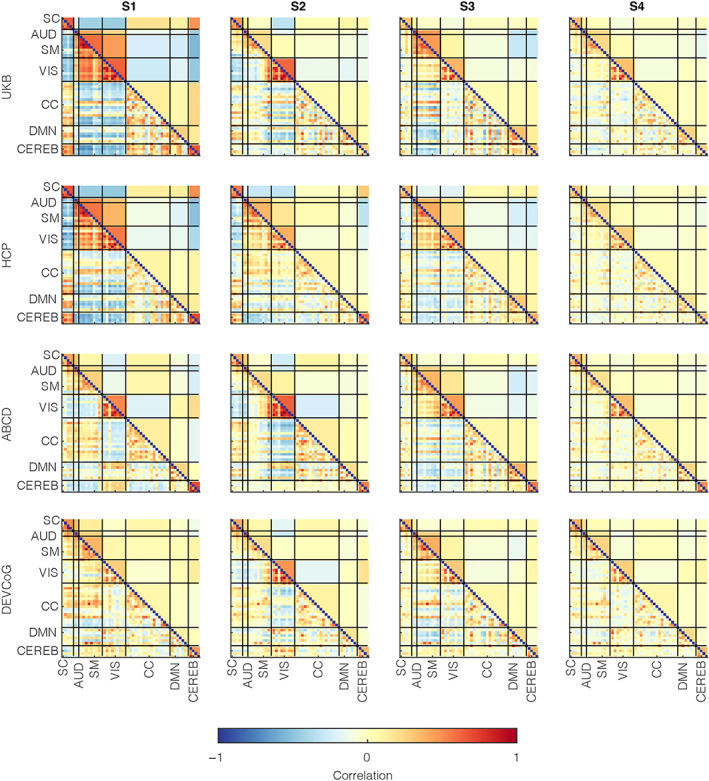
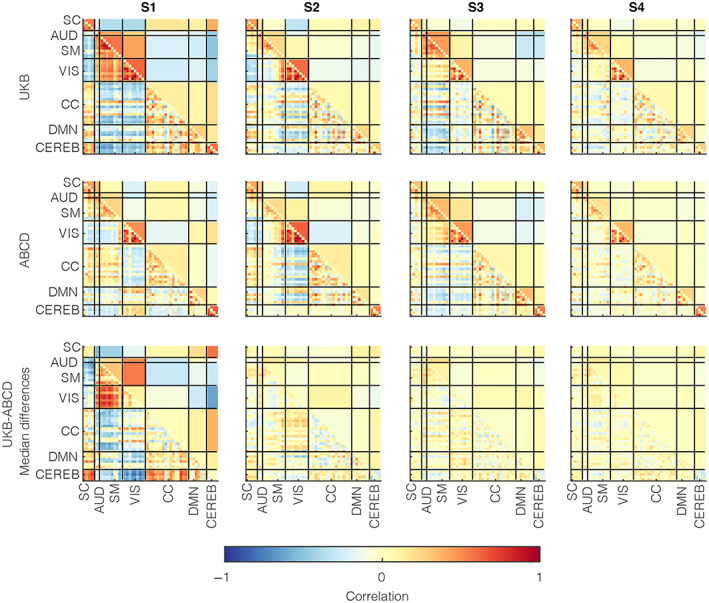
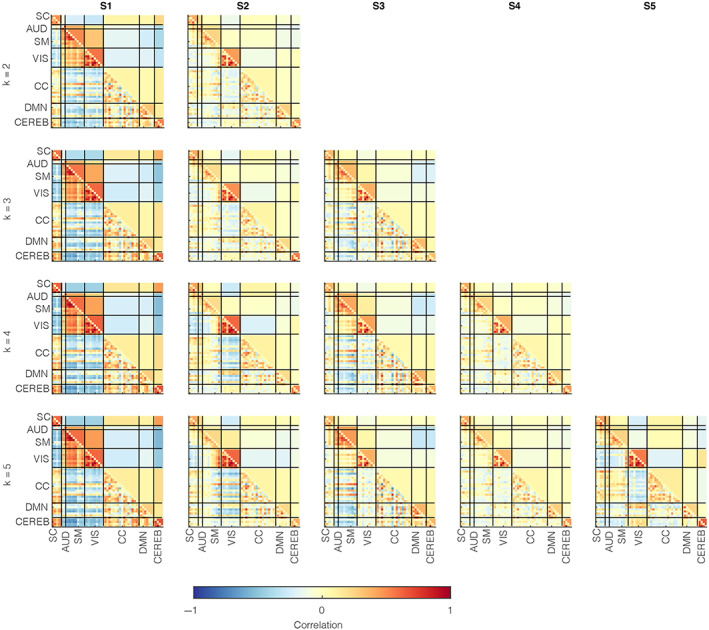
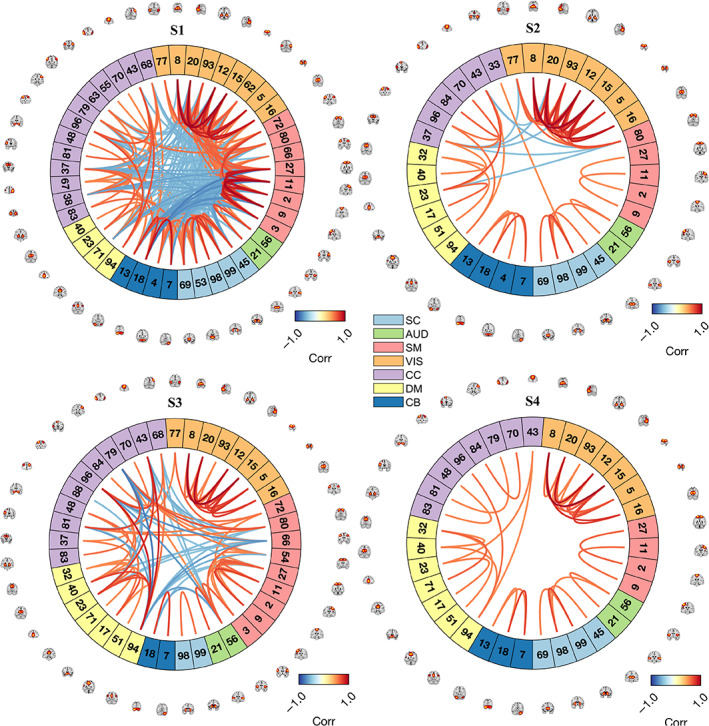
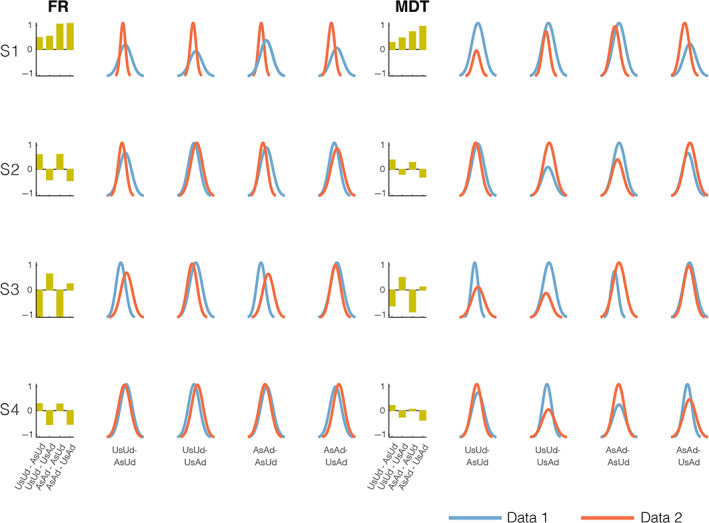
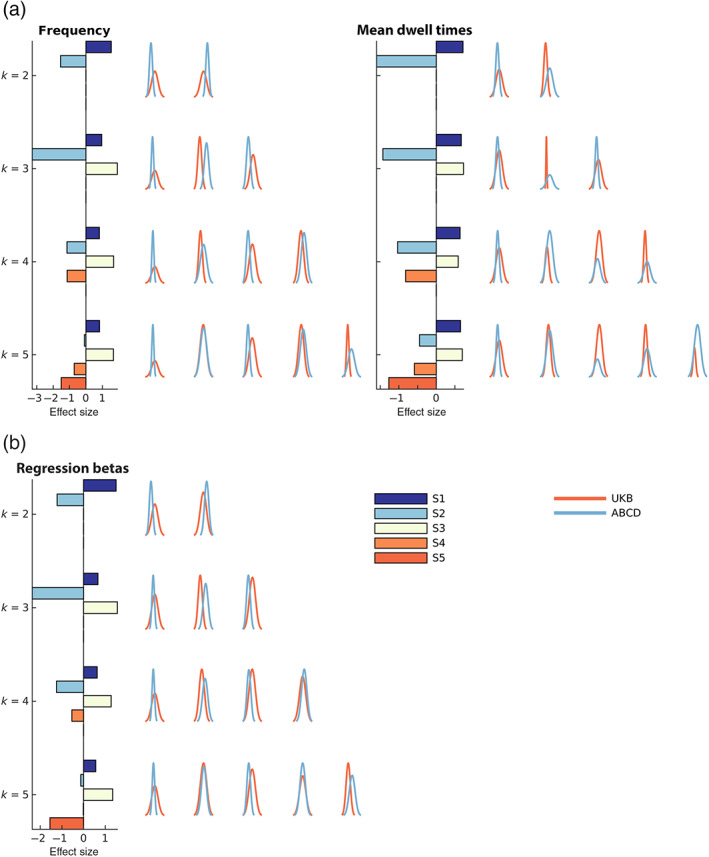
The brain's functional architecture and organization undergo continual development and modification throughout adolescence. While it is well known that multiple factors govern brain maturation, the constantly evolving patterns of time-resolved functional connectivity are still unclear and understudied. We systematically evaluated over 47,000 youth and adult brains to bridge this gap, highlighting replicable time-resolved developmental and aging functional brain patterns. The largest difference between the two life stages was captured in a brain state that indicated coherent strengthening and modularization of functional coupling within the auditory, visual, and motor subdomains, supplemented by anticorrelation with other subdomains in adults. This distinctive pattern, which we replicated in independent data, was consistently less modular or absent in children and presented a negative association with age in adults, thus indicating an overall inverted U-shaped trajectory. This indicates greater synchrony, strengthening, modularization, and integration of the brain's functional connections beyond adolescence, and gradual decline of this pattern during the healthy aging process. We also found evidence that the developmental changes may also bring along a departure from the canonical static functional connectivity pattern in favor of more efficient and modularized utilization of the vast brain interconnections. State-based statistical summary measures presented robust and significant group differences that also showed significant age-related associations. The findings reported in this article support the idea of gradual developmental and aging brain state adaptation processes in different phases of life and warrant future research via lifespan studies to further authenticate the projected time-resolved brain state trajectories.
大脑的功能结构和组织在整个青春期都在不断发展和改变。虽然人们已经知道有多种因素控制着大脑的成熟,但时间分辨功能连接的不断变化的模式仍然不清楚,也没有得到充分研究。我们系统地评估了超过 47000 个青少年和成年人的大脑,以弥补这一差距,突出了可重复的时间分辨的发育和衰老的功能性大脑模式。这两个生命阶段最大的区别在于一种大脑状态,这种状态表明听觉、视觉和运动子域内的功能耦合具有连贯的增强和模块化,而在成年人中则与其他子域呈反相关。这种独特的模式在独立的数据中得到了复制,在儿童中通常不太模块化或不存在,而在成年人中与年龄呈负相关,因此表明整体呈倒 U 型轨迹。这表明大脑功能连接的同步性、增强、模块化和整合程度超过了青春期,并在健康衰老过程中逐渐下降。我们还发现,这种发育变化可能也会偏离经典的静态功能连接模式,转而更有效地利用大脑的广泛连接。基于状态的统计汇总指标显示出了显著的组间差异,并且与年龄也有显著的相关性。本文报道的研究结果支持了在生命的不同阶段逐渐发展和衰老的大脑状态适应过程的观点,并通过寿命研究进一步验证了预测的时间分辨的大脑状态轨迹,值得未来的研究。