Departamento de Neurodesarrollo y Fisiología, División de Neurociencias, Instituto de Fisiología Celular, Universidad Nacional Autónoma de México, 04510 Mexico City, México.
Facultad de Ciencias, Universidad Nacional Autónoma de México, 04510 Mexico City, México.
J Cell Sci. 2023 Jan 1;136(1). doi: 10.1242/jcs.260563. Epub 2023 Jan 12.
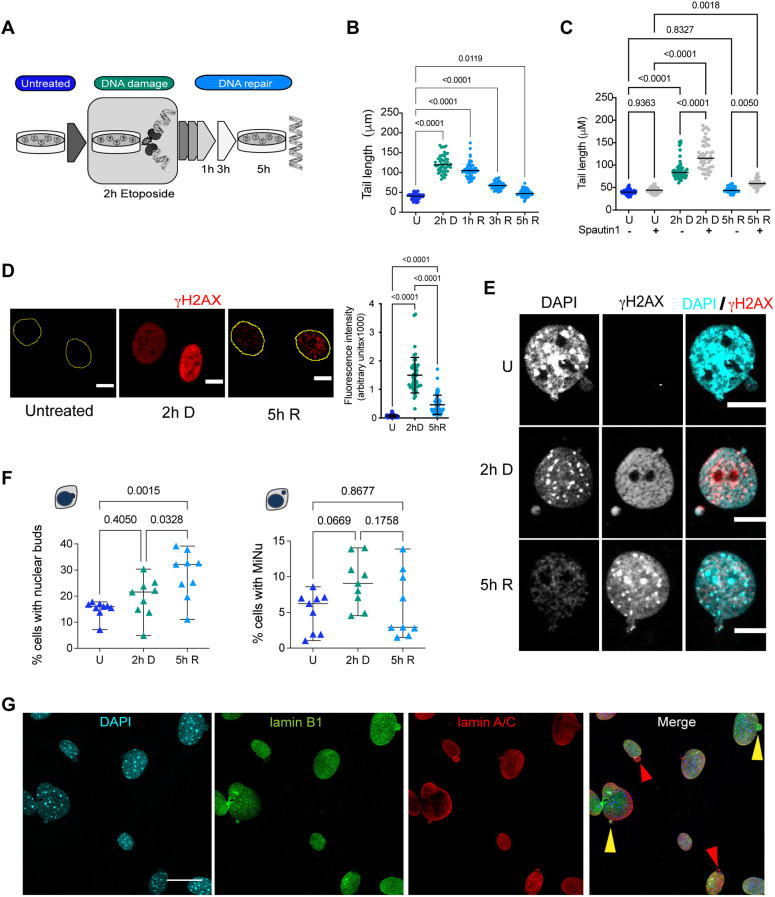
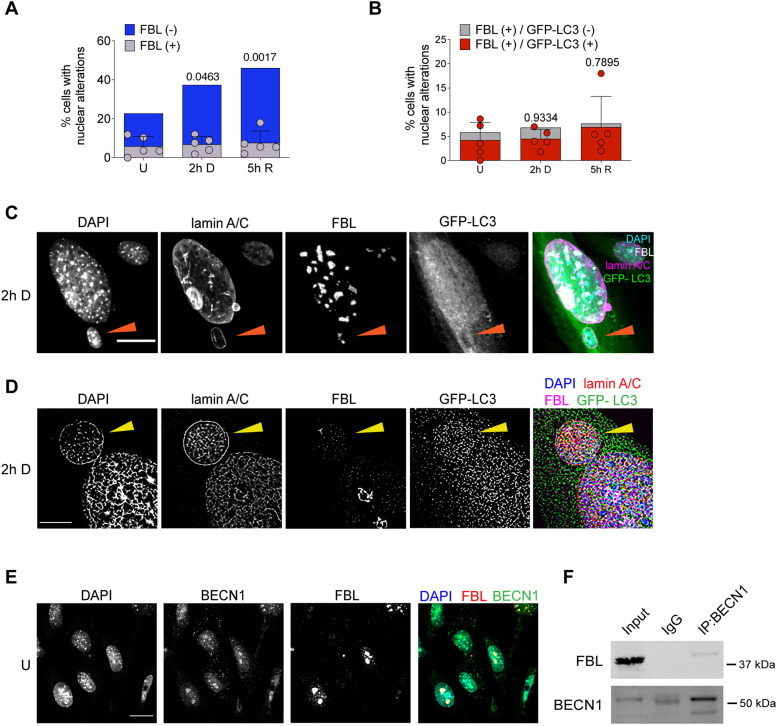
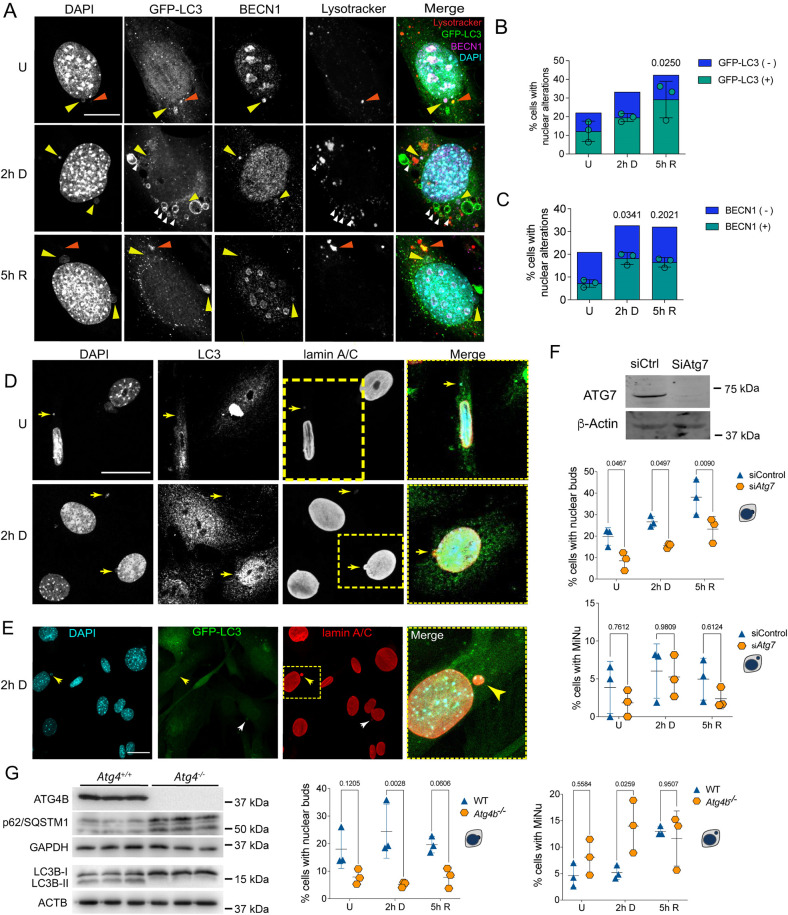
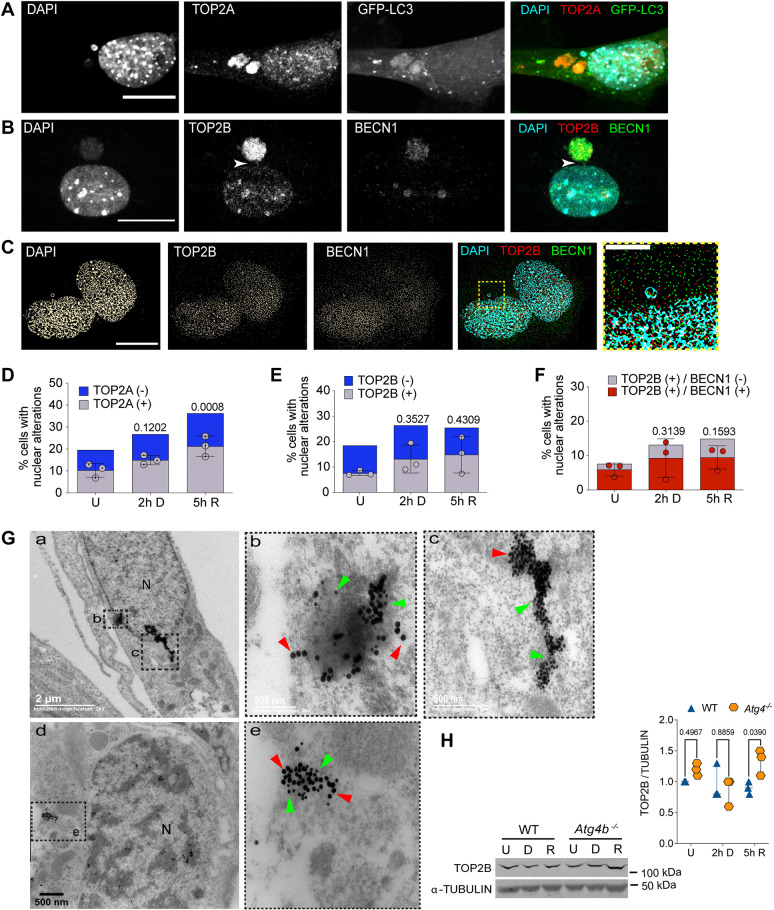
The nuclear architecture of mammalian cells can be altered as a consequence of anomalous accumulation of nuclear proteins or genomic alterations. Most of the knowledge about nuclear dynamics comes from studies on cancerous cells. How normal healthy cells maintain genome stability, avoiding accumulation of nuclear damaged material, is less understood. Here, we describe that primary mouse embryonic fibroblasts develop a basal level of nuclear buds and micronuclei, which increase after etoposide-induced DNA double-stranded breaks. Both basal and induced nuclear buds and micronuclei colocalize with the autophagic proteins BECN1 and LC3B (also known as MAP1LC3B) and with acidic vesicles, suggesting their clearance by nucleophagy. Some of the nuclear alterations also contain autophagic proteins and type II DNA topoisomerases (TOP2A and TOP2B), or the nucleolar protein fibrillarin, implying they are also targets of nucleophagy. We propose that basal nucleophagy contributes to genome and nuclear stability, as well as in response to DNA damage.
哺乳动物细胞的核架构可能会因核蛋白异常积累或基因组改变而改变。关于核动力学的大部分知识来自对癌细胞的研究。正常健康细胞如何维持基因组稳定性,避免核损伤物质的积累,人们对此了解较少。在这里,我们描述了原代小鼠胚胎成纤维细胞会产生基底水平的核芽和微核,在用依托泊苷诱导 DNA 双链断裂后,这种核芽和微核的数量会增加。基底和诱导的核芽和微核与自噬蛋白 BECN1 和 LC3B(也称为 MAP1LC3B)以及酸性小泡共定位,表明它们通过核自噬被清除。一些核改变还包含自噬蛋白和 II 型 DNA 拓扑异构酶(TOP2A 和 TOP2B)或核仁蛋白核仁素,这意味着它们也是核自噬的靶点。我们提出,基底核自噬有助于基因组和核稳定性,以及对 DNA 损伤的反应。