Department of Psychology, Education & Child Studies, Erasmus University Rotterdam, Burgemeester Oudlaan 50, 3000 DR, Rotterdam, The Netherlands.
Department of Interdisciplinary Social Science, Utrecht University, Padualaan 14, 3584 CH, Utrecht, The Netherlands.
J Youth Adolesc. 2023 May;52(5):1010-1023. doi: 10.1007/s10964-022-01723-0. Epub 2023 Jan 12.
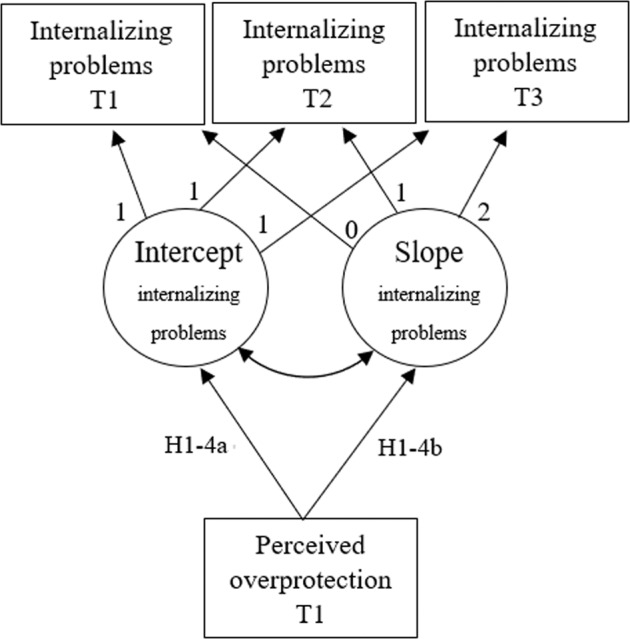
Although parental overprotection is theorized to have lasting negative effects throughout a child's life, there is limited empirical evidence available on its long-term significance on adolescent well-being. This preregistered, three-wave longitudinal study investigated the association of maternal and paternal perceived overprotection in early adolescence with the development of (mal)adaptive psychological, academic, and social functioning throughout adolescence. Data (N = 2229; 50.7% girls) from the longitudinal TRacking Adolescents' Individual Lives Survey (TRAILS) in the Netherlands were used (M T1 = 11.11, T2 = 13.57, T3 = 16.28). At T1, adolescents reported on their mothers' and fathers' overprotection. From T1 to T3 adolescents and teachers reported about internalizing problems, academic achievement, prosocial, and antisocial behavior. The results showed concurrent associations between higher levels of perceived overprotection and higher levels of internalizing problems, antisocial behaviors, and (after controlling for parental warmth and rejection) lower levels of academic achievement. Perceived overprotection was positively associated with decreased internalizing problems over time. This longitudinal association disappeared after controlling for baseline levels of internalizing problems, suggesting that this result was less robust than expected. Mothers and fathers did not differ in their associations between perceived overprotection and (mal)adaptive functioning. The findings showed that perceived overprotection is mainly concurrently associated with (mal)adaptive adolescent functioning. Future research recommendations are discussed in terms of stability and bidirectional relations.
虽然父母过度保护被认为会对孩子的一生产生持久的负面影响,但关于其对青少年幸福感的长期意义,实证证据有限。这项预先注册的、三波纵向研究调查了青少年早期母亲和父亲感知到的过度保护与青少年时期(适应不良的)心理、学业和社会功能发展之间的关系。该研究使用了来自荷兰纵向追踪青少年个体生活调查(TRAILS)的数据(N=2229;50.7%为女孩)(M T1=11.11,T2=13.57,T3=16.28)。在 T1 时,青少年报告了他们的母亲和父亲的过度保护。从 T1 到 T3,青少年和教师报告了内化问题、学业成绩、亲社会和反社会行为。结果表明,感知到的过度保护水平与内化问题、反社会行为水平较高,以及(在控制了父母的温暖和拒绝之后)学业成绩较低之间存在同时关联。感知到的过度保护与内化问题随时间的减少呈正相关。在控制了内化问题的基线水平后,这种纵向关联消失了,这表明这一结果不如预期的那么稳健。母亲和父亲在感知到的过度保护与(适应不良的)功能之间的关联上没有差异。研究结果表明,感知到的过度保护主要与(适应不良的)青少年功能同时相关。未来的研究建议从稳定性和双向关系的角度进行讨论。