Biointerfaces Institute, Departments of Chemical Engineering, Material Science and Engineering, Biomedical Engineering, and Macromolecular Science and Engineering, University of Michigan, 2800 Plymouth Rd, Ann Arbor, MI, 48105, USA.
Division of Oral Maxillofacial Pathology, College of Dentistry, The Ohio State University, 305 W. 12th Ave, Columbus, OH, 43210, USA.
Pharm Res. 2023 Mar;40(3):749-764. doi: 10.1007/s11095-022-03465-x. Epub 2023 Jan 12.
Oral squamous cell carcinoma (OSCC), is associated with high morbidity and mortality. Preemptive interventions have been postulated to provide superior therapeutic options, but their implementation has been restricted by the availability of broadly applicable local delivery systems.
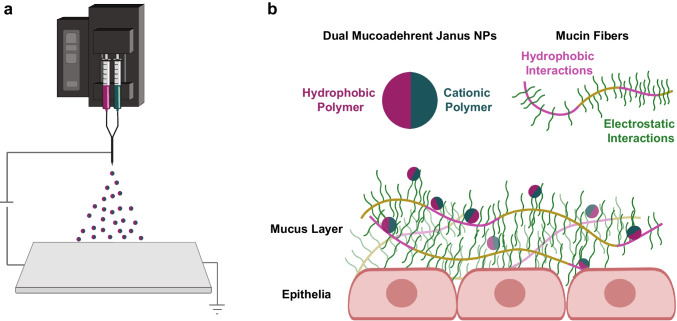
We address this challenge by engineering a delivery vehicle, Janus nanoparticles (JNP), that combine the dual mucoadhesive properties of a first cationic chitosan compartment with a second hydrophobic poly(lactide-co-glycolide) release compartment. JNP are designed to avoid rapid mucus clearance while ensuring stable loading and controlled release of the IL-6 receptor antagonist, tocilizumab (TCZ).
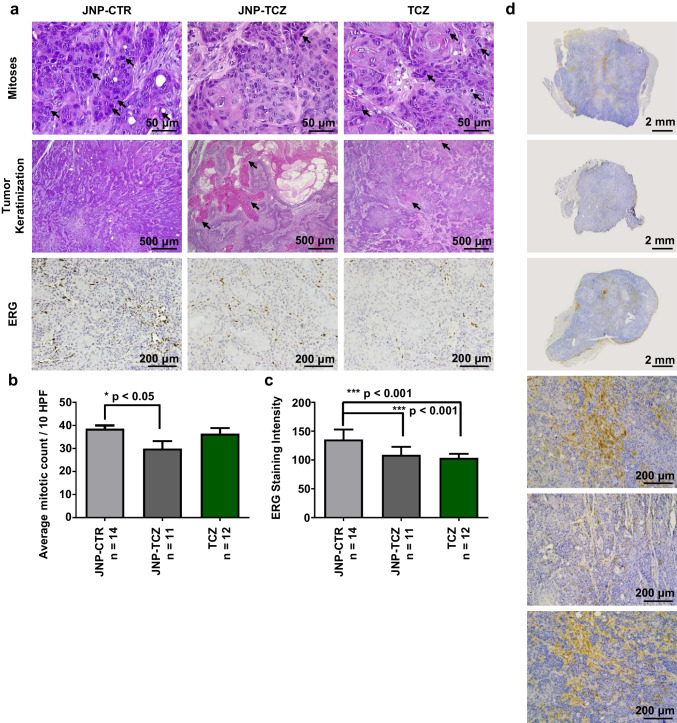
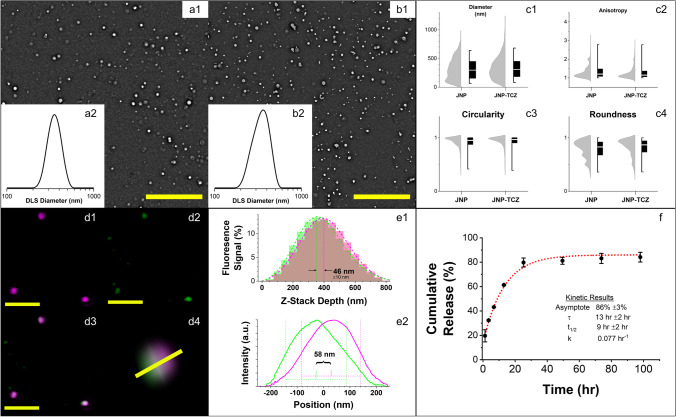
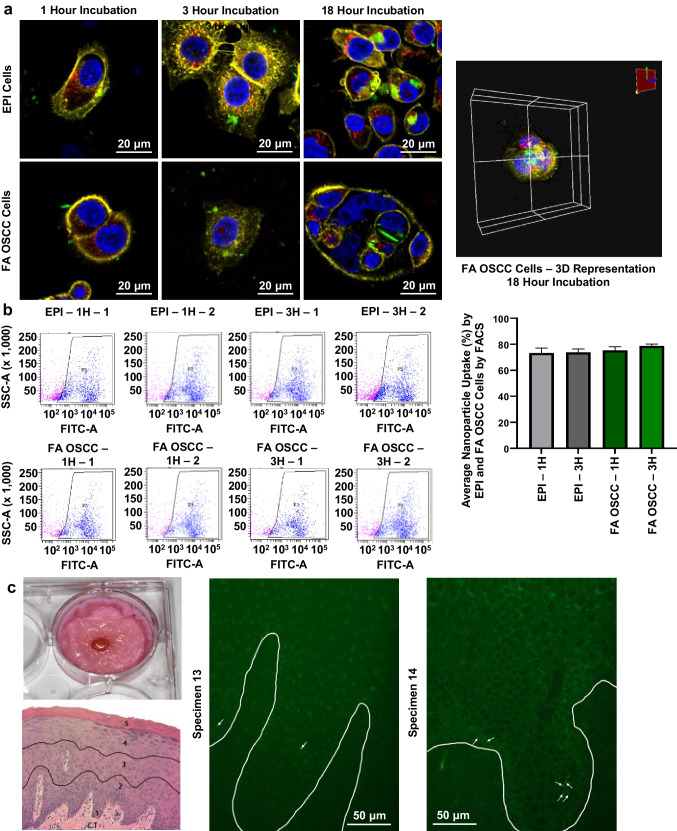
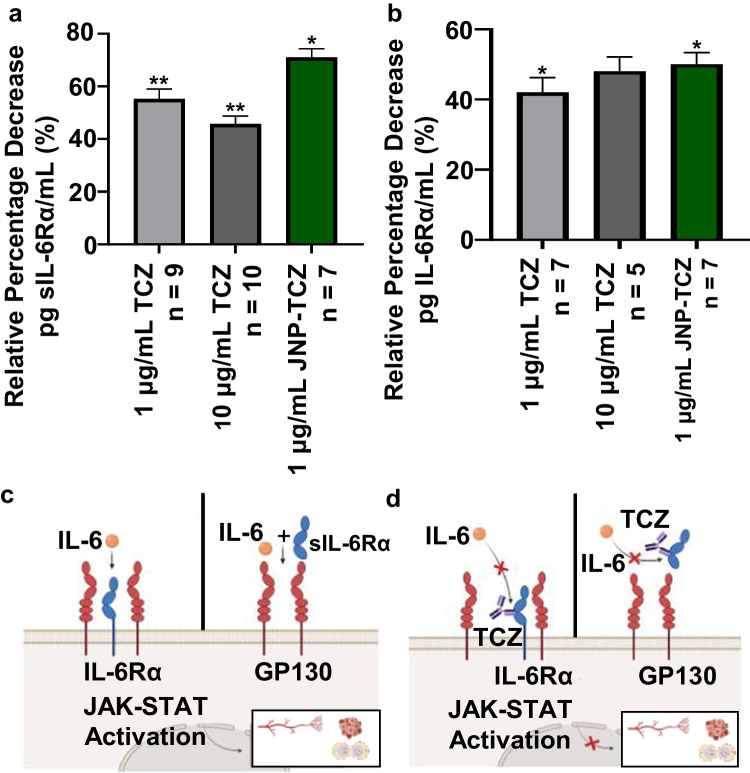
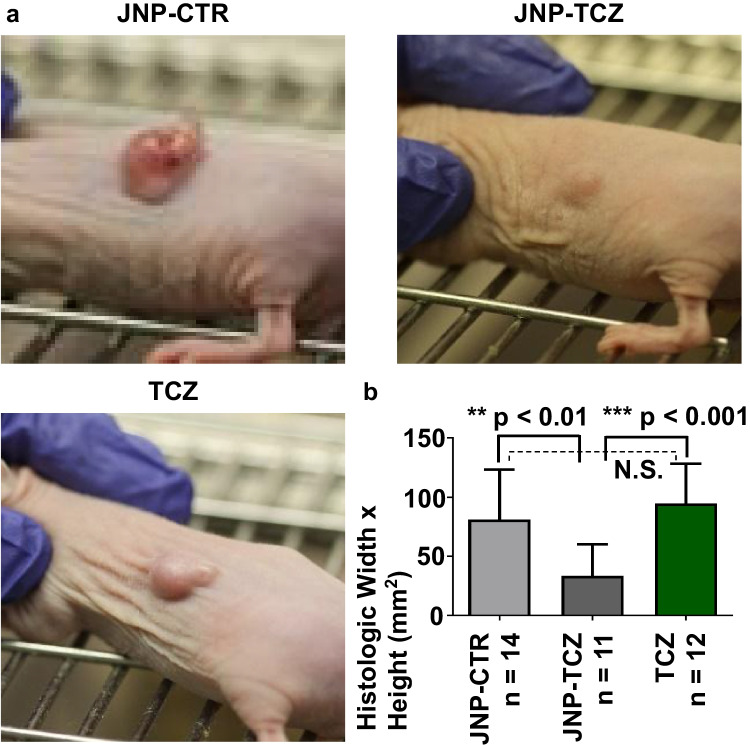
The JNP featured defined and monodispersed sizes with an average diameter of 327 nm and a PDI of 0.245, high circularities above 0.90 and supported controlled release of TCZ and effective internalization by oral keratinocytes. TCZ released from JNP retained its biological activity and effectively reduced both, soluble and membrane-bound IL-6Rα (71% and 50%). In full-thickness oral mucosal explants, 76% of the JNP breached the stratum corneum and in 41% were observed in the basal cell layer indicating excellent mucopenetrating properties. When tested in an aggressive OSCC xenograft model, TCZ-loaded JNP showed high levels of xenograft inhibition and outperformed all control groups with respect to inhibition of tumor cell proliferation, reduction in tumor size and reduced expression of the proto-oncogene ERG.
By combining critically required, yet orthogonal properties within the same nanoparticle design, the JNP in this study, demonstrate promise as precision delivery platforms for intraoral field-coverage chemoprevention, a vastly under-researched area of high clinical importance.
口腔鳞状细胞癌(OSCC)与高发病率和死亡率相关。人们推测预防性干预可以提供更好的治疗选择,但由于缺乏广泛适用的局部递药系统,其应用受到限制。
我们通过工程化一种递药载体 Janus 纳米颗粒(JNP)来解决这一挑战,该载体结合了第一阳离子壳聚糖隔间的双重黏膜黏附特性和第二疏水性聚(乳酸-共-乙醇酸)释放隔间。JNP 的设计旨在避免快速清除黏液,同时确保稳定装载和受控释放白细胞介素 6 受体拮抗剂托珠单抗(TCZ)。
JNP 具有明确的单分散性,平均粒径为 327nm,PDI 为 0.245,高圆形度大于 0.90,支持 TCZ 的控制释放和口腔角质形成细胞的有效内化。从 JNP 释放的 TCZ保留了其生物活性,有效地降低了可溶性和膜结合的 IL-6Rα(71%和 50%)。在全厚口腔黏膜外植体中,76%的 JNP 突破了角质层,在 41%的外植体中观察到基底细胞层,表明具有优异的黏膜穿透特性。在侵袭性 OSCC 异种移植模型中进行测试时,负载 TCZ 的 JNP 显示出高水平的异种移植物抑制作用,并且在抑制肿瘤细胞增殖、减小肿瘤大小和降低原癌基因 ERG 的表达方面均优于所有对照组。
通过在同一纳米颗粒设计中结合临界必需的、正交的特性,本研究中的 JNP 作为口腔内全场覆盖化学预防的精准递药平台具有很大的潜力,而这是一个高度临床重要性但研究甚少的领域。