Department of Stem Cell Biology and Regenerative Medicine, Eli and Edythe Broad Center for Regenerative Medicine and Stem Cell Research, Keck School of Medicine, University of Southern California, Los Angeles, CA, 90033, USA.
Jinfeng Laboratory, Chongqing, 401329, China.
Exp Mol Med. 2023 Jan;55(1):205-214. doi: 10.1038/s12276-022-00922-w. Epub 2023 Jan 13.
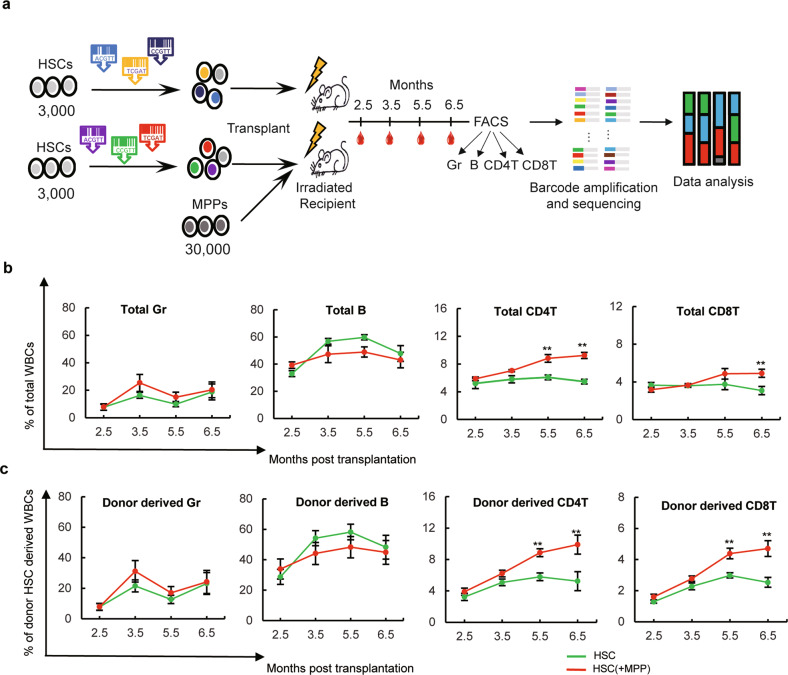
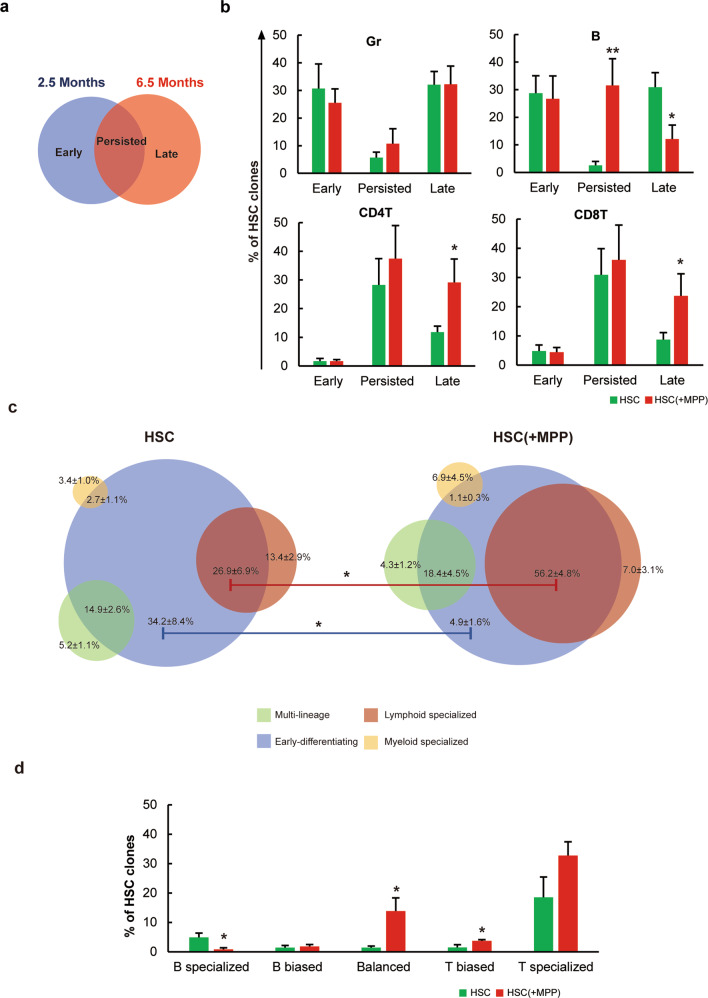
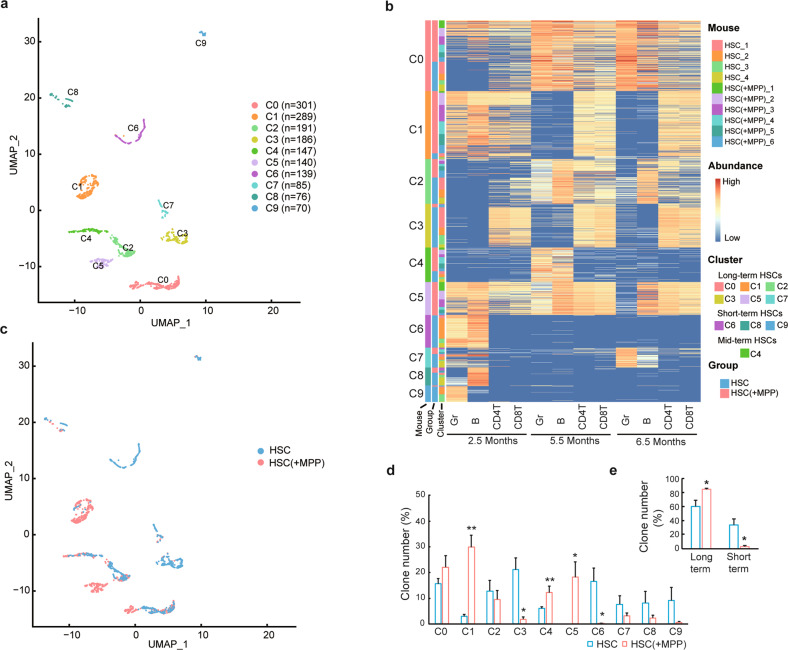
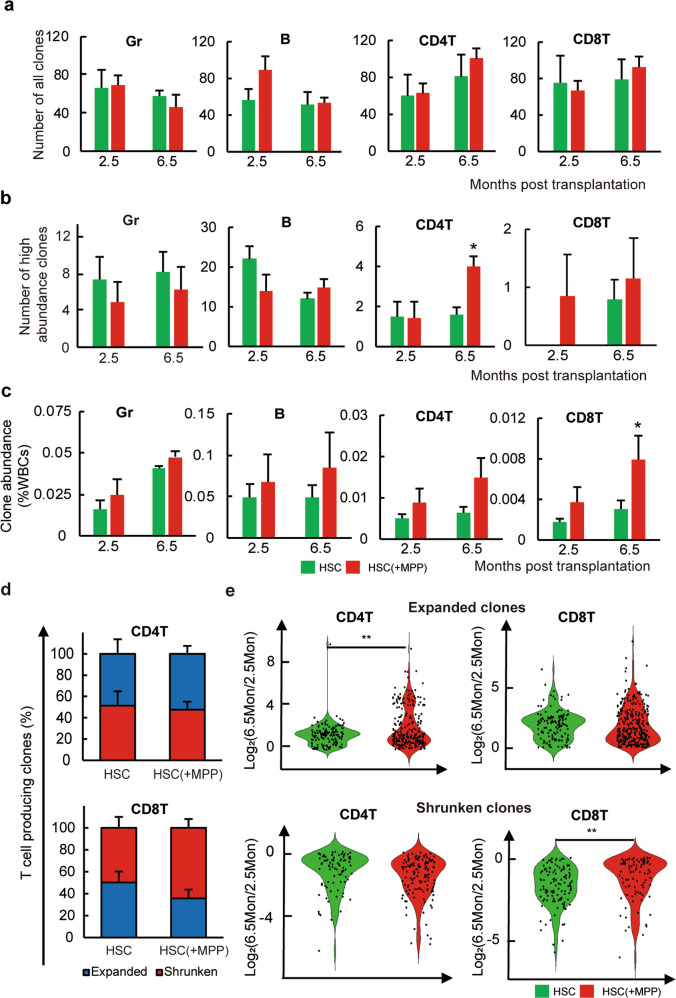
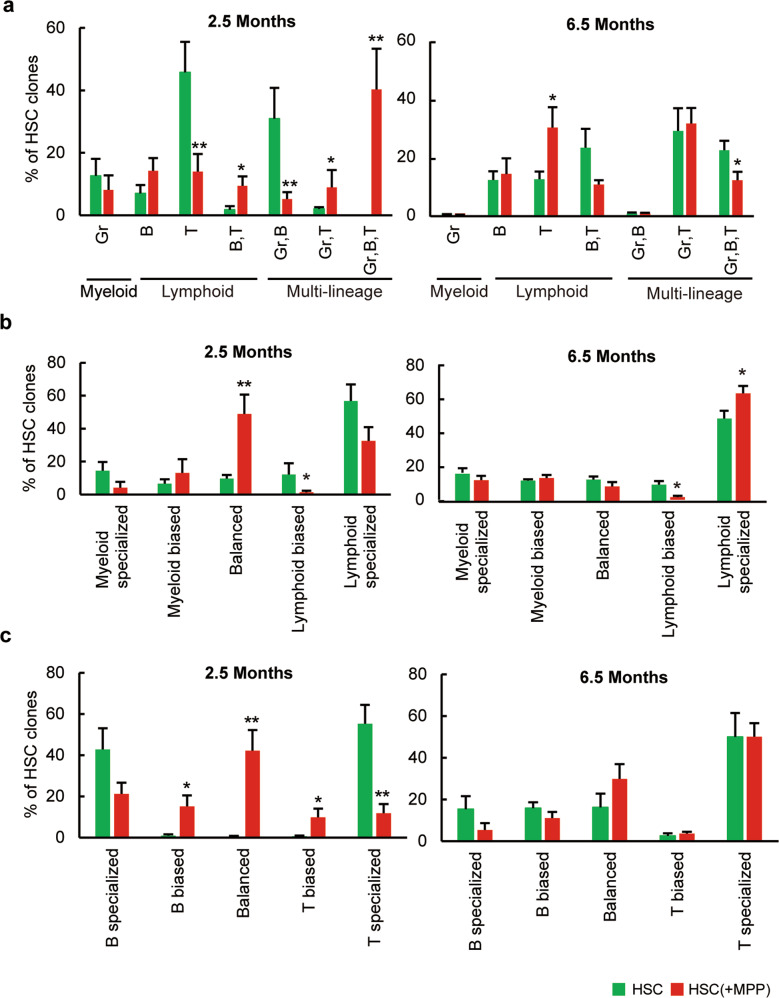
After transplantation, hematopoietic stem cells (HSCs) sustain blood cell regeneration throughout the patient's life. Recent studies suggest that several types of mature blood cells provide feedback signals to regulate HSC fate. However, the potential feedback effect of hematopoietic progenitor cells has not been characterized to date. The present investigation demonstrated that multipotent progenitors (MPPs) promoted T cell production of HSCs when both cell types were cotransplanted in mice. Using genetic barcodes to track individual HSCs in mice, we found that the increased T cell production by HSCs was associated with the combined effects of altered lineage bias and clonal expansion during HSC differentiation. We showed that MPP and HSC co-transplantation promoted the multilineage differentiation of HSCs in the short term while preserving lymphoid-specialized HSC differentiation in the long term. Our findings indicate that MPPs derived from HSCs regulate the fate of HSCs after bone marrow transplantation.
移植后,造血干细胞(HSCs)在患者的整个生命周期中维持血细胞的再生。最近的研究表明,几种成熟的血细胞向提供反馈信号,以调节 HSC 命运。然而,迄今为止尚未对造血祖细胞的潜在反馈作用进行特征描述。本研究表明,当两种细胞类型在小鼠中共移植时,多能祖细胞(MPP)可促进 T 细胞产生 HSC。使用遗传条码追踪小鼠中的单个 HSC,我们发现 HSCs 产生的 T 细胞增加与 HSC 分化过程中谱系偏向和克隆扩增的综合效应有关。我们表明,MPP 和 HSC 共移植可促进 HSC 的多谱系分化,短期,同时长期保持淋巴样特异性 HSC 分化。我们的研究结果表明,HSCs 衍生的 MPPs 调节骨髓移植后 HSC 的命运。