• 文献检索
  • 文档翻译
  • 深度研究
  • 学术资讯
  • Suppr Zotero 插件Zotero 插件
  • 邀请有礼
  • 套餐&价格
  • 历史记录
应用&插件
Suppr Zotero 插件Zotero 插件浏览器插件Mac 客户端Windows 客户端微信小程序
定价
高级版会员购买积分包购买API积分包
服务
文献检索文档翻译深度研究API 文档MCP 服务
关于我们
关于 Suppr公司介绍联系我们用户协议隐私条款
关注我们

Suppr 超能文献

核心技术专利:CN118964589B侵权必究
粤ICP备2023148730 号-1Suppr @ 2026

文献检索

告别复杂PubMed语法,用中文像聊天一样搜索,搜遍4000万医学文献。AI智能推荐,让科研检索更轻松。

立即免费搜索

文件翻译

保留排版,准确专业,支持PDF/Word/PPT等文件格式,支持 12+语言互译。

免费翻译文档

深度研究

AI帮你快速写综述,25分钟生成高质量综述,智能提取关键信息,辅助科研写作。

立即免费体验

回忆一次“良好”面试的鲜活经历:将微观现象学应用于其自身。

The lived experience of remembering a 'good' interview: Micro-phenomenology applied to itself.

作者信息

Heimann Katrin, Boelsbjerg Hanne Bess, Allen Chris, van Beek Martijn, Suhr Christian, Lübbert Annika, Petitmengin Claire

机构信息

Interacting Minds Center, Aarhus University, Aarhus, Denmark.

Max Planck Institute for Empirical Aesthetics, Frankfurt, Germany.

出版信息

Phenomenol Cogn Sci. 2023;22(1):217-245. doi: 10.1007/s11097-022-09844-4. Epub 2022 Sep 10.

DOI:10.1007/s11097-022-09844-4
PMID:36644374
原文链接:https://pmc.ncbi.nlm.nih.gov/articles/PMC9834112/
Abstract

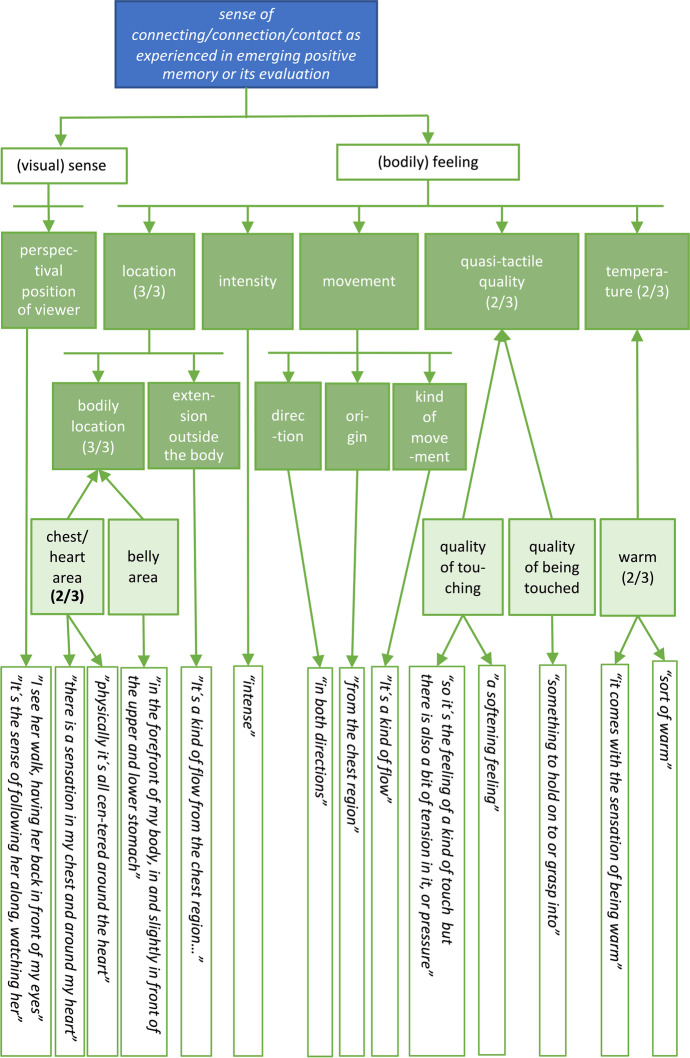
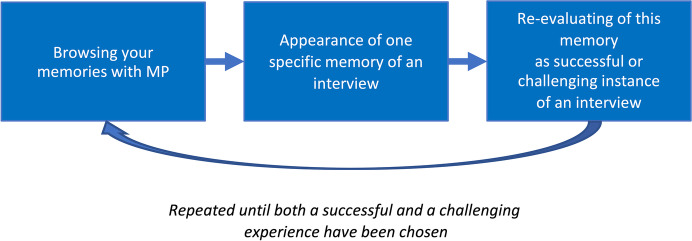
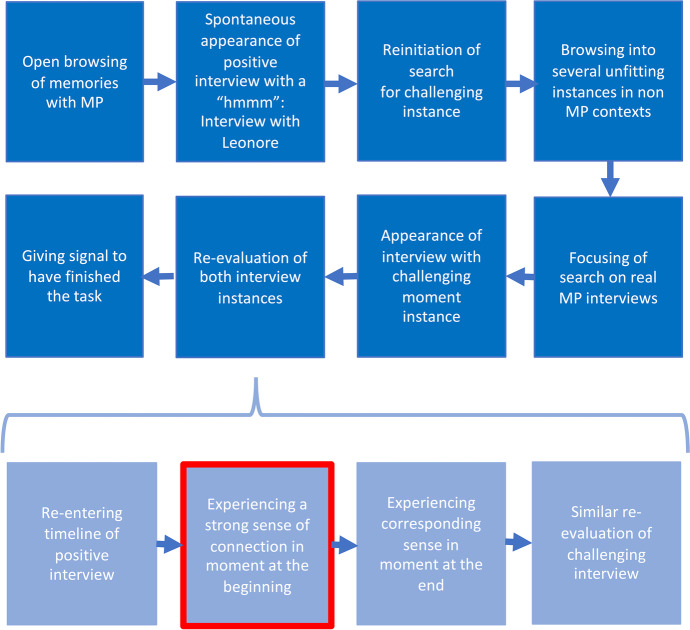
Micro-phenomenology is an interview and analysis method for investigating subjective experience. As a research tool, it provides detailed descriptions of brief moments of any type of subjective experience and offers techniques for systematically comparing them. In this article, we use an auto-ethnographic approach to present and explore the method. The reader is invited to observe a dialogue between two authors that illustrates and comments on the planning, conducting and analysis of a pilot series of five micro-phenomenological interviews. All these interviews asked experienced researchers of micro-phenomenology to browse their memories to identify one successful and one challenging instance of working with micro-phenomenology. The interview then focused on this reflective task to investigate whether applying the method to itself might reveal quality criteria. The article starts by presenting a shortened and edited version of the first of these interviews. Keeping the dialogue format, we then outline the micro-phenomenological analysis procedure by demonstrating its application to part of this data and corresponding passages of other interviews. We focus on one unexpected finding: interviewed researchers judge the quality of an interview in part based on a connection or contact between interviewer and interviewee. We discuss these results in the context of the means and intentions of the method and suggest avenues for future research.

摘要

微观现象学是一种用于探究主观体验的访谈与分析方法。作为一种研究工具,它能对任何类型主观体验的短暂时刻进行详细描述,并提供系统比较这些体验的技巧。在本文中,我们采用自我民族志方法来呈现和探索该方法。邀请读者观察两位作者之间的对话,该对话阐释并评论了一系列由五个微观现象学访谈组成的试点项目的规划、实施及分析过程。所有这些访谈都要求有经验的微观现象学研究者回顾自身记忆,以找出运用微观现象学的一个成功实例和一个具有挑战性的实例。随后,访谈聚焦于这一反思任务,以探究将该方法应用于自身是否能揭示质量标准。本文开篇呈现了这些访谈中的第一个访谈的精简编辑版本。我们保持对话形式,接着通过展示其在部分数据及其他访谈相应段落中的应用,概述微观现象学的分析程序。我们聚焦于一个意外发现:接受访谈的研究者部分地基于访谈者与被访谈者之间的联系或接触来评判访谈的质量。我们在该方法的手段和意图背景下讨论这些结果,并提出未来研究的方向。
https://cdn.ncbi.nlm.nih.gov/pmc/blobs/79d9/9834112/1c03affb5f9d/11097_2022_9844_Fig6_HTML.jpg
https://cdn.ncbi.nlm.nih.gov/pmc/blobs/79d9/9834112/c7db9363aeb4/11097_2022_9844_Fig1_HTML.jpg
https://cdn.ncbi.nlm.nih.gov/pmc/blobs/79d9/9834112/7579b62caf2b/11097_2022_9844_Fig2_HTML.jpg
https://cdn.ncbi.nlm.nih.gov/pmc/blobs/79d9/9834112/ddabbcbe45bf/11097_2022_9844_Fig3_HTML.jpg
https://cdn.ncbi.nlm.nih.gov/pmc/blobs/79d9/9834112/dfc4648160cf/11097_2022_9844_Fig4_HTML.jpg
https://cdn.ncbi.nlm.nih.gov/pmc/blobs/79d9/9834112/0597e5c6761e/11097_2022_9844_Fig5_HTML.jpg
https://cdn.ncbi.nlm.nih.gov/pmc/blobs/79d9/9834112/1c03affb5f9d/11097_2022_9844_Fig6_HTML.jpg
https://cdn.ncbi.nlm.nih.gov/pmc/blobs/79d9/9834112/c7db9363aeb4/11097_2022_9844_Fig1_HTML.jpg
https://cdn.ncbi.nlm.nih.gov/pmc/blobs/79d9/9834112/7579b62caf2b/11097_2022_9844_Fig2_HTML.jpg
https://cdn.ncbi.nlm.nih.gov/pmc/blobs/79d9/9834112/ddabbcbe45bf/11097_2022_9844_Fig3_HTML.jpg
https://cdn.ncbi.nlm.nih.gov/pmc/blobs/79d9/9834112/dfc4648160cf/11097_2022_9844_Fig4_HTML.jpg
https://cdn.ncbi.nlm.nih.gov/pmc/blobs/79d9/9834112/0597e5c6761e/11097_2022_9844_Fig5_HTML.jpg
https://cdn.ncbi.nlm.nih.gov/pmc/blobs/79d9/9834112/1c03affb5f9d/11097_2022_9844_Fig6_HTML.jpg

相似文献

1
The lived experience of remembering a 'good' interview: Micro-phenomenology applied to itself.回忆一次“良好”面试的鲜活经历:将微观现象学应用于其自身。
Phenomenol Cogn Sci. 2023;22(1):217-245. doi: 10.1007/s11097-022-09844-4. Epub 2022 Sep 10.
2
First-person access to decision-making using micro-phenomenological self-inquiry.第一人称使用微观现象学自我探究获取决策信息。
Scand J Psychol. 2021 Dec;62(6):798-805. doi: 10.1111/sjop.12766. Epub 2021 Aug 11.
3
Toward a phenomenology of taking care.走向关怀现象学。
Int J Qual Stud Health Well-being. 2022 Dec;17(1):2045671. doi: 10.1080/17482631.2022.2045671.
4
Depressing time: Waiting, melancholia, and the psychoanalytic practice of care压抑的时光:等待、忧郁与精神分析的关怀实践
5
Training naive subjects in using micro-phenomenological self-inquiry to investigate pain and suffering during headaches.培训新手使用微观现象学自我探究法来调查头痛期间的疼痛和痛苦。
Scand J Psychol. 2023 Feb;64(1):60-70. doi: 10.1111/sjop.12858. Epub 2022 Jul 11.
6
Resolving tensions in phenomenological research interviewing.化解现象学研究访谈中的紧张关系。
J Adv Nurs. 2021 Jan;77(1):484-491. doi: 10.1111/jan.14597. Epub 2020 Oct 15.
7
Phenomenological Research in Health Professions Education: Tunneling from Both Ends.健康职业教育中的现象学研究:从两端掘进。
Teach Learn Med. 2022 Jan-Mar;34(1):113-121. doi: 10.1080/10401334.2021.1971989. Epub 2021 Sep 29.
8
The phenomenological focus group: an oxymoron?现象学焦点小组:一种矛盾修辞法?
J Adv Nurs. 2009 Mar;65(3):663-71. doi: 10.1111/j.1365-2648.2008.04922.x.
9
Studying the experience of meditation through Micro-phenomenology.通过微观现象学研究冥想的体验。
Curr Opin Psychol. 2019 Aug;28:54-59. doi: 10.1016/j.copsyc.2018.10.009. Epub 2018 Oct 25.
10
Embodiment and Objectification in Illness and Health Care: Taking Phenomenology from Theory to Practice.疾病与医疗保健中的体现与客观化:将现象学从理论应用于实践
J Clin Nurs. 2020 Nov;29(21-22):4403-4412. doi: 10.1111/jocn.15431. Epub 2020 Aug 16.

引用本文的文献

1
Kinaesthetic empathy through the lens of the cinematographer: physiological and phenomenological alignments in the act of creation.从电影摄影师视角看动觉共情:创作行为中的生理与现象学契合
Front Neurosci. 2025 Aug 13;19:1613485. doi: 10.3389/fnins.2025.1613485. eCollection 2025.

本文引用的文献

1
Microcognitive science: bridging experiential and neuronal microdynamics.微观认知科学:连接经验与神经元微观动态。
Front Hum Neurosci. 2013 Sep 27;7:617. doi: 10.3389/fnhum.2013.00617. eCollection 2013.
2
A gap in Nisbett and Wilson's findings? A first-person access to our cognitive processes.尼斯贝特和威尔逊的发现存在差距?对我们认知过程的第一人称访问。
Conscious Cogn. 2013 Jun;22(2):654-69. doi: 10.1016/j.concog.2013.02.004.
3
How something can be said about telling more than we can know: on choice blindness and introspection.
关于说出的内容超出我们所知的情况:论选择盲视与内省。
Conscious Cogn. 2006 Dec;15(4):673-92; discussion 693-9. doi: 10.1016/j.concog.2006.09.004. Epub 2006 Oct 17.
4
Seizure anticipation: are neurophenomenological approaches able to detect preictal symptoms?癫痫发作预测:神经现象学方法能否检测到发作前症状?
Epilepsy Behav. 2006 Sep;9(2):298-306. doi: 10.1016/j.yebeh.2006.05.013. Epub 2006 Jul 24.
5
Guiding the study of brain dynamics by using first-person data: synchrony patterns correlate with ongoing conscious states during a simple visual task.利用第一人称数据指导脑动力学研究:在一项简单视觉任务中,同步模式与当前意识状态相关。
Proc Natl Acad Sci U S A. 2002 Feb 5;99(3):1586-91. doi: 10.1073/pnas.032658199. Epub 2002 Jan 22.