Heyza Joshua R, Ekinci Elmira, Lindquist Jacob, Lei Wen, Yunker Christopher, Vinothkumar Vilvanathan, Rowbotham Rachelle, Polin Lisa, Snider Natalie G, Van Buren Eric, Watza Donovan, Back Jessica B, Chen Wei, Mamdani Hirva, Schwartz Ann G, Turchi John J, Bepler Gerold, Patrick Steve M
Department of Oncology, Wayne State University and Karmanos Cancer Institute, Detroit, MI, USA.
Departments of Medicine and Biochemistry and Molecular Biology, Indiana University School of Medicine, Indianapolis, IN, USA.
NAR Cancer. 2023 Jan 11;5(1):zcac045. doi: 10.1093/narcan/zcac045. eCollection 2023 Mar.
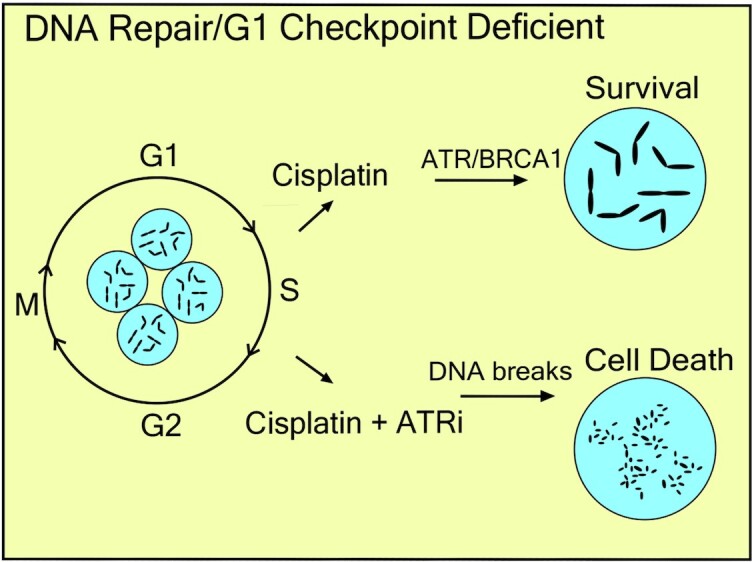
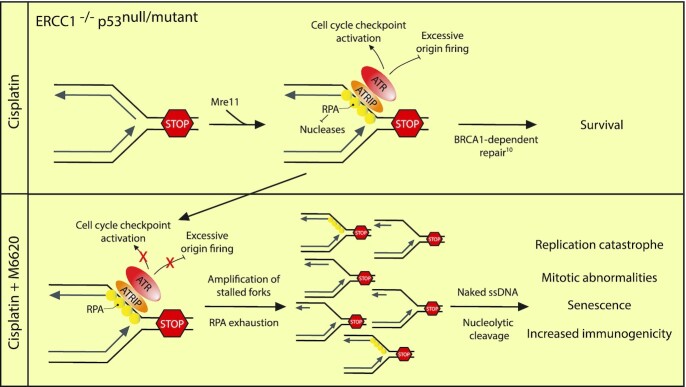
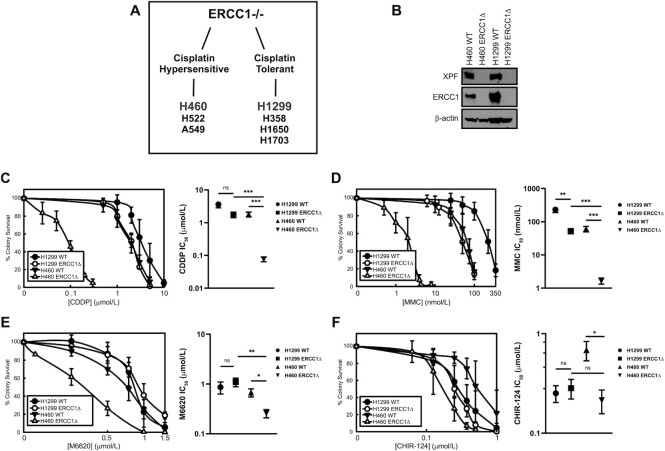
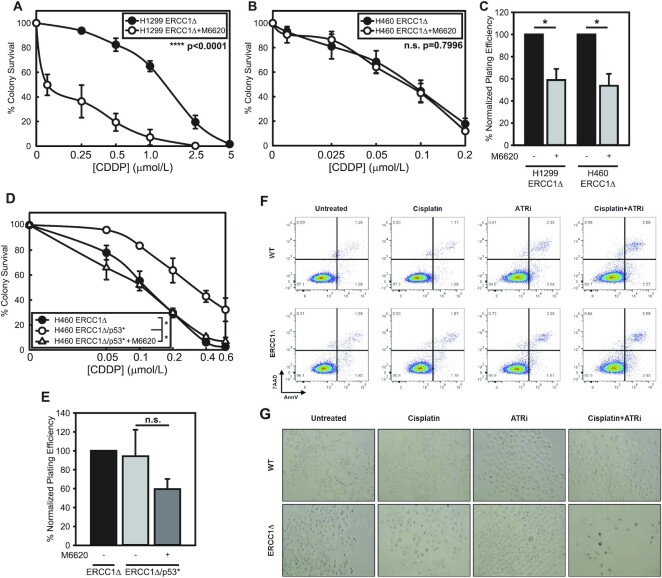
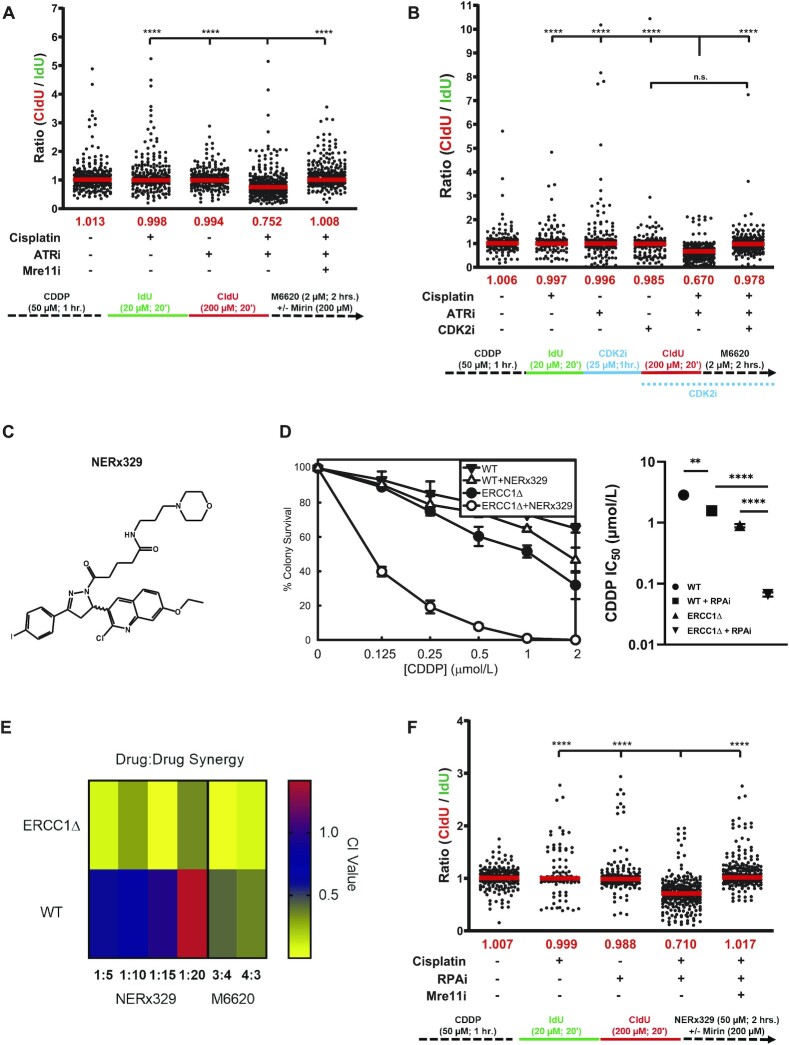
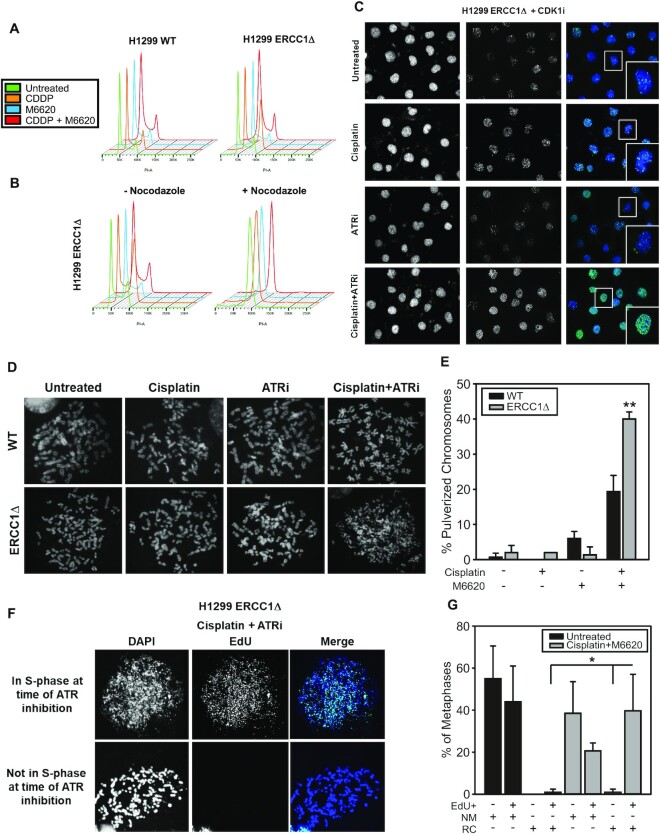
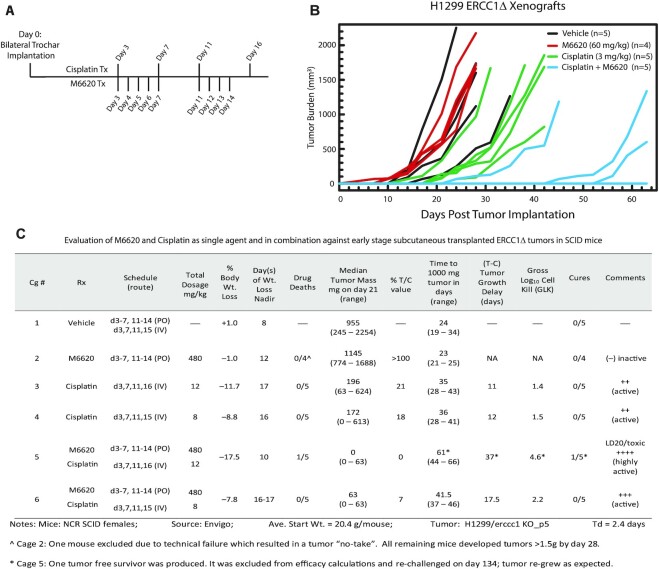
ERCC1/XPF is a heterodimeric DNA endonuclease critical for repair of certain chemotherapeutic agents. We recently identified that ERCC1- and p53-deficient lung cancer cells are tolerant to platinum-based chemotherapy. ATR inhibition synergistically re-stored platinum sensitivity to platinum tolerant ERCC1-deficient cells. Mechanistically we show this effect is reliant upon several functions of ATR including replication fork protection and altered cell cycle checkpoints. Utilizing an inhibitor of replication protein A (RPA), we further demonstrate that replication fork protection and RPA availability are critical for platinum-based drug tolerance. Dual treatment led to increased formation of DNA double strand breaks and was associated with chromosome pulverization. Combination treatment was also associated with increased micronuclei formation which were capable of being bound by the innate immunomodulatory factor, cGAS, suggesting that combination platinum and ATR inhibition may also enhance response to immunotherapy in ERCC1-deficient tumors. studies demonstrate a significant effect on tumor growth delay with combination therapy compared with single agent treatment. Results of this study have led to the identification of a feasible therapeutic strategy combining ATR inhibition with platinum and potentially immune checkpoint blockade inhibitors to overcome platinum tolerance in ERCC1-deficient, p53-mutant lung cancers.
ERCC1/XPF是一种异二聚体DNA核酸内切酶,对某些化疗药物的修复至关重要。我们最近发现,ERCC1和p53缺陷的肺癌细胞对铂类化疗具有耐受性。抑制ATR可协同恢复铂耐受的ERCC1缺陷细胞对铂的敏感性。从机制上讲,我们表明这种效应依赖于ATR的几种功能,包括复制叉保护和改变的细胞周期检查点。利用复制蛋白A(RPA)的抑制剂,我们进一步证明复制叉保护和RPA的可用性对铂类药物耐受性至关重要。联合治疗导致DNA双链断裂形成增加,并与染色体粉碎有关。联合治疗还与微核形成增加有关,这些微核能够被先天免疫调节因子cGAS结合,这表明铂与ATR抑制联合使用也可能增强ERCC1缺陷肿瘤对免疫治疗的反应。 研究表明,与单药治疗相比,联合治疗对肿瘤生长延迟有显著影响。这项研究的结果已确定了一种可行的治疗策略,即联合使用ATR抑制剂与铂以及潜在的免疫检查点阻断抑制剂,以克服ERCC1缺陷、p53突变肺癌中的铂耐受性。