Milligan Megan C, Johnston Aaron N, Beck Jeffrey L, Taylor Kaitlyn L, Hall Embere, Knox Lee, Cufaude Teal, Wallace Cody, Chong Geneva, Kauffman Matthew J
U.S. Geological Survey Northern Rocky Mountain Science Center Bozeman Montana USA.
Department of Ecosystem Science and Management University of Wyoming Laramie Wyoming USA.
Ecol Evol. 2023 Jan 10;13(1):e9687. doi: 10.1002/ece3.9687. eCollection 2023 Jan.
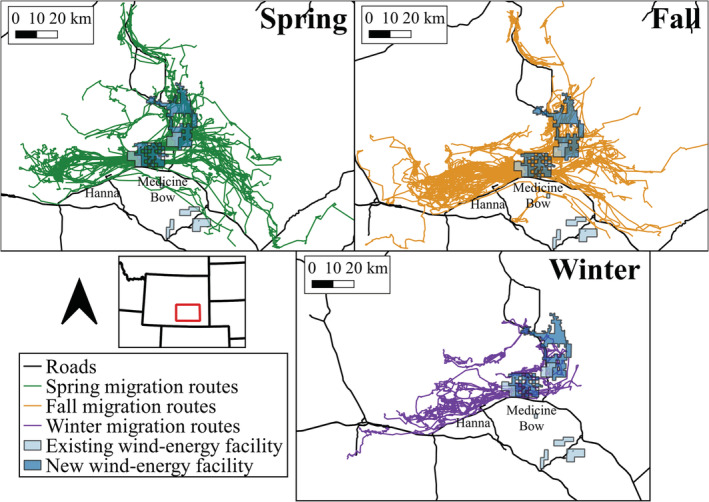
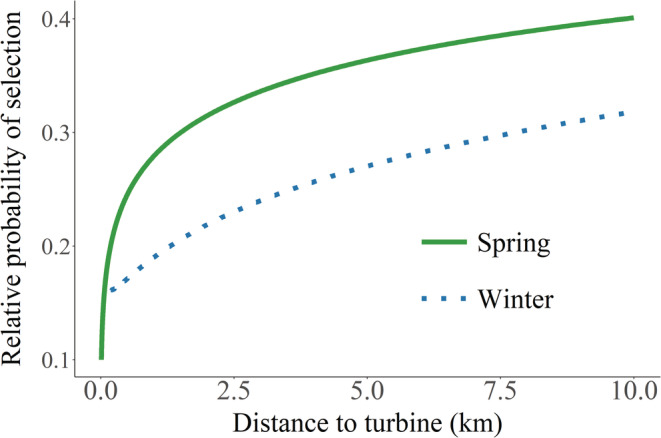
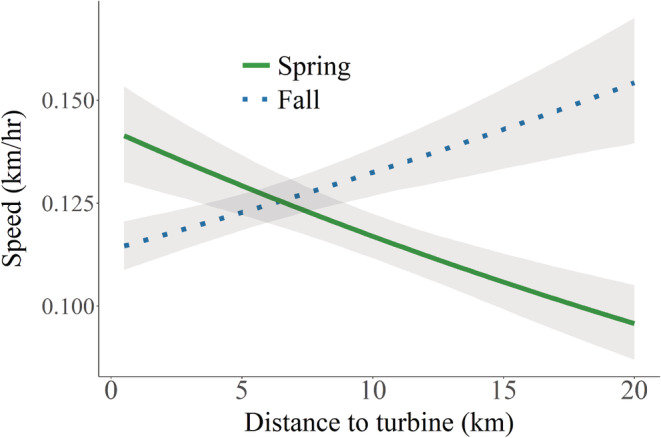
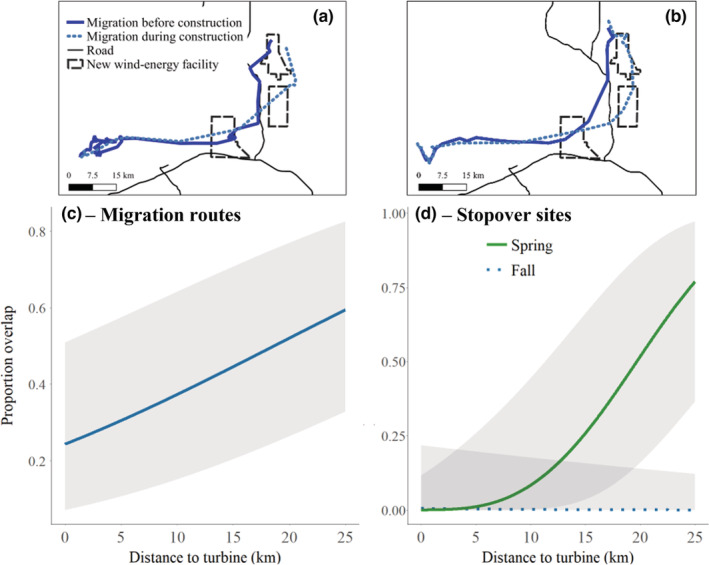
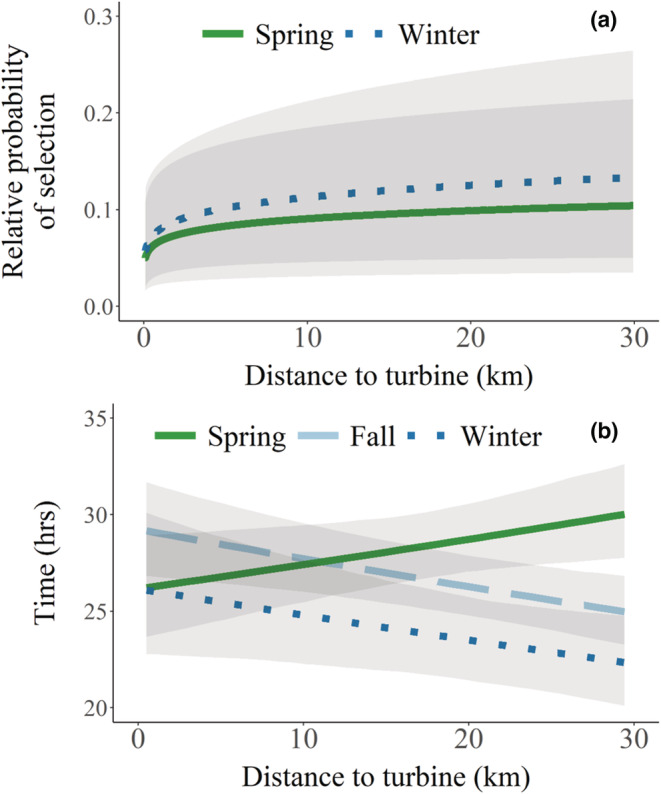
Migration is a critical behavioral strategy necessary for population persistence and ecosystem functioning, but migration routes have been increasingly disrupted by anthropogenic activities, including energy development. Wind energy is the world's fastest growing source of electricity and represents an important alternative to hydrocarbon extraction, but its effects on migratory species beyond birds and bats are not well understood. We evaluated the effects of wind-energy development on pronghorn migration, including behavior and habitat selection, to assess potential effects on connectivity and other functional benefits including stopovers. We monitored GPS-collared female pronghorn from 2010 to 2012 and 2018 to 2020 in south-central Wyoming, USA, an area with multiple wind-energy facilities in various stages of development and operation. Across all time periods, we collected 286 migration sequences from 117 individuals, including 121 spring migrations, 123 fall migrations, and 42 facultative winter migrations. While individuals continued to migrate through wind-energy facilities, pronghorn made important behavioral adjustments relative to turbines during migration. These included avoiding turbines when selecting stopover sites in spring and winter, selecting areas farther from turbines at a small scale in spring and winter, moving more quickly near turbines in spring (although pronghorn moved more slowly near turbines in the fall), and reducing fidelity to migration routes relative to wind turbines under construction in both spring and fall. For example, an increase in distance to turbine from 0 to 1 km translated to a 33% and 300% increase in the relative probability of selection for stopover sites in spring and winter, respectively. The behavioral adjustments pronghorn made relative to wind turbines could reduce the functional benefits of their migration, such as foraging success or the availability of specific routes, over the long term.
迁徙是种群存续和生态系统功能所必需的关键行为策略,但迁徙路线日益受到包括能源开发在内的人为活动干扰。风能是全球增长最快的电力来源,是碳氢化合物开采的重要替代能源,但其对鸟类和蝙蝠以外的迁徙物种的影响尚不清楚。我们评估了风能开发对叉角羚迁徙的影响,包括行为和栖息地选择,以评估其对连通性和其他功能效益(包括中途停留)的潜在影响。2010年至2012年以及2018年至2020年,我们在美国怀俄明州中南部监测了佩戴GPS项圈的雌性叉角羚,该地区有多个处于不同开发和运营阶段的风能设施。在所有时间段内,我们从117只个体中收集了286个迁徙序列,包括121次春季迁徙、123次秋季迁徙和42次兼性冬季迁徙。虽然个体继续穿越风能设施进行迁徙,但叉角羚在迁徙过程中相对于涡轮机做出了重要的行为调整。这些调整包括在春季和冬季选择中途停留地点时避开涡轮机,在春季和冬季小规模选择离涡轮机更远的区域,春季在涡轮机附近移动得更快(尽管秋季叉角羚在涡轮机附近移动得更慢),以及相对于春季和秋季正在建设的风力涡轮机,降低对迁徙路线的忠诚度。例如,与涡轮机的距离从0增加到1公里,分别使春季和冬季中途停留地点选择的相对概率增加了33%和300%。从长期来看,叉角羚相对于风力涡轮机所做的行为调整可能会降低其迁徙的功能效益,如觅食成功率或特定路线的可用性。