Division of Urology, Department of Surgery, Brigham and Women's Hospital & Harvard Medical School, Boston, MA, USA.
Department of Urology, Osaka Medical and Pharmaceutical University, Osaka, Japan.
Nat Commun. 2023 Jan 17;14(1):252. doi: 10.1038/s41467-023-35880-y.
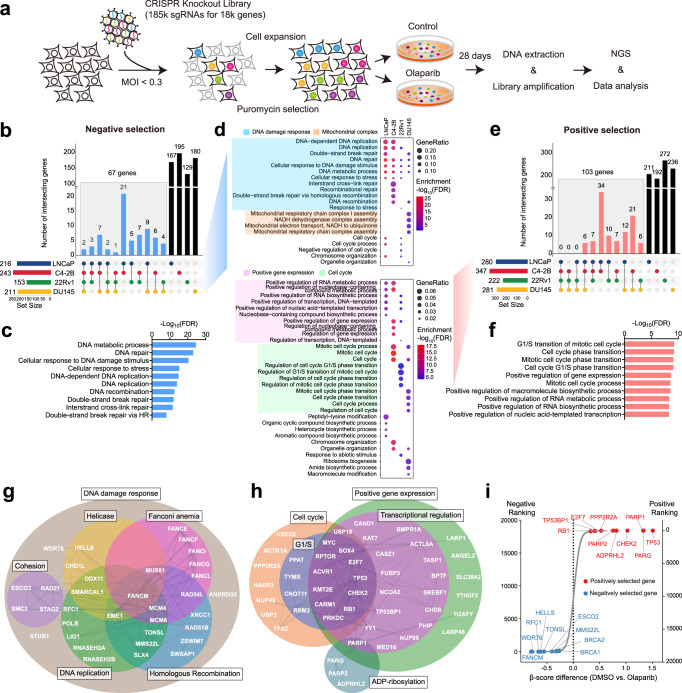
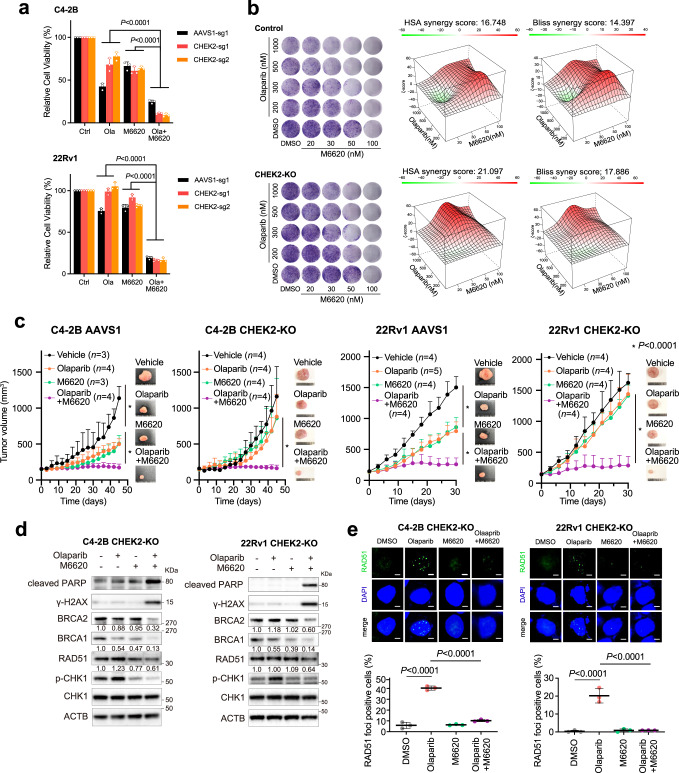
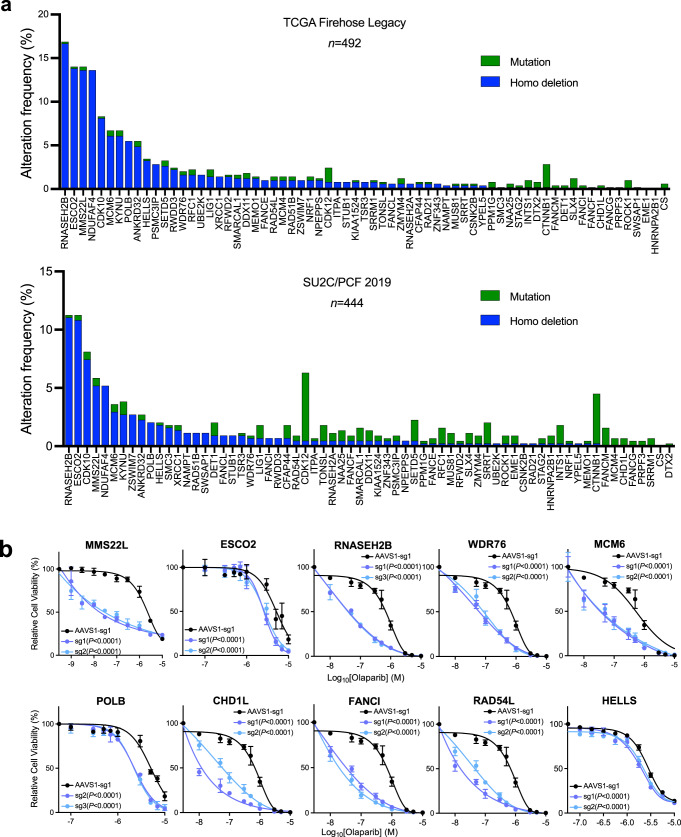
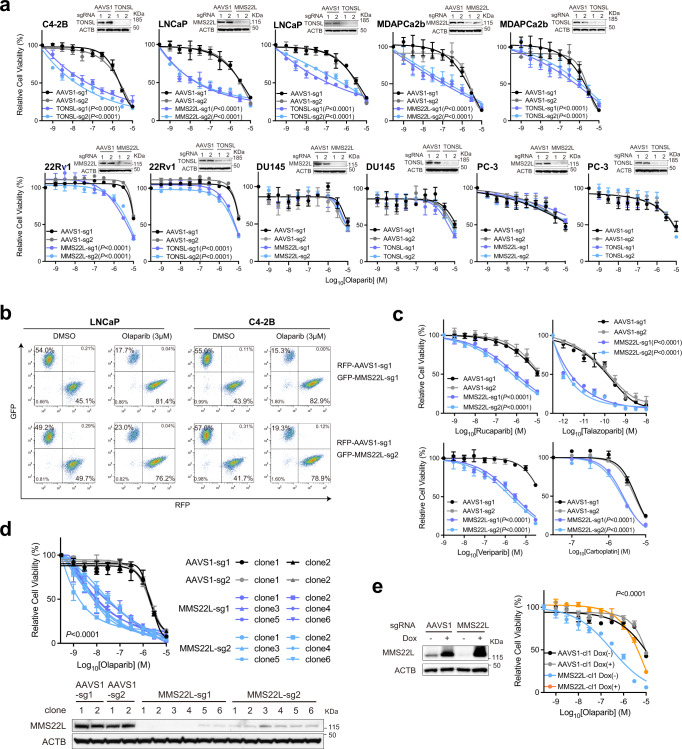
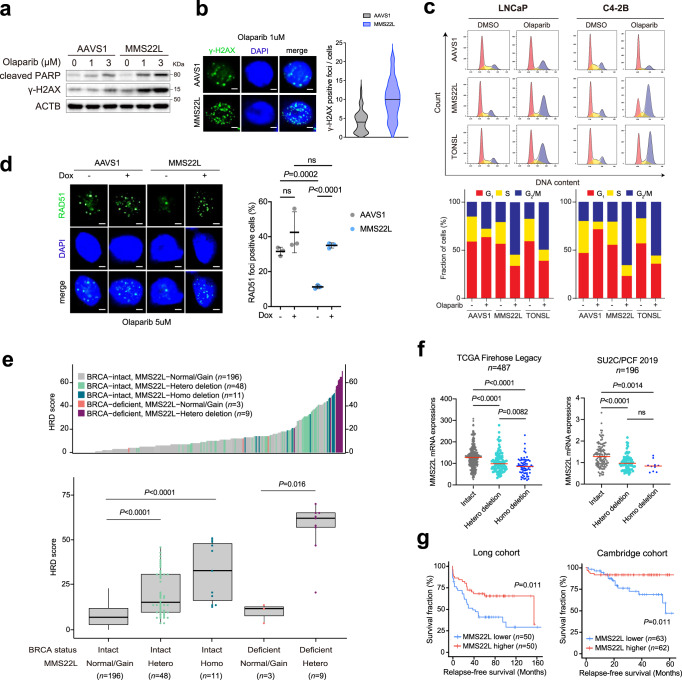
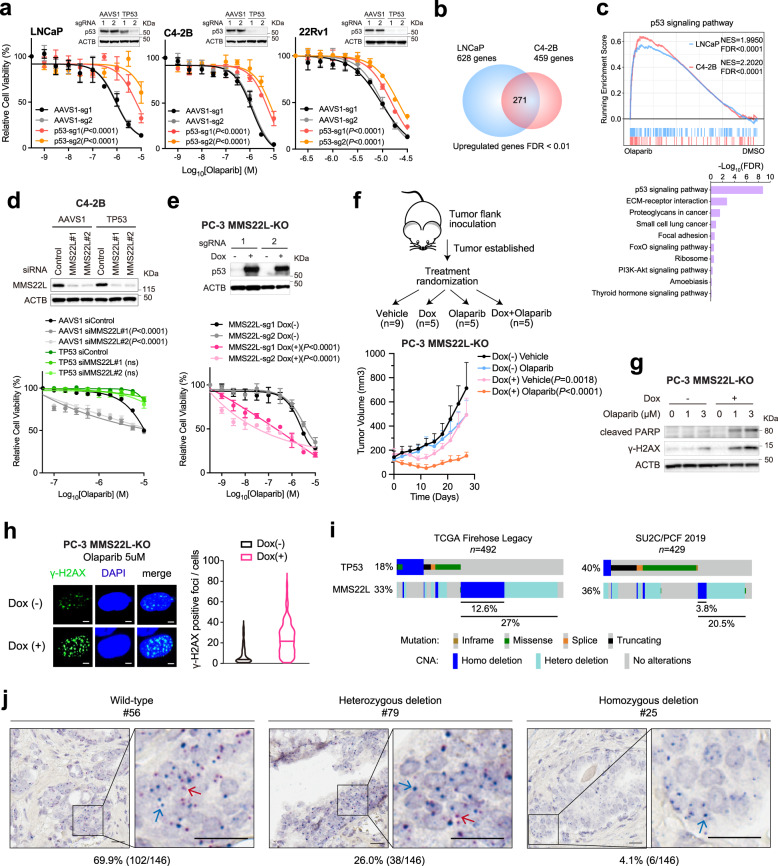
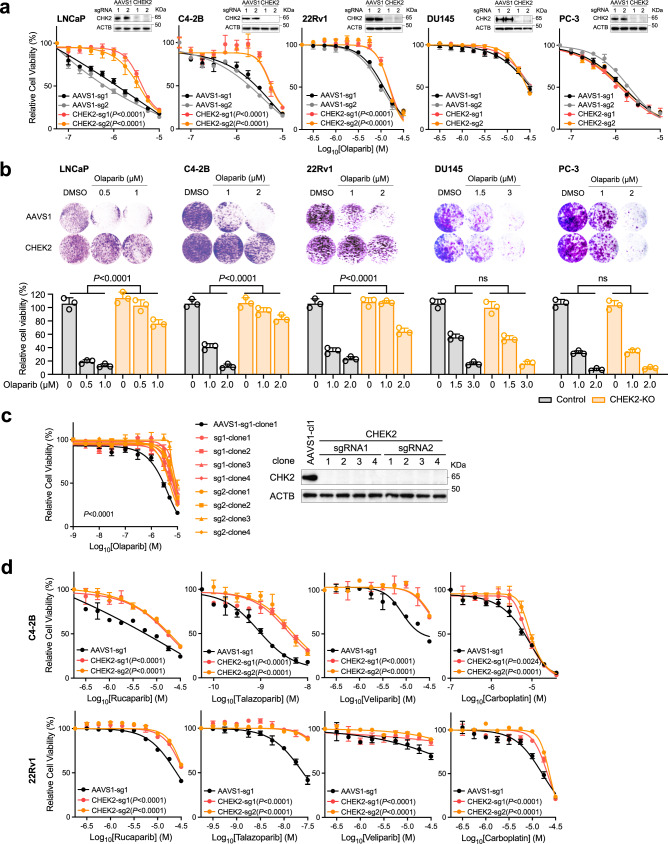
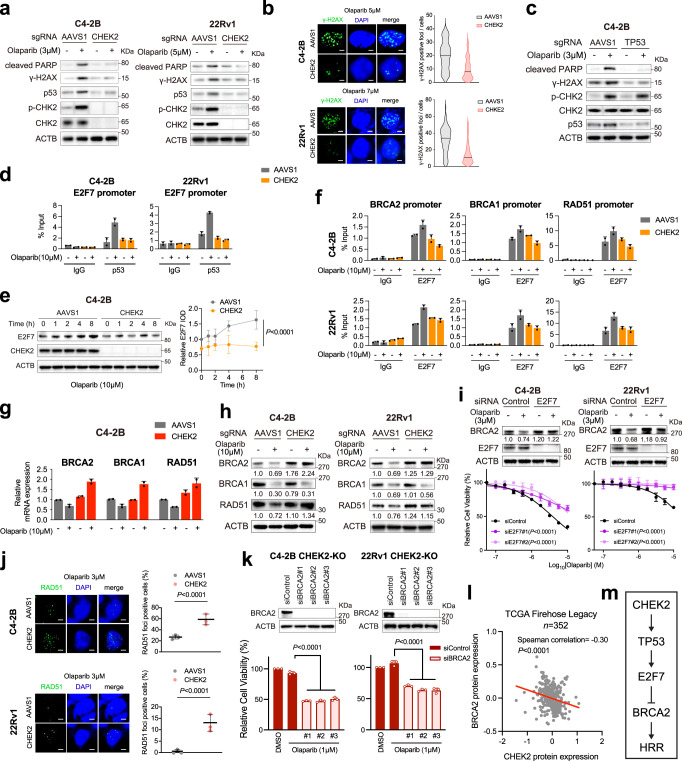
Prostate cancer harboring BRCA1/2 mutations are often exceptionally sensitive to PARP inhibitors. However, genomic alterations in other DNA damage response genes have not been consistently predictive of clinical response to PARP inhibition. Here, we perform genome-wide CRISPR-Cas9 knockout screens in BRCA1/2-proficient prostate cancer cells and identify previously unknown genes whose loss has a profound impact on PARP inhibitor response. Specifically, MMS22L deletion, frequently observed (up to 14%) in prostate cancer, renders cells hypersensitive to PARP inhibitors by disrupting RAD51 loading required for homologous recombination repair, although this response is TP53-dependent. Unexpectedly, loss of CHEK2 confers resistance rather than sensitivity to PARP inhibition through increased expression of BRCA2, a target of CHEK2-TP53-E2F7-mediated transcriptional repression. Combined PARP and ATR inhibition overcomes PARP inhibitor resistance caused by CHEK2 loss. Our findings may inform the use of PARP inhibitors beyond BRCA1/2-deficient tumors and support reevaluation of current biomarkers for PARP inhibition in prostate cancer.
携带有 BRCA1/2 突变的前列腺癌通常对 PARP 抑制剂异常敏感。然而,其他 DNA 损伤反应基因的基因组改变并不能始终预测对 PARP 抑制的临床反应。在这里,我们在 BRCA1/2 功能正常的前列腺癌细胞中进行全基因组 CRISPR-Cas9 敲除筛选,鉴定出以前未知的基因,这些基因的缺失对 PARP 抑制剂的反应有深远的影响。具体来说,MMS22L 缺失(在前列腺癌中高达 14%)通过破坏同源重组修复所需的 RAD51 加载,使细胞对 PARP 抑制剂高度敏感,尽管这种反应依赖于 TP53。出乎意料的是,CHEK2 的缺失通过增加 BRCA2 的表达赋予了对 PARP 抑制的抗性,而不是敏感性,BRCA2 是 CHEK2-TP53-E2F7 介导的转录抑制的靶标。联合 PARP 和 ATR 抑制克服了 CHEK2 缺失引起的 PARP 抑制剂耐药性。我们的发现可能为 PARP 抑制剂在 BRCA1/2 缺陷肿瘤之外的应用提供信息,并支持重新评估当前前列腺癌中 PARP 抑制的生物标志物。