Tea Research Institute, Fujian Academy of Agricultural Sciences, Fu'an, 355000, China.
Laixi Bureau of Agriculture and Rural Affairs of Shandong Province, Laixi, 266699, China.
BMC Genomics. 2023 Jan 17;24(1):27. doi: 10.1186/s12864-023-09112-y.
As an economically important crop, tea is strongly nitrogen (N)-dependent. However, the physiological and molecular mechanisms underlying the response of N deficiency in tea are not fully understood. Tea cultivar "Chunlv2" [Camellia sinensis (L.) O. Kuntze] were cultured with a nutrient solution with 0 mM [N-deficiency] or 3 mM (Control) NHNO in 6 L pottery pots containing clean river sands.
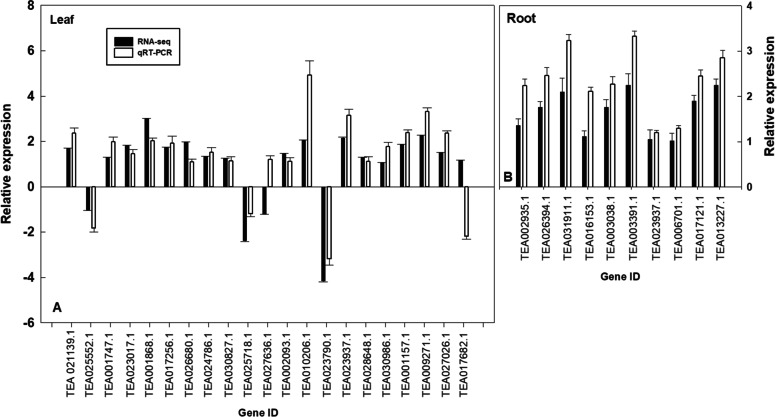
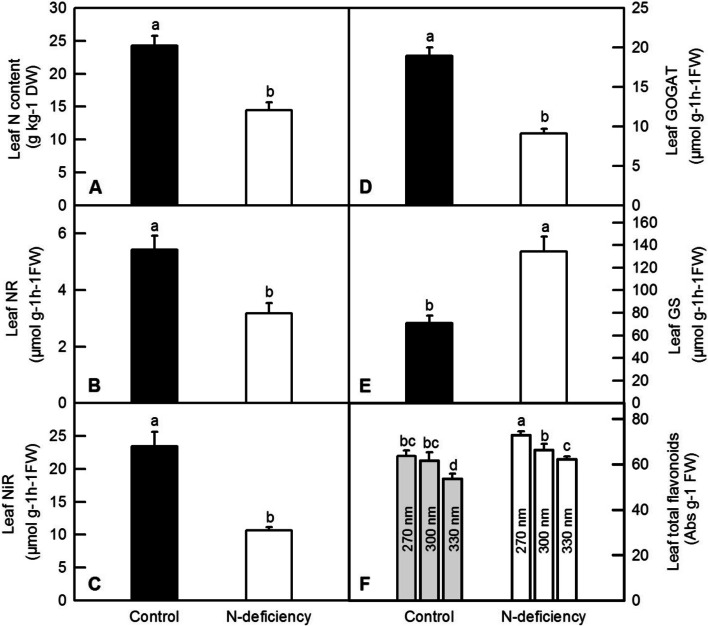
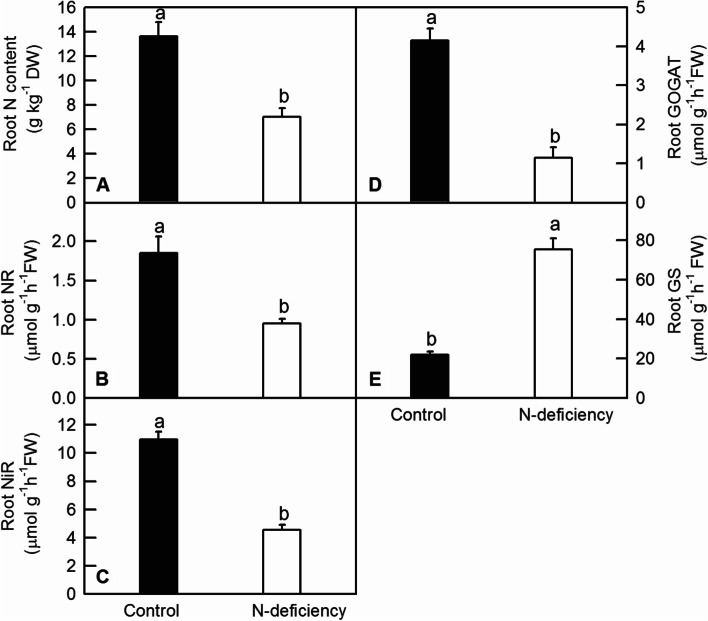
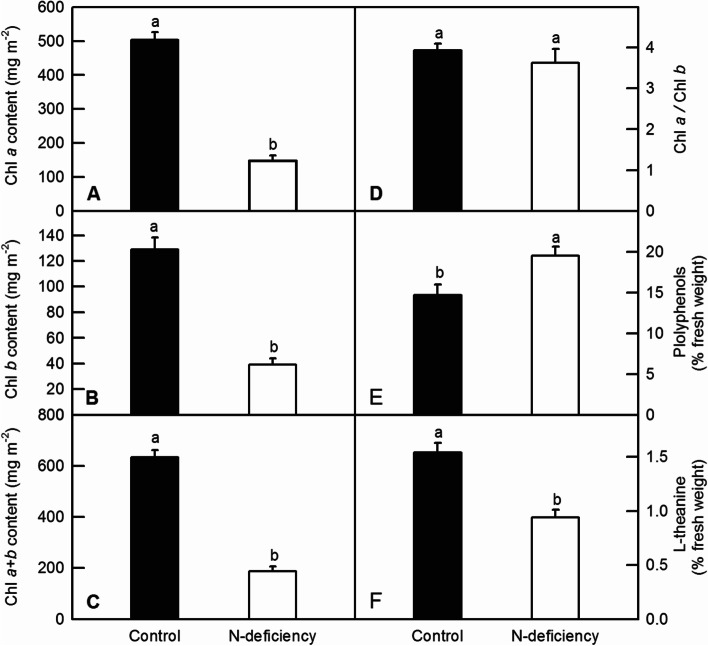
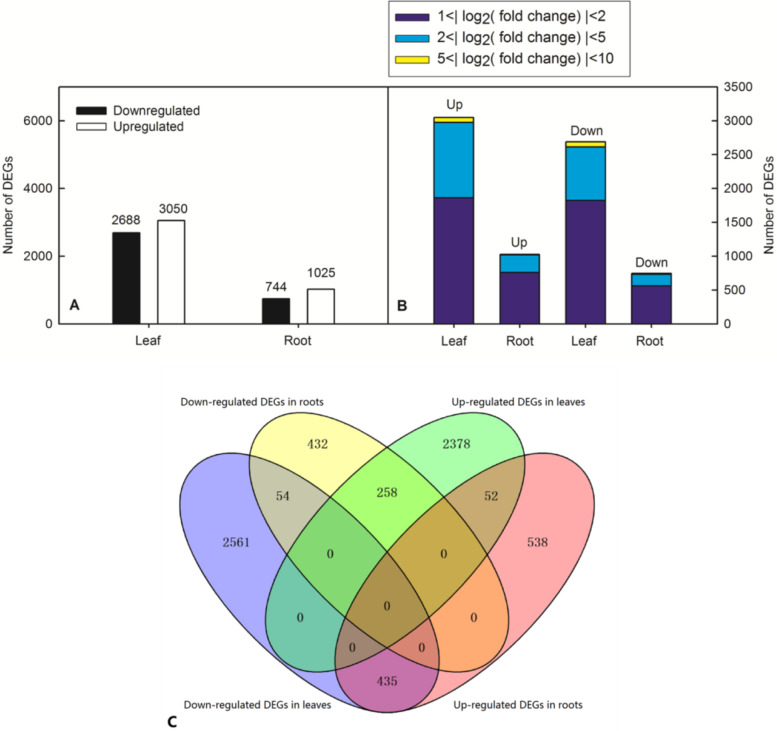
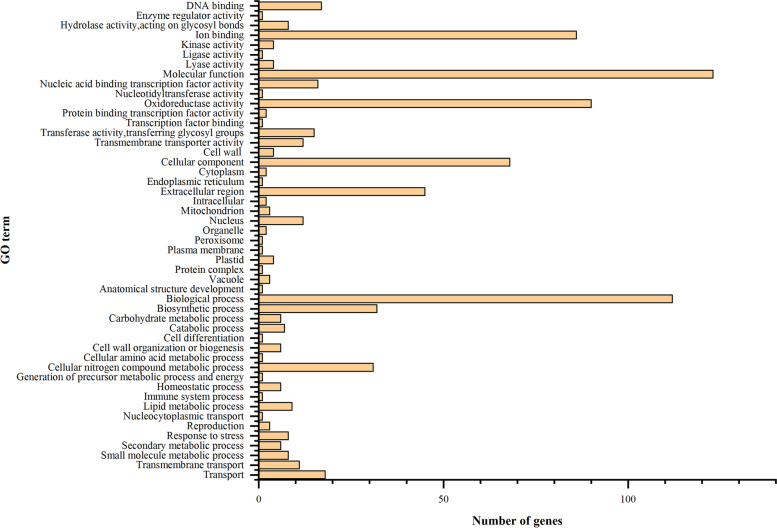
N deficiency significantly decreased N content, dry weight, chlorophyll (Chl) content, L-theanine and the activities of N metabolism-related enzymes, but increased the content of total flavonoids and polyphenols in tea leaves. N deficiency delayed the sprouting time of tea buds. By using the RNA-seq technique and subsequent bioinformatics analysis, 3050 up-regulated and 2688 down-regulated differentially expressed genes (DEGs) were isolated in tea leaves in response to N deficiency. However, only 1025 genes were up-regulated and 744 down-regulated in roots. Gene ontology (GO) term enrichment analysis showed that 205 DEGs in tea leaves were enriched in seven GO terms and 152 DEGs in tea roots were enriched in 11 GO items based on P < 0.05. In tea leaves, most GO-enriched DEGs were involved in chlorophyll a/b binding activities, photosynthetic performance, and transport activities. But most of the DEGs in tea roots were involved in the metabolism of carbohydrates and plant hormones with regard to the GO terms of biological processes. N deficiency significantly increased the expression level of phosphate transporter genes, which indicated that N deficiency might impair phosphorus metabolism in tea leaves. Furthermore, some DEGs, such as probable anion transporter 3 and high-affinity nitrate transporter 2.7, might be of great potential in improving the tolerance of N deficiency in tea plants and further study could work on this area in the future.
Our results indicated N deficiency inhibited the growth of tea plant, which might be due to altered N metabolism and expression levels of DEGs involved in the photosynthetic performance, transport activity and oxidation-reduction processes.
作为一种经济上重要的作物,茶强烈依赖氮(N)。然而,茶对 N 缺乏的响应的生理和分子机制尚未完全了解。将“春绿 2 号”[茶树(L.)O. Kunze]茶苗用含有 0 mM[N 缺乏]或 3 mM(对照)NHNO 的营养液在 6 升盛有干净河沙的陶盆中培养。
N 缺乏显著降低了茶叶中的 N 含量、干重、叶绿素(Chl)含量、L-茶氨酸和氮代谢相关酶的活性,但增加了总类黄酮和多酚的含量。N 缺乏延迟了茶芽的萌发时间。通过使用 RNA-seq 技术和随后的生物信息学分析,在响应 N 缺乏时,在茶树叶片中分离出 3050 个上调和 2688 个下调的差异表达基因(DEGs)。然而,在根中仅有 1025 个基因上调,744 个基因下调。GO 术语富集分析表明,在叶片中有 205 个 DEGs 富集在 7 个 GO 术语中,在根中有 152 个 DEGs 富集在 11 个 GO 项目中,均基于 P < 0.05。在叶片中,大多数 GO 富集的 DEGs 参与叶绿素 a/b 结合活性、光合作用和运输活性。但根中大多数 DEGs 参与与生物过程的 GO 术语相关的碳水化合物和植物激素代谢。N 缺乏显著增加了磷酸盐转运基因的表达水平,这表明 N 缺乏可能损害了茶树中的磷代谢。此外,一些 DEGs,如可能的阴离子转运蛋白 3 和高亲和力硝酸盐转运蛋白 2.7,可能在提高茶树对 N 缺乏的耐受性方面具有很大潜力,未来可以对此进行进一步研究。
我们的结果表明,N 缺乏抑制了茶树的生长,这可能是由于参与光合作用、运输活性和氧化还原过程的氮代谢和 DEGs 表达水平的改变所致。