Department of Pediatrics, Peking University First Hospital, Beijing, China.
CNS Neurosci Ther. 2023 Apr;29(4):1049-1066. doi: 10.1111/cns.14079. Epub 2023 Jan 17.
Leukoencephalopathy with vanishing white matter (VWM) is a rare autosomal recessive leukoencephalopathy resulting from mutations in EIF2B1-5, which encode subunits of eukaryotic translation initiation factor 2B (eIF2B). Studies have found that eIF2B mutation has a certain influence on embryonic brain development. So far, the effect of the eIF2B mutations on the dynamic process of brain development is not fully understood yet.
Three-dimensional brain organoid technology has promoted the study of human nervous system developmental diseases in recent years, providing a potential platform for elucidating the pathological mechanism of neurodevelopmental diseases. In this study, we aimed to investigate the effects of eIF2B mutation on the differentiation and development of different nerve cells during dynamic brain development process using 3D brain organoids.
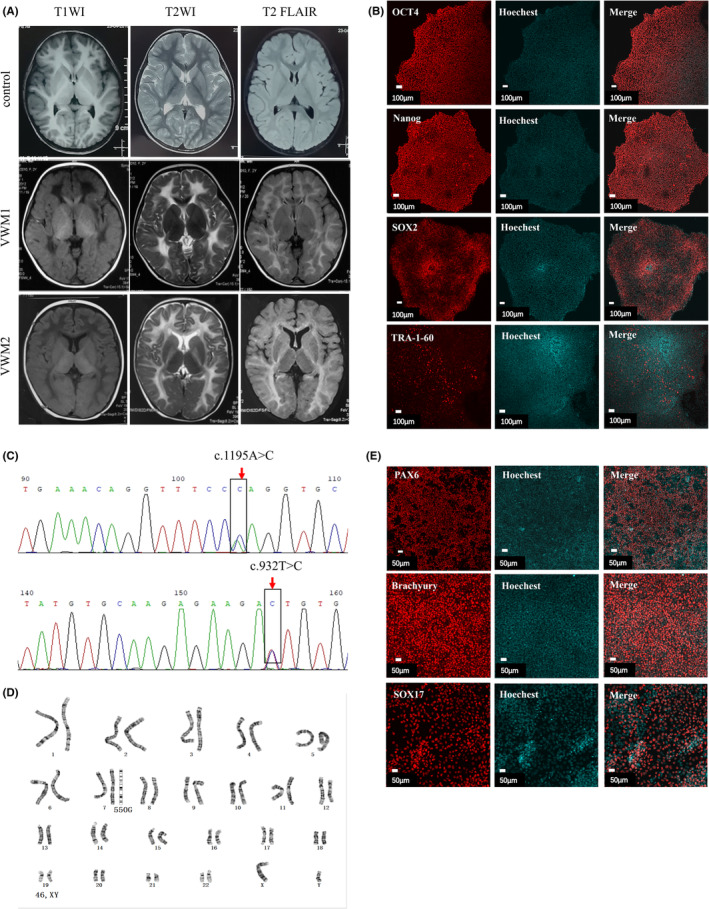
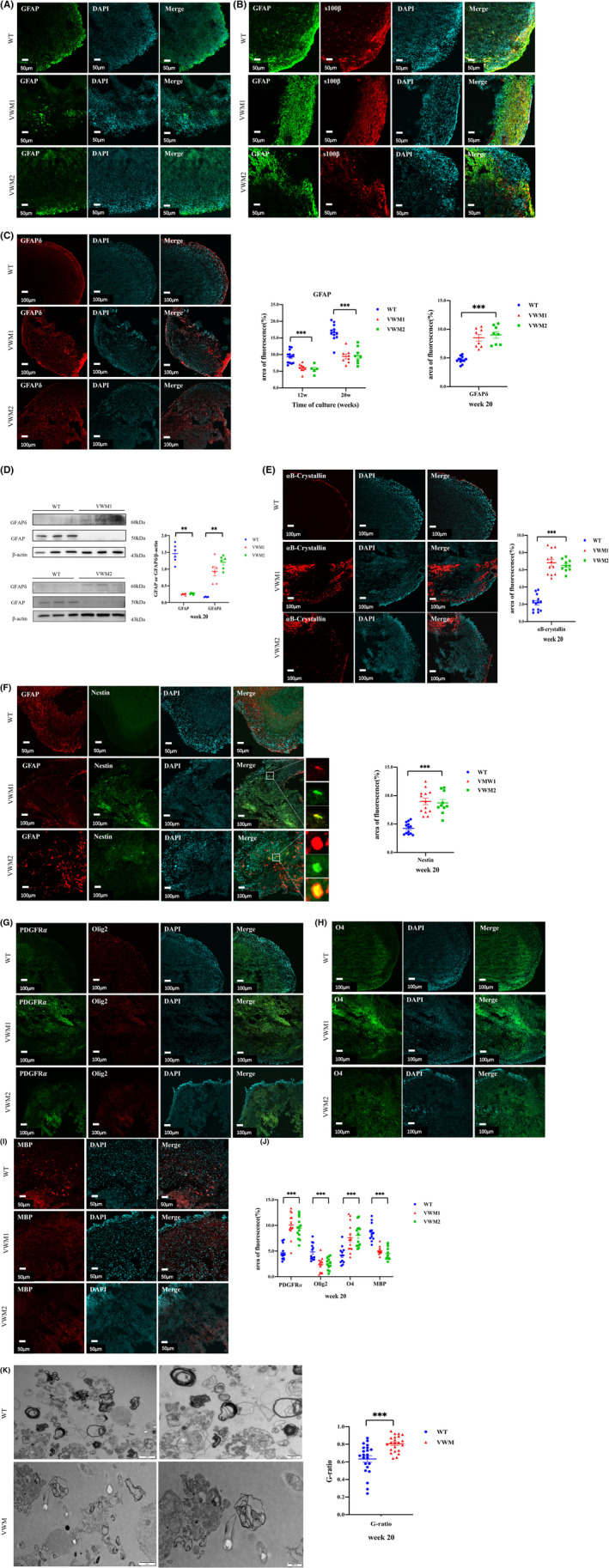
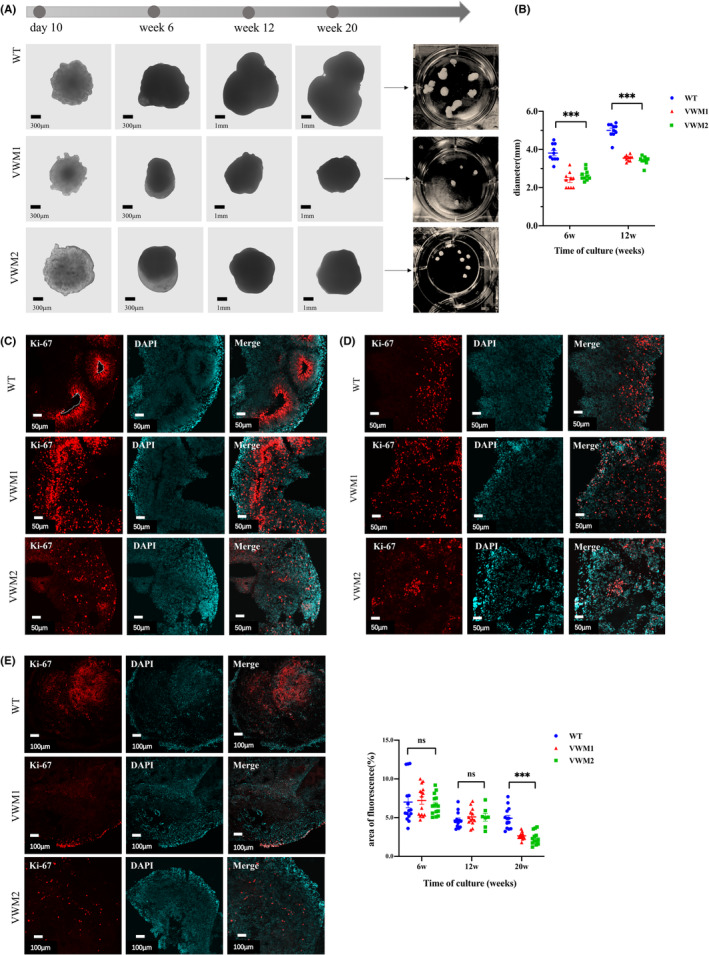
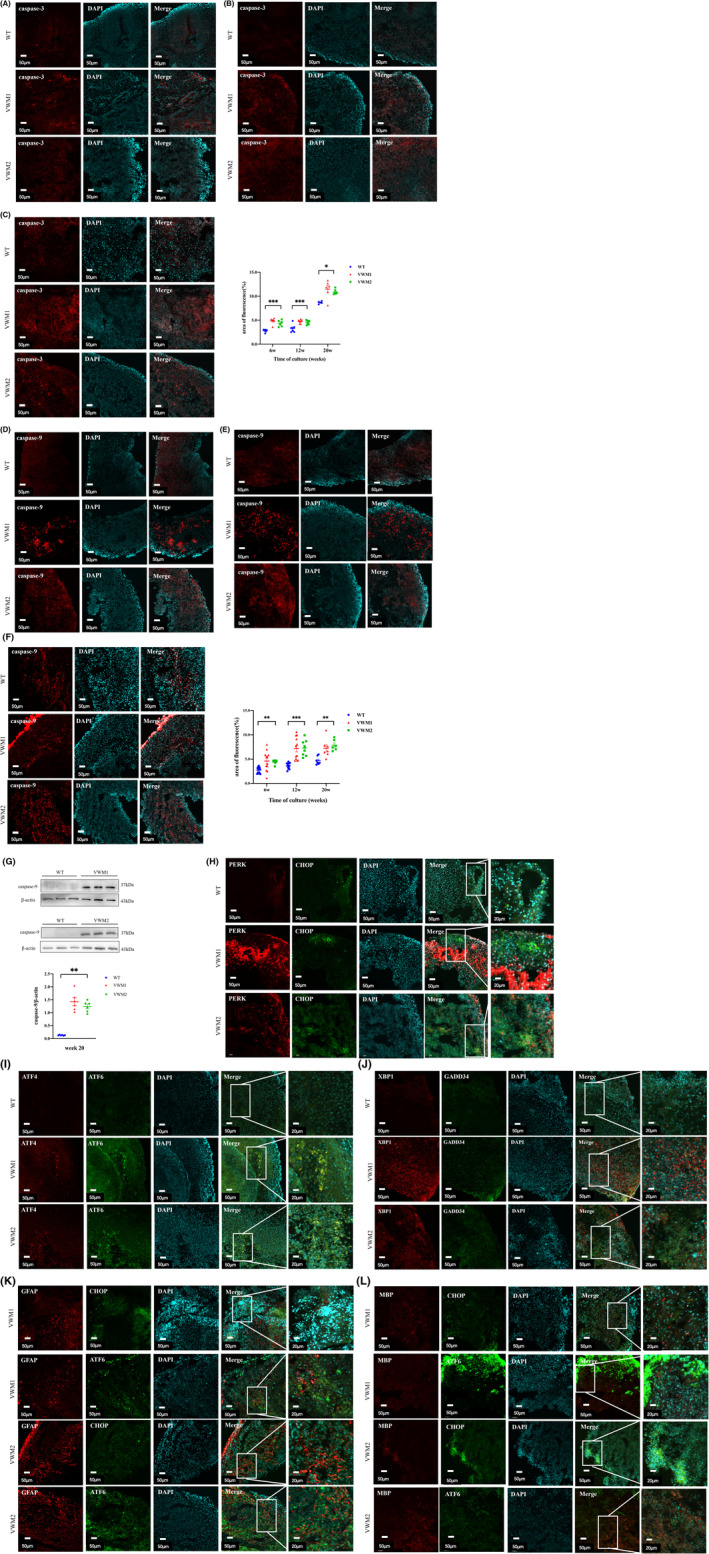
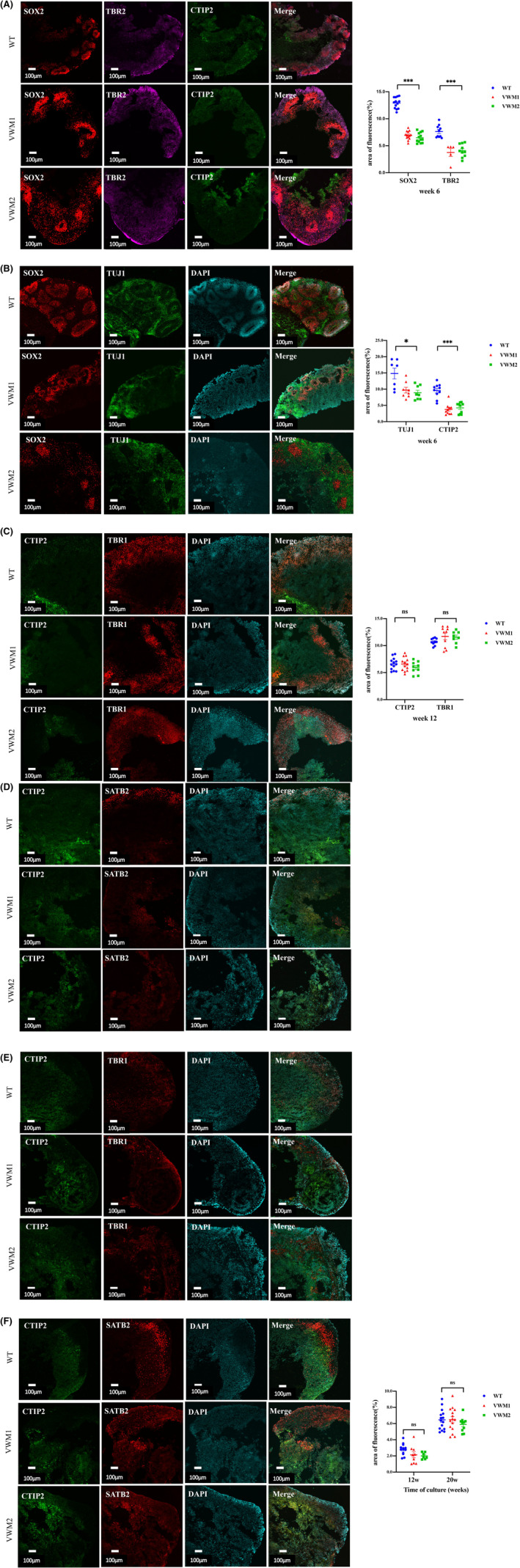
We constructed eIF2B mutant and wild-type brain organoid model with induced pluripotent stem cell (iPSC). Compared with the wild type, the mutant brain organoids were significantly smaller, accompanied by increase in apoptosis, which might be resulted from overactivation of unfolded protein response (UPR). Neuronal development was delayed in early stage, but with normal superficial neuronal differentiation in later stage. eIF2B mutations resulted in immature astrocytes with increased expression of GFAPδ, nestin, and αB-crystallin, and there were increased oligodendrocyte progenitor cells, decreased mature oligodendrocytes, and sparse myelin in mutant cerebral organoids in the later stage.
we constructed the first eIF2B mutant cerebral organoids to explore the dynamic brain development process, which provides a platform for further research on the specific pathogenesis of VWM.
脑白质消融症(VWM)是一种罕见的常染色体隐性脑白质病,由真核翻译起始因子 2B(eIF2B)编码亚基 EIF2B1-5 的突变引起。研究发现 eIF2B 突变对胚胎脑发育有一定影响。但目前,eIF2B 突变对大脑发育动态过程的影响尚未完全了解。
三维脑类器官技术近年来促进了人类神经系统发育性疾病的研究,为阐明神经发育性疾病的病理机制提供了一个潜在的平台。本研究旨在利用三维脑类器官研究 eIF2B 突变对动态脑发育过程中不同神经细胞分化和发育的影响。
我们构建了诱导多能干细胞(iPSC)来源的 eIF2B 突变型和野生型脑类器官模型。与野生型相比,突变型脑类器官体积明显较小,同时伴有凋亡增加,这可能是未折叠蛋白反应(UPR)过度激活所致。神经元发育早期延迟,但后期浅层神经元分化正常。eIF2B 突变导致星形胶质细胞不成熟,GFAPδ、巢蛋白和αB-晶体蛋白表达增加,晚期少突胶质前体细胞增加,成熟少突胶质细胞减少,髓鞘稀疏。
我们构建了第一个 eIF2B 突变脑类器官,以探索动态脑发育过程,为进一步研究 VWM 的具体发病机制提供了一个平台。