Department of Microbiology, Immunology, and Cell Biology, West Virginia University, Morgantown, West Virginia, USA.
Department of Neuroscience, West Virginia University, Morgantown, West Virginia, USA.
Glia. 2022 Jan;70(1):5-19. doi: 10.1002/glia.24082. Epub 2021 Aug 31.
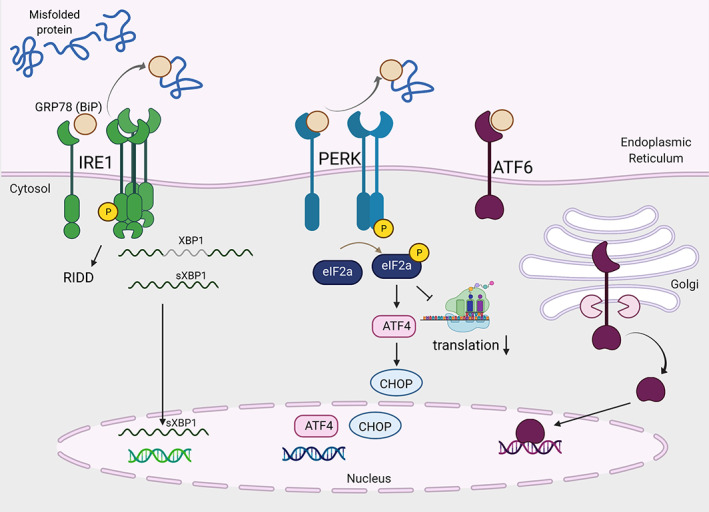
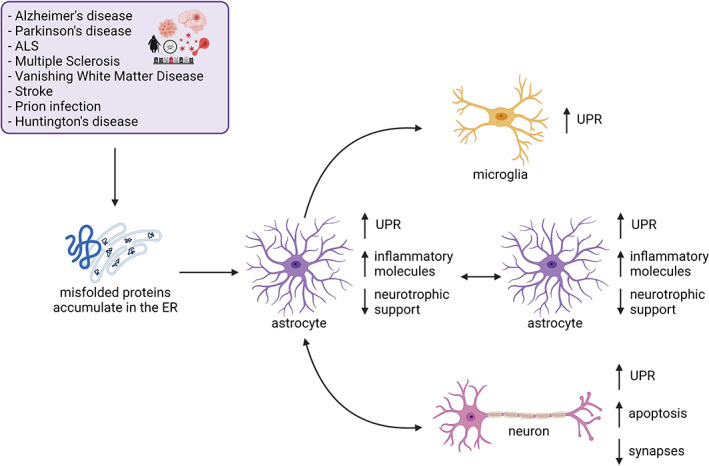
Astrocytes are glial cells that support neurological function in the central nervous system (CNS), in part, by providing structural support for neuronal synapses and blood vessels, participating in electrical and chemical transmission, and providing trophic support via soluble factors. Dysregulation of astrocyte function contributes to neurological decline in CNS diseases. Neurological diseases are highly heterogeneous but share common features of cellular stress including the accumulation of misfolded proteins. Endoplasmic reticulum (ER) stress has been reported in nearly all neurological and neurodegenerative diseases. ER stress occurs when there is an accumulation of misfolded proteins in the ER lumen and the protein folding demand of the ER is overwhelmed. ER stress initiates the unfolded protein response (UPR) to restore homeostasis by abating protein translation and, if the cell is irreparably damaged, initiating apoptosis. Although protein aggregation and misfolding in neurological disease has been well described, cell-specific contributions of ER stress and the UPR in physiological and disease states are poorly understood. Recent work has revealed a role for active UPR signaling that may drive astrocytes toward a maladaptive phenotype in various model systems. In response to ER stress, astrocytes produce inflammatory mediators, have reduced trophic support, and can transmit ER stress to other cells. This review will discuss the current known contributions and consequences of activated UPR signaling in astrocytes.
星形胶质细胞是中枢神经系统(CNS)中支持神经功能的神经胶质细胞,部分通过为神经元突触和血管提供结构支持、参与电和化学传递以及通过可溶性因子提供营养支持来实现这一功能。星形胶质细胞功能的失调导致 CNS 疾病中的神经功能下降。神经疾病高度异质,但具有细胞应激的共同特征,包括错误折叠蛋白的积累。内质网(ER)应激已在几乎所有神经和神经退行性疾病中报道。当 ER 腔中错误折叠的蛋白质积累并且 ER 的蛋白质折叠需求超过时,就会发生 ER 应激。ER 应激通过减缓蛋白质翻译来启动未折叠蛋白反应(UPR)以恢复内稳态,如果细胞不可修复地受损,则启动细胞凋亡。尽管神经疾病中的蛋白质聚集和错误折叠已有很好的描述,但 ER 应激和 UPR 在生理和疾病状态下的细胞特异性贡献仍知之甚少。最近的工作揭示了活跃的 UPR 信号的作用,它可能在各种模型系统中驱使星形胶质细胞向适应不良的表型发展。星形胶质细胞在 ER 应激时会产生炎症介质,减少营养支持,并可将 ER 应激传递给其他细胞。这篇综述将讨论激活的 UPR 信号在星形胶质细胞中的已知作用和后果。