Department of Pharmacology and Toxicology, Faculty of Medicine, University Complutense Madrid (UCM), Madrid, Spain.
Biomedical Network Research Center of Mental Health (CIBERSAM), Institute of Health Carlos III, Madrid, Spain.
Gut Microbes. 2023 Jan-Dec;15(1):2162306. doi: 10.1080/19490976.2022.2162306.
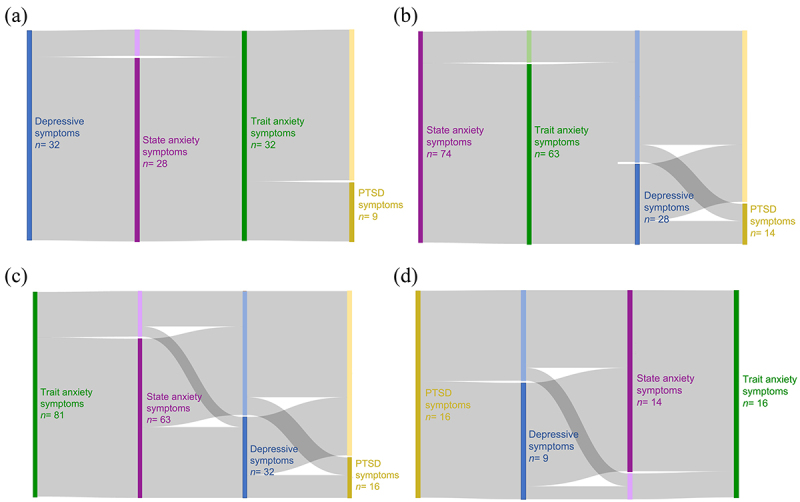
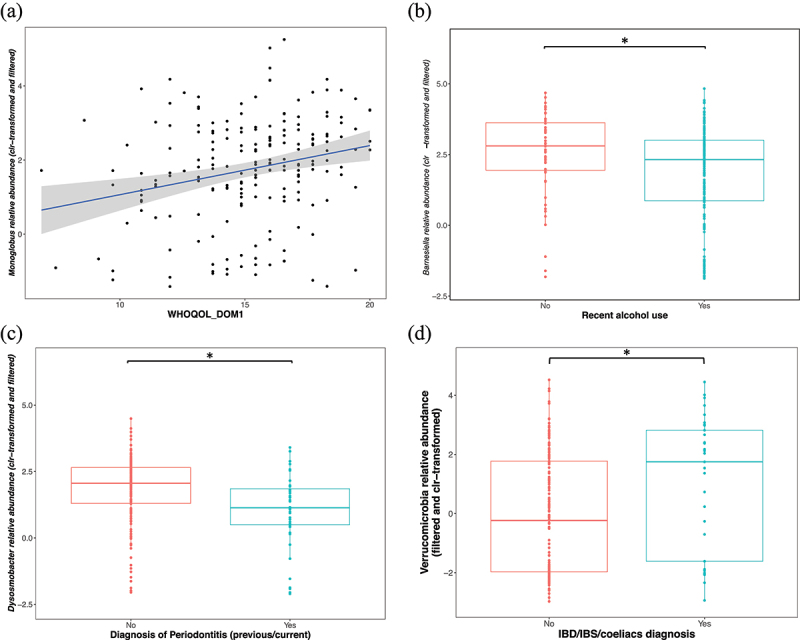
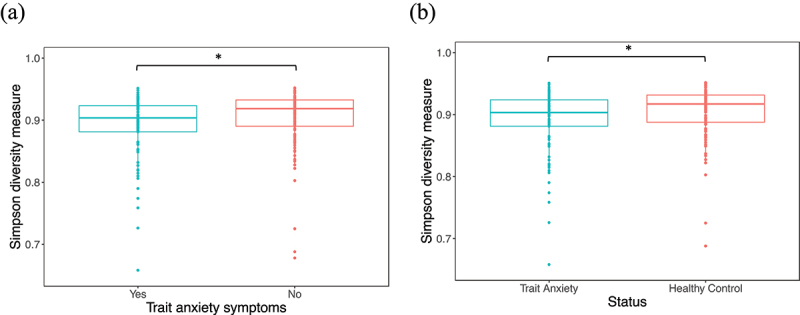
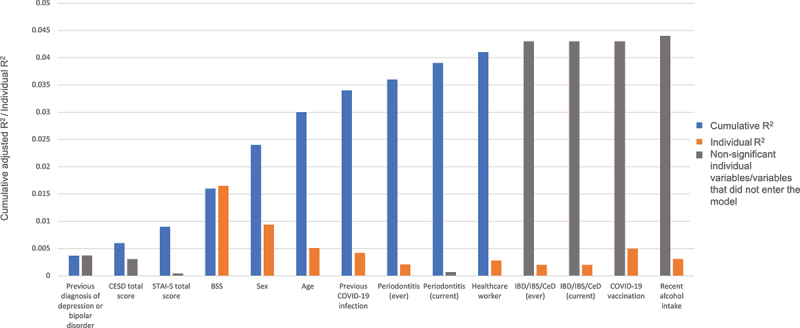
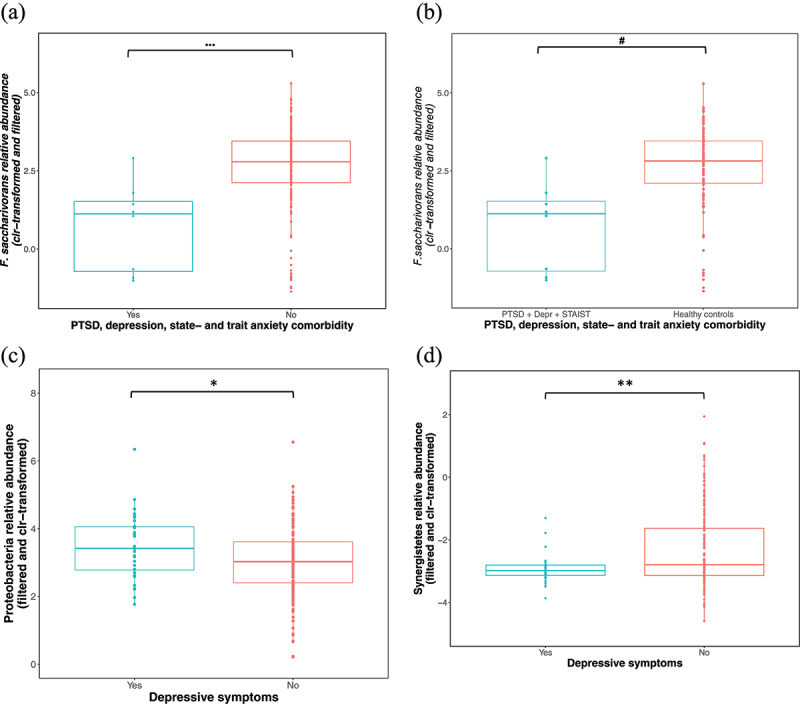
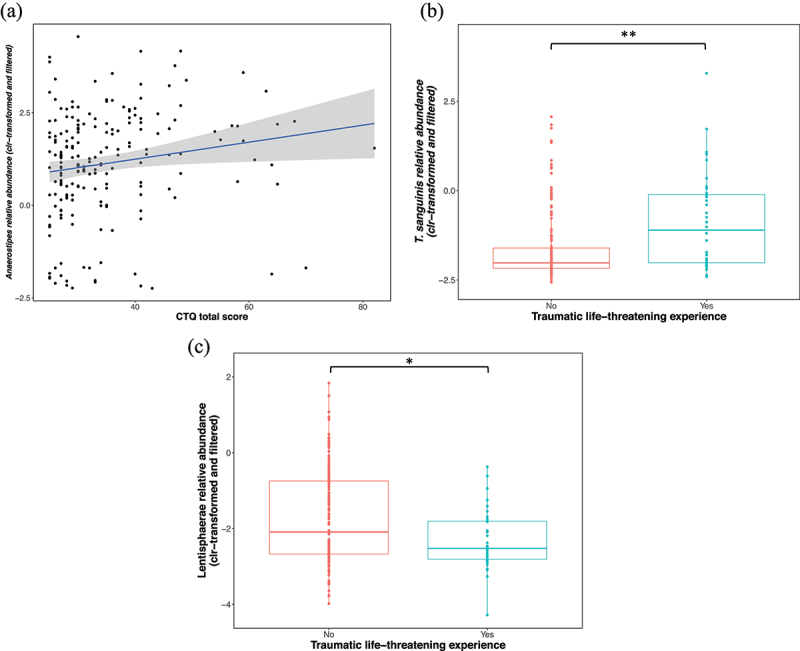
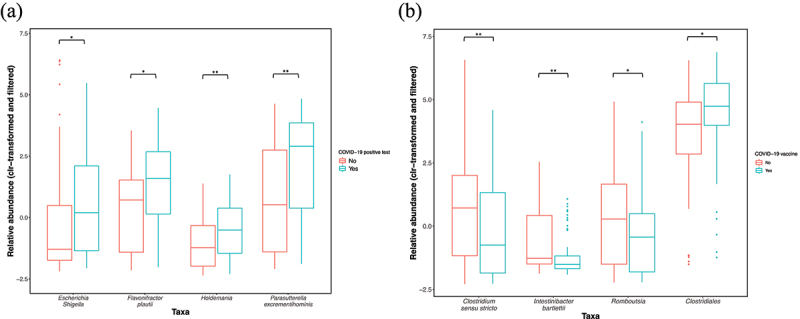
The prevalence of anxiety and depression soared following the COVID-19 pandemic. To effectively treat these conditions, a comprehensive understanding of all etiological factors is needed. This study investigated fecal microbial features associated with mental health outcomes (symptoms of anxiety, depression, or posttraumatic stress disorder (PTSD)) in a Spanish cohort in the aftermath of the COVID-19 pandemic. Microbial communities from stool samples were profiled in 198 individuals who completed validated, self-report questionnaires. 16S ribosomal RNA gene V3-4 amplicon sequencing was performed. Microbial diversity and community structure were analyzed, together with relative taxonomic abundance. In our cohort of N=198, 17.17% reported depressive symptoms, 37.37% state anxiety symptoms, 40.90% trait anxiety symptoms, and 8.08% PTSD symptoms, with high levels of comorbidity. Individuals with trait anxiety had lower Simpson's diversity. was reduced in individuals with comorbid PTSD + depression + state and trait anxiety symptoms, whilst an expansion of Proteobacteria and depletion of Synergistetes phyla were noted in individuals with depressive symptoms. The relative abundance of was positively correlated with childhood trauma, and higher levels of and lower levels of Lentisphaerae were found in individuals who experienced life-threatening traumas. COVID-19 infection and vaccination influenced the overall microbial composition and were associated with distinct relative taxonomic abundance profiles. These findings will help lay the foundation for future studies to identify microbial role players in symptoms of anxiety, depression, and PTSD and provide future therapeutic targets to improve mental health outcomes.
新冠疫情后,焦虑和抑郁的患病率飙升。为了有效治疗这些疾病,需要全面了解所有病因。本研究调查了西班牙队列在新冠疫情后与心理健康结果(焦虑、抑郁或创伤后应激障碍(PTSD)症状)相关的粪便微生物特征。对 198 名完成验证性自我报告问卷的个体的粪便样本中的微生物群落进行了分析。进行了 16S 核糖体 RNA 基因 V3-4 扩增子测序。分析了微生物多样性和群落结构以及相对分类丰度。在我们的 N=198 队列中,17.17%报告有抑郁症状,37.37%有状态焦虑症状,40.90%有特质焦虑症状,8.08%有 PTSD 症状,共病率很高。具有特质焦虑的个体的 Simpson 多样性较低。在同时患有 PTSD+抑郁+状态和特质焦虑症状的个体中减少,而在患有抑郁症状的个体中观察到变形菌门的扩张和互养菌门的消耗。的相对丰度与儿童期创伤呈正相关,经历过危及生命的创伤的个体中发现更高水平的 和更低水平的 Lentisphaerae。新冠感染和疫苗接种影响了整体微生物组成,并与独特的相对分类丰度谱相关。这些发现将为未来研究确定焦虑、抑郁和 PTSD 症状中的微生物作用因子奠定基础,并提供改善心理健康结果的未来治疗靶点。