Ahrens Angelica P, Culpepper Tyler, Saldivar Brittany, Anton Stephen, Stoll Scott, Handberg Eileen M, Xu Ke, Pepine Carl, Triplett Eric W, Aggarwal Monica
Department of Microbiology and Cell Science, College of Agricultural and Life Sciences, University of Florida, 1355 Museum Dr, Gainesville, FL 32603, USA.
Department of Medicine, College of Medicine, University of Florida, P.O. Box 100277, Gainesville, FL 32610, USA.
Nutrients. 2021 Sep 29;13(10):3459. doi: 10.3390/nu13103459.
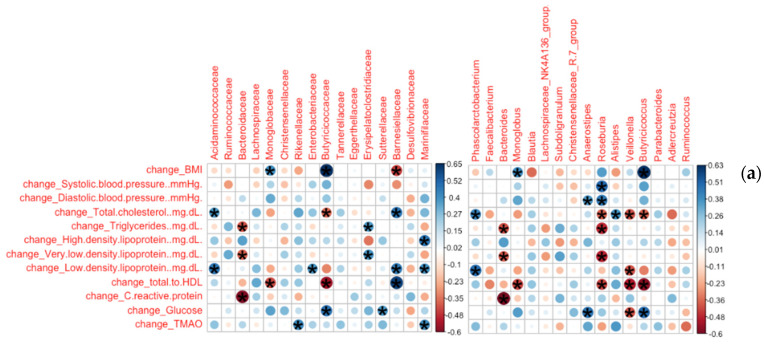
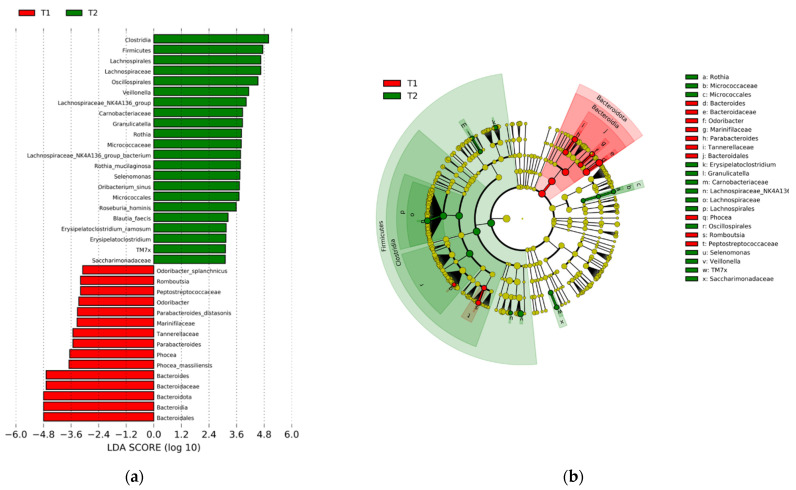
Cardiovascular disease (CVD) prevalence remains elevated globally. We have previously shown that a one-week lifestyle "immersion program" leads to clinical improvements and sustained improvements in quality of life in moderate to high atherosclerotic CVD (ASCVD) risk individuals. In a subsequent year of this similarly modeled immersion program, we again collected markers of cardiovascular health and, additionally, evaluated intestinal microbiome composition. ASCVD risk volunteers ( = 73) completed the one-week "immersion program" involving nutrition (100% plant-based foods), stress management education, and exercise. Anthropometric measurements and CVD risk factors were compared at baseline and post intervention. A subgroup ( = 22) provided stool, which we analyzed with 16S rRNA sequencing. We assessed abundance changes within-person, correlated the abundance shifts with clinical changes, and inferred functional pathways using PICRUSt. Reductions in blood pressure, total cholesterol, and triglycerides, were observed without reduction in weight. Significant increases in butyrate producers were detected, including and . Within-person, significant shifts in relative abundance (RA) occurred, e.g., increased (+58.8% RA, = 0.0002), (+82.1%, = 0.0003), (+54.5%, = 0.002), and diversification and richness. Microbiota changes significantly correlated with body mass index (BMI), blood pressure (BP), cholesterol, high-sensitivity C-reactive protein (hsCRP), glucose, and trimethylamine N-oxide (TMAO) changes. Pairwise decreases were inferred in microbial genes corresponding to cancer, metabolic disease, and amino acid metabolism. This brief lifestyle-based intervention improved lipids and BP and enhanced known butyrate producers, without significant weight loss. These results demonstrate a promising non-pharmacological preventative strategy for improving cardiovascular health.
心血管疾病(CVD)在全球的患病率仍然居高不下。我们之前已经表明,为期一周的生活方式“沉浸式计划”能使中度至高度动脉粥样硬化性心血管疾病(ASCVD)风险个体的临床症状得到改善,并持续提高生活质量。在这个类似模式的沉浸式计划的后续一年中,我们再次收集了心血管健康指标,此外,还评估了肠道微生物群组成。ASCVD风险志愿者(n = 73)完成了为期一周的“沉浸式计划”,该计划包括营养(100%植物性食物)、压力管理教育和运动。在基线和干预后比较了人体测量指标和CVD风险因素。一个亚组(n = 22)提供了粪便,我们用16S rRNA测序对其进行了分析。我们评估了个体内部的丰度变化,将丰度变化与临床变化相关联,并使用PICRUSt推断功能途径。观察到血压、总胆固醇和甘油三酯降低,但体重没有减轻。检测到丁酸盐产生菌显著增加,包括[具体菌种1]和[具体菌种2]。个体内部相对丰度(RA)发生了显著变化,例如,[菌种3]增加(RA增加58.8%,P = 0.0002),[菌种4]增加(+82.1%,P = 0.0003),[菌种5]增加(+54.5%,P = 0.002),以及多样性和丰富度增加。微生物群变化与体重指数(BMI)、血压(BP)、胆固醇、高敏C反应蛋白(hsCRP)、葡萄糖和氧化三甲胺(TMAO)变化显著相关。推断出与癌症、代谢疾病和氨基酸代谢相关的微生物基因成对减少。这种基于生活方式的简短干预改善了血脂和血压,并增加了已知的丁酸盐产生菌,且体重没有显著减轻。这些结果证明了一种有前景的非药物预防策略,可改善心血管健康。