Department of Translational Medicine, University of Ferrara, Via Aldo Moro 8, 44124, Ferrara, Italy.
Department of Angiology, University Hospital Zurich, Zurich, Switzerland.
J Thromb Thrombolysis. 2023 Apr;55(3):490-498. doi: 10.1007/s11239-022-02766-7. Epub 2023 Jan 18.
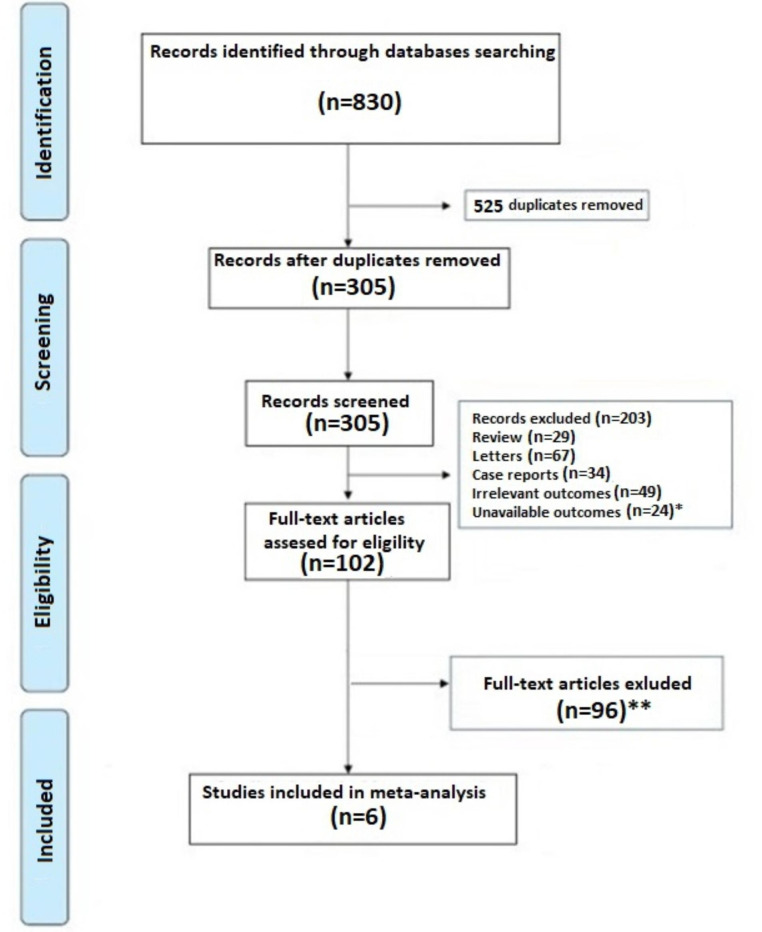
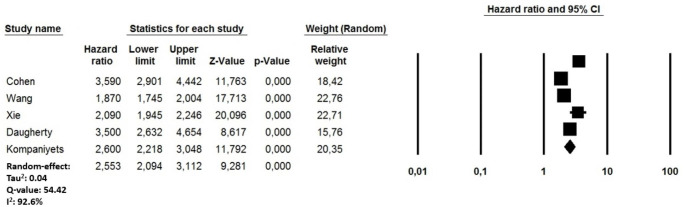
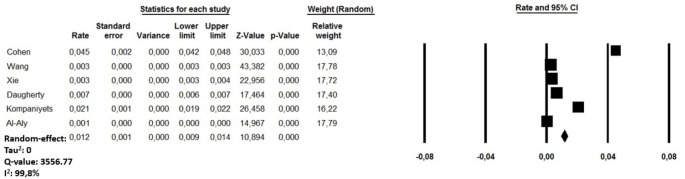
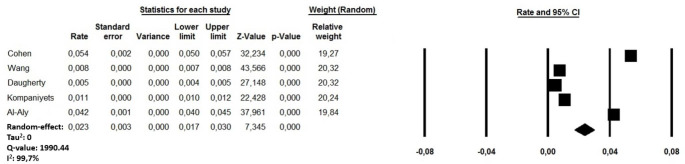
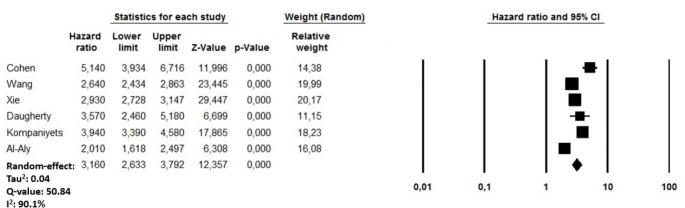
Data regarding the occurrence of venous thromboembolic events (VTE), including acute pulmonary embolism (PE) and deep vein thrombosis (DVT) in recovered COVID-19 patients are scant. We performed a systematic review and meta-analysis to assess the risk of acute PE and DVT in COVID-19 recovered subject. Following the PRIMSA guidelines, we searched Medline and Scopus to locate all articles published up to September 1st, 2022, reporting the risk of acute PE and/or DVT in patients recovered from COVID-19 infection compared to non-infected patients who developed VTE over the same follow-up period. PE and DVT risk were evaluated using the Mantel-Haenszel random effects models with Hazard ratio (HR) as the effect measure with 95% confidence interval (CI) while heterogeneity was assessed using Higgins I statistic. Overall, 29.078.950 patients (mean age 50.2 years, 63.9% males), of which 2.060.496 had COVID-19 infection, were included. Over a mean follow-up of 8.5 months, the cumulative incidence of PE and DVT in COVID-19 recovered patients were 1.2% (95% CI:0.9-1.4, I2: 99.8%) and 2.3% (95% CI:1.7-3.0, I2: 99.7%), respectively. Recovered COVID-19 patients presented a higher risk of incident PE (HR: 3.16, 95% CI: 2.63-3.79, I = 90.1%) and DVT (HR: 2.55, 95% CI: 2.09-3.11, I: 92.6%) compared to non-infected patients from the general population over the same follow-up period. Meta-regression showed a higher risk of PE and DVT with age and with female gender, and lower risk with longer follow-up. Recovered COVID-19 patients have a higher risk of VTE events, which increase with aging and among females.
关于已康复的 COVID-19 患者发生静脉血栓栓塞事件(VTE),包括急性肺栓塞(PE)和深静脉血栓形成(DVT)的数据很少。我们进行了系统评价和荟萃分析,以评估 COVID-19 康复患者发生急性 PE 和 DVT 的风险。根据 PRISMA 指南,我们在 Medline 和 Scopus 上搜索了截至 2022 年 9 月 1 日所有发表的文章,报告了与在相同随访期间发生 VTE 的非感染患者相比,COVID-19 感染后康复患者发生急性 PE 和/或 DVT 的风险。使用 Mantel-Haenszel 随机效应模型评估 PE 和 DVT 风险,使用风险比(HR)作为效应量,95%置信区间(CI),同时使用 Higgins I 统计评估异质性。总体而言,纳入了 29078950 名患者(平均年龄 50.2 岁,63.9%为男性),其中 2060496 名患有 COVID-19 感染。在平均 8.5 个月的随访中,COVID-19 康复患者的 PE 和 DVT 累积发生率分别为 1.2%(95%CI:0.9-1.4,I2:99.8%)和 2.3%(95%CI:1.7-3.0,I2:99.7%)。与同一随访期间的普通人群中的非感染患者相比,COVID-19 康复患者发生 PE(HR:3.16,95%CI:2.63-3.79,I=90.1%)和 DVT(HR:2.55,95%CI:2.09-3.11,I:92.6%)的风险更高。Meta 回归显示,PE 和 DVT 的风险随着年龄和女性性别而增加,随着随访时间的延长而降低。COVID-19 康复患者发生 VTE 事件的风险较高,并且随着年龄增长和女性中风险增加。