Faculty of Medicine and Health, Discipline of Child and Adolescent Health, The University of Sydney, Sydney, NSW, Australia.
Australian Paediatric Surveillance Unit, Kids Research, Sydney Children's Hospitals Network, Westmead, NSW, Australia.
World J Pediatr. 2023 Jul;19(7):701-709. doi: 10.1007/s12519-022-00675-6. Epub 2023 Jan 18.
Children with rare diseases experience challenges at home and school and frequently require multi-disciplinary healthcare. We aimed to determine health service utilization by Australian children with rare diseases and barriers to accessing healthcare.
Parents completed an online survey on health professional and emergency department (ED) presentations, hospitalization, and barriers to accessing services. Potential barriers to service access included residential location (city, regional, remote) and child health-related functioning, determined using a validated, parent-completed measure-of-function tool.
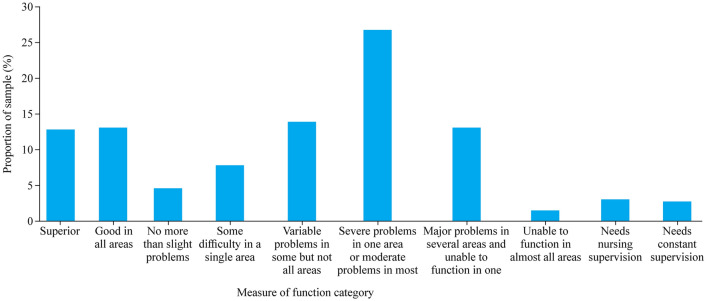
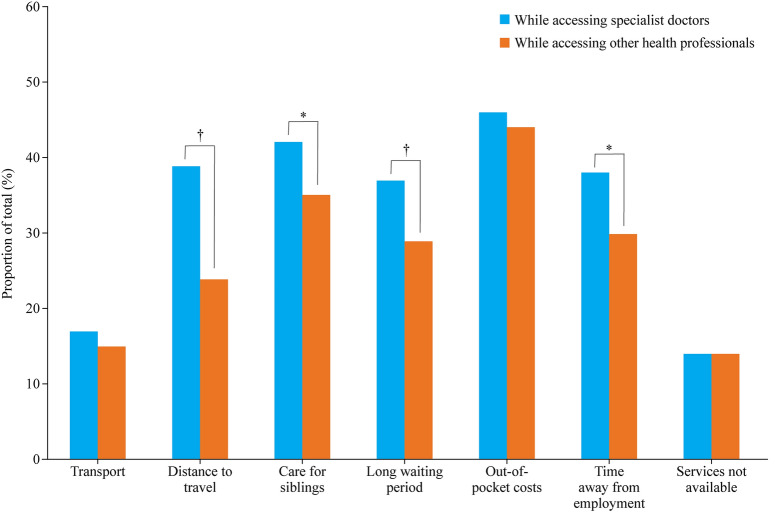
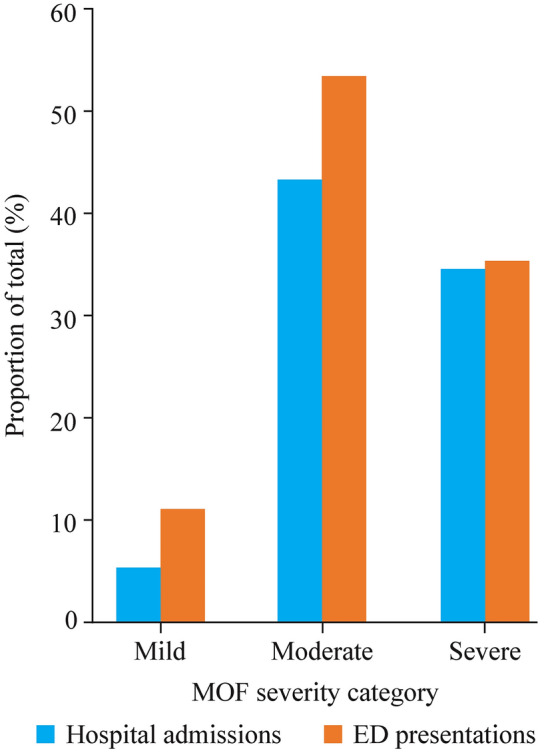
Parents of 462 children with over 240 rare diseases completed the survey. Compared with the general population, these children were more likely to be hospitalized [odds ratio (OR) = 17.25, 95% confidence interval (CI) = 15.50-19.20] and present to the ED (OR = 4.15, 95% CI = 3.68-4.68) or a family physician (OR = 4.14, 95% CI = 3.72-4.60). Child functional impairment was nil/mild (31%), moderate (48%) or severe (22%). Compared to children with nil/mild impairment, those with severe impairment were more likely to be hospitalized (OR = 13.39, 95% CI = 7.65-23.44) and present to the ED (OR = 11.16, 95% CI = 6.46-19.27). Most children (75%) lived in major cities, but children from regional (OR = 2.78, 95% CI = 1.72-4.55) and remote areas (OR = 9.09, 95% CI = 3.03-25.00) experienced significantly more barriers to healthcare access than children from major cities. Barriers included distance to travel, out-of-pocket costs, and lack of specialist medical and other health services.
Children with rare diseases, especially those with severe functional impairment have an enormous impact on health services, and better integrated multidisciplinary services with patient-centered care are needed. Access must be improved for children living in rural and remote settings.
患有罕见疾病的儿童在家庭和学校中面临挑战,经常需要多学科的医疗保健。我们旨在确定澳大利亚罕见病儿童的卫生服务利用情况和获得医疗保健的障碍。
父母通过在线调查完成了对卫生专业人员和急诊部(ED)就诊、住院和获取服务障碍的调查。获取服务的潜在障碍包括居住地点(城市、地区、偏远地区)和儿童健康相关功能,使用经过验证的、由父母完成的功能工具进行评估。
240 多种罕见疾病儿童的父母完成了调查。与一般人群相比,这些儿童更有可能住院[优势比(OR)=17.25,95%置信区间(CI)=15.50-19.20]和到 ED 就诊(OR=4.15,95%CI=3.68-4.68)或家庭医生就诊(OR=4.14,95%CI=3.72-4.60)。儿童的功能损伤为无/轻度(31%)、中度(48%)或重度(22%)。与无/轻度损伤的儿童相比,严重损伤的儿童更有可能住院(OR=13.39,95%CI=7.65-23.44)和到 ED 就诊(OR=11.16,95%CI=6.46-19.27)。大多数儿童(75%)居住在主要城市,但来自地区(OR=2.78,95%CI=1.72-4.55)和偏远地区(OR=9.09,95%CI=3.03-25.00)的儿童比来自主要城市的儿童面临更多的医疗保健获取障碍。障碍包括旅行距离、自付费用以及缺乏专科医疗和其他健康服务。
患有罕见疾病的儿童,尤其是功能严重受损的儿童,对卫生服务产生了巨大影响,需要更好的多学科综合服务和以患者为中心的护理。必须改善农村和偏远地区儿童的医疗服务获取途径。