• 文献检索
  • 文档翻译
  • 深度研究
  • 学术资讯
  • Suppr Zotero 插件Zotero 插件
  • 邀请有礼
  • 套餐&价格
  • 历史记录
应用&插件
Suppr Zotero 插件Zotero 插件浏览器插件Mac 客户端Windows 客户端微信小程序
定价
高级版会员购买积分包购买API积分包
服务
文献检索文档翻译深度研究API 文档MCP 服务
关于我们
关于 Suppr公司介绍联系我们用户协议隐私条款
关注我们

Suppr 超能文献

核心技术专利:CN118964589B侵权必究
粤ICP备2023148730 号-1Suppr @ 2026

文献检索

告别复杂PubMed语法,用中文像聊天一样搜索,搜遍4000万医学文献。AI智能推荐,让科研检索更轻松。

立即免费搜索

文件翻译

保留排版,准确专业,支持PDF/Word/PPT等文件格式,支持 12+语言互译。

免费翻译文档

深度研究

AI帮你快速写综述,25分钟生成高质量综述,智能提取关键信息,辅助科研写作。

立即免费体验

预测遗传性乳腺癌和卵巢癌综合征家庭中的沟通开放性:自然语言处理分析

Predicting Openness of Communication in Families With Hereditary Breast and Ovarian Cancer Syndrome: Natural Language Processing Analysis.

作者信息

Baroutsou Vasiliki, Cerqueira Gonzalez Pena Rodrigo, Schweighoffer Reka, Caiata-Zufferey Maria, Kim Sue, Hesse-Biber Sharlene, Ciorba Florina M, Lauer Gerhard, Katapodi Maria

机构信息

Department of Clinical Research, University of Basel, Basel, Switzerland.

Center for Data Analytics, University of Basel, Basel, Switzerland.

出版信息

JMIR Form Res. 2023 Jan 19;7:e38399. doi: 10.2196/38399.

DOI:10.2196/38399
PMID:36656633
原文链接:https://pmc.ncbi.nlm.nih.gov/articles/PMC9896354/
Abstract

BACKGROUND

In health care research, patient-reported opinions are a critical element of personalized medicine and contribute to optimal health care delivery. The importance of integrating natural language processing (NLP) methods to extract patient-reported opinions has been gradually acknowledged over the past years. One form of NLP is sentiment analysis, which extracts and analyses information by detecting feelings (thoughts, emotions, attitudes, etc) behind words. Sentiment analysis has become particularly popular following the rise of digital interactions. However, NLP and sentiment analysis in the context of intrafamilial communication for genetic cancer risk is still unexplored. Due to privacy laws, intrafamilial communication is the main avenue to inform at-risk relatives about the pathogenic variant and the possibility of increased cancer risk.

OBJECTIVE

The study examined the role of sentiment in predicting openness of intrafamilial communication about genetic cancer risk associated with hereditary breast and ovarian cancer (HBOC) syndrome.

METHODS

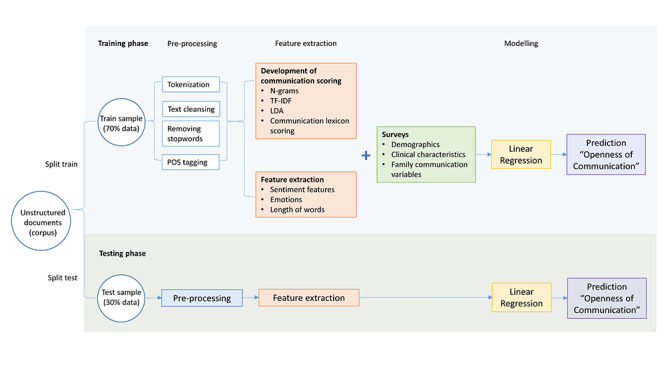
We used narratives derived from 53 in-depth interviews with individuals from families that harbor pathogenic variants associated with HBOC: first, to quantify openness of communication about cancer risk, and second, to examine the role of sentiment in predicting openness of communication. The interviews were conducted between 2019 and 2021 in Switzerland and South Korea using the same interview guide. We used NLP to extract and quantify textual features to construct a handcrafted lexicon about interpersonal communication of genetic testing results and cancer risk associated with HBOC. Moreover, we examined the role of sentiment in predicting openness of communication using a stepwise linear regression model. To test model accuracy, we used a split-validation set. We measured the performance of the training and testing model using area under the curve, sensitivity, specificity, and root mean square error.

RESULTS

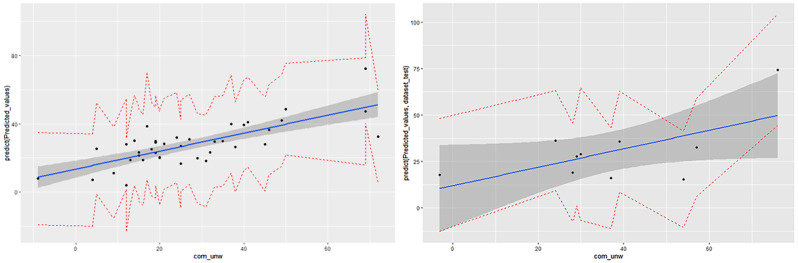
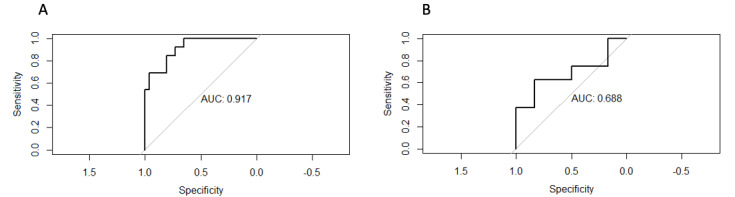
Higher "openness of communication" scores were associated with higher overall net sentiment score of the narrative, higher fear, being single, having nonacademic education, and higher informational support within the family. Our results demonstrate that NLP was highly effective in analyzing unstructured texts from individuals of different cultural and linguistic backgrounds and could also reliably predict a measure of "openness of communication" (area under the curve=0.72) in the context of genetic cancer risk associated with HBOC.

CONCLUSIONS

Our study showed that NLP can facilitate assessment of openness of communication in individuals carrying a pathogenic variant associated with HBOC. Findings provided promising evidence that various features from narratives such as sentiment and fear are important predictors of interpersonal communication and self-disclosure in this context. Our approach is promising and can be expanded in the field of personalized medicine and technology-mediated communication.

摘要

背景

在医疗保健研究中,患者报告的意见是个性化医疗的关键要素,有助于实现最佳医疗服务。在过去几年中,人们逐渐认识到整合自然语言处理(NLP)方法来提取患者报告意见的重要性。NLP的一种形式是情感分析,它通过检测词语背后的情感(思想、情绪、态度等)来提取和分析信息。随着数字互动的兴起,情感分析变得特别流行。然而,在遗传性癌症风险的家庭内部沟通背景下的NLP和情感分析仍未得到探索。由于隐私法,家庭内部沟通是告知高危亲属致病变异和癌症风险增加可能性的主要途径。

目的

本研究探讨了情感在预测与遗传性乳腺癌和卵巢癌(HBOC)综合征相关的遗传性癌症风险的家庭内部沟通开放性方面的作用。

方法

我们使用了对携带与HBOC相关致病变异的家庭中的个体进行的53次深入访谈得出的叙述:首先,量化关于癌症风险的沟通开放性;其次,研究情感在预测沟通开放性方面的作用。访谈于2019年至2021年在瑞士和韩国进行,使用相同的访谈指南。我们使用NLP提取和量化文本特征,以构建一个关于基因检测结果人际沟通和与HBOC相关的癌症风险的手工词典。此外,我们使用逐步线性回归模型研究情感在预测沟通开放性方面的作用。为了测试模型准确性,我们使用了一个分割验证集。我们使用曲线下面积、敏感性、特异性和均方根误差来衡量训练和测试模型的性能。

结果

较高的“沟通开放性”得分与叙述的总体净情感得分较高、恐惧程度较高、单身、接受非学术教育以及家庭内部较高的信息支持相关。我们的结果表明,NLP在分析来自不同文化和语言背景个体的非结构化文本方面非常有效,并且在与HBOC相关的遗传性癌症风险背景下,也能够可靠地预测“沟通开放性”的度量(曲线下面积 = 0.72)。

结论

我们的研究表明,NLP可以促进对携带与HBOC相关致病变异个体的沟通开放性的评估。研究结果提供了有希望的证据,表明诸如情感和恐惧等叙述中的各种特征是这种背景下人际沟通和自我披露的重要预测因素。我们的方法很有前景,可以在个性化医疗和技术介导的沟通领域中得到扩展。
https://cdn.ncbi.nlm.nih.gov/pmc/blobs/07a5/9896354/782fba33dfda/formative_v7i1e38399_fig5.jpg
https://cdn.ncbi.nlm.nih.gov/pmc/blobs/07a5/9896354/bf62cfabd302/formative_v7i1e38399_fig1.jpg
https://cdn.ncbi.nlm.nih.gov/pmc/blobs/07a5/9896354/db67cb53ec6c/formative_v7i1e38399_fig2.jpg
https://cdn.ncbi.nlm.nih.gov/pmc/blobs/07a5/9896354/c2464eda14e5/formative_v7i1e38399_fig3.jpg
https://cdn.ncbi.nlm.nih.gov/pmc/blobs/07a5/9896354/5e2cda34b109/formative_v7i1e38399_fig4.jpg
https://cdn.ncbi.nlm.nih.gov/pmc/blobs/07a5/9896354/782fba33dfda/formative_v7i1e38399_fig5.jpg
https://cdn.ncbi.nlm.nih.gov/pmc/blobs/07a5/9896354/bf62cfabd302/formative_v7i1e38399_fig1.jpg
https://cdn.ncbi.nlm.nih.gov/pmc/blobs/07a5/9896354/db67cb53ec6c/formative_v7i1e38399_fig2.jpg
https://cdn.ncbi.nlm.nih.gov/pmc/blobs/07a5/9896354/c2464eda14e5/formative_v7i1e38399_fig3.jpg
https://cdn.ncbi.nlm.nih.gov/pmc/blobs/07a5/9896354/5e2cda34b109/formative_v7i1e38399_fig4.jpg
https://cdn.ncbi.nlm.nih.gov/pmc/blobs/07a5/9896354/782fba33dfda/formative_v7i1e38399_fig5.jpg

相似文献

1
Predicting Openness of Communication in Families With Hereditary Breast and Ovarian Cancer Syndrome: Natural Language Processing Analysis.预测遗传性乳腺癌和卵巢癌综合征家庭中的沟通开放性:自然语言处理分析
JMIR Form Res. 2023 Jan 19;7:e38399. doi: 10.2196/38399.
2
Using a Tailored Digital Health Intervention for Family Communication and Cascade Genetic Testing in Swiss and Korean Families With Hereditary Breast and Ovarian Cancer: Protocol for the DIALOGUE Study.在瑞士和韩国遗传性乳腺癌和卵巢癌家庭中使用定制数字健康干预进行家庭沟通和级联基因检测:DIALOGUE研究方案
JMIR Res Protoc. 2021 Jun 11;10(6):e26264. doi: 10.2196/26264.
3
Cancer Predisposition Cascade Screening for Hereditary Breast/Ovarian Cancer and Lynch Syndromes in Switzerland: Study Protocol.瑞士遗传性乳腺癌/卵巢癌和林奇综合征的癌症易感性级联筛查:研究方案
JMIR Res Protoc. 2017 Sep 20;6(9):e184. doi: 10.2196/resprot.8138.
4
BRCAShare-Assessment of an animated digital message for intrafamilial communication of pathogenic variant positive test results: A feasibility study.BRCAShare——一项关于用于家族内致病性变异阳性检测结果沟通的动画数字信息的评估:一项可行性研究。
J Genet Couns. 2023 Apr;32(2):475-485. doi: 10.1002/jgc4.1656. Epub 2022 Nov 25.
5
Building lexicon-based sentiment analysis model for low-resource languages.为低资源语言构建基于词典的情感分析模型。
MethodsX. 2023 Oct 22;11:102460. doi: 10.1016/j.mex.2023.102460. eCollection 2023 Dec.
6
Construction of an Emotional Lexicon of Patients With Breast Cancer: Development and Sentiment Analysis.构建乳腺癌患者情绪词汇库:编制与情感分析
J Med Internet Res. 2023 Sep 12;25:e44897. doi: 10.2196/44897.
7
Intention to Inform Relatives, Rates of Cascade Testing, and Preference for Patient-Mediated Communication in Families Concerned with Hereditary Breast and Ovarian Cancer and Lynch Syndrome: The Swiss CASCADE Cohort.遗传性乳腺癌和卵巢癌以及林奇综合征相关家庭中告知亲属的意愿、级联检测率和对患者介导沟通的偏好:瑞士级联队列研究
Cancers (Basel). 2022 Mar 23;14(7):1636. doi: 10.3390/cancers14071636.
8
Efficacy of ChatGPT in Cantonese Sentiment Analysis: Comparative Study.ChatGPT 在粤语情感分析中的有效性:对比研究。
J Med Internet Res. 2024 Jan 30;26:e51069. doi: 10.2196/51069.
9
Boosting Delirium Identification Accuracy With Sentiment-Based Natural Language Processing: Mixed Methods Study.基于情感的自然语言处理提高谵妄识别准确性:混合方法研究
JMIR Med Inform. 2022 Dec 20;10(12):e38161. doi: 10.2196/38161.
10
The Real-World Experiences of Persons With Multiple Sclerosis During the First COVID-19 Lockdown: Application of Natural Language Processing.多发性硬化症患者在首次新冠疫情封锁期间的真实世界经历:自然语言处理的应用
JMIR Med Inform. 2022 Nov 10;10(11):e37945. doi: 10.2196/37945.

本文引用的文献

1
Using a Tailored Digital Health Intervention for Family Communication and Cascade Genetic Testing in Swiss and Korean Families With Hereditary Breast and Ovarian Cancer: Protocol for the DIALOGUE Study.在瑞士和韩国遗传性乳腺癌和卵巢癌家庭中使用定制数字健康干预进行家庭沟通和级联基因检测:DIALOGUE研究方案
JMIR Res Protoc. 2021 Jun 11;10(6):e26264. doi: 10.2196/26264.
2
Predicting changes in substance use following psychedelic experiences: natural language processing of psychedelic session narratives.预测迷幻体验后物质使用的变化:迷幻体验叙述的自然语言处理。
Am J Drug Alcohol Abuse. 2021 Jul 4;47(4):444-454. doi: 10.1080/00952990.2021.1910830. Epub 2021 Jun 5.
3
A Proposed Sentiment Analysis Deep Learning Algorithm for Analyzing COVID-19 Tweets.
一种用于分析新冠疫情推文的情感分析深度学习算法提案
Inf Syst Front. 2021;23(6):1417-1429. doi: 10.1007/s10796-021-10135-7. Epub 2021 Apr 20.
4
Sharing genetic test results with family members of BRCA, PALB2, CHEK2, and ATM carriers.与 BRCA、PALB2、CHEK2 和 ATM 携带者的家庭成员共享基因检测结果。
Patient Educ Couns. 2021 Apr;104(4):720-725. doi: 10.1016/j.pec.2020.12.019. Epub 2021 Jan 5.
5
Prediction of Loneliness in Older Adults Using Natural Language Processing: Exploring Sex Differences in Speech.利用自然语言处理预测老年人的孤独感:探索言语中的性别差异。
Am J Geriatr Psychiatry. 2021 Aug;29(8):853-866. doi: 10.1016/j.jagp.2020.09.009. Epub 2020 Sep 12.
6
Examining Patterns of Information Exchange and Social Support in a Web-Based Health Community: Exponential Random Graph Models.基于网络的健康社区中信息交流和社会支持模式的研究:指数随机图模型。
J Med Internet Res. 2020 Sep 29;22(9):e18062. doi: 10.2196/18062.
7
Barriers and facilitators for cascade testing in genetic conditions: a systematic review.遗传疾病级联检测的障碍和促进因素:系统评价。
Eur J Hum Genet. 2020 Dec;28(12):1631-1644. doi: 10.1038/s41431-020-00725-5. Epub 2020 Sep 18.
8
Parent of Origin Effects on Family Communication of Risk in + Women: A Qualitative Investigation of Human Factors in Cascade Screening.母源效应在携带 BRCA1/2 突变女性家庭风险沟通中的作用:级联筛查中人为因素的定性研究
Cancers (Basel). 2020 Aug 17;12(8):2316. doi: 10.3390/cancers12082316.
9
Experience of Ambulatory Cancer Care: Understanding Patients' Perspectives of Quality Using Sentiment Analysis.门诊癌症护理体验:使用情感分析理解患者对质量的看法。
Cancer Nurs. 2021;44(6):E331-E338. doi: 10.1097/NCC.0000000000000845.
10
How to automatically turn patient experience free-text responses into actionable insights: a natural language programming (NLP) approach.如何自动将患者体验自由文本回复转化为可操作的见解:一种自然语言编程(NLP)方法。
BMC Med Inform Decis Mak. 2020 May 27;20(1):97. doi: 10.1186/s12911-020-1104-5.