Department of Psychiatry, Brain Behavior Laboratory, Perelman School of Medicine, University of Pennsylvania, Philadelphia, PA 19104, USA; Lifespan Brain Institute (LiBI), Children's Hospital of Philadelphia and Penn Medicine, Philadelphia, PA 19104, USA.
Department of Psychiatry, Brain Behavior Laboratory, Perelman School of Medicine, University of Pennsylvania, Philadelphia, PA 19104, USA.
J Neurosci Methods. 2023 Feb 15;386:109795. doi: 10.1016/j.jneumeth.2023.109795. Epub 2023 Jan 16.
Traditional paper-and-pencil neurocognitive evaluations and semi-structured mental health interviews can take hours to administer and score. Computerized assessment has decreased that burden substantially, and contemporary psychometric tools such as item response theory and computerized adaptive testing (CAT) allow even further abbreviation.
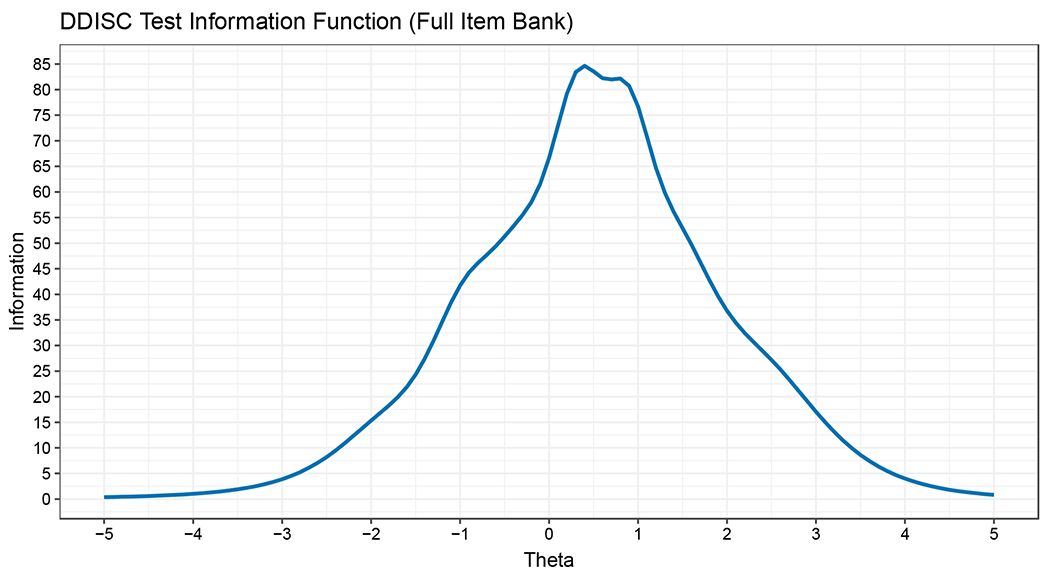
The goal of this paper was to describe the application of CAT and related methods to the Penn Computerized Neurocognitive Battery (CNB) and a well-validated clinical assessment in order to increase efficiency in assessment and relevant domain coverage. To calibrate item banks for CAT, N = 5053 participants (63% female; mean age 45 years, range 18-80) were collected from across the United States via crowdsourcing, providing item parameters that were then linked to larger item banks and used in individual test construction. Tests not amenable to CAT were abbreviated using complementary short-form methods.
The final "CAT-CCNB" battery comprised 21 cognitive tests (compared to 14 in the original) and five adaptive clinical scales (compared to 16 in the original).
This new battery, derived with contemporary psychometric approaches, provides further improvements over existing assessments that use collections of fixed-length tests developed for stand-alone administration. The CAT-CCNB provides an improved version of the CNB that shows promise as a maximally efficient tool for neuropsychiatric assessment.
We anticipate CAT-CCNB will help satisfy the clear need for broad yet efficient measurement of cognitive and clinical domains, facilitating implementation of large-scale, "big science" approaches to data collection, and potential widespread clinical implementation.
传统的纸笔式神经认知评估和半结构化心理健康访谈可能需要数小时的时间来进行管理和评分。计算机化评估大大减轻了这种负担,而当代心理计量学工具,如项目反应理论和计算机化自适应测试(CAT),甚至可以进一步缩短测试时间。
本文的目的是描述 CAT 及其相关方法在宾夕法尼亚计算机神经认知电池(CNB)和经过充分验证的临床评估中的应用,以提高评估效率和相关领域的覆盖范围。为了对 CAT 进行项目库校准,通过众包在美国各地收集了 N=5053 名参与者(63%为女性;平均年龄 45 岁,范围 18-80 岁),提供了项目参数,然后将这些参数与更大的项目库联系起来,并用于个体测试的构建。不适合 CAT 的测试使用互补的短形式方法进行缩写。
最终的“CAT-CCNB”电池由 21 项认知测试组成(与原始的 14 项相比)和 5 项自适应临床量表(与原始的 16 项相比)。
这种新的电池,使用当代心理计量学方法开发,与使用为单独管理而开发的固定长度测试集合的现有评估相比,提供了进一步的改进。CAT-CCNB 提供了 CNB 的改进版本,有望成为神经精神病评估的最有效工具。
我们预计 CAT-CCNB 将有助于满足广泛而高效测量认知和临床领域的明显需求,促进大规模“大科学”数据收集方法的实施,并可能在临床中广泛实施。