Liu Yang, Zhang Chao, Wang Qianwen, Wu Kangze, Sun Zhouyi, Tang Zhe, Zhang Bo
The Fourth Affiliated Hospital, Zhejiang University School of Medicine, Yiwu, Zhejiang, 322000, People's Republic of China.
Center for Evidence-Based Medicine and Clinical Research, Taihe Hospital, Hubei University of Medicine, Shiyan, Hubei, 442000, People's Republic of China.
Clin Epidemiol. 2023 Jan 12;15:55-71. doi: 10.2147/CLEP.S388323. eCollection 2023.
This study aimed to evaluate the global colorectal cancer(CRC) trend and the relevant risk factors from 1990 to 2019 and for better policymaking and resource allocation.
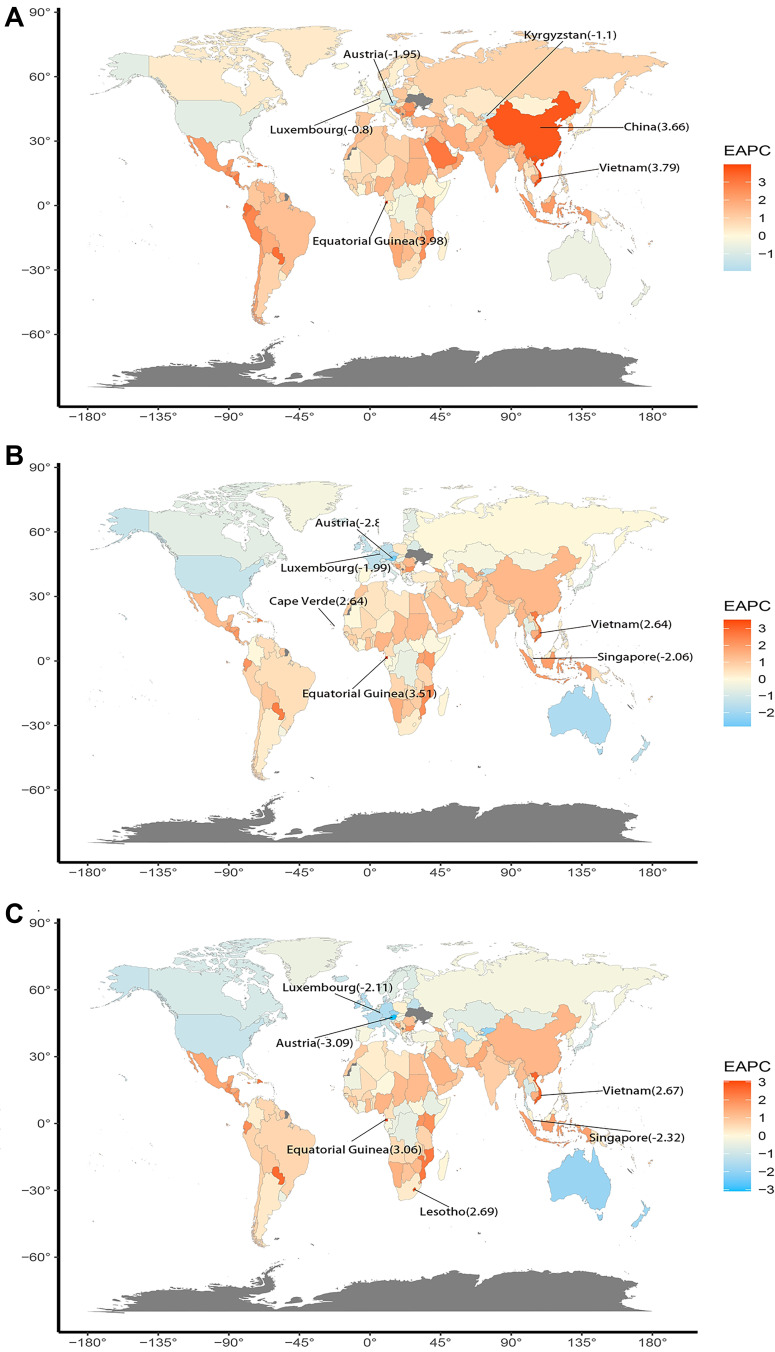
Data on CRC, including incidence, mortality and disability adjusted life year (DALY) rates, were extracted from the 2019 Global Burden of Disease (GBD) study. The estimated annual percentage changes (EAPCs) were calculated to assess the temporal trend of incidence, mortality and DALYs. The Bayesian age-period-cohort model(BAPC) was used to predict the future burden of CRC.
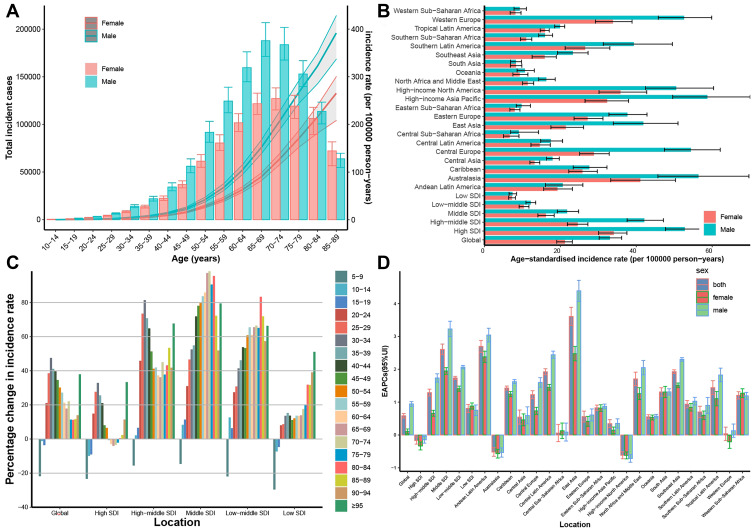
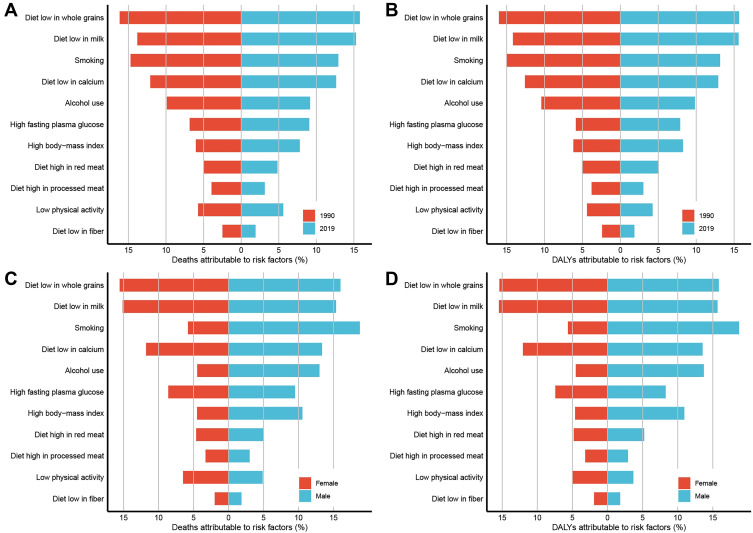
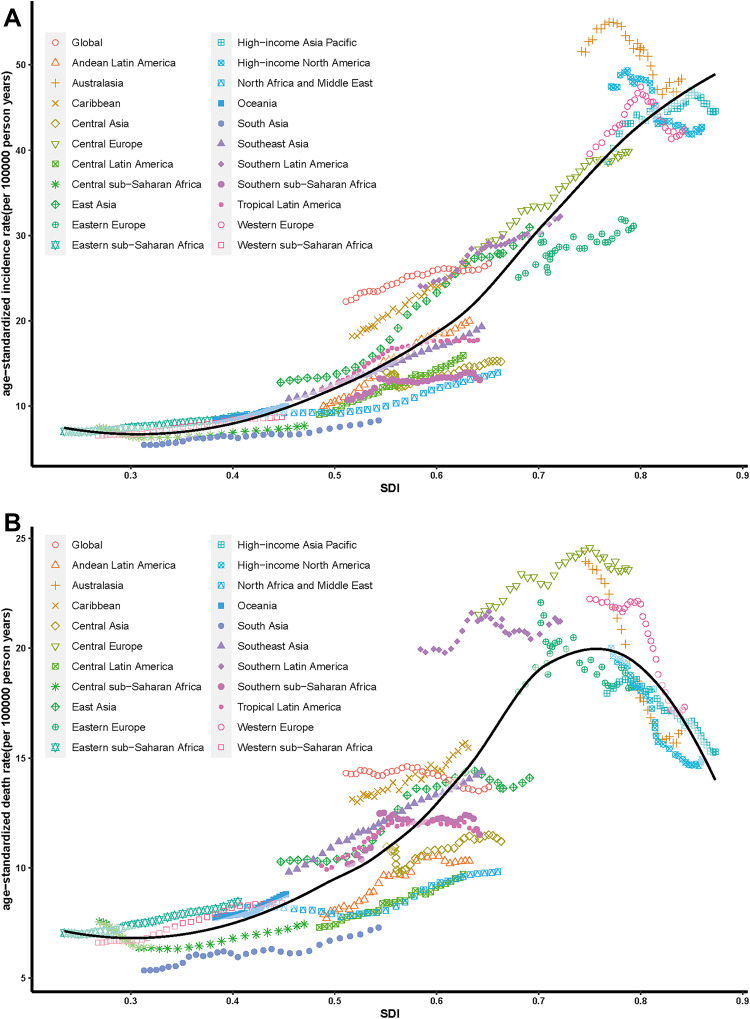
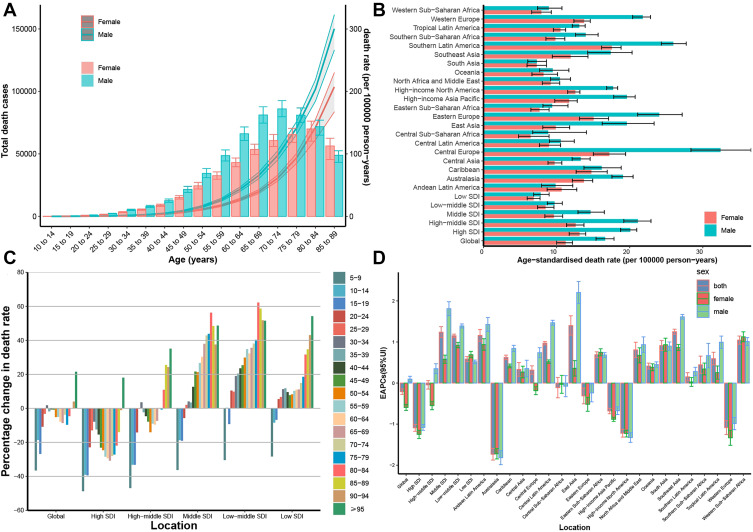
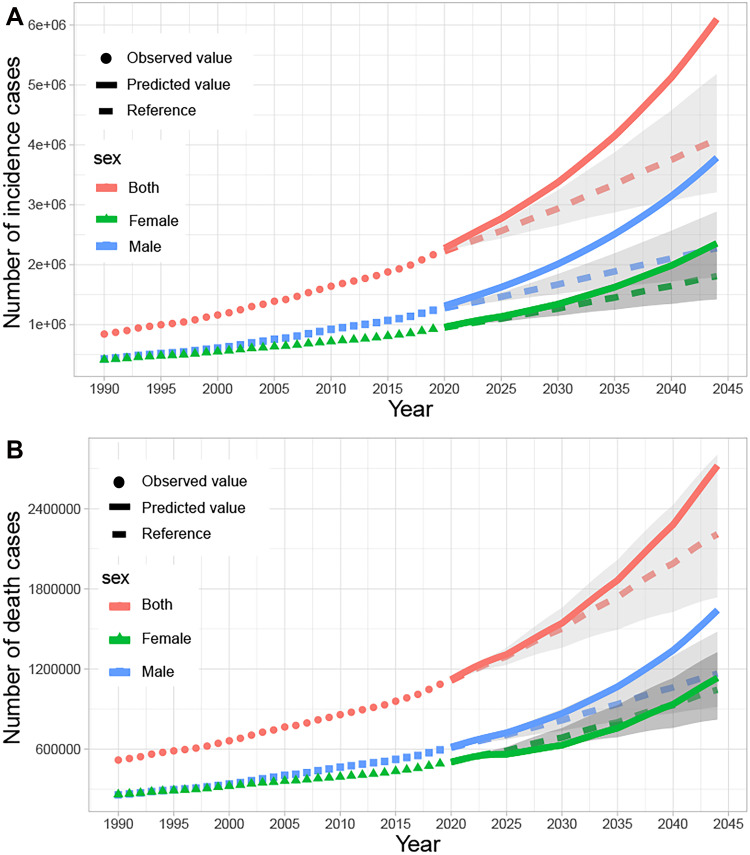
In 2019, a total of 2.17 million CRC cases were reported worldwide, a 157% increase from 1990. In high-social demographic index (SDI) regions, the trend of age-standardized incidence rate(ASIR) tended to decrease, while the proportion of people under 50 years of age tended to increase. Although the number of deaths and DALYs increased, the age-standardized death rate (ASDR) and age-standardized DALY rate decreased. The CRC burden was growing fastest in middle-SDI regions, especially in East Asia, followed by low SDI regions. In addition, the milk intake, High-BMI and high fasting plasma glucose play a more important role in on CRC. The predicted cases and deaths in global continued to increase to 2044. And there is an upward trend in ASIR for both men and women.
In developed regions, the CRC burden continues to decrease, while the CRC burden become more and more severe in developing regions. Overall, the burden of CRC will rising in the near future. Therefore, reasonable resource allocation and prevention policies should be implemented. Developing countries needs more attention.
本研究旨在评估1990年至2019年全球结直肠癌(CRC)的趋势及相关风险因素,以促进更好的政策制定和资源分配。
从《2019年全球疾病负担(GBD)研究》中提取CRC数据,包括发病率、死亡率和伤残调整生命年(DALY)率。计算估计年百分比变化(EAPC)以评估发病率、死亡率和DALY的时间趋势。使用贝叶斯年龄-时期-队列模型(BAPC)预测CRC的未来负担。
2019年,全球共报告217万例CRC病例,较1990年增加了157%。在高社会人口指数(SDI)地区,年龄标准化发病率(ASIR)呈下降趋势,而50岁以下人群的比例呈上升趋势。尽管死亡人数和DALY有所增加,但年龄标准化死亡率(ASDR)和年龄标准化DALY率有所下降。CRC负担在中SDI地区增长最快,尤其是东亚地区,其次是低SDI地区。此外,牛奶摄入量、高体重指数和高空腹血糖在CRC中起更重要的作用。预计到2044年全球病例数和死亡数将持续增加。男性和女性的ASIR均呈上升趋势。
在发达地区,CRC负担持续下降,而在发展中地区CRC负担日益严重。总体而言,CRC负担在不久的将来将上升。因此,应实施合理的资源分配和预防政策。发展中国家需要更多关注。