Departments of Transplantation and Cancer Biology, Mayo Clinic, Jacksonville, FL 32224, USA.
Int J Oncol. 2023 Feb;62(2). doi: 10.3892/ijo.2023.5479. Epub 2023 Jan 20.
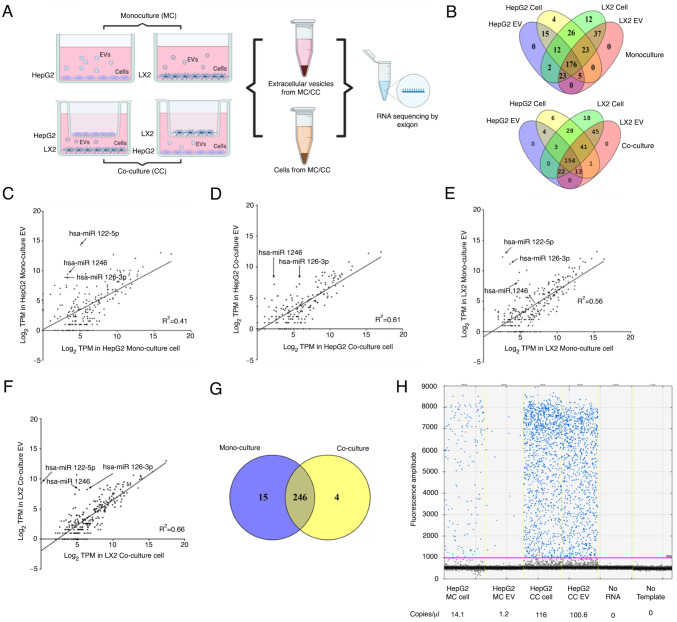
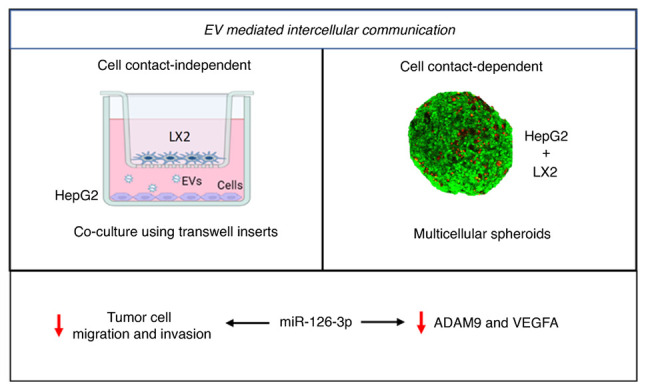
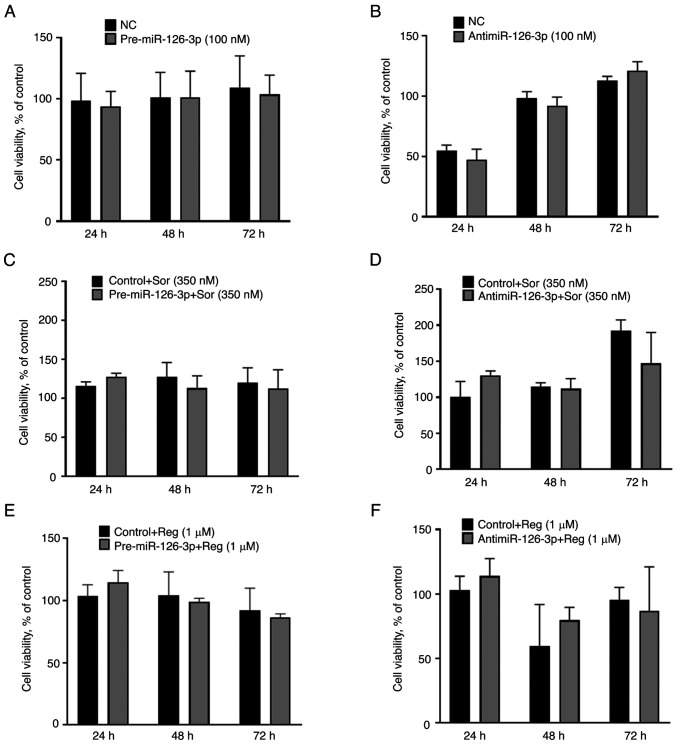
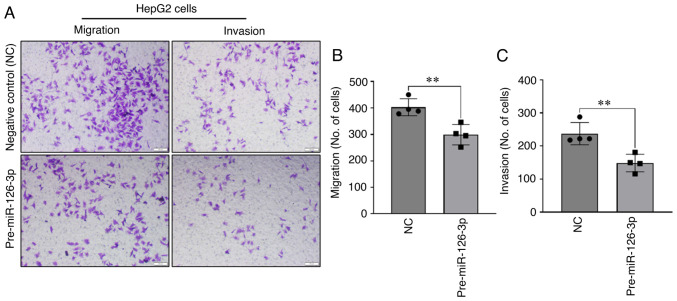
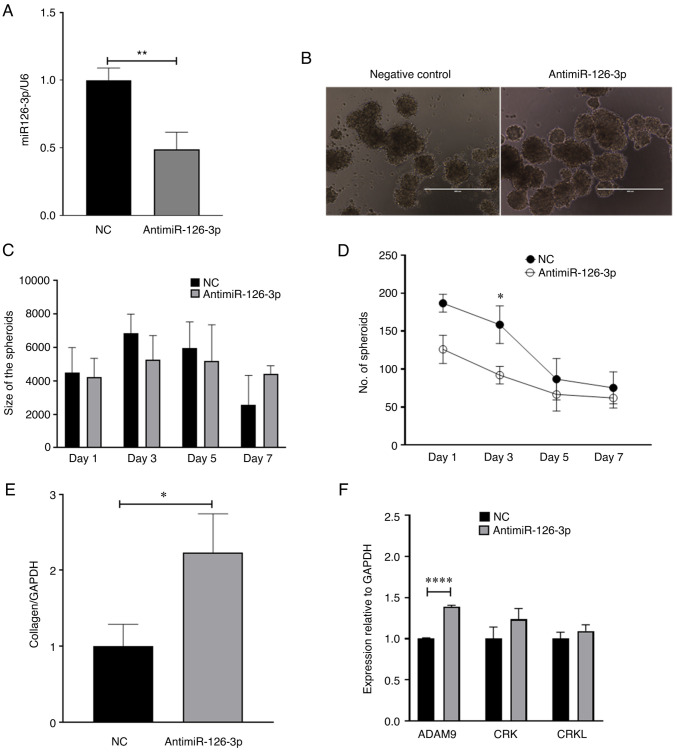
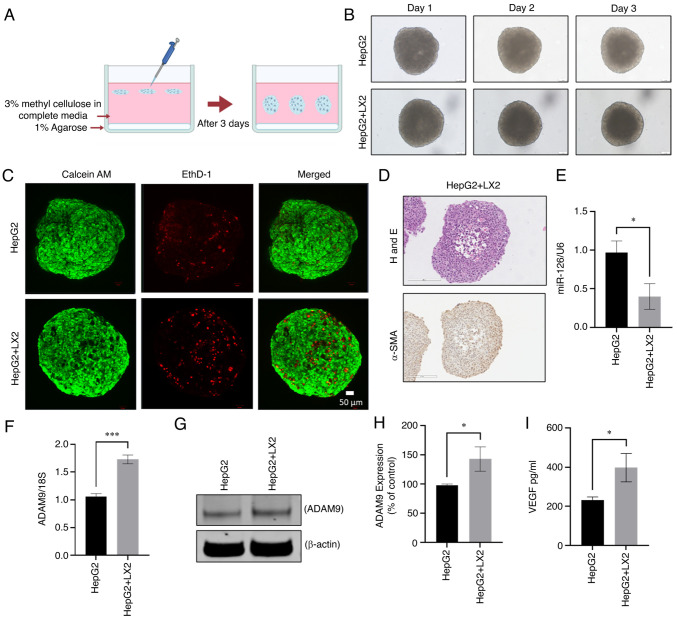
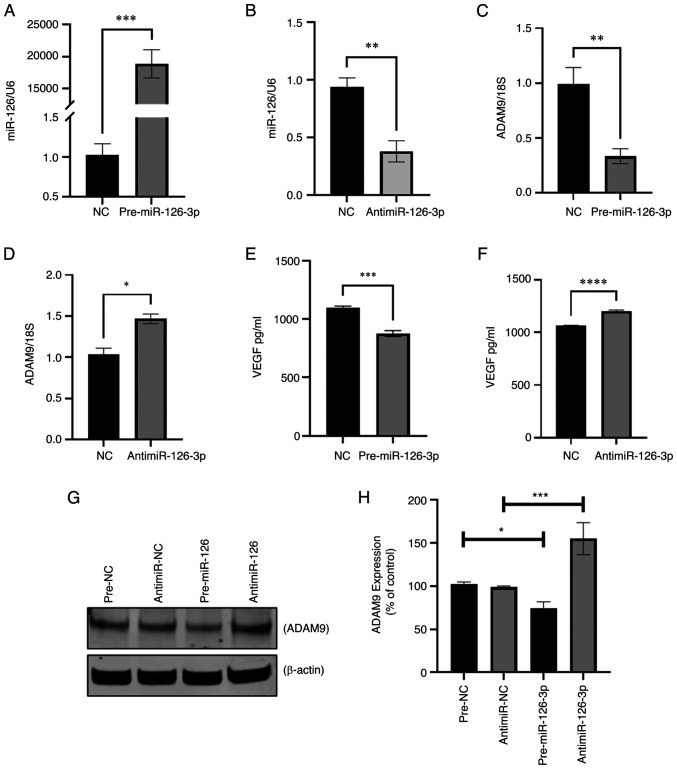
Extracellular vesicles (EVs) and their contents are gaining recognition as important mediators of intercellular communication through the transfer of bioactive molecules, such as non‑coding RNA. The present study comprehensively assessed the microRNA (miRNA/miR) content within EVs released from HepG2 liver cancer (LC) cells and LX2 hepatic stellate cells (HSCs) and determined the contribution of EV miRNA to intercellular communication. Using both transwell and spheroid co‑cultures of LC cells and HSCs, miR‑126‑3p within EV was established as a mediator of HSC to LC cell communication that influenced tumor cell migration and invasion, as well as the growth of multicellular LC/HSC spheroids. Manipulation of miR‑126‑3p either by enforced expression using pre‑miR‑126‑3p or by inhibition using antimiR‑126‑3p did not alter tumor cell viability, proliferation or sensitivity to either sorafenib or regorafenib. By contrast, enforced expression of miR‑126‑3p decreased tumor‑cell migration. Knockdown of miR‑126‑3p in tumor cells increased disintegrin and metalloproteinase domain‑containing protein 9 (ADAM9) expression and in HSCs increased collagen‑1A1 accumulation with an increase in compactness of multicellular spheroids. Within LC/HSC spheroids, ADAM9 and vascular endothelial growth factor expression was increased by silencing of miR‑126‑3p but diminished with the restoration of miR‑126‑3p. These studies implicate miR‑126‑3p in functional effects on migration, invasion and spheroid growth of tumor cells in the presence of HSCs, and thereby demonstrate functional EV‑RNA‑based intercellular signaling between HSCs and LC cells that is directly relevant to tumor‑cell behavior.
细胞外囊泡 (EV) 及其内容物作为生物活性分子(如非编码 RNA)的重要细胞间通讯介质而受到越来越多的关注。本研究全面评估了 HepG2 肝癌 (LC) 细胞和 LX2 肝星状细胞 (HSC) 释放的 EV 中的 microRNA (miRNA/miR) 含量,并确定了 EV miRNA 对细胞间通讯的贡献。通过 LC 细胞和 HSC 的 Transwell 和球体共培养,证实 EV 中的 miR-126-3p 是 HSC 与 LC 细胞通讯的介质,可影响肿瘤细胞迁移和侵袭,以及多细胞 LC/HSC 球体的生长。通过使用前体 miR-126-3p 进行强制表达或使用 antimiR-126-3p 进行抑制来操纵 miR-126-3p,既不会改变肿瘤细胞的活力、增殖或对索拉非尼或regorafenib 的敏感性。相比之下,强制表达 miR-126-3p 可降低肿瘤细胞迁移。肿瘤细胞中 miR-126-3p 的敲低增加了 disintegrin 和 metalloproteinase domain-containing protein 9 (ADAM9) 的表达,而在 HSC 中增加了胶原 1A1 的积累,并增加了多细胞球体的致密性。在 LC/HSC 球体中,沉默 miR-126-3p 可增加 ADAM9 和血管内皮生长因子的表达,但通过恢复 miR-126-3p 可降低其表达。这些研究表明 miR-126-3p 参与了在 HSC 存在下肿瘤细胞迁移、侵袭和球体生长的功能效应,并证明了 HSC 和 LC 细胞之间基于 EV-RNA 的细胞间信号传递具有功能,与肿瘤细胞行为直接相关。