Pérez-Iglesias Juan Manuel, Bach Nadia Carla, Colombetti Patricia Laura, Acuña Pablo, Colman-Lerner Jorge Esteban, González Silvia Patricia, Brodeur Julie Celine, Almeida Cesar Américo
Laboratorio de Química Analítica Ambiental (LAQUAA), Instituto de Química de San Luis (INQUISAL-CONICET), FQByF, UNSL, Ejército de Los Andes 950, San Luis D5700, Argentina.
Departamento de Ciencias Ambientales y Producción, Universidad Nacional de Los Comechingones, Héroes de Malvinas S/N, Merlo, San Luis D5881, Argentina.
Toxics. 2023 Jan 12;11(1):73. doi: 10.3390/toxics11010073.
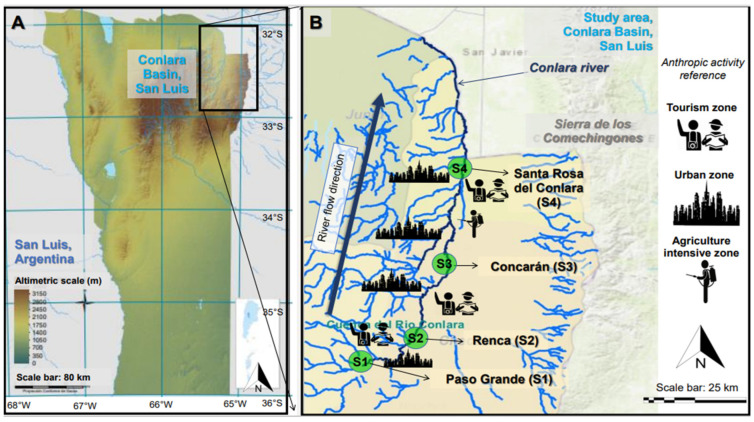
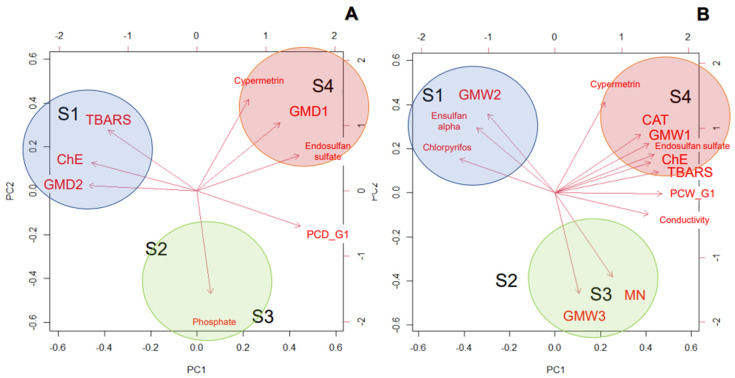
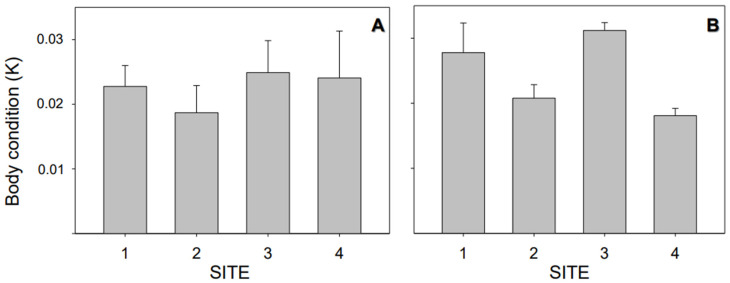
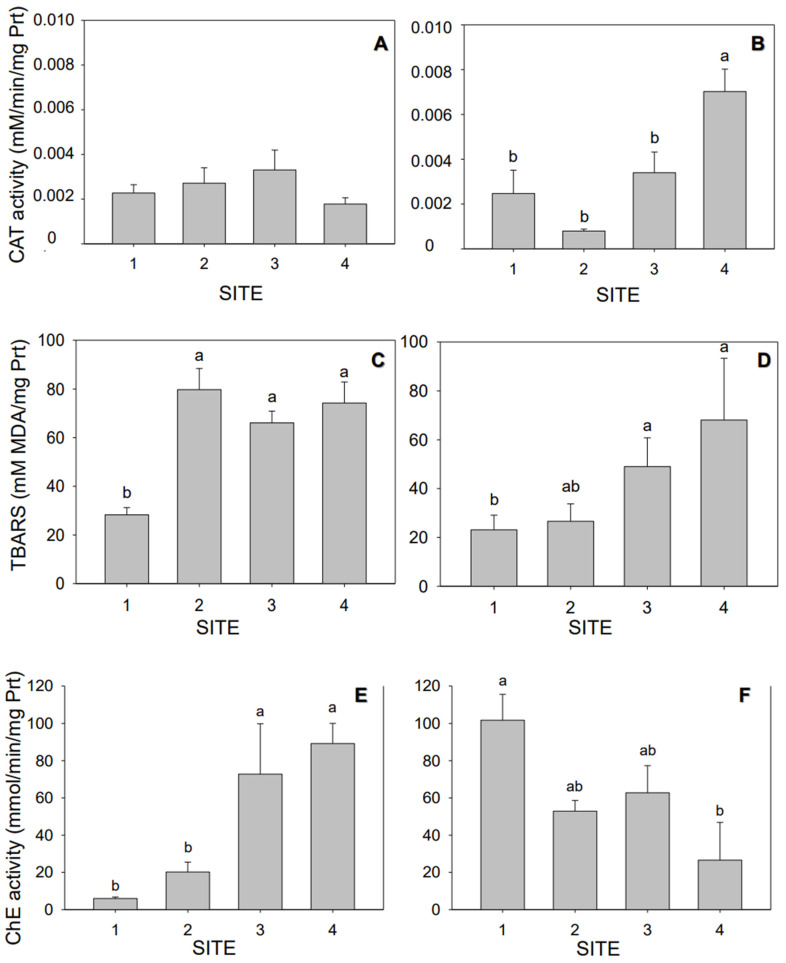
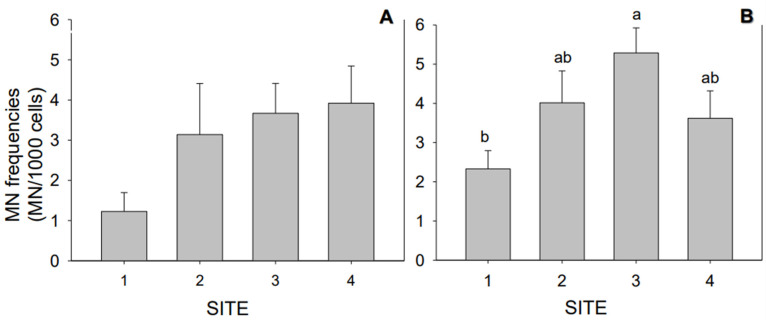
Industrial, agricultural, and urban areas can be sources of pollution and a cause of habitat fragmentation. The Conlara River located in the northeast of San Luis Province suffers different environmental pressures along its course from urban to agro-industrial areas. The present study aims to assess the water quality of the Conlara basin by evaluating how metals and pesticide contamination as well as physicochemical parameters relate to physiological stress in . Samplings were carried out in four sites characterized by a growing gradient of anthropic impact from the springs to the final sections of the river, starting with tourism passing through urban areas and ending with large agricultural areas (from S1 to S4) during both the dry and wet seasons. A total of 27 parameters were determined (11 physicochemical, 9 heavy metals, and 7 pesticides) in surface waters. Biomarkers (CAT, TBARS, ChE, and MN) showed significant physiological and cytological alterations in depending on the hydrology season. The combination of physicochemical parameters, metals, and pesticide levels allowed typification and differentiation of the sites. Some metal (Cr, Mn, Pb, and Zn) and pesticide (α-BHC, chlorpyrifos, permethrin and cypermethrin, and endosulfan α) levels recorded exceeded the recommended Argentinian legislation values. A principal component analysis (PCA) allowed detection of differences between both seasons and across sites. Furthermore, the differences in distances showed by PCA between the sites were due to differences in the presence of physicochemical parameters, metals, and pesticides correlated with several biomarkers' responses depending on type of environmental stressor. Water quality evaluation along the Conlara River shows deterioration and different types of environmental stressors, identifying zones, and specific sources of pollution. Furthermore, the biomarkers suggest that the native species could be sensitive to anthropogenic environmental pressures.
工业、农业和城市地区可能成为污染源,并导致栖息地破碎化。位于圣路易斯省东北部的孔拉拉河在其流经城市到农业工业区的过程中承受着不同的环境压力。本研究旨在通过评估金属和农药污染以及理化参数与……生理应激之间的关系来评估孔拉拉河流域的水质。在四个采样点进行了采样,这些采样点的特点是从泉水到河流末端的人为影响呈递增梯度,从经过城市地区的旅游区开始,到大型农业区结束(从S1到S4),采样在旱季和雨季均进行。在地表水中共测定了27个参数(11个理化参数、9种重金属和7种农药)。生物标志物(CAT、TBARS、ChE和MN)显示,根据水文季节的不同,……出现了显著的生理和细胞学改变。理化参数、金属和农药水平的组合使得对采样点进行了分类和区分。记录的一些金属(铬、锰、铅和锌)和农药(α-六六六、毒死蜱、氯菊酯和氯氰菊酯以及硫丹α)水平超过了阿根廷法律规定的推荐值。主成分分析(PCA)能够检测出两个季节之间以及不同采样点之间的差异。此外,PCA显示的采样点之间距离的差异是由于理化参数、金属和农药的存在差异造成的,这些差异与取决于环境应激源类型的几种生物标志物的反应相关。对孔拉拉河水质的评估显示水质恶化以及不同类型的环境应激源,确定了污染区域和具体污染源。此外,生物标志物表明本地物种可能对人为环境压力敏感。