Department of Pharmacology and Physiology, University of Rochester School of Medicine and Dentistry, Rochester, New York, USA.
Department of Biomedical Engineering, University of Rochester School of Medicine and Dentistry, Rochester, New York, USA.
J Biol Chem. 2023 Mar;299(3):102922. doi: 10.1016/j.jbc.2023.102922. Epub 2023 Jan 18.
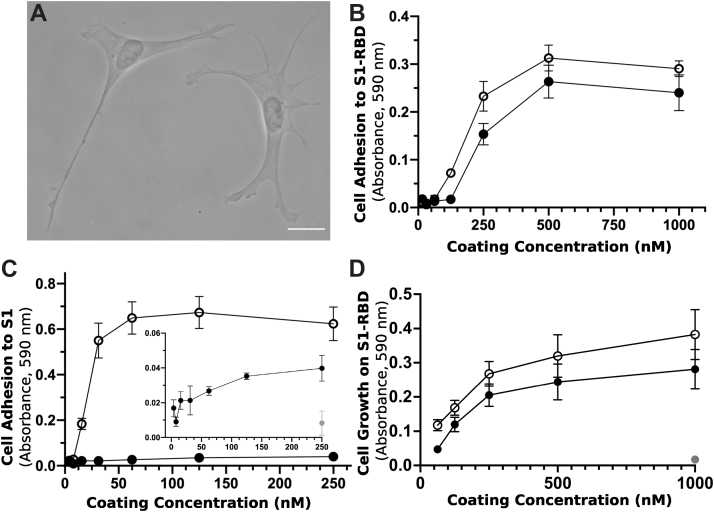
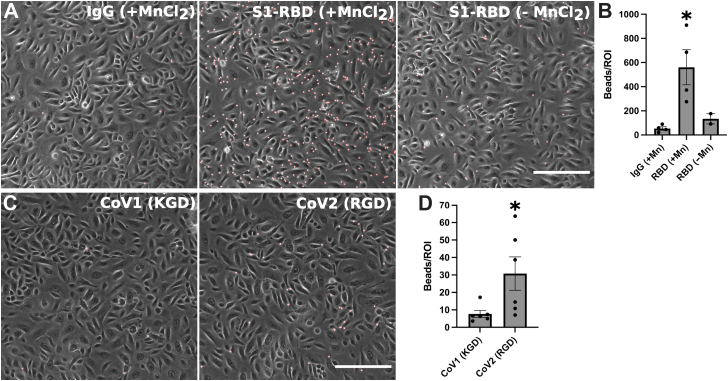
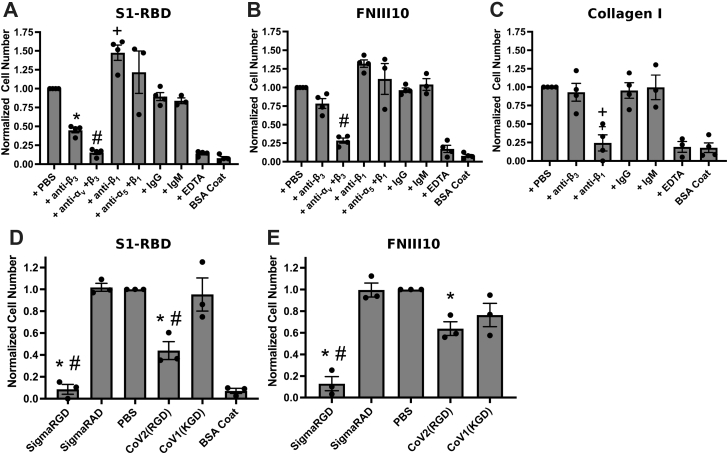
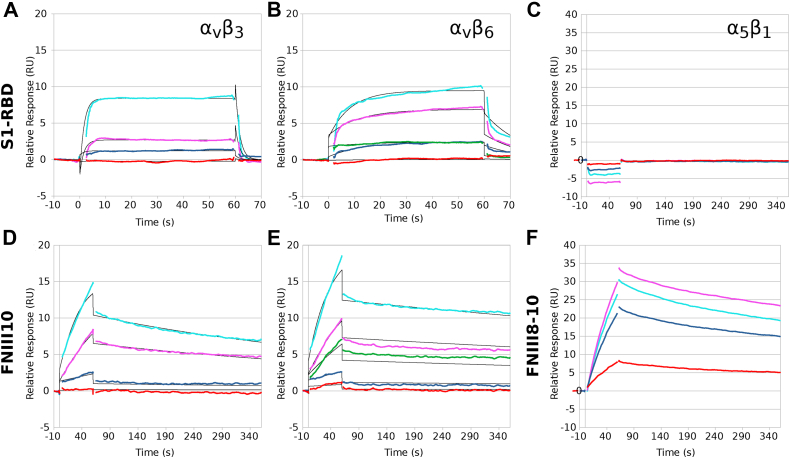
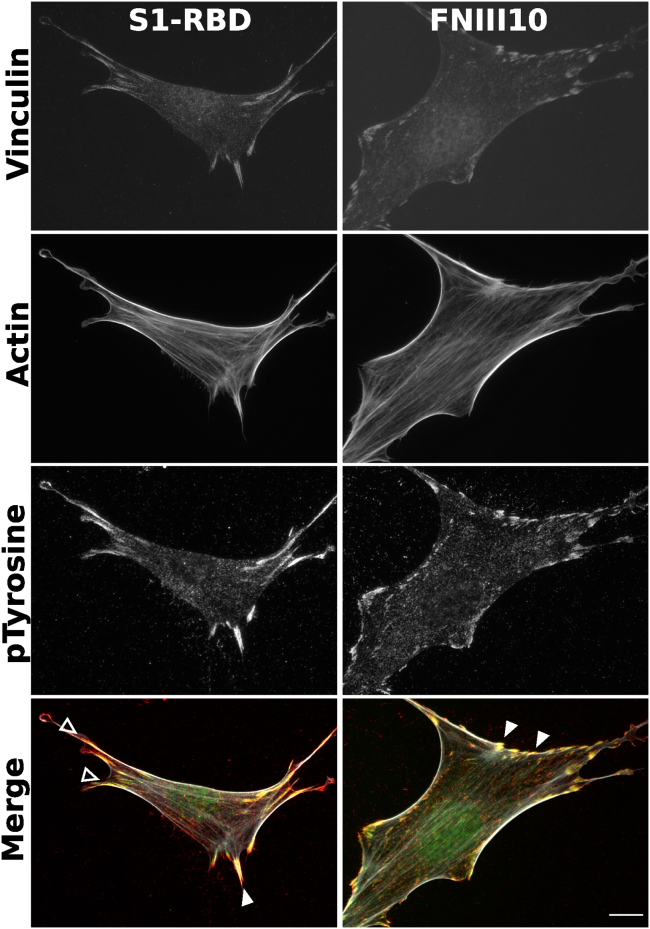
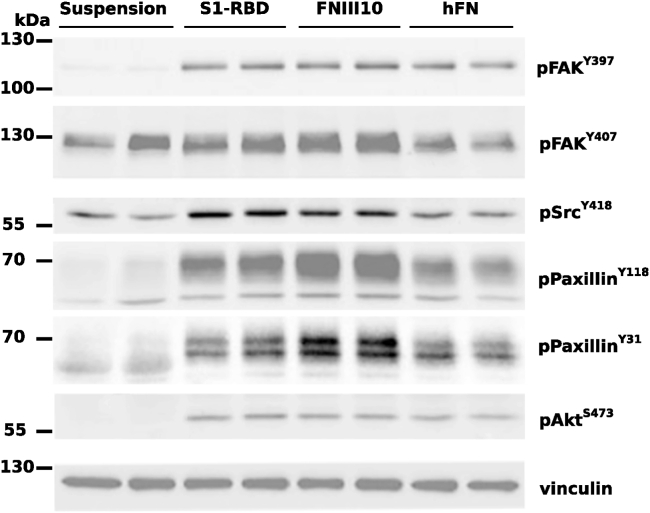
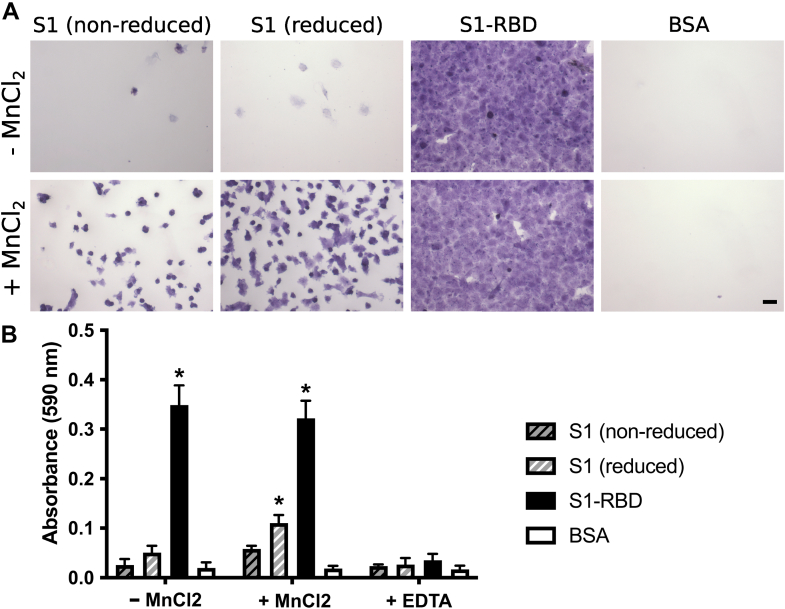
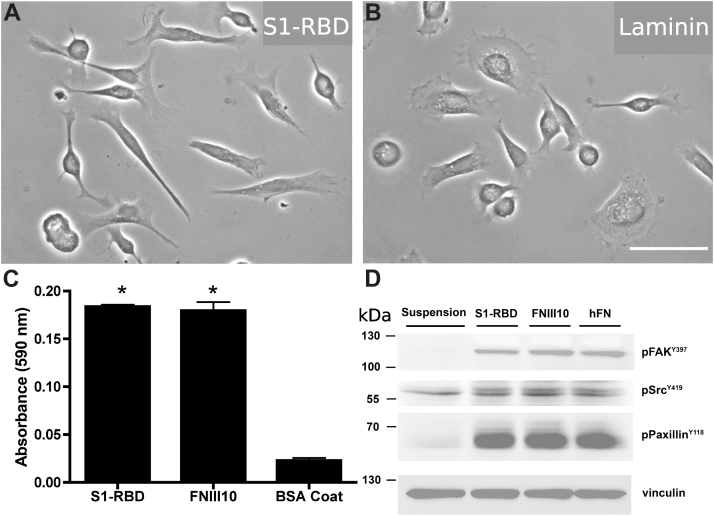
Among the novel mutations distinguishing SARS-CoV-2 from similar coronaviruses is a K403R substitution in the receptor-binding domain (RBD) of the viral spike (S) protein within its S1 region. This amino acid substitution occurs near the angiotensin-converting enzyme 2-binding interface and gives rise to a canonical RGD adhesion motif that is often found in native extracellular matrix proteins, including fibronectin. Here, the ability of recombinant S1-RBD to bind to cell surface integrins and trigger downstream signaling pathways was assessed and compared with RGD-containing, integrin-binding fragments of fibronectin. We determined that S1-RBD supported adhesion of fibronectin-null mouse embryonic fibroblasts as well as primary human small airway epithelial cells, while RBD-coated microparticles attached to epithelial monolayers in a cation-dependent manner. Cell adhesion to S1-RBD was RGD dependent and inhibited by blocking antibodies against α and β but not α or β integrins. Similarly, we observed direct binding of S1-RBD to recombinant human αβ and αβ integrins, but not αβ integrins, using surface plasmon resonance. S1-RBD adhesion initiated cell spreading, focal adhesion formation, and actin stress fiber organization to a similar extent as fibronectin. Moreover, S1-RBD stimulated tyrosine phosphorylation of the adhesion mediators FAK, Src, and paxillin; triggered Akt activation; and supported cell proliferation. Thus, the RGD sequence of S1-RBD can function as an α-selective integrin agonist. This study provides evidence that cell surface α-containing integrins can respond functionally to spike protein and raises the possibility that S1-mediated dysregulation of extracellular matrix dynamics may contribute to the pathogenesis and/or post-acute sequelae of SARS-CoV-2 infection.
在区分 SARS-CoV-2 与相似冠状病毒的新型突变中,病毒刺突(S)蛋白的 S1 区域受体结合域(RBD)中的 K403R 取代。这种氨基酸取代发生在血管紧张素转换酶 2 结合界面附近,并产生了通常存在于天然细胞外基质蛋白(包括纤连蛋白)中的典型 RGD 粘附基序。在这里,评估了重组 S1-RBD 与细胞表面整联蛋白结合并触发下游信号通路的能力,并将其与含有 RGD 的纤连蛋白整联蛋白结合片段进行了比较。我们确定 S1-RBD 支持纤连蛋白缺失的小鼠胚胎成纤维细胞以及原代人小气道上皮细胞的粘附,而 RBD 包被的微粒以依赖阳离子的方式附着在上皮单层上。细胞与 S1-RBD 的粘附依赖于 RGD,并且可以被针对 α 和 β 但不是 α 或 β 整联蛋白的阻断抗体抑制。同样,我们使用表面等离子体共振观察到 S1-RBD 与重组人 αβ 和 αβ 整联蛋白的直接结合,但与 αβ 整联蛋白没有结合。S1-RBD 粘附启动细胞扩展、焦点粘附形成和肌动蛋白应力纤维组织的程度与纤连蛋白相似。此外,S1-RBD 刺激粘着介体 FAK、Src 和桩蛋白的酪氨酸磷酸化;触发 Akt 激活;并支持细胞增殖。因此,S1-RBD 的 RGD 序列可以作为 α 选择性整联蛋白激动剂发挥作用。这项研究提供了证据,表明细胞表面含 α 的整联蛋白可以对刺突蛋白做出功能性反应,并提出了 S1 介导的细胞外基质动力学失调可能导致 SARS-CoV-2 感染的发病机制和/或急性后后遗症的可能性。