Danen Erik H J, Sonneveld Petra, Brakebusch Cord, Fassler Reinhard, Sonnenberg Arnoud
Division of Cell Biology, Netherlands Cancer Institute, 1066 CX Amsterdam, Netherlands.
J Cell Biol. 2002 Dec 23;159(6):1071-86. doi: 10.1083/jcb.200205014. Epub 2002 Dec 16.
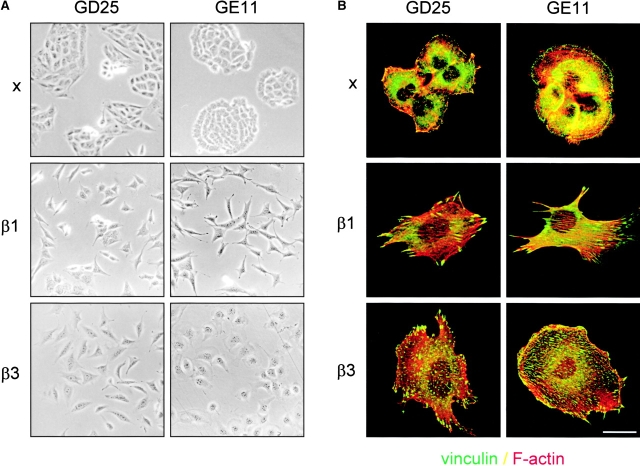
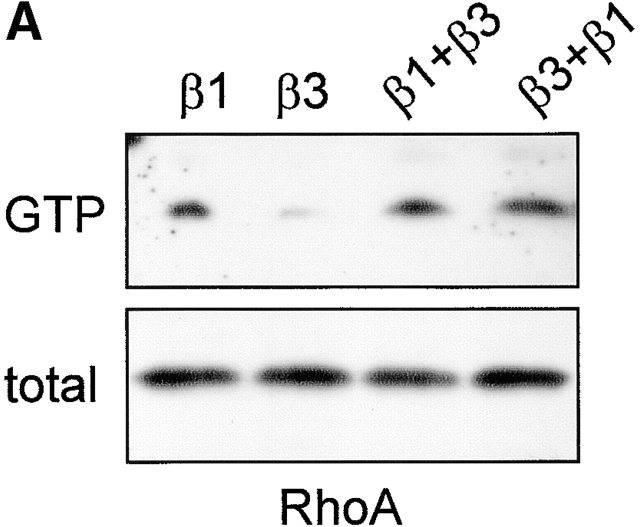
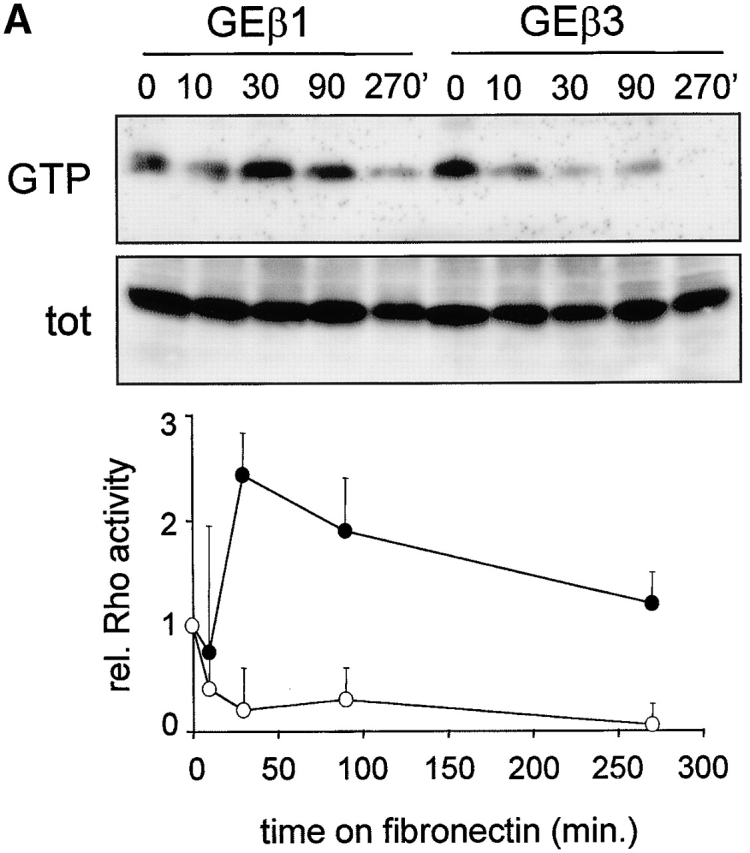
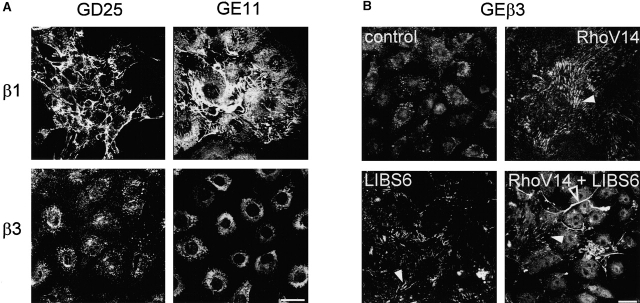
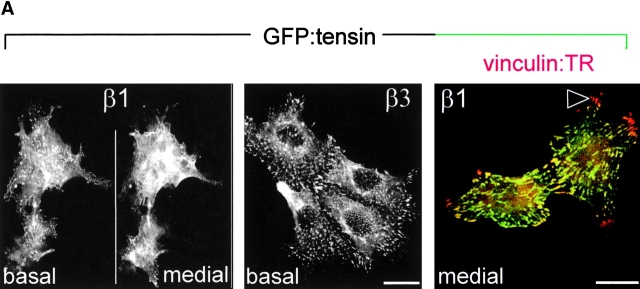
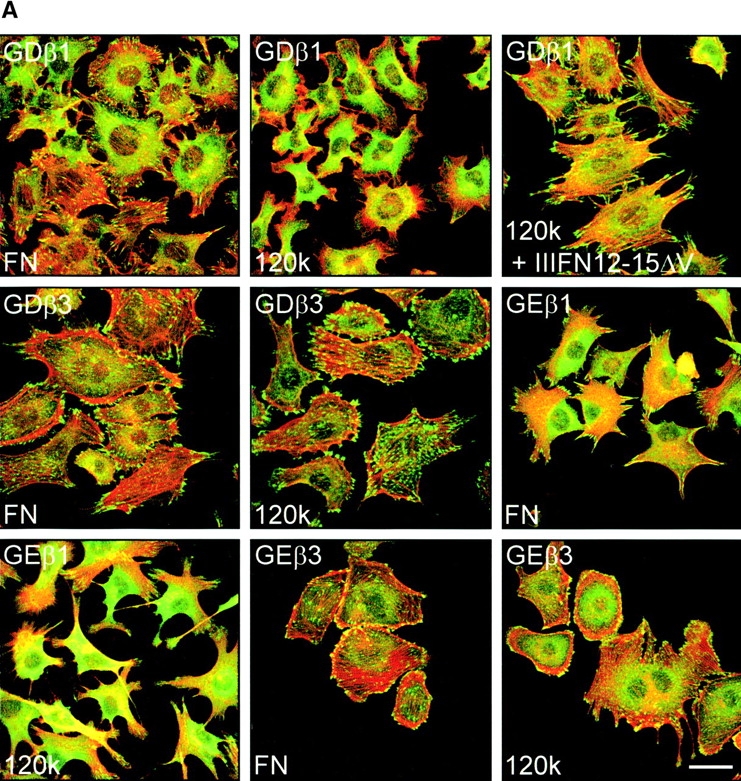
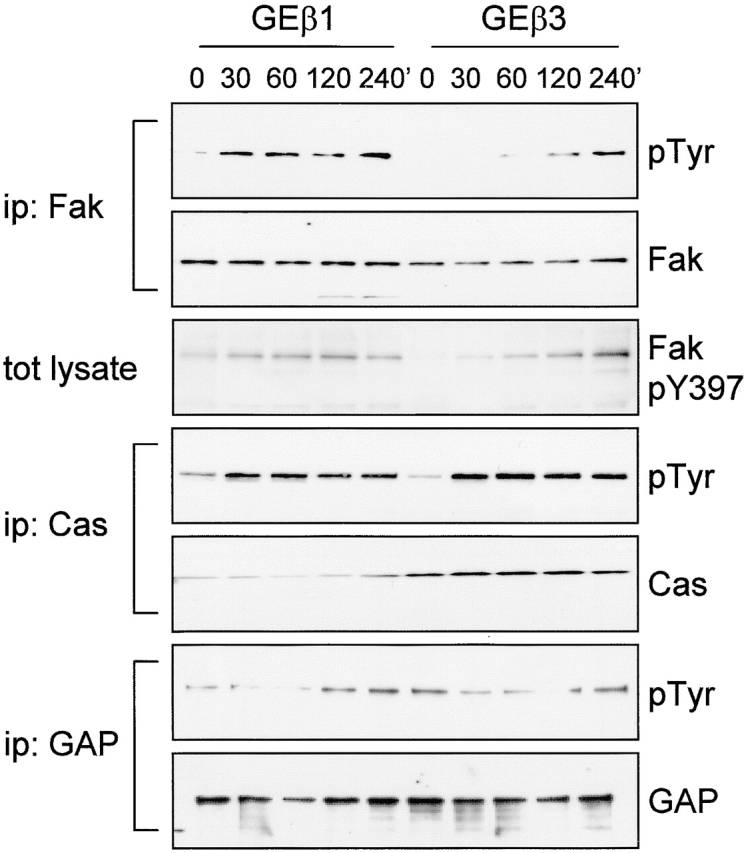
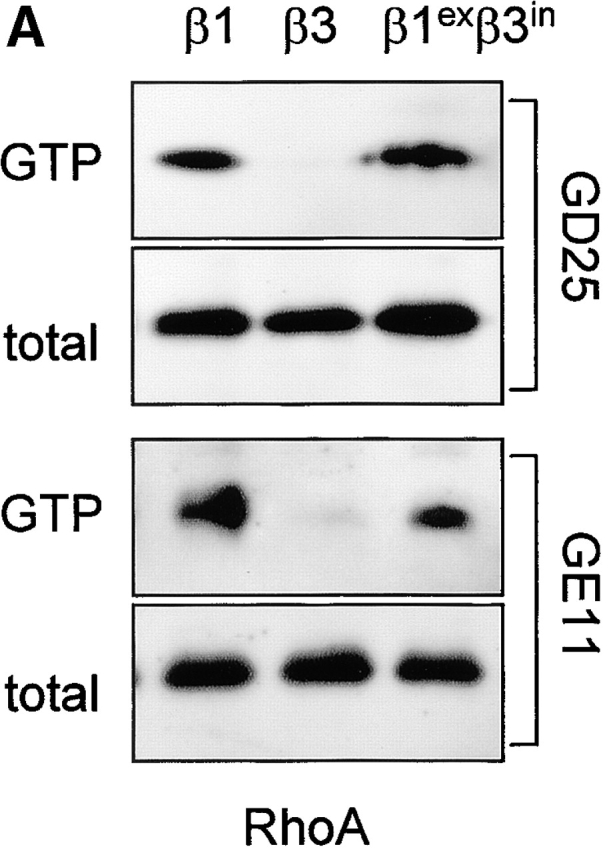
We have studied the formation of different types of cell matrix adhesions in cells that bind to fibronectin via either alpha5beta1 or alphavbeta3. In both cases, cell adhesion to fibronectin leads to a rapid decrease in RhoA activity. However, alpha5beta1 but not alphavbeta3 supports high levels of RhoA activity at later stages of cell spreading, which are associated with a translocation of focal contacts to peripheral cell protrusions, recruitment of tensin into fibrillar adhesions, and fibronectin fibrillogenesis. Expression of an activated mutant of RhoA stimulates alphavbeta3-mediated fibrillogenesis. Despite the fact that alpha5beta1-mediated adhesion to the central cell-binding domain of fibronectin supports activation of RhoA, other regions of fibronectin are required for the development of alpha5beta1-mediated but not alphavbeta3-mediated focal contacts. Using chimeras of beta1 and beta3 subunits, we find that the extracellular domain of beta1 controls RhoA activity. By expressing both beta1 and beta3 at high levels, we show that beta1-mediated control of the levels of beta3 is important for the distribution of focal contacts. Our findings demonstrate that the pattern of fibronectin receptors expressed on a cell dictates the ability of fibronectin to stimulate RhoA-mediated organization of cell matrix adhesions.
我们研究了通过α5β1或αvβ3与纤连蛋白结合的细胞中不同类型细胞基质黏附的形成。在这两种情况下,细胞与纤连蛋白的黏附都会导致RhoA活性迅速降低。然而,α5β1而非αvβ3在细胞铺展后期支持高水平的RhoA活性,这与粘着斑向细胞周边突起的转位、张力蛋白募集到纤维状黏附中以及纤连蛋白纤维形成有关。RhoA激活突变体的表达刺激αvβ3介导的纤维形成。尽管α5β1介导的与纤连蛋白中央细胞结合结构域的黏附支持RhoA的激活,但纤连蛋白的其他区域对于α5β1介导而非αvβ3介导的粘着斑的形成是必需的。使用β1和β3亚基的嵌合体,我们发现β1的胞外结构域控制RhoA活性。通过高水平表达β1和β3,我们表明β1介导的对β3水平的控制对于粘着斑的分布很重要。我们的研究结果表明,细胞上表达的纤连蛋白受体模式决定了纤连蛋白刺激RhoA介导的细胞基质黏附组织的能力。