Li Yanan, Qi Man, Zhang Qi, Xu Zhixu, Zhang Yan, Gao Yuqian, Qi Yuancheng, Qiu Liyou, Wang Mingdao
Key Laboratory of Enzyme Engineering of Agricultural Microbiology, Ministry of Agriculture and Rural Affairs, College of Life Sciences, Henan Agricultural University, Zhengzhou 450002, China.
J Fungi (Basel). 2022 Dec 29;9(1):55. doi: 10.3390/jof9010055.
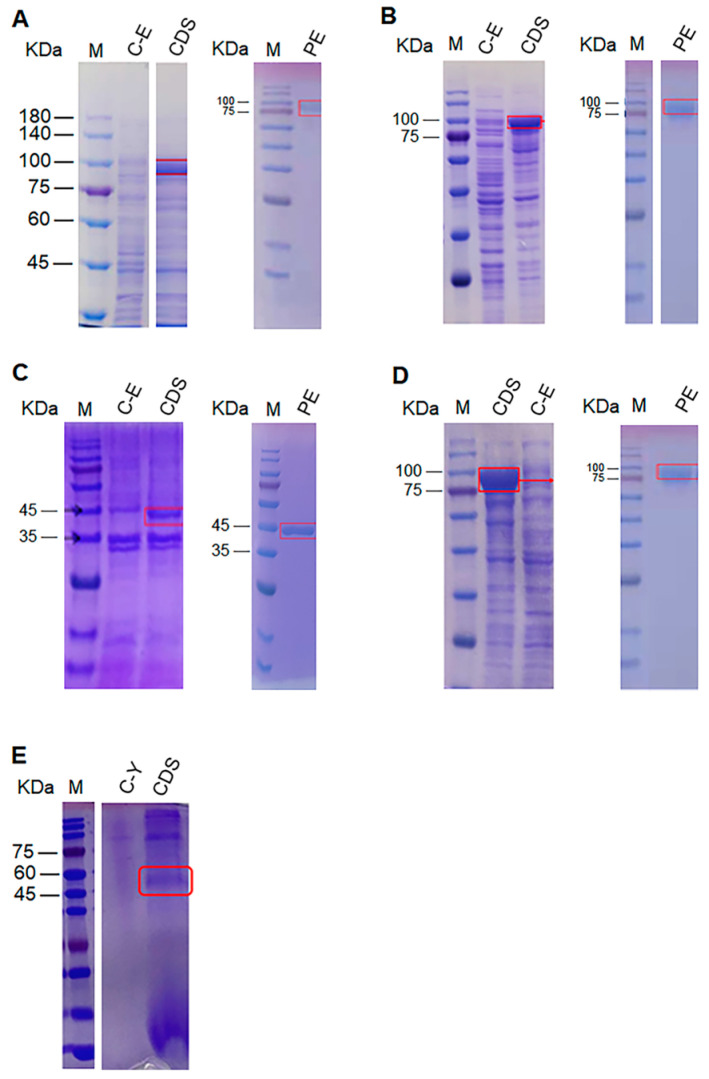
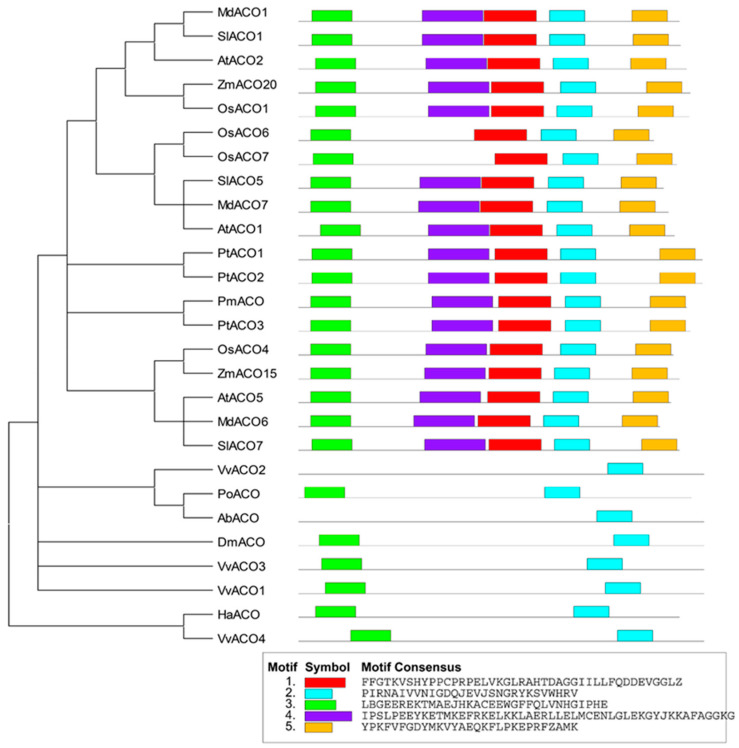
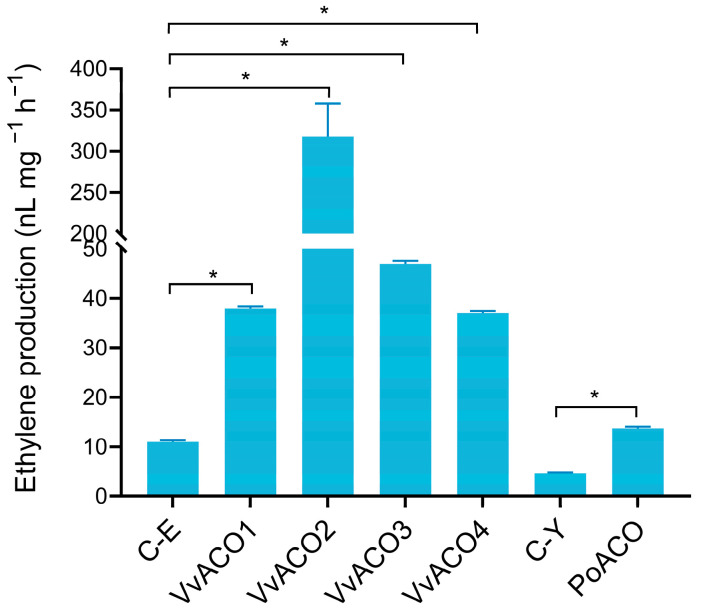
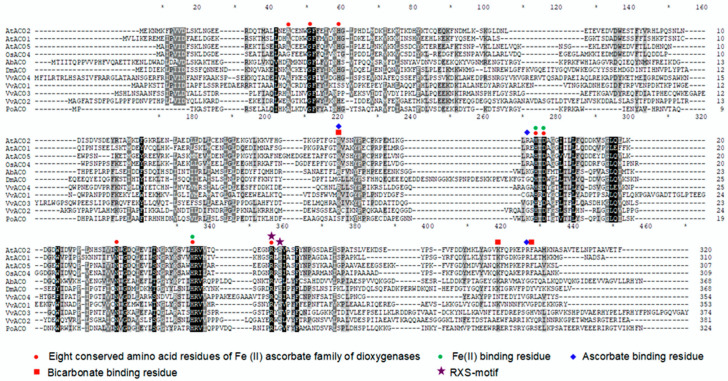
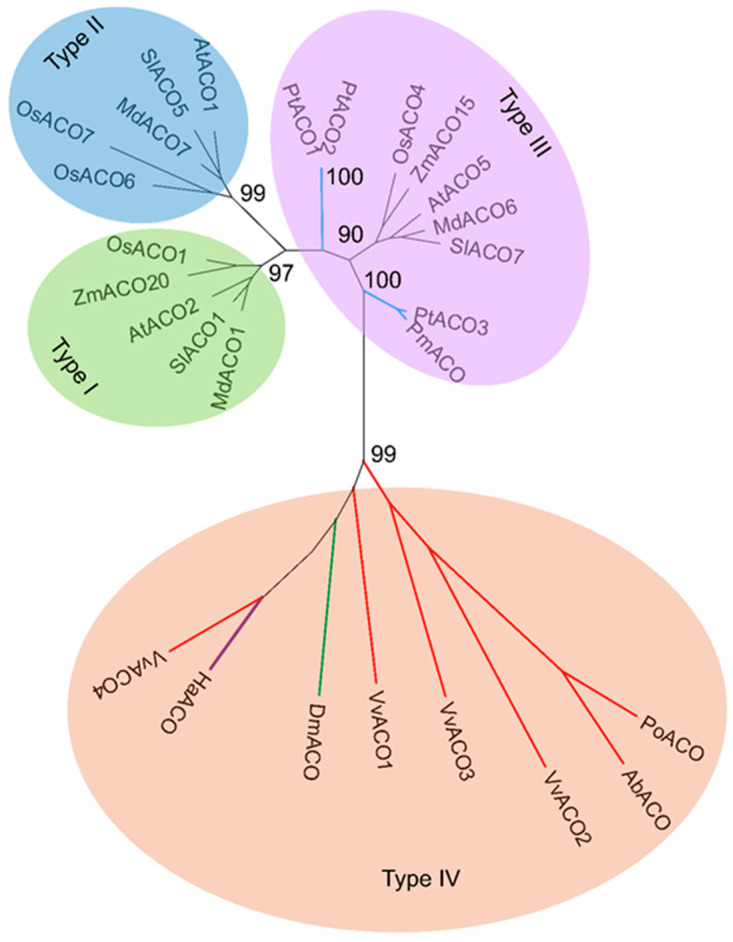
The 1-aminocyclopropane-1-carboxylic acid (ACC) pathway that synthesizes ethylene is shared in seed plants, fungi and probably other organisms. However, the evolutionary relationship of the key enzyme ACC oxidase (ACO) in the pathway among organisms remains unknown. Herein, we cloned, expressed and characterized five ACOs from the straw mushroom () and the oyster mushroom (): VvACO1-4 and PoACO. The five mushroom ACOs and the previously identified AbACO of the button mushroom contained all three conserved residues that bound to Fe(II) in plant ACOs. They also had variable residues that were conserved and bound to ascorbate and bicarbonate in plant ACOs and harbored only 1-2 of the five conserved ACO motifs in plant ACOs. Particularly, VvACO2 and AbACO had only one ACO motif 2. Additionally, VvACO4 shared 44.23% sequence identity with the cyanobacterium putative functional ACO. Phylogenetic analysis showed that the functional ACOs of monocotyledonous and dicotyledonous plants co-occurred in Type I, Type II and Type III, while putative functional gymnosperm ACOs also appeared in Type III. The putative functional bacterial ACO, functional fungi and slime mold ACOs were clustered in ancestral Type IV. These results indicate that ACO motif 2, ACC and Fe(II) are essential for ACO activity. The ACOs of the other organisms may come from the horizontal transfer of fungal ACOs, which were found ordinarily in basidiomycetes. It is mostly the first case for the horizontal gene transfers from fungi to seed plants. The horizontal transfer of ACOs from fungi to plants probably facilitates the fungal-plant symbioses, plant-land colonization and further evolution to form seeds.
合成乙烯的1-氨基环丙烷-1-羧酸(ACC)途径在种子植物、真菌以及可能的其他生物体中是共有的。然而,该途径中关键酶ACC氧化酶(ACO)在生物体之间的进化关系仍然未知。在此,我们从草菇()和平菇()中克隆、表达并鉴定了5种ACO:VvACO1 - 4和PoACO。这5种蘑菇ACO以及先前鉴定的双孢蘑菇的AbACO含有植物ACO中与Fe(II)结合的所有三个保守残基。它们还具有在植物ACO中保守且与抗坏血酸和碳酸氢盐结合的可变残基,并且在植物ACO的五个保守ACO基序中仅含有1 - 2个。特别地,VvACO2和AbACO仅具有一个ACO基序2。此外,VvACO4与蓝藻假定的功能性ACO具有44.23%的序列同一性。系统发育分析表明,单子叶植物和双子叶植物的功能性ACO在I型、II型和III型中共同出现,而假定的功能性裸子植物ACO也出现在III型中。假定的功能性细菌ACO、功能性真菌和黏菌ACO聚集在祖先IV型中。这些结果表明ACO基序2、ACC和Fe(II)对ACO活性至关重要。其他生物体的ACO可能来自真菌ACO的水平转移,真菌ACO通常在担子菌中发现。这大多是真菌向种子植物水平基因转移的首例。ACO从真菌向植物的水平转移可能促进了真菌 - 植物共生、植物在陆地的定殖以及进一步进化形成种子。