Korza George, Goulet Michelle, DeMarco Angela, Wicander James, Setlow Peter
Molecular Biology and Biophysics Department, UConn Health, Farmington, CT 06030-3305, USA.
Microorganisms. 2023 Jan 12;11(1):195. doi: 10.3390/microorganisms11010195.
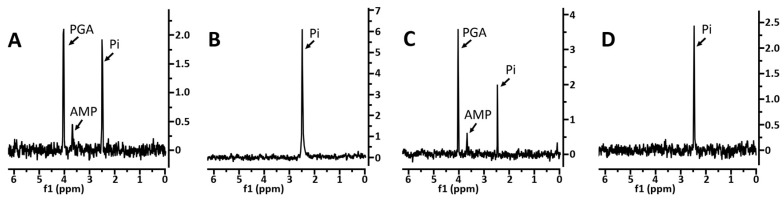
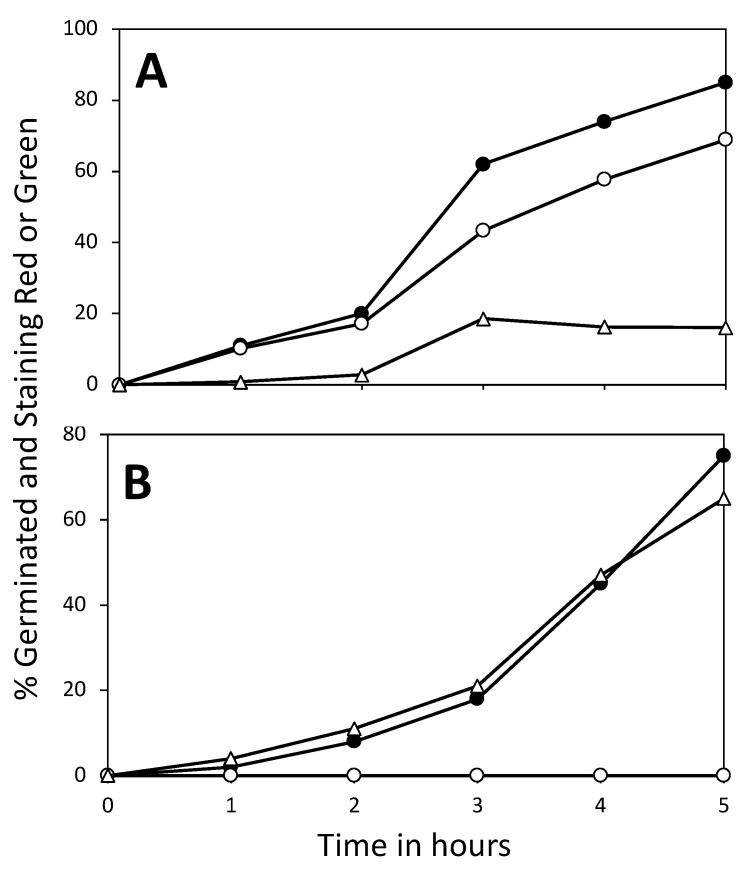
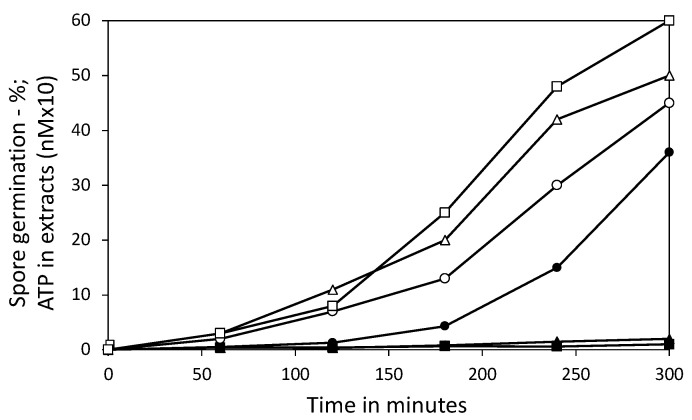
The development of Bacillus spore cores involves the accumulation of 3-phosphoglycerate (3PGA) during sporulation, following core acidification to ~6.4, and before decreases in core water content occur due to Ca-dipicolinc acid (CaDPA) uptake. This core acidification inhibits phosphoglycerate mutase (PGM) at pH 6.4, allowing 3PGA accumulation, although PGM is active at pH 7.4. Spores’ 3PGA is stable for months at 4 °C and weeks at 37 °C. However, in wild-type spore germination, increases in core pH to 7.5−8 and in core water content upon CaDPA release and cortex peptidoglycan hydrolysis allow for rapid 3PGA catabolism, generating ATP; indeed, the earliest ATP generated following germination is from 3PGA catabolism. The current work found no 3PGA in those Bacillus subtilis spores that do not accumulate CaDPA during sporulation and have a core pH of ~7.4. The ATP production in the germination of 3PGA-less spores in a poor medium was minimal, and the germinated spores were >99% dead. However, the 3PGA-replete spores that germinated in the poor medium accumulated >30 times more ATP, and >70% of the germinated spores were found to be alive. These findings indicate why 3PGA accumulation during sporulation (and utilization during germination) in all the Firmicute spores studied can be crucial for spore revival due to the generation of essential ATP. The latter finding further suggests that targeting PGM activity during germination could be a novel way to minimize the damaging effects of spores.
芽孢杆菌芽孢核心的形成涉及在芽孢形成过程中3-磷酸甘油酸(3PGA)的积累,这一过程发生在核心酸化至约6.4之后,且在由于摄取钙-吡啶二羧酸(CaDPA)导致核心含水量降低之前。这种核心酸化在pH 6.4时抑制磷酸甘油酸变位酶(PGM),从而使3PGA得以积累,尽管PGM在pH 7.4时具有活性。孢子中的3PGA在4℃下可稳定存在数月,在37℃下可稳定存在数周。然而,在野生型孢子萌发过程中,随着CaDPA释放和皮层肽聚糖水解,核心pH值升高至7.5 - 8,核心含水量增加,这使得3PGA能够快速分解代谢,产生ATP;事实上,萌发后最早产生的ATP来自3PGA的分解代谢。目前的研究发现,在芽孢形成过程中不积累CaDPA且核心pH值约为7.4的枯草芽孢杆菌孢子中没有3PGA。在贫瘠培养基中,缺乏3PGA的孢子萌发时产生的ATP极少,且萌发后的孢子死亡率>99%。然而,在贫瘠培养基中萌发的富含3PGA的孢子积累的ATP比前者多30倍以上,且发现>70%的萌发孢子存活。这些发现表明,为什么在所有已研究的厚壁菌门孢子中,芽孢形成过程中3PGA的积累(以及萌发过程中的利用)对于孢子复苏至关重要,因为它能产生必需的ATP。后一项发现进一步表明,在萌发过程中靶向PGM活性可能是一种将孢子的破坏作用降至最低的新方法。