Arroyo J C, Jordan W, Lema M W, Brown A
Medical and Research Services, Dorn Veterans Administration Hospital, Columbia, South Carolina.
J Clin Microbiol. 1987 Oct;25(10):1952-5. doi: 10.1128/jcm.25.10.1952-1955.1987.
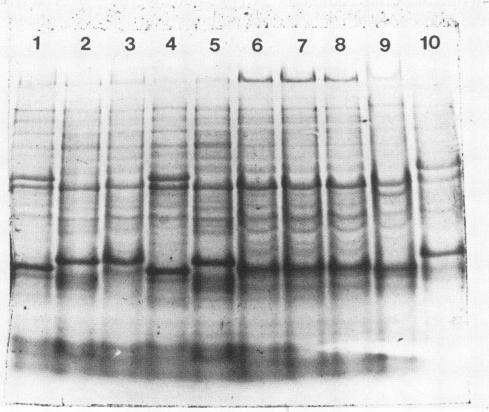
Achromobacter xylosoxidans, an uncommon yet highly resistant opportunistic pathogen, was isolated from nine hospitalized patients during an 8-month period. It had been isolated from only seven patients with either nonfatal infection or colonization from 1981 to 1984. From June 1985 to January 1986, A. xylosoxidans was isolated 18 times from seven different sites (sputum, 7 times; urine, 4 times; blood, 3 times; and lung, pleural fluid, wound tissue, and tracheal aspirate, 1 time each). Four patients died, including the three with bacteremia. All but two patients had nosocomial infections and either were on the same ward or were cared for by the same staff members. Eleven A. xylosoxidans strains yielded eight distinct plasmids (8, 21, 23, 26, 38, 50, 51, and 64 megadaltons). Whole-cell peptide patterns of 10 of these strains were determined by sodium dodecyl sulfate-polyacrylamide gel electrophoresis. Isolates from the same patient contained the same plasmids and had identical peptide patterns but differed from other strains in both parameters. Plasmids were absent from the two community-acquired isolates. Although nosocomial strains showed similar antibiotic resistance patterns (only moxalactam and ticarcillin-clavulanic acid were uniformly active) and cross-contamination was strongly suggested epidemiologically, results of plasmid and peptide analyses did not support the possibility of a single-strain outbreak.
木糖氧化无色杆菌是一种罕见但具有高度耐药性的机会致病菌,在8个月期间从9名住院患者中分离得到。1981年至1984年期间,仅从7例非致命感染或定植患者中分离到该菌。1985年6月至1986年1月,木糖氧化无色杆菌从7个不同部位分离到18次(痰液7次;尿液4次;血液3次;肺、胸腔积液、伤口组织和气管吸出物各1次)。4例患者死亡,包括3例菌血症患者。除2例患者外,所有患者均发生医院感染,且要么在同一病房,要么由同一工作人员护理。11株木糖氧化无色杆菌菌株产生了8种不同的质粒(8、21、23、26、38、50、51和64兆道尔顿)。其中10株菌株的全细胞肽图谱通过十二烷基硫酸钠-聚丙烯酰胺凝胶电泳测定。来自同一患者的分离株含有相同的质粒且具有相同的肽图谱,但在这两个参数上与其他菌株不同。两株社区获得性分离株未检测到质粒。尽管医院菌株显示出相似的抗生素耐药模式(仅羟羧氧酰胺菌素和替卡西林-克拉维酸始终有效),且流行病学强烈提示存在交叉污染,但质粒和肽分析结果不支持单一菌株暴发的可能性。