Xu Kai, Yan Chentao, Du Chunlin, Xu Yue, Li Bin, Liu Lubin
Heilongjiang Key Laboratory of Molecular Design and Preparation of Flame Retarded Materials, College of Chemistry, Chemical Engineering and Resource Utilization, Northeast Forestry University, Harbin 150040, China.
Key Laboratory of Forest Plant Ecology, Ministry of Education, Northeast Forestry University, Harbin 150040, China.
Polymers (Basel). 2023 Jan 6;15(2):300. doi: 10.3390/polym15020300.
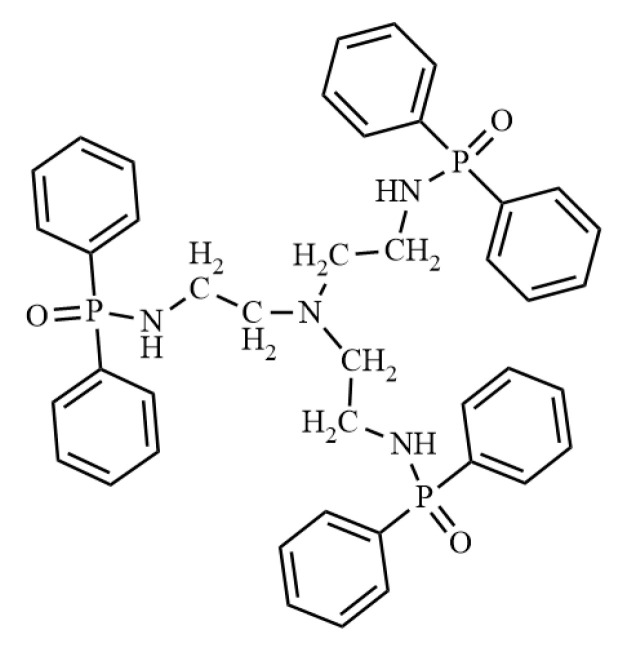
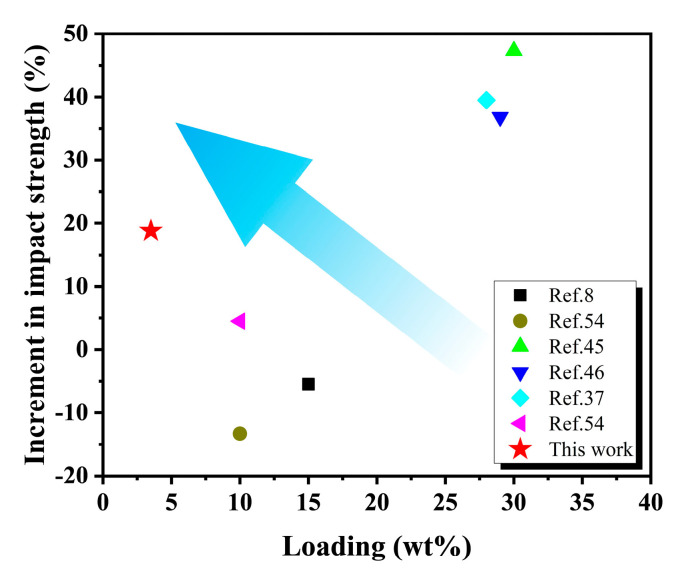
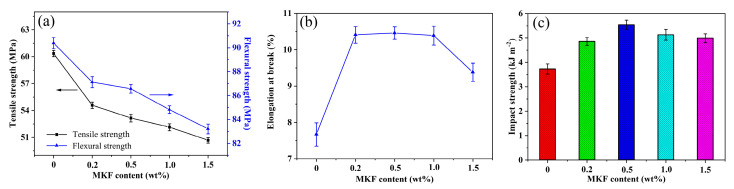
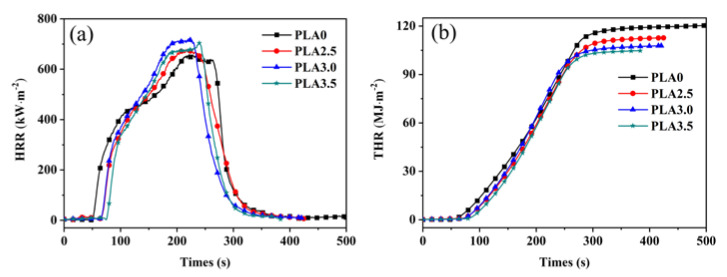
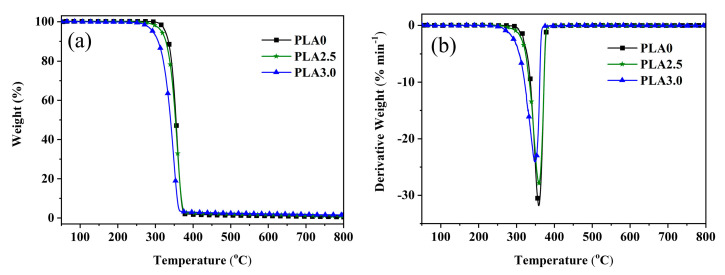
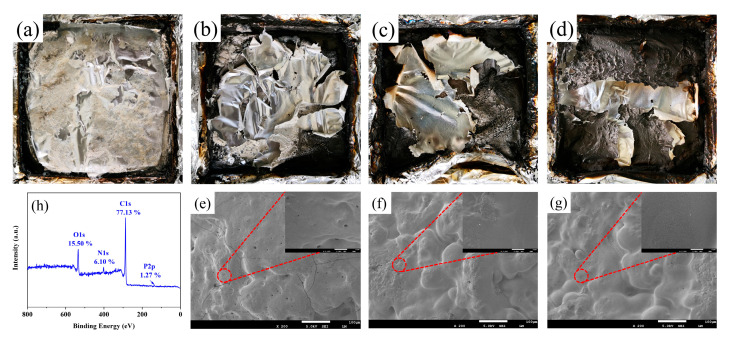
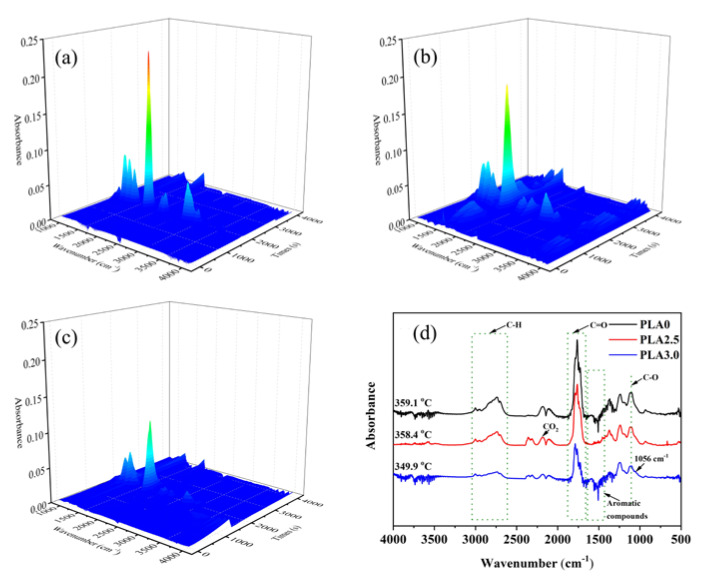
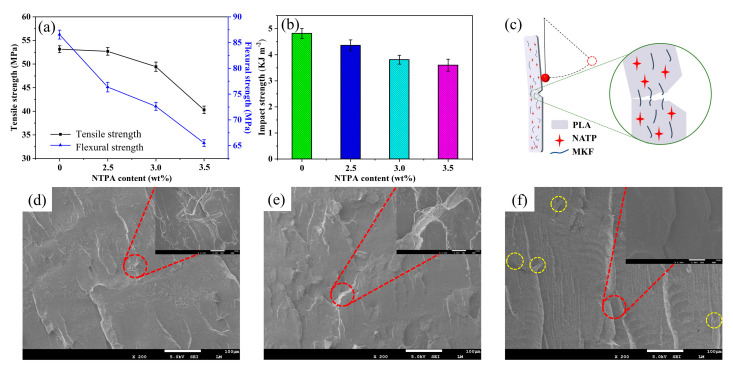
As a biodegradable thermoplastic, polylactic acid (PLA) shows great potential to replace petroleum-based plastics. Nevertheless, the flammability and brittleness of PLA seriously limits its use in emerging applications. This work is focused on simultaneously improving the flame-retardancy and toughness of PLA at a low additive load via a simple strategy. The PLA/MKF/NTPA biocomposites were prepared by incorporating alkali-treated, lightweight, renewable kapok fiber (MKF) and high-efficiency, phosphorus-nitrogenous flame retardant (NTPA) into the PLA matrix based on the extrusion-injection molding method. When the additive loads of MKF and NTPA were 0.5 and 3.0 wt%, respectively, the PLA/MKF/NTPA biocomposites (PLA3.0) achieved a rating of UL-94 V-0 with an LOI value of 28.3%, and its impact strength (4.43 kJ·m) was improved by 18.8% compared to that of pure PLA. Moreover, the cone calorimetry results confirmed a 9.7% reduction in the average effective heat of combustion (av-EHC) and a 0.5-fold increase in the flame retardancy index (FRI) compared to the neat PLA. NTPA not only exerted a gas-phase flame-retardant role, but also a condensed-phase barrier effect during the combustion process of the PLA/MKF/NTPA biocomposites. Moreover, MKF acted as an energy absorber to enhance the toughness of the PLA/MKF/NTPA biocomposites. This work provides a simple way to prepare PLA biocomposites with excellent flame-retardancy and toughness at a low additive load, which is of great importance for expanding the application range of PLA biocomposites.
作为一种可生物降解的热塑性塑料,聚乳酸(PLA)在替代石油基塑料方面显示出巨大潜力。然而,PLA的易燃性和脆性严重限制了其在新兴应用中的使用。这项工作的重点是通过一种简单的策略在低添加剂负载下同时提高PLA的阻燃性和韧性。基于挤出-注塑成型方法,通过将碱处理的、轻质的、可再生的木棉纤维(MKF)和高效的含磷-氮阻燃剂(NTPA)掺入PLA基体中来制备PLA/MKF/NTPA生物复合材料。当MKF和NTPA的添加剂负载分别为0.5和3.0 wt%时,PLA/MKF/NTPA生物复合材料(PLA3.0)达到UL-94 V-0等级,极限氧指数(LOI)值为28.3%,其冲击强度(4.43 kJ·m)相比纯PLA提高了18.8%。此外,锥形量热法结果证实,与纯PLA相比,平均有效燃烧热(av-EHC)降低了9.7%,阻燃指数(FRI)提高了0.5倍。NTPA不仅在PLA/MKF/NTPA生物复合材料的燃烧过程中发挥气相阻燃作用,还发挥凝聚相阻隔作用。此外,MKF作为能量吸收剂增强了PLA/MKF/NTPA生物复合材料的韧性。这项工作提供了一种在低添加剂负载下制备具有优异阻燃性和韧性的PLA生物复合材料的简单方法,这对于扩大PLA生物复合材料的应用范围具有重要意义。