Sahin Taha Koray, Erul Enes, Aksun Melek Seren, Sonmezer Meliha Cagla, Unal Serhat, Akova Murat
Internal Medicine Department, Faculty of Medicine, Hacettepe University, Ankara 06100, Turkey.
Infectious Diseases and Clinical Microbiology Department, Faculty of Medicine, Hacettepe University, Ankara 06100, Turkey.
Vaccines (Basel). 2022 Dec 21;11(1):19. doi: 10.3390/vaccines11010019.
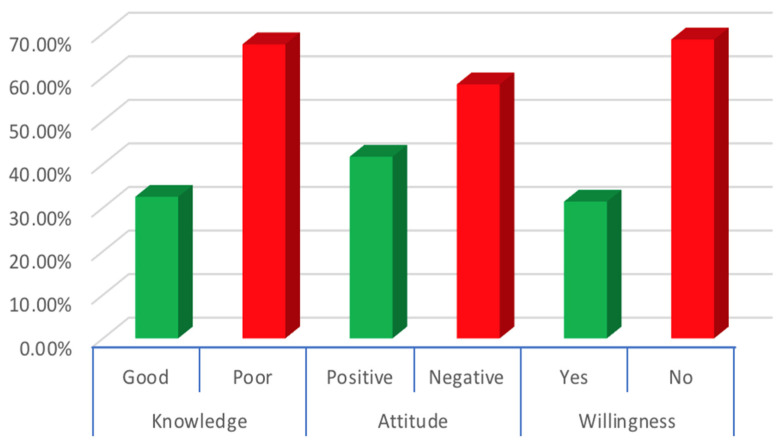
Background: In May 2022, the monkeypox virus outbreak in multiple countries on various continents marked a potential resurgence of the disease as a global health issue. Considering the crucial role of physicians in mitigating the monkeypox outbreak, we sought to evaluate physicians’ knowledge, attitude, concerns, and vaccine acceptance for monkeypox, in the shadow of the COVID-19 pandemic. Methods: A large-scale, cross-sectional survey was conducted among 283 physicians between 20 August−2 September 2022, in Turkey. The participants’ sociodemographic characteristics, knowledge, attitudes, concerns, and vaccine acceptance toward monkeypox infection were collected via a questionnaire. Results: Our study revealed that 32.5% of physicians achieved a good level of knowledge; similarly, 31.4% of the physicians planned to have the monkeypox vaccine. Multivariate binary logistic regression analysis showed that female physicians (p = 0.031) and older people (≥30 vs. <30) were more likely to be knowledgeable about monkeypox (p = 0.007). We found that participants from divisions of internal medicine (p = 0.033) who knew about the monkeypox disease during medical school or residency (p = 0.005) and were previously exposed to COVID-19 disease (p = 0.005) were more likely to have a good knowledge score of monkeypox. We also found that physicians with a good knowledge score were more worried about monkeypox compared to COVID-19 (AOR: 2.22; 95% CI:1.13−4.33; p = 0.019). Additionally, those who had information on monkeypox during medical education (AOR = 2.16, 95% CI = 1.10−4.21; p = 0.024) were more likely to receive the smallpox vaccine to prevent monkeypox viral infection when available. Conclusions: The present study pointed out that physicians in Turkey have unsatisfactory levels of knowledge about the emerging monkeypox. This study results can impede attempts to detect and manage cases of monkeypox and should be addressed through appropriate and timely awareness and educational programs, alerts, and seminars. These might serve as the basis for policymakers’ decisions about promoting national monkeypox vaccination strategies and addressing potential vaccine hesitancy and misinformation when needed.
2022年5月,猴痘病毒在各大洲的多个国家爆发,标志着该疾病作为一个全球健康问题可能再度出现。鉴于医生在缓解猴痘疫情方面的关键作用,我们试图在新冠疫情的背景下,评估医生对猴痘的知识、态度、担忧以及疫苗接受度。方法:2022年8月20日至9月2日期间在土耳其对283名医生进行了一项大规模横断面调查。通过问卷收集参与者的社会人口学特征、对猴痘感染的知识、态度、担忧以及疫苗接受度。结果:我们的研究显示,32.5%的医生知识水平良好;同样,31.4%的医生计划接种猴痘疫苗。多因素二元逻辑回归分析表明,女医生(p = 0.031)和年龄较大者(≥30岁与<30岁相比)更有可能对猴痘有较多了解(p = 0.007)。我们发现,来自内科的参与者(p = 0.033)、在医学院或住院医师培训期间了解猴痘疾病的人(p = 0.005)以及先前接触过新冠疾病的人(p = 0.005)更有可能对猴痘有良好的知识得分。我们还发现,与新冠相比,知识得分良好的医生更担心猴痘(比值比:2.22;95%置信区间:1.13 - 4.33;p = 0.019)。此外,在医学教育期间了解猴痘信息的人(比值比 = 2.16,95%置信区间 = 1.10 - 4.21;p = 0.024)在有天花疫苗可用于预防猴痘病毒感染时更有可能接种。结论:本研究指出,土耳其的医生对新出现的猴痘知识水平不尽人意。本研究结果可能会阻碍猴痘病例的检测和管理工作,应通过适当及时的认识和教育项目、警报及研讨会来加以解决。这些可能会成为政策制定者制定国家猴痘疫苗接种策略以及在需要时应对潜在疫苗犹豫和错误信息的决策依据。