Clinical Laboratory, Department of Clinical Diagnostics and Services, Center for Clinical Studies, Vetsuisse Faculty, University of Zurich, Winterthurerstrasse 260, 8057 Zurich, Switzerland.
Department of Biosystems Science and Engineering, ETH Zurich, Mattenstrasse 26, 4058 Basel, Switzerland.
Viruses. 2023 Jan 15;15(1):245. doi: 10.3390/v15010245.
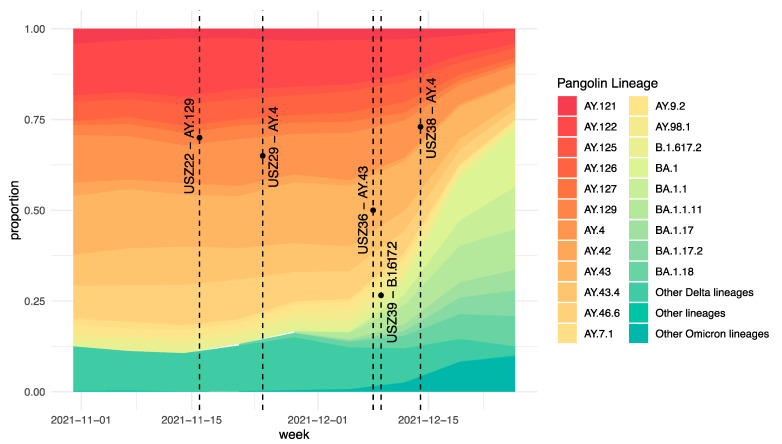
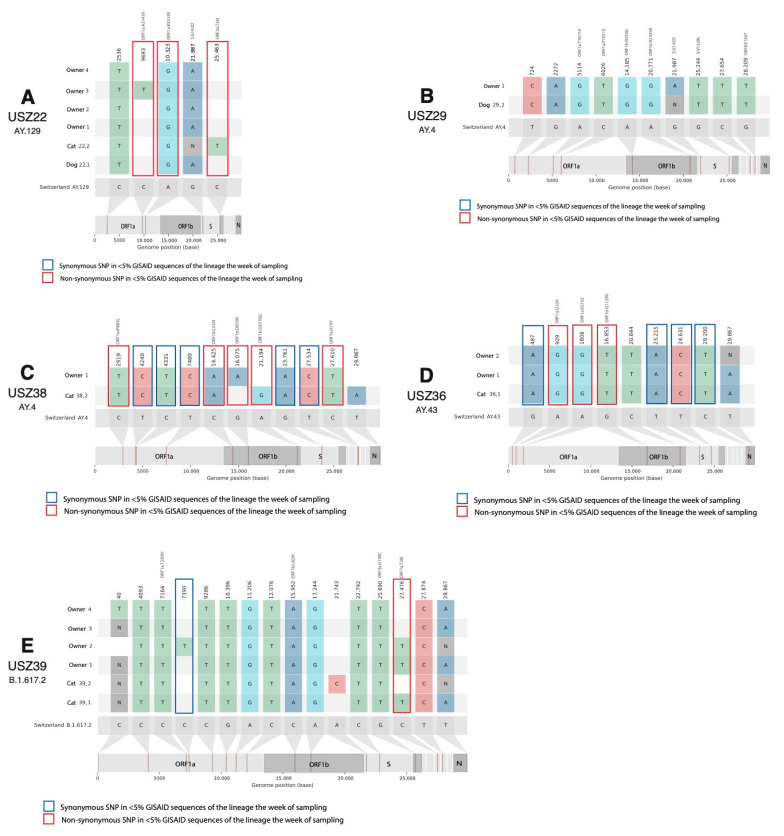
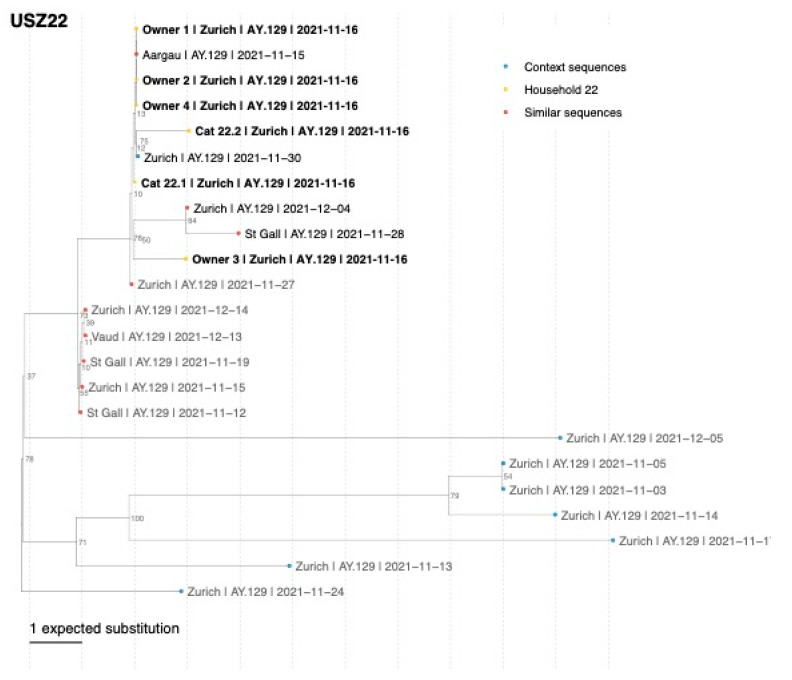
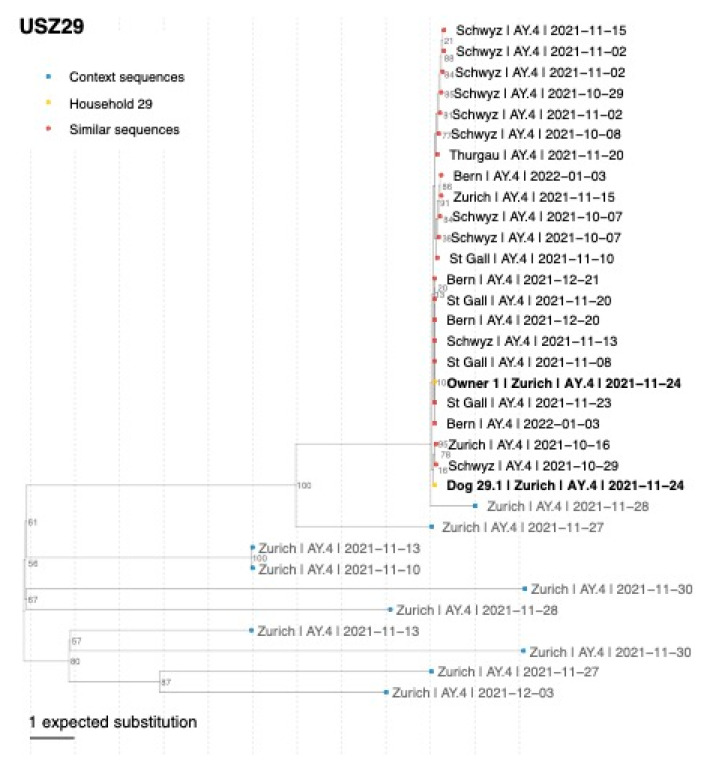
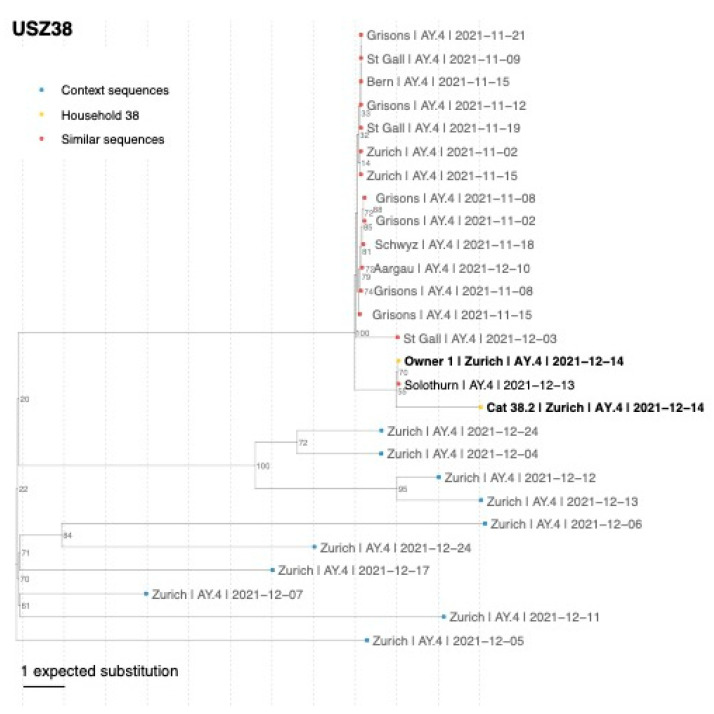
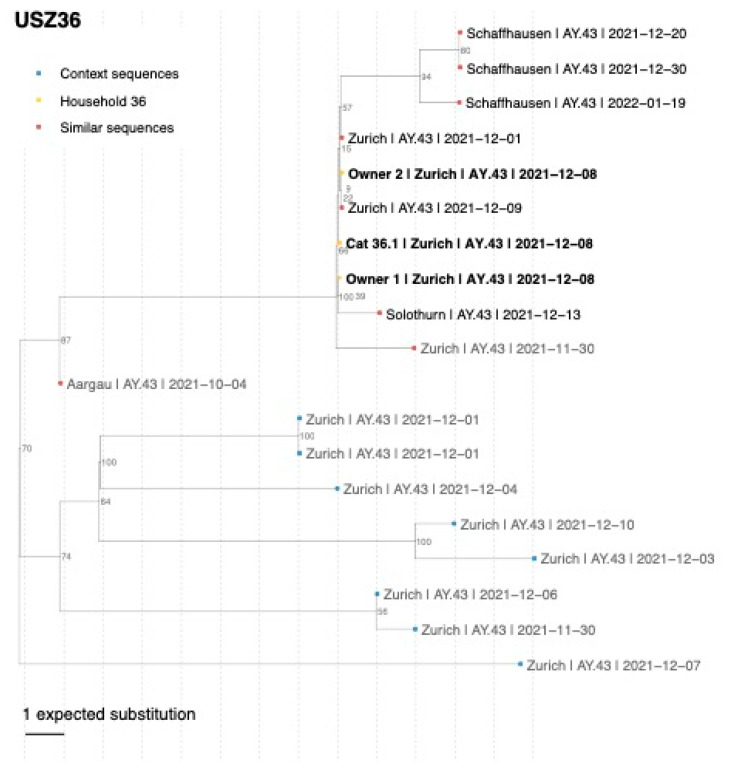
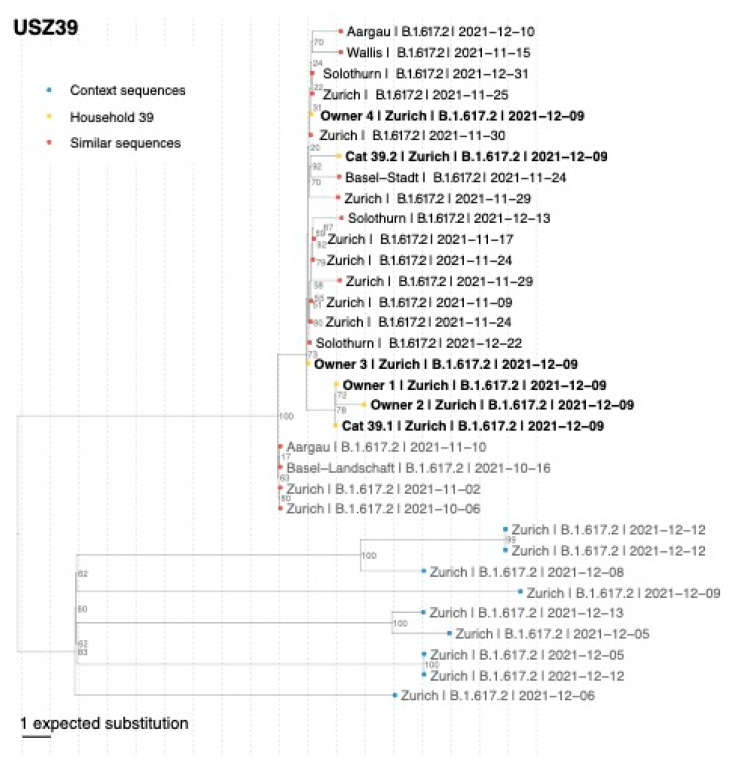
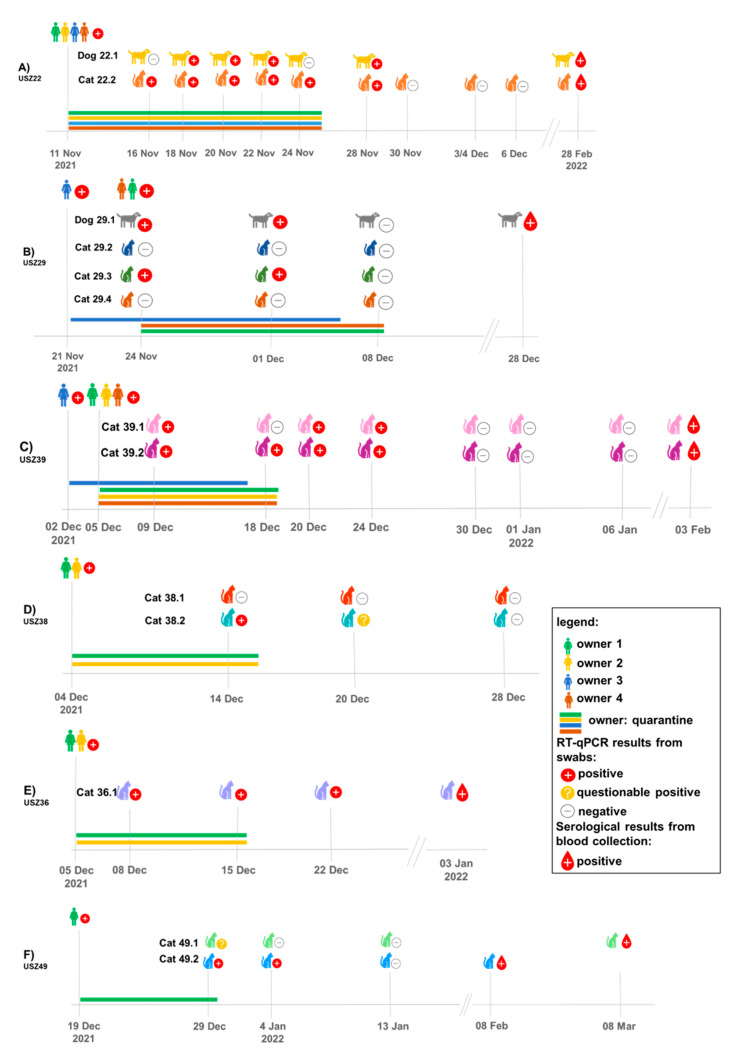
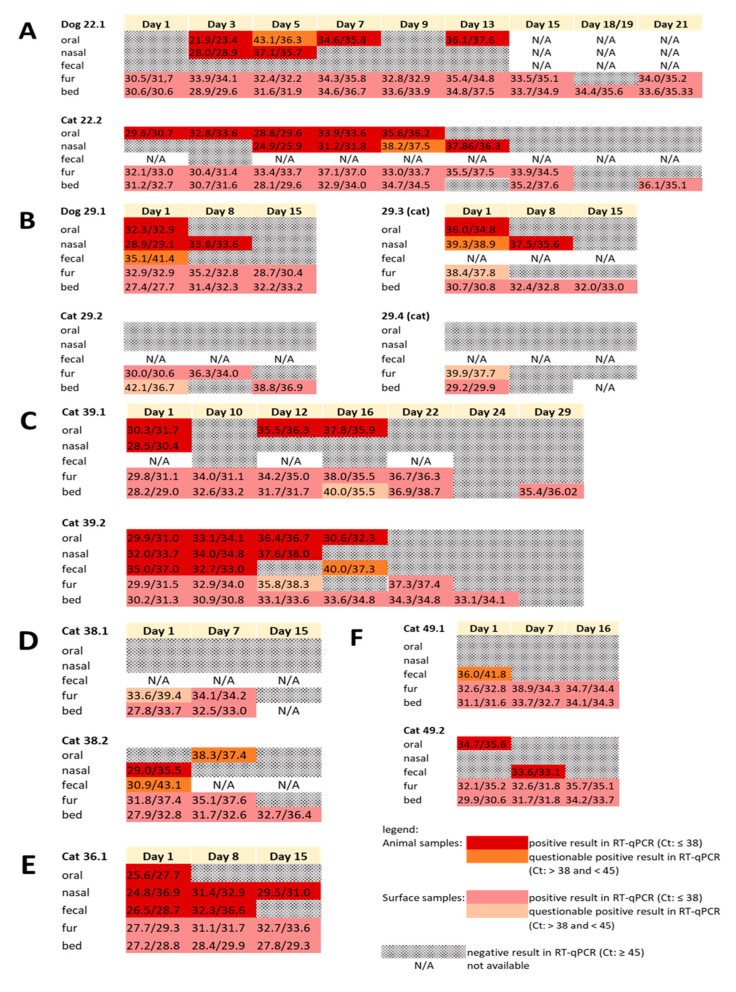
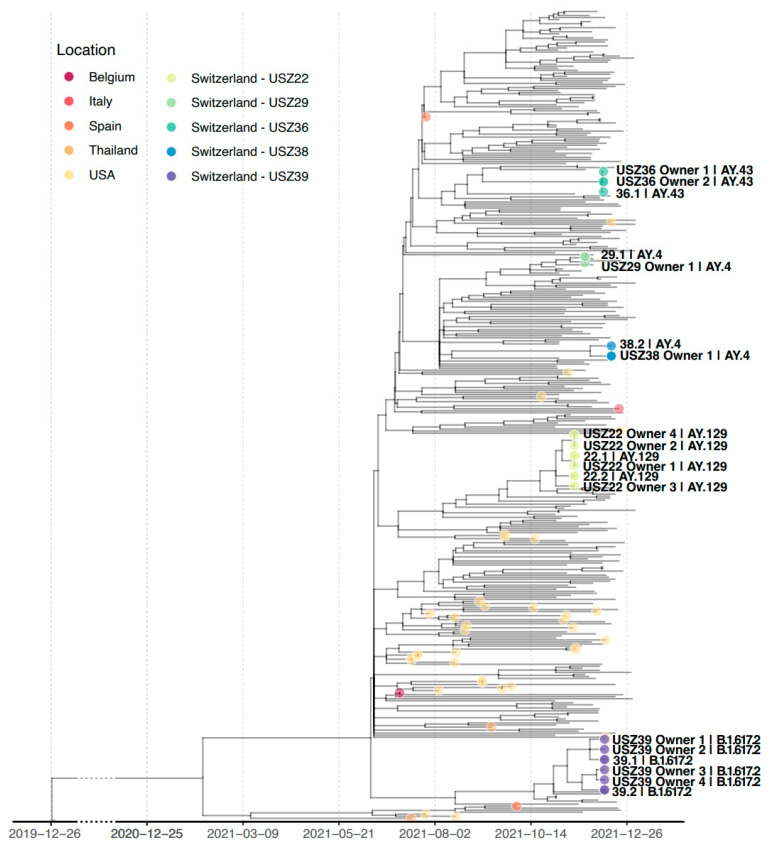
In human beings, there are five reported variants of concern of severe acute respiratory syndrome coronavirus type 2 (SARS-CoV-2). However, in contrast to human beings, descriptions of infections of animals with specific variants are still rare. The aim of this study is to systematically investigate SARS-CoV-2 infections in companion animals in close contact with SARS-CoV-2-positive owners ("COVID-19 households") with a focus on the Delta variant. Samples, obtained from companion animals and their owners were analyzed using a real-time reverse transcriptase-polymerase chain reaction (RT-qPCR) and next-generation sequencing (NGS). Animals were also tested for antibodies and neutralizing activity against SARS-CoV-2. Eleven cats and three dogs in nine COVID-19-positive households were RT-qPCR and/or serologically positive for the SARS-CoV-2 Delta variant. For seven animals, the genetic sequence could be determined. The animals were infected by one of the pangolin lineages B.1.617.2, AY.4, AY.43 and AY.129 and between zero and three single-nucleotide polymorphisms (SNPs) were detected between the viral genomes of animals and their owners, indicating within-household transmission between animal and owner and in multi-pet households also between the animals. NGS data identified SNPs that occur at a higher frequency in the viral sequences of companion animals than in viral sequences of humans, as well as SNPs, which were exclusively found in the animals investigated in the current study and not in their owners. In conclusion, our study is the first to describe the SARS-CoV-2 Delta variant transmission to animals in Switzerland and provides the first-ever description of Delta-variant pangolin lineages AY.129 and AY.4 in animals. Our results reinforce the need of a One Health approach in the monitoring of SARS-CoV-2 in animals.
在人类中,有五种严重急性呼吸系统综合症冠状病毒 2 型(SARS-CoV-2)的报告关注变体。然而,与人类不同的是,关于动物感染特定变体的描述仍然很少。本研究的目的是系统地调查与 SARS-CoV-2 阳性主人(“COVID-19 家庭”)密切接触的伴侣动物中的 SARS-CoV-2 感染,重点关注 Delta 变体。使用实时逆转录酶-聚合酶链反应(RT-qPCR)和下一代测序(NGS)分析从伴侣动物及其主人获得的样本。还对动物进行了针对 SARS-CoV-2 的抗体和中和活性测试。在 9 个 COVID-19 阳性家庭中的 11 只猫和 3 只狗的 RT-qPCR 和/或血清学检测呈 SARS-CoV-2 Delta 变体阳性。对 7 只动物的遗传序列进行了确定。这些动物是由穿山甲谱系 B.1.617.2、AY.4、AY.43 和 AY.129 感染的,在动物和主人的病毒基因组之间检测到零到三个单核苷酸多态性(SNP),表明在家庭内动物与主人之间以及在多宠物家庭中动物之间存在传播。NGS 数据鉴定了在伴侣动物的病毒序列中比在人类病毒序列中出现频率更高的 SNP,以及仅在本研究中调查的动物中发现而不在其主人中发现的 SNP。总之,本研究首次描述了瑞士向动物传播 SARS-CoV-2 Delta 变体,并首次描述了在动物中发现的 Delta 变体穿山甲谱系 AY.129 和 AY.4。我们的研究结果强化了在动物中监测 SARS-CoV-2 时需要采取一种“同一健康”方法。