Institute of Hematology, Union Hospital, Tongji Medical College, Huazhong University of Science and Technology, 1277 Jiefang Avenue, Wuhan, 430022, Hubei, China.
Hubei Clinical Medical Center of Cell Therapy for Neoplastic Disease, Wuhan, 430022, China.
J Hematol Oncol. 2023 Jan 21;16(1):5. doi: 10.1186/s13045-023-01402-y.
T cell receptor (TCR)-T cells possess similar effector function, but milder and more durable signal activation compared with chimeric antigen receptor-T cells. TCR-T cell therapy is another active field of cellular immunotherapy for cancer.
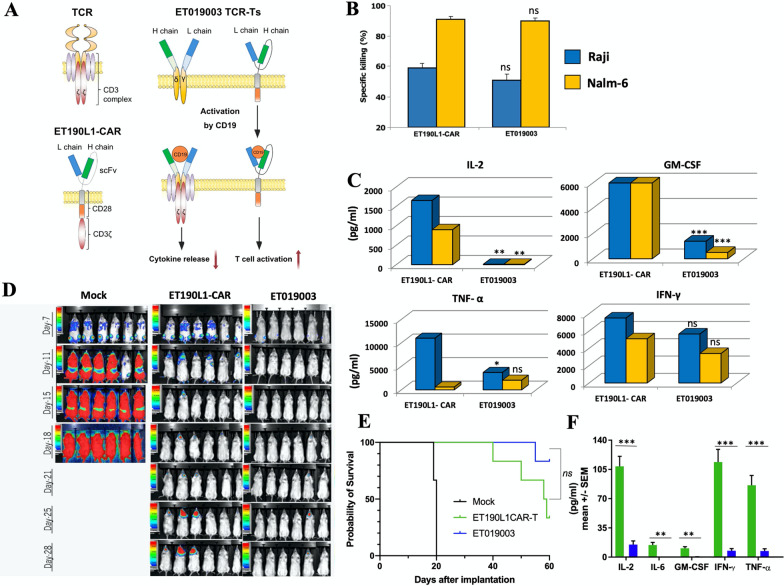
We previously developed a human anti-CD19 antibody (ET190L1) and generated novel CD19-specific γ/δ TCR-T cells, ET019003, by fusing the Fab fragment of ET190L1 with γ/δ TCR constant chain plus adding an ET190L1-scFv/CD28 co-stimulatory molecule. ET019003 cells were tested in preclinical studies followed by a phase 1 clinical trial.
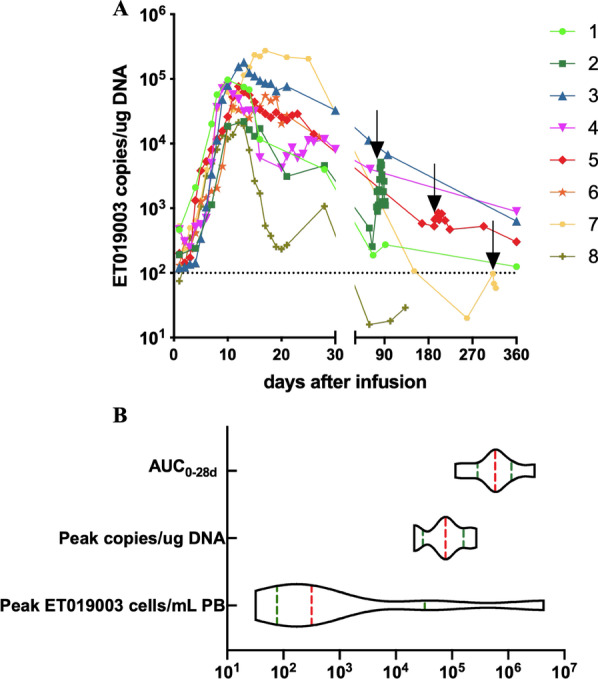
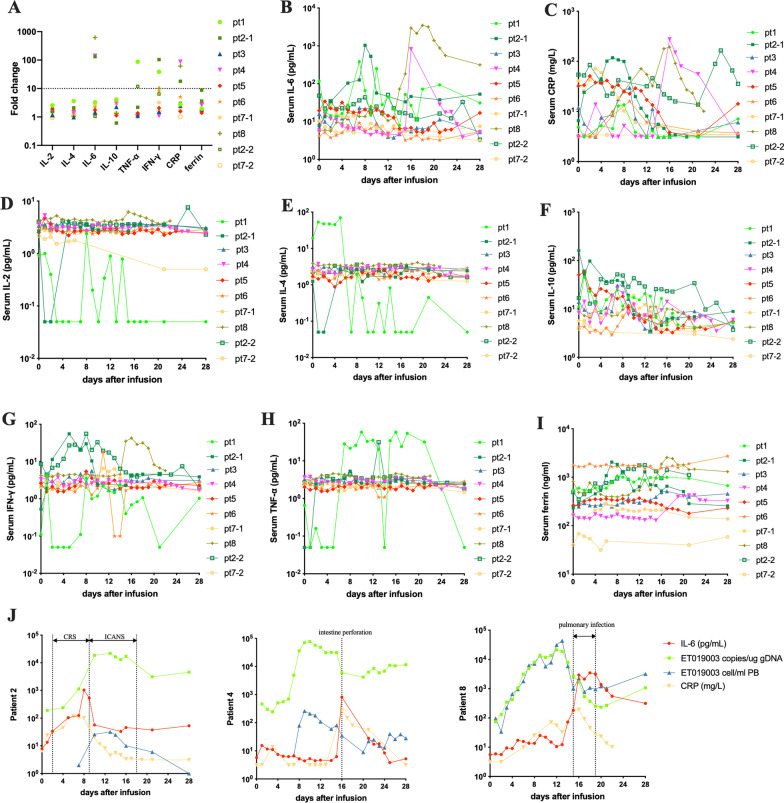
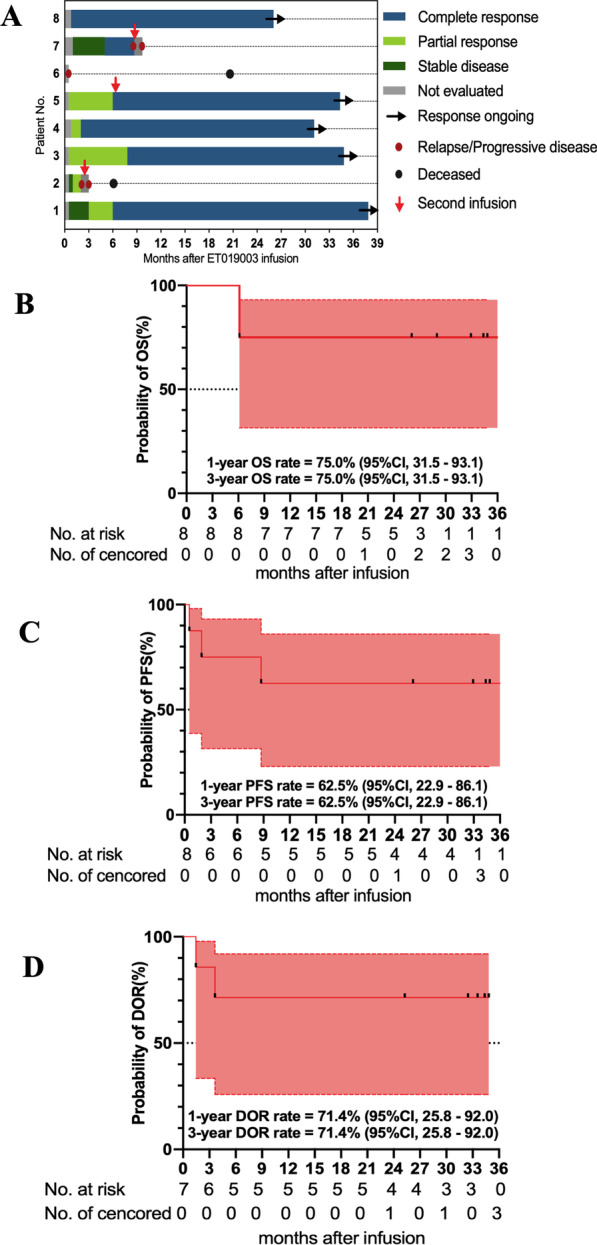
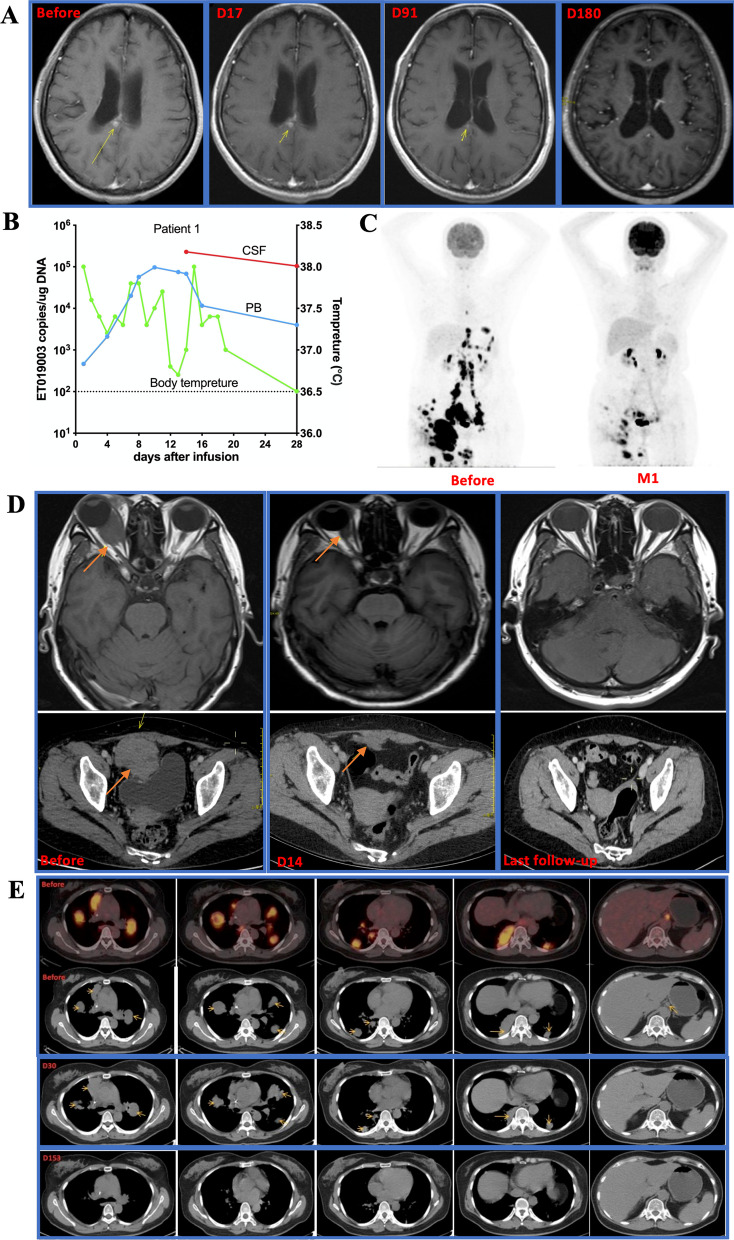
ET019003 cells produced less cytokines but retained comparable antitumor potency than ET190L1-CAR-T cells in vivo and in vitro. In the first-in-human trial, eight patients with relapsed or refractory DLBCL were treated. CRS of grade 1 was observed in three (37.5%) patients; ICANS of grade 3 was noted in one (12.5%) patient. Elevation of serum cytokines after ET019003 infusion was almost modest. With a median follow-up of 34 (range 6-38) months, seven (87.5%) patients attained clinical responses and six (75%) achieved complete responses (CR). OS, PFS and DOR at 3 years were 75.0%, 62.5%, and 71.4%, respectively. Notably, patient 1 with primary CNS lymphoma did not experience CRS or ICANS and got an ongoing CR for over 3 years after infusion, with detectable ET019003 cells in CSF. ET019003 showed striking in vivo expansion and persisted in 50% of patients at 12 months. Three patients received a second infusion, one for consolidation therapy after CR and two for salvage therapy after disease progression, but no response was observed. ET019003 expansion was striking in the first infusion, but poor in the second infusion.
CD19-specific γ/δ TCR-T cells, ET019003, had a good safety profile and could induce rapid responses and durable CR in patients with relapsed or refractory DLBCL, even primary CNS lymphoma, presenting a novel and potent therapeutic option for these patients.
NCT04014894.
T 细胞受体 (TCR)-T 细胞具有相似的效应功能,但与嵌合抗原受体-T 细胞相比,其信号激活更温和、更持久。TCR-T 细胞疗法是癌症细胞免疫治疗的另一个活跃领域。
我们之前开发了一种人抗 CD19 抗体(ET190L1),并通过融合 ET190L1 的 Fab 片段与 γ/δ TCR 恒定链,再加上 ET190L1-scFv/CD28 共刺激分子,生成了新型的 CD19 特异性 γ/δ TCR-T 细胞 ET019003。ET019003 细胞在进行了临床前研究后,随后进行了 I 期临床试验。
ET019003 细胞在体内和体外产生的细胞因子较少,但保留了与 ET190L1-CAR-T 细胞相当的抗肿瘤效力。在首例人体试验中,8 例复发或难治性弥漫性大 B 细胞淋巴瘤(DLBCL)患者接受了治疗。3 例(37.5%)患者出现 1 级细胞因子释放综合征(CRS);1 例(12.5%)患者出现 3 级免疫效应细胞相关神经毒性综合征(ICANS)。ET019003 输注后血清细胞因子升高几乎温和。中位随访 34 个月(范围 6-38 个月),7 例(87.5%)患者获得临床缓解,6 例(75%)患者获得完全缓解(CR)。3 年时的总生存期(OS)、无进展生存期(PFS)和疾病缓解持续时间(DOR)分别为 75.0%、62.5%和 71.4%。值得注意的是,1 例原发性中枢神经系统淋巴瘤患者未发生 CRS 或 ICANS,输注后持续超过 3 年获得持续缓解,CSF 中可检测到 ET019003 细胞。ET019003 在体内显著扩增,并在 12 个月时持续存在于 50%的患者中。3 例患者接受了第二次输注,1 例用于 CR 后的巩固治疗,2 例用于疾病进展后的挽救治疗,但均未观察到缓解。ET019003 在第一次输注时扩增明显,但在第二次输注时扩增不佳。
CD19 特异性 γ/δ TCR-T 细胞 ET019003 具有良好的安全性,并能在复发或难治性弥漫性大 B 细胞淋巴瘤(甚至原发性中枢神经系统淋巴瘤)患者中快速诱导缓解和持久的 CR,为这些患者提供了一种新的、有效的治疗选择。
NCT04014894。