Tan Yan, Cai Jiali, Wang Zhiyong
Guangdong Key Laboratory for Biomedical Measurements and Ultrasound Imaging, School of Biomedical Engineering, Health Science Center, Shenzhen University, Shenzhen 518060, China.
Key Laboratory for Polymeric Composite and Functional Materials of Ministry of Education, School of Materials Science and Engineering, Center for Functional Biomaterials, Sun Yat-Sen University, Guangzhou 510275, China.
Regen Biomater. 2022 Nov 2;10:rbac090. doi: 10.1093/rb/rbac090. eCollection 2023.
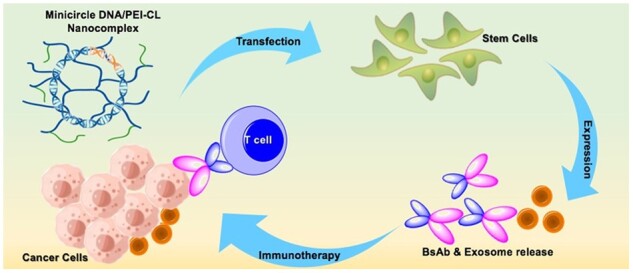
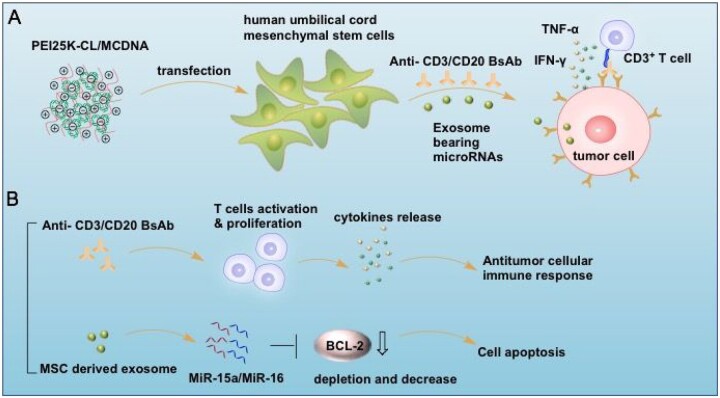
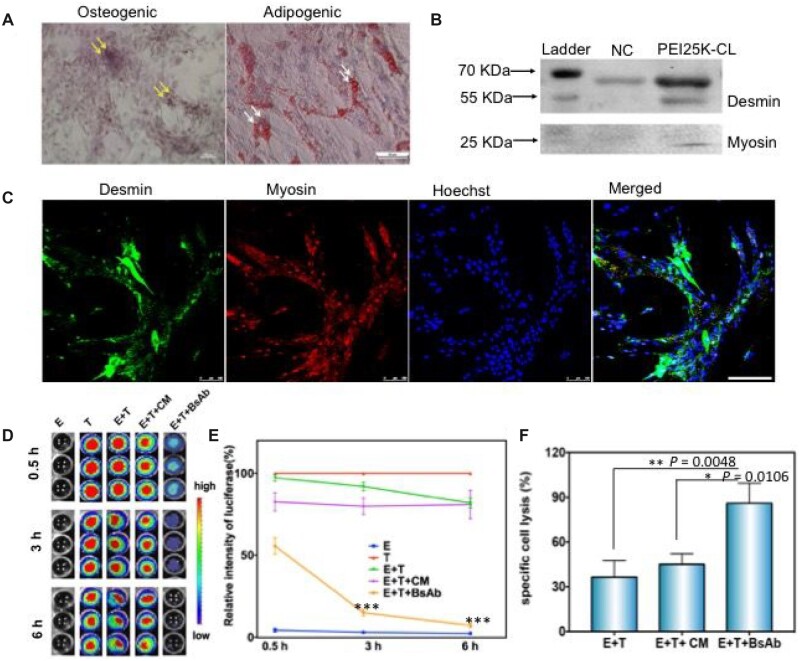
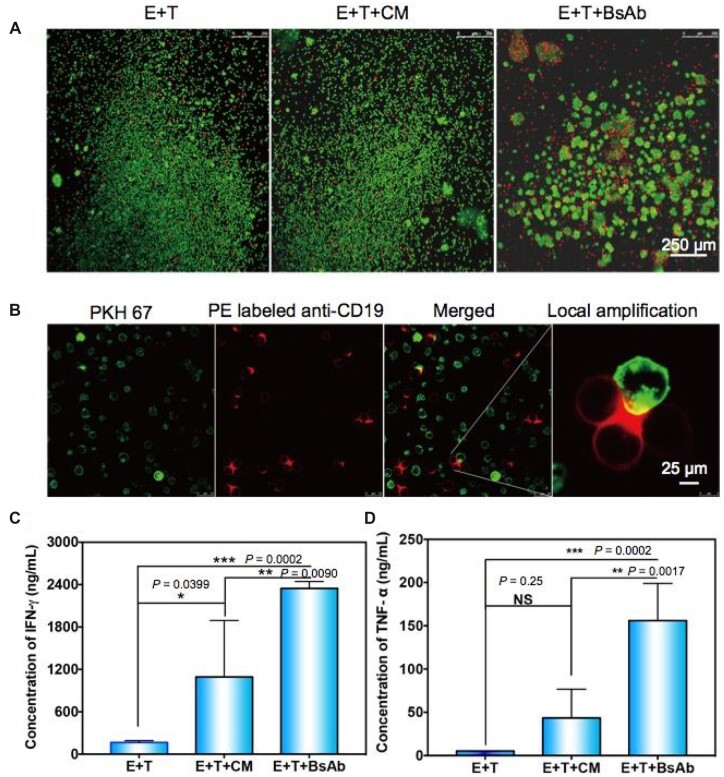
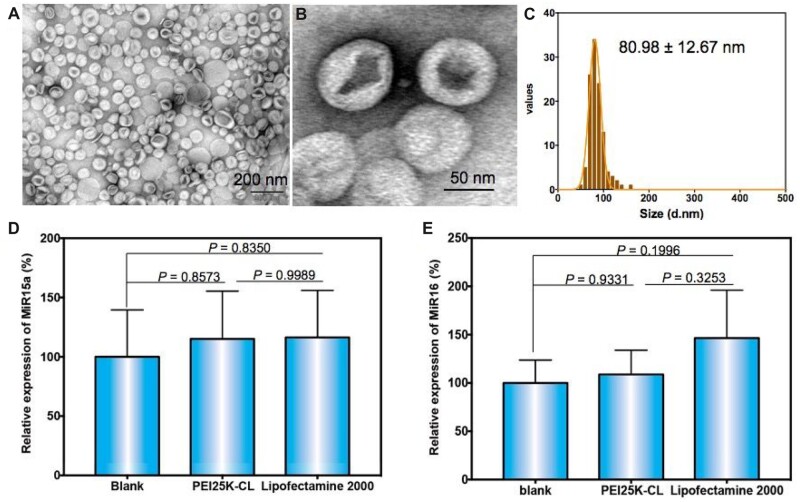
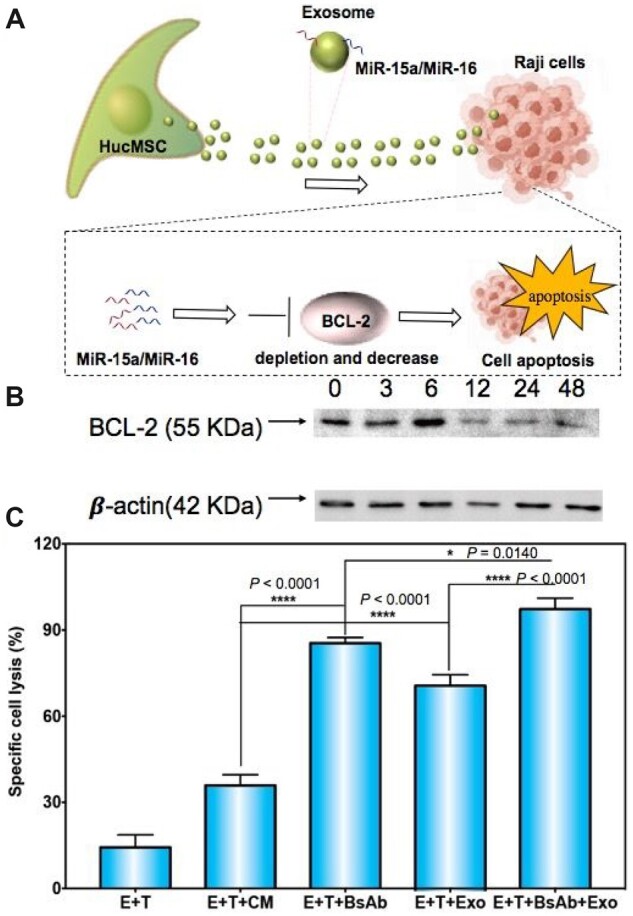
Bispecific antibodies (BsAb) have gained significant momentum in clinical application. However, the rapid enzymolysis and metabolism of protein drugs usually induce short circulation , and developing an efficient protein delivery system still is a bottleneck. Mesenchymal stem cells (MSCs) have become an attractive therapeutic carrier for cancers. Genetic modification enables MSCs to express and secrete specific proteins, which is essential for therapeutic efficacy. However, efficient gene transfer into MSCs is still a challenge. In this study, we applied epsilon-caprolactone-modified polyethylenimine (PEI-CL) as an efficacy carrier for plasmid transfection into MSC that served as 'cell factory' for anti-CD3/CD20 BsAb preparation. Herein, the PEI-CL encapsulates the minicircle plasmid and mediates cell transfection efficiently. Thus, the anti-CD3/CD20 BsAb is secreted from MSC and recruited T cell, resulting in highly sensitive cytotoxicity in the human B-cell lymphoma. Furthermore, these stem cells produce exosomes bearing MiR-15a/MiR-16, which could negatively regulate cancer's oncogenes BCL-2 for adjuvant therapy. Meanwhile, high immunologic factors like tumor necrosis factor-α and interferon-γ are generated and enhance immunotherapy efficacy. The engineered MSCs are demonstrated as an efficient route for BsAb production, and these bioactive components contribute to synergistic therapy, which would be an innovative treatment.
双特异性抗体(BsAb)在临床应用中已获得显著进展。然而,蛋白质药物的快速酶解和代谢通常会导致其循环时间缩短,开发一种高效的蛋白质递送系统仍然是一个瓶颈。间充质干细胞(MSCs)已成为一种有吸引力的癌症治疗载体。基因改造使MSCs能够表达和分泌特定蛋白质,这对治疗效果至关重要。然而,将基因高效导入MSCs仍然是一项挑战。在本研究中,我们应用ε-己内酯修饰的聚乙烯亚胺(PEI-CL)作为一种有效的载体,用于将质粒转染到MSCs中,MSCs作为制备抗CD3/CD20 BsAb的“细胞工厂”。在此,PEI-CL包裹微环质粒并有效介导细胞转染。因此,抗CD3/CD20 BsAb从MSCs分泌并募集T细胞,从而在人B细胞淋巴瘤中产生高度敏感的细胞毒性。此外,这些干细胞产生携带MiR-15a/MiR-16的外泌体,其可对癌症原癌基因BCL-2进行负调控以用于辅助治疗。同时,产生高免疫因子如肿瘤坏死因子-α和干扰素-γ并增强免疫治疗效果。工程化的MSCs被证明是一种生产BsAb的有效途径,并且这些生物活性成分有助于协同治疗,这将是一种创新的治疗方法。