Institute of Ophthalmology, University College London, Greater London, UK.
Curr Protoc. 2023 Jan;3(1):e654. doi: 10.1002/cpz1.654.
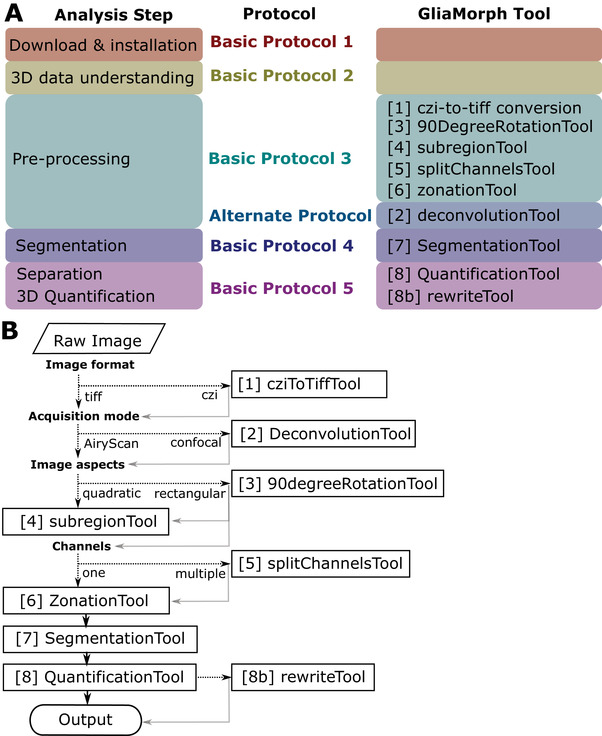
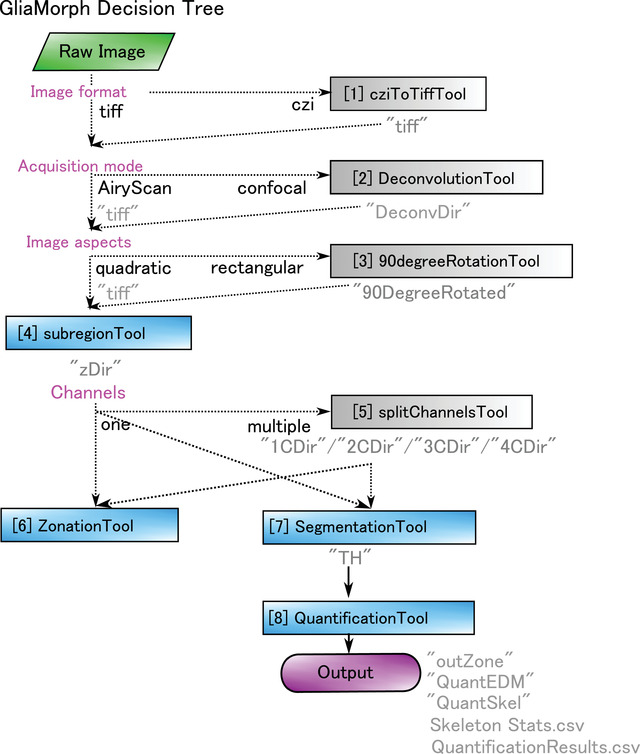
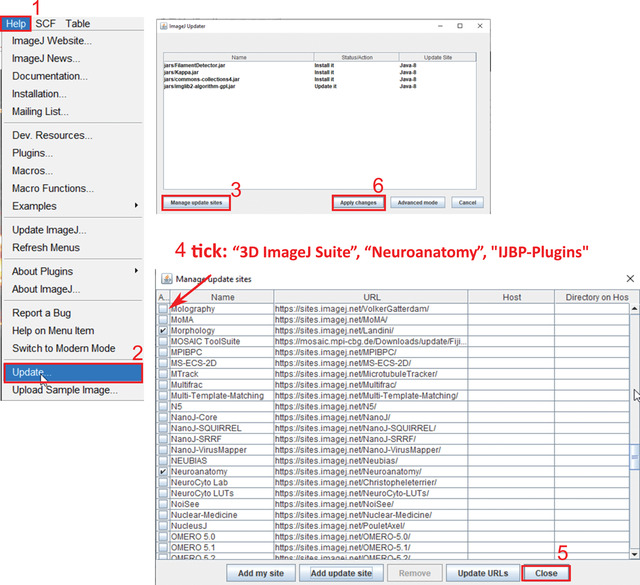
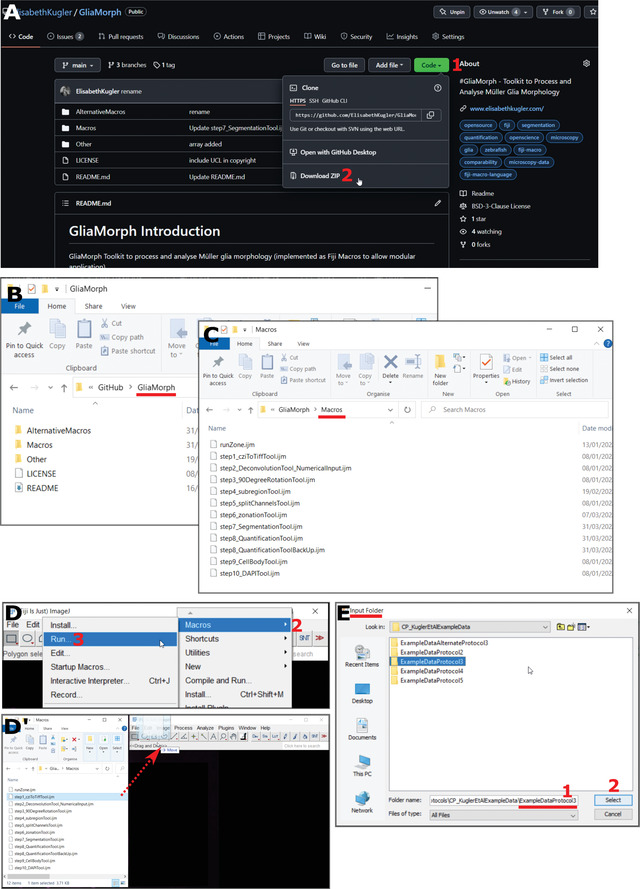
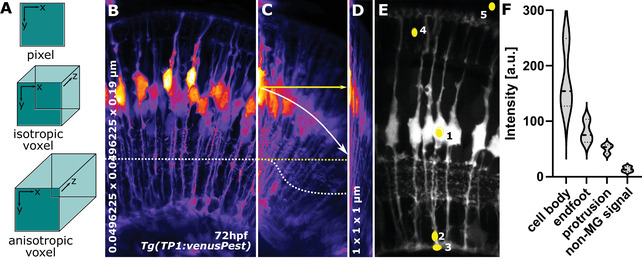
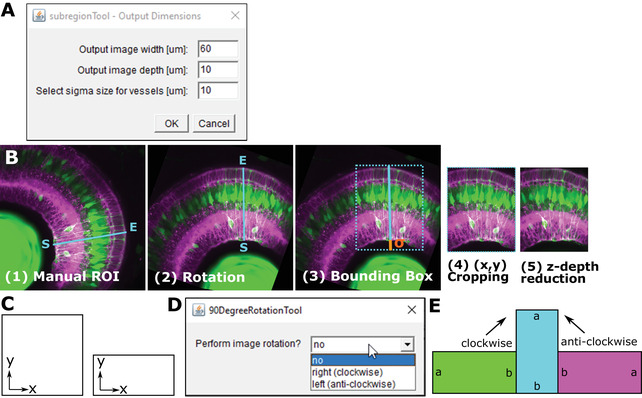
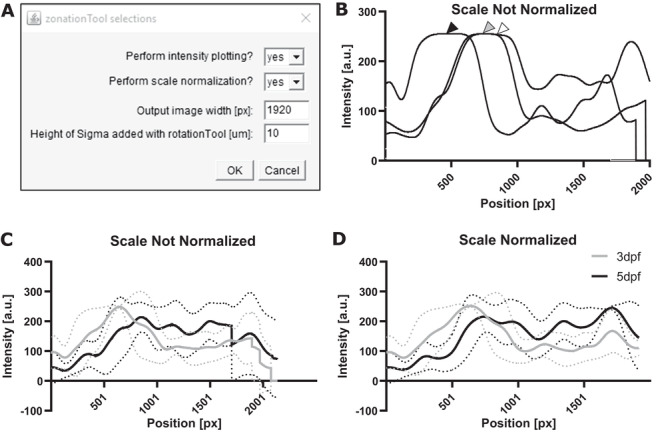
Glial cells are the support cells of the nervous system. Glial cells typically have elaborate morphologies that facilitate close contacts with neighboring neurons, synapses, and the vasculature. In the retina, Müller glia (MG) are the principal glial cell type that supports neuronal function by providing a myriad of supportive functions via intricate cell morphologies and precise contacts. Thus, complex glial morphology is critical for glial function, but remains challenging to resolve at a sub-cellular level or reproducibly quantify in complex tissues. To address this issue, we developed GliaMorph as a Fiji-based macro toolkit that allows 3D glial cell morphology analysis in the developing and mature retina. As GliaMorph is implemented in a modular fashion, here we present guides to (a) setup of GliaMorph, (b) data understanding in 3D, including z-axis intensity decay and signal-to-noise ratio, (c) pre-processing data to enhance image quality, (d) performing and examining image segmentation, and (e) 3D quantification of MG features, including apicobasal texture analysis. To allow easier application, GliaMorph tools are supported with graphical user interfaces where appropriate, and example data are publicly available to facilitate adoption. Further, GliaMorph can be modified to meet users' morphological analysis needs for other glial or neuronal shapes. Finally, this article provides users with an in-depth understanding of data requirements and the workflow of GliaMorph. © 2023 The Authors. Current Protocols published by Wiley Periodicals LLC. Basic Protocol 1: Download and installation of GliaMorph components including example data Basic Protocol 2: Understanding data properties and quality 3D-essential for subsequent analysis and capturing data property issues early Basic Protocol 3: Pre-processing AiryScan microscopy data for analysis Alternate Protocol: Pre-processing confocal microscopy data for analysis Basic Protocol 4: Segmentation of glial cells Basic Protocol 5: 3D quantification of glial cell morphology.
神经胶质细胞是神经系统的支持细胞。神经胶质细胞通常具有精细的形态,便于与邻近神经元、突触和血管紧密接触。在视网膜中,Müller 胶质细胞 (MG) 是主要的胶质细胞类型,通过复杂的细胞形态和精确的接触提供多种支持功能来支持神经元功能。因此,复杂的胶质形态对于胶质功能至关重要,但在亚细胞水平上解析或在复杂组织中重现定量仍然具有挑战性。为了解决这个问题,我们开发了 GliaMorph,这是一个基于 Fiji 的宏工具包,允许在发育中和成熟的视网膜中进行 3D 胶质细胞形态分析。由于 GliaMorph 以模块化的方式实现,因此我们在此提供了以下指南:(a) GliaMorph 的设置,(b) 3D 数据的理解,包括 z 轴强度衰减和信噪比,(c) 预处理数据以增强图像质量,(d) 执行和检查图像分割,以及 (e) MG 特征的 3D 定量,包括顶底纹理分析。为了方便应用,GliaMorph 工具在适当的情况下都支持图形用户界面,并且提供了公共示例数据,以方便采用。此外,GliaMorph 可以进行修改,以满足用户对其他胶质或神经元形状的形态分析需求。最后,本文为用户提供了对 GliaMorph 的数据要求和工作流程的深入了解。© 2023 作者。Wiley Periodicals LLC 出版的《当代协议》。基本方案 1:下载和安装 GliaMorph 组件,包括示例数据 基本方案 2:理解数据属性和 3D 质量——这是后续分析的基础,并且可以及早捕获数据属性问题 基本方案 3:使用 AiryScan 显微镜数据进行分析的预处理 可选方案:使用共聚焦显微镜数据进行分析的预处理 基本方案 4:胶质细胞的分割 基本方案 5:胶质细胞形态的 3D 定量