Australian Centre for Water and Environmental Biotechnology, The University of Queensland, Brisbane, QLD 4072, Australia.
School of Environmental Science and Engineering, Tiangong University, Tianjin 300387, China.
Proc Natl Acad Sci U S A. 2023 Jan 31;120(5):e2208344120. doi: 10.1073/pnas.2208344120. Epub 2023 Jan 23.
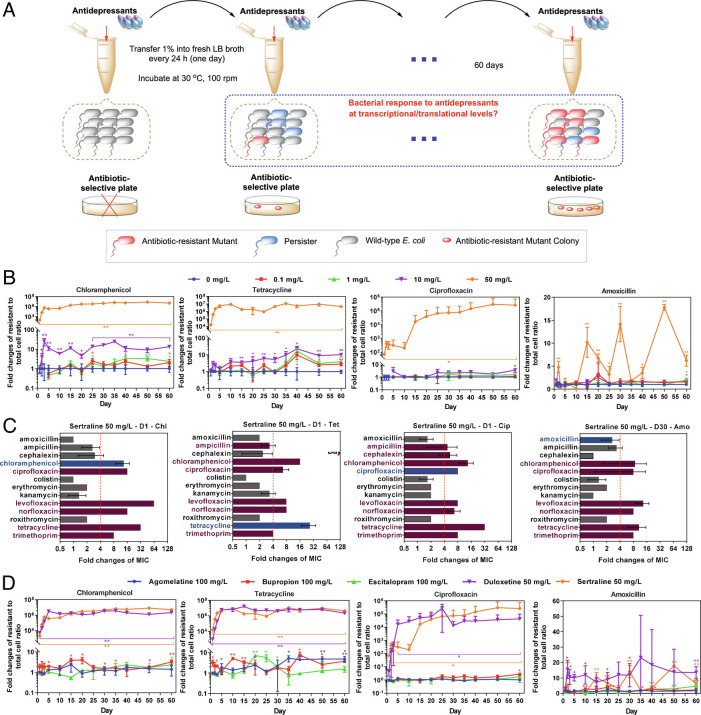
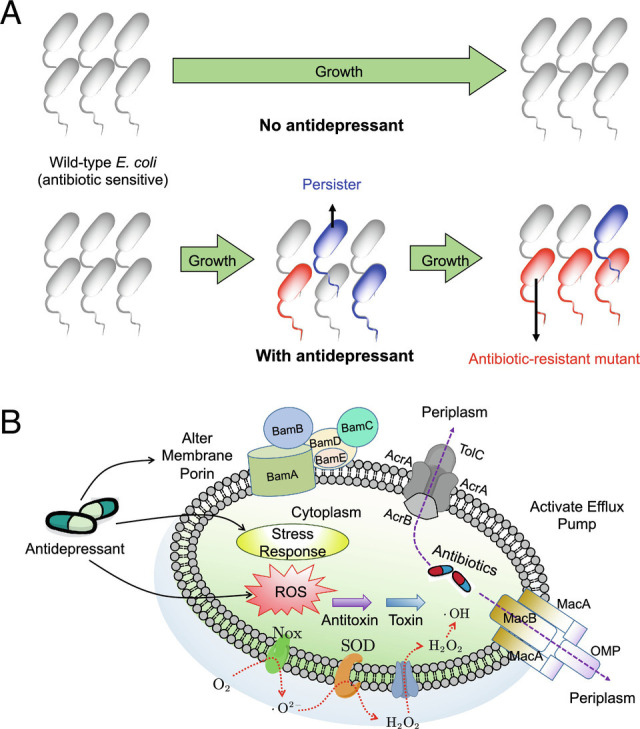
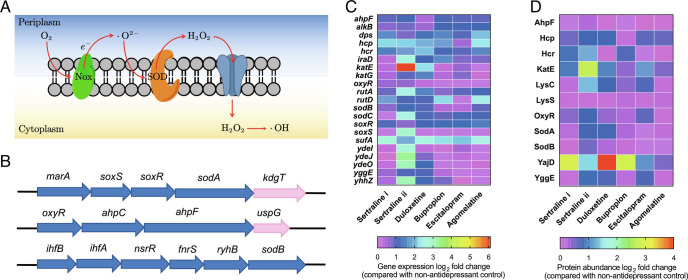
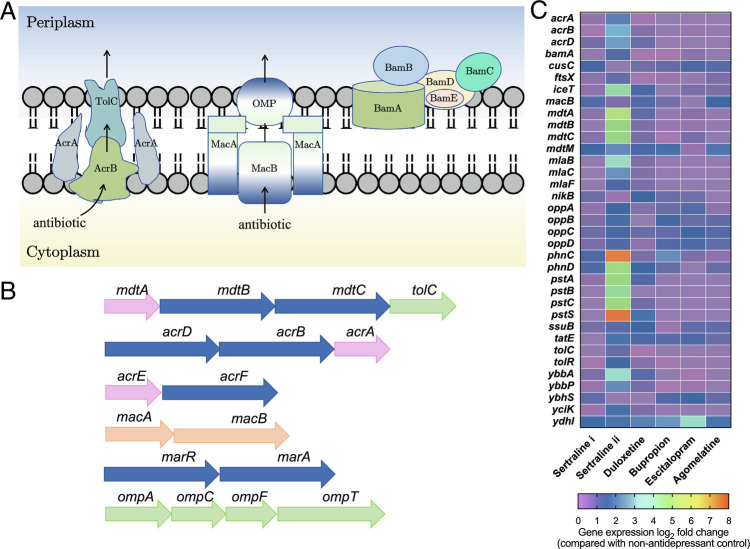
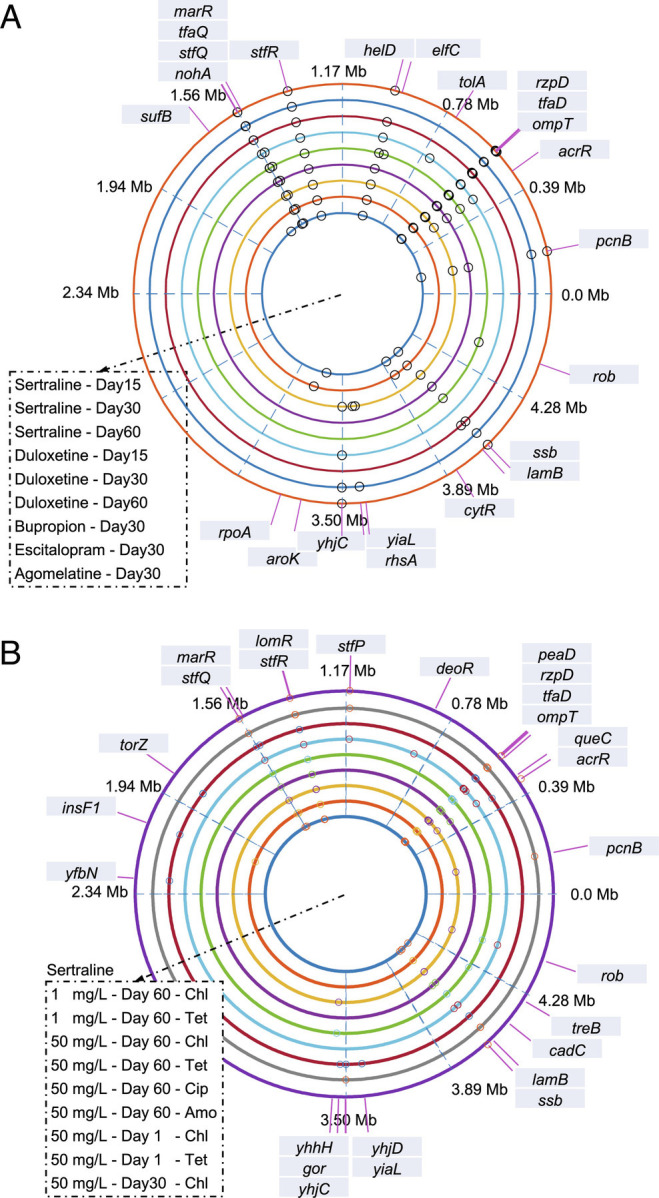
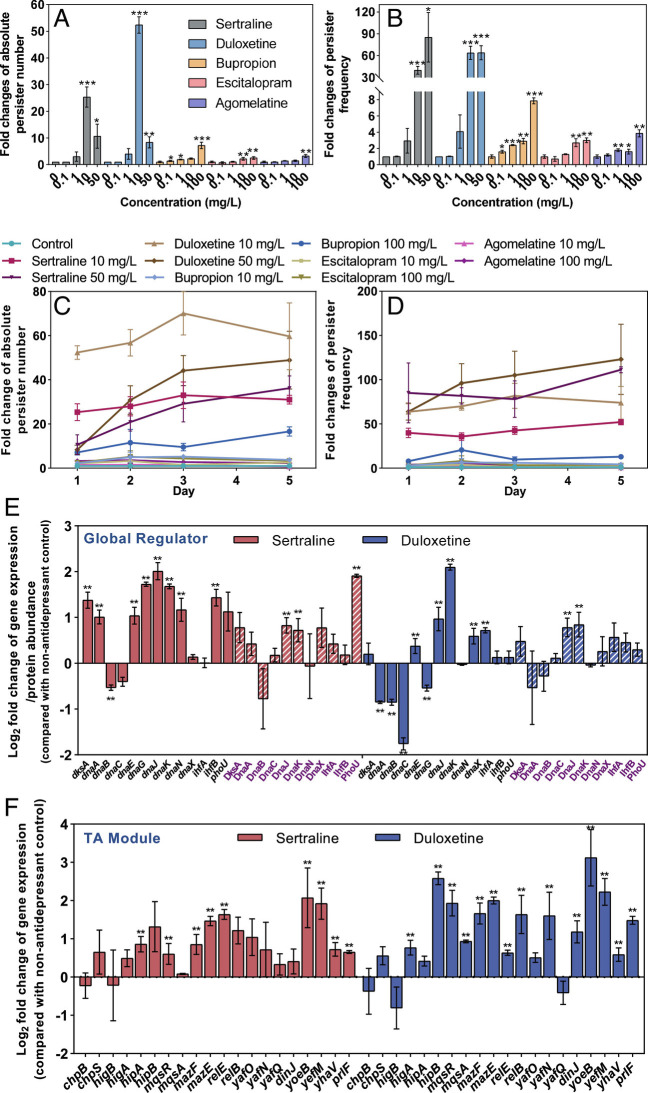
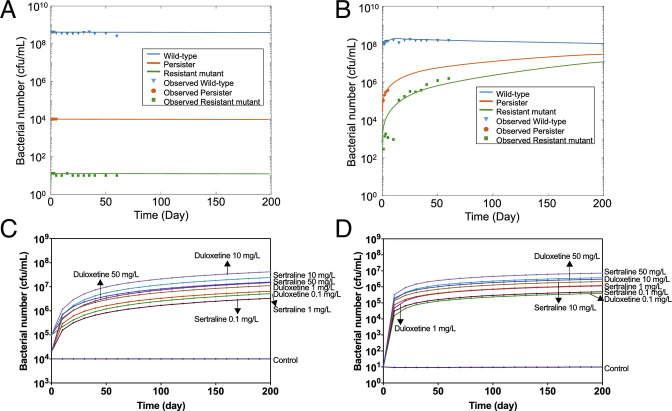
Antibiotic resistance is an urgent threat to global health. Antidepressants are consumed in large quantities, with a similar pharmaceutical market share (4.8%) to antibiotics (5%). While antibiotics are acknowledged as the major driver of increasing antibiotic resistance, little attention is paid to the contribution of antidepressants in this process. Here, we demonstrate that antidepressants at clinically relevant concentrations induce resistance to multiple antibiotics, even following short periods of exposure. Antibiotic persistence was also enhanced. Phenotypic and genotypic analyses revealed the enhanced production of reactive oxygen species following exposure to antidepressants was directly associated with increased resistance. An enhanced stress signature response and stimulation of efflux pump expression were also associated with increased resistance and persistence. Mathematical modeling also predicted that antidepressants would accelerate the emergence of antibiotic-resistant bacteria, and persister cells would help to maintain the resistance. Overall, our findings highlight the antibiotic resistance risk caused by antidepressants.
抗生素耐药性是全球健康的一个紧迫威胁。抗抑郁药的消耗量很大,其在药物市场的占比与抗生素(5%)相似(4.8%)。虽然抗生素被公认为导致抗生素耐药性不断增加的主要因素,但人们很少关注抗抑郁药在这一过程中的作用。在这里,我们证明了在临床相关浓度下,抗抑郁药即使在短时间暴露后也会诱导对多种抗生素的耐药性。抗生素的持久性也得到了增强。表型和基因型分析表明,暴露于抗抑郁药后活性氧的产生增加与耐药性的增强直接相关。增强的应激特征反应和外排泵表达的刺激也与耐药性和持久性的增加有关。数学建模也预测,抗抑郁药会加速抗生素耐药菌的出现,而持留细胞将有助于维持耐药性。总的来说,我们的研究结果强调了抗抑郁药引起的抗生素耐药性风险。