Department of Biology, The Catholic University of America, Washington, DC, USA.
Department of Computer Science and Engineering, University of Tennessee at Chattanoogagrid.267303.3, Chattanooga, Tennessee, USA.
mBio. 2022 Dec 20;13(6):e0219122. doi: 10.1128/mbio.02191-22. Epub 2022 Nov 14.
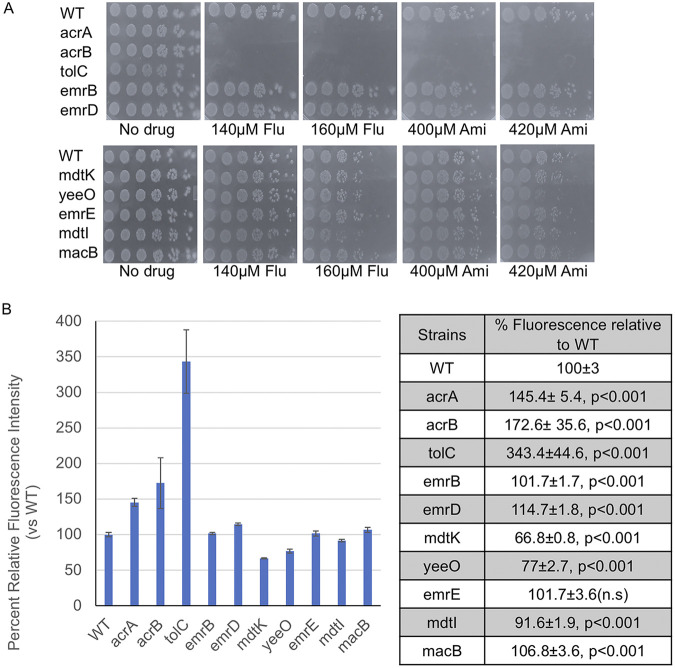
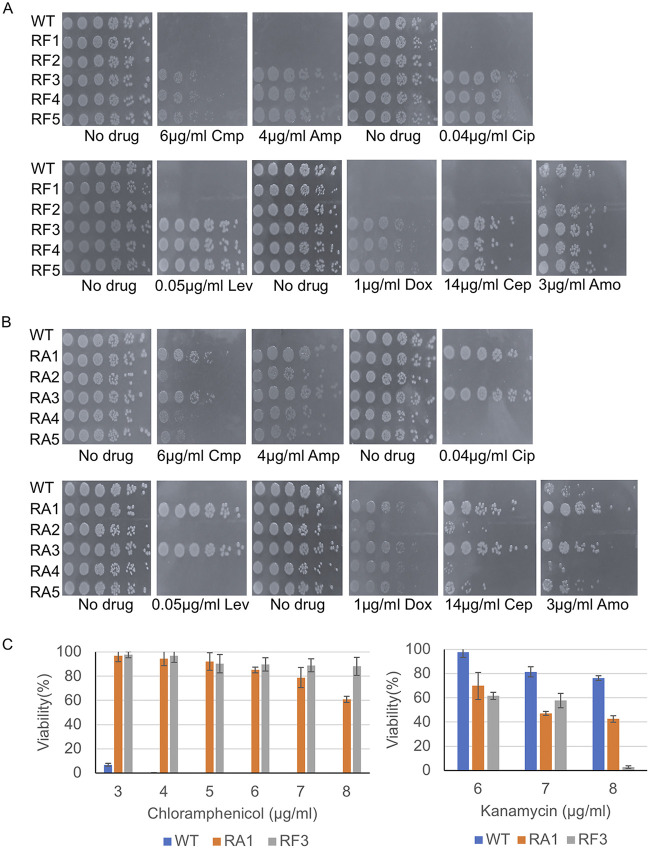
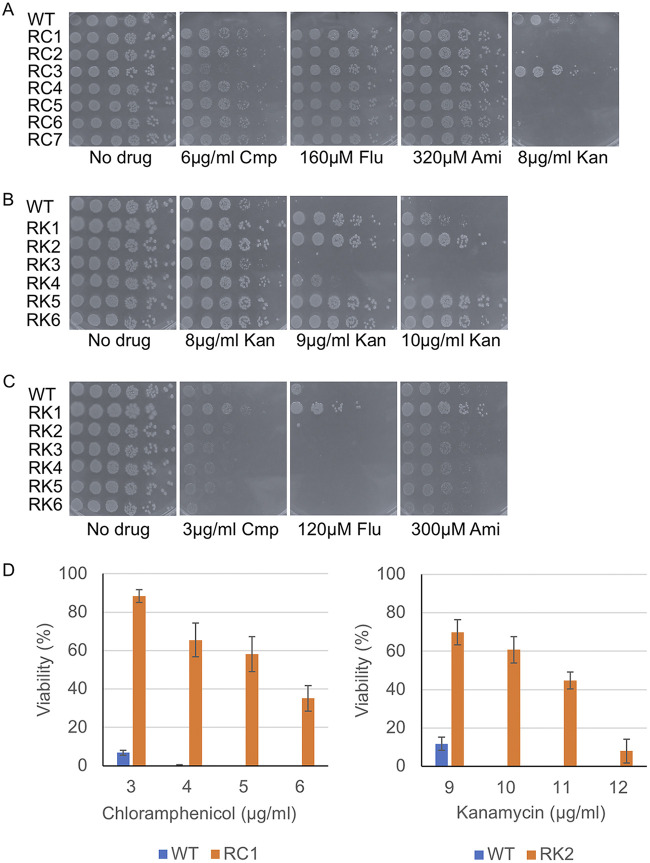
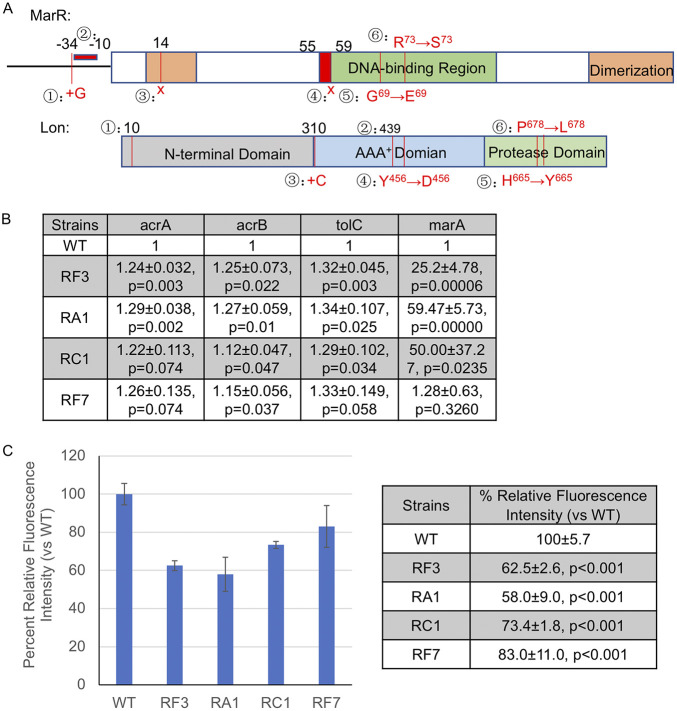
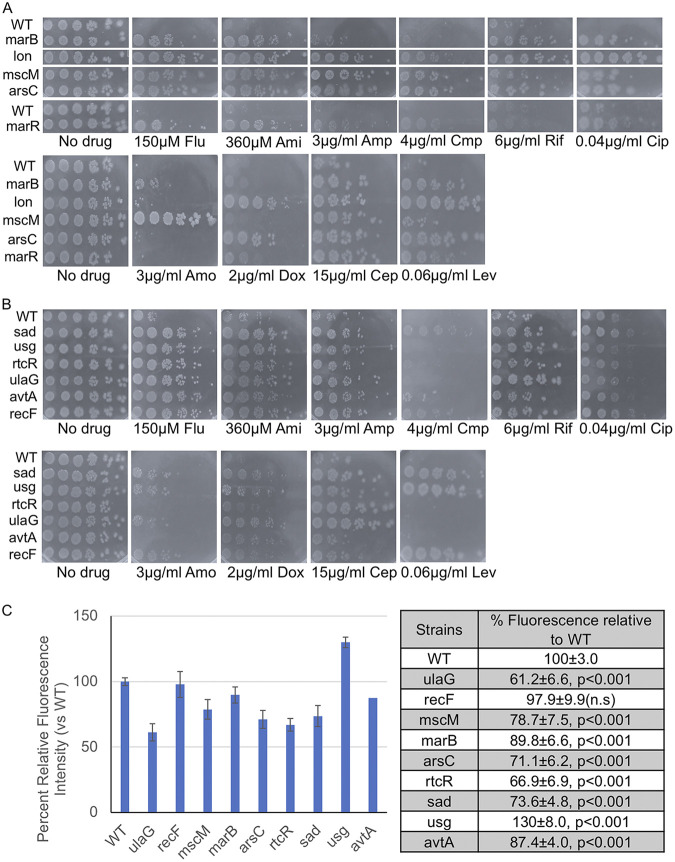
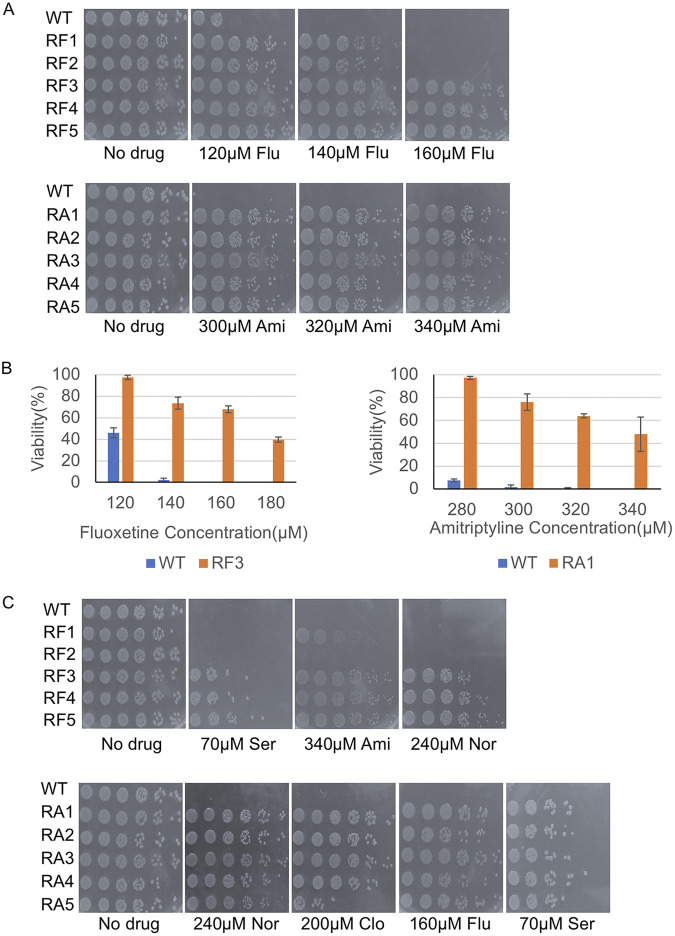
Microbial diversity is reduced in the gut microbiota of animals and humans treated with selective serotonin reuptake inhibitors (SSRIs) and tricyclic antidepressants (TCAs). The mechanisms driving the changes in microbial composition, while largely unknown, is critical to understand considering that the gut microbiota plays important roles in drug metabolism and brain function. Using Escherichia coli, we show that the SSRI fluoxetine and the TCA amitriptyline exert strong selection pressure for enhanced efflux activity of the AcrAB-TolC pump, a member of the resistance-nodulation-cell division (RND) superfamily of transporters. Sequencing spontaneous fluoxetine- and amitriptyline-resistant mutants revealed mutations in marR and lon, negative regulators of AcrAB-TolC expression. In line with the broad specificity of AcrAB-TolC pumps these mutants conferred resistance to several classes of antibiotics. We show that the converse also occurs, as spontaneous chloramphenicol-resistant mutants displayed cross-resistance to SSRIs and TCAs. Chemical-genomic screens identified deletions in marR and lon, confirming the results observed for the spontaneous resistant mutants. In addition, deletions in 35 genes with no known role in drug resistance were identified that conferred cross-resistance to antibiotics and several displayed enhanced efflux activities. These results indicate that combinations of specific antidepressants and antibiotics may have important effects when both are used simultaneously or successively as they can impose selection for common mechanisms of resistance. Our work suggests that selection for enhanced efflux activities is an important factor to consider in understanding the microbial diversity changes associated with antidepressant treatments. Antidepressants are prescribed broadly for psychiatric conditions to alter neuronal levels of synaptic neurotransmitters such as serotonin and norepinephrine. Two categories of antidepressants are selective serotonin reuptake inhibitors (SSRIs) and tricyclic antidepressants (TCAs); both are among the most prescribed drugs in the United States. While it is well-established that antidepressants inhibit reuptake of neurotransmitters there is evidence that they also impact microbial diversity in the gastrointestinal tract. However, the mechanisms and therefore biological and clinical effects remain obscure. We demonstrate antidepressants may influence microbial diversity through strong selection for mutant bacteria with increased AcrAB-TolC activity, an efflux pump that removes antibiotics from cells. Furthermore, we identify a new group of genes that contribute to cross-resistance between antidepressants and antibiotics, several act by regulating efflux activity, underscoring overlapping mechanisms. Overall, this work provides new insights into bacterial responses to antidepressants important for understanding antidepressant treatment effects.
微生物多样性在接受选择性 5-羟色胺再摄取抑制剂(SSRIs)和三环抗抑郁药(TCAs)治疗的动物和人类的肠道微生物群中减少。尽管驱动微生物组成变化的机制在很大程度上尚不清楚,但了解这一点至关重要,因为肠道微生物在药物代谢和大脑功能中发挥着重要作用。使用大肠杆菌,我们表明 SSRIs 氟西汀和 TCA 阿米替林对 AcrAB-TolC 泵的增强外排活性具有很强的选择压力,AcrAB-TolC 泵是抗性-结节-细胞分裂(RND)超家族转运蛋白的成员。对自发产生的氟西汀和阿米替林抗性突变体进行测序表明,marR 和 lon 发生突变,这是 AcrAB-TolC 表达的负调节因子。与 AcrAB-TolC 泵的广泛特异性一致,这些突变赋予了对几类抗生素的抗性。我们表明,情况正好相反,因为自发产生的氯霉素抗性突变体对 SSRIs 和 TCAs 表现出交叉抗性。化学基因组筛选鉴定出 marR 和 lon 的缺失,证实了自发抗性突变体的结果。此外,还鉴定出 35 个具有未知耐药作用的基因缺失,这些基因缺失赋予了抗生素和几种抗生素的交叉抗性,并且表现出增强的外排活性。这些结果表明,当同时或相继使用特定的抗抑郁药和抗生素时,它们的组合可能会产生重要的影响,因为它们可以选择共同的耐药机制。我们的工作表明,增强的外排活性的选择是理解与抗抑郁治疗相关的微生物多样性变化时需要考虑的一个重要因素。抗抑郁药被广泛用于治疗精神疾病,以改变神经元水平的突触神经递质,如血清素和去甲肾上腺素。两类抗抑郁药是选择性 5-羟色胺再摄取抑制剂(SSRIs)和三环抗抑郁药(TCAs);它们都是美国最常开的药物之一。虽然已经确定抗抑郁药抑制了神经递质的再摄取,但有证据表明它们也会影响胃肠道中的微生物多样性。然而,机制以及因此的生物学和临床影响仍然不清楚。我们证明,抗抑郁药可能通过强烈选择具有增强的 AcrAB-TolC 活性的突变细菌来影响微生物多样性,AcrAB-TolC 是一种将抗生素从细胞中排出的外排泵。此外,我们鉴定出一组新的基因,它们有助于抗抑郁药和抗生素之间的交叉耐药,其中一些通过调节外排活性起作用,这强调了重叠的机制。总的来说,这项工作为理解抗抑郁治疗效果提供了对抗抑郁药细菌反应的新见解。