Department of Pathology, School of Basic Medical Sciences, Shandong University, Jinan, 250012, Shandong, China.
Department of Pathology, Qilu Hospital, Shandong University, Jinan, 250012, Shandong, China.
BMC Pulm Med. 2023 Jan 23;23(1):32. doi: 10.1186/s12890-022-02303-5.
The family with sequence similarity 83B (FAM83B) is one of the markers for poor prognosis in several carcinomas, but the expression and the mechanism resulted in malignant phenotype in lung adenocarcinoma (LUAD) remain to be elucidated.
Data of RNA-seq in LUAD were downloaded from the cancer genome atlas (TCGA) database for differential expression and survival analysis, and immunohistochemistry was employed to analyze the protein expression of FAM83B in 126 cases of primary LUAD. The LUAD cell lines were collected for the detection of the effects on migration and invasion. Then, western blot was performed to measure the expression of tissue inhibitor of metalloproteinase (TIMP)-1 and activation of PI3K/AKT/NF-κB pathway.
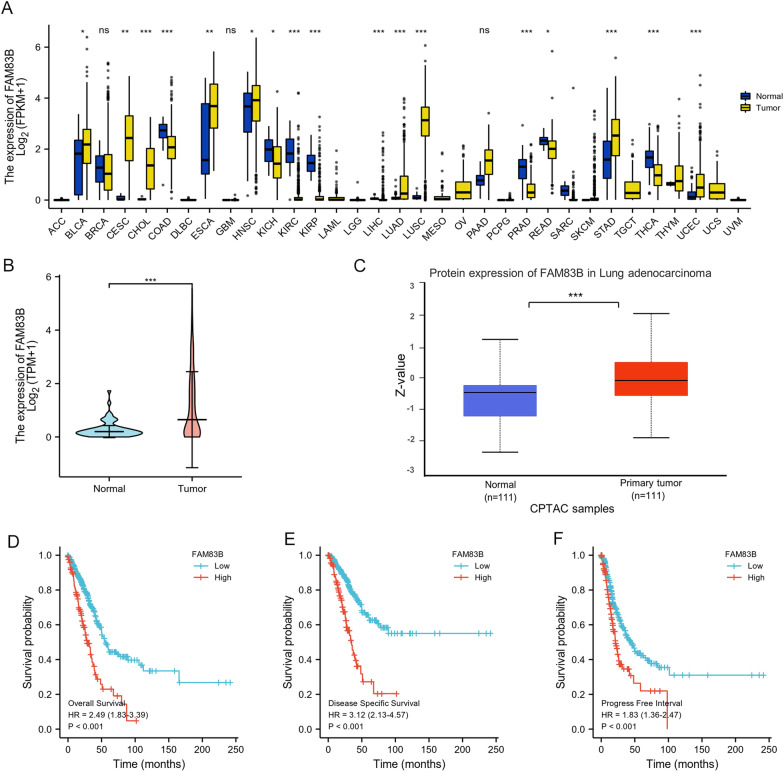
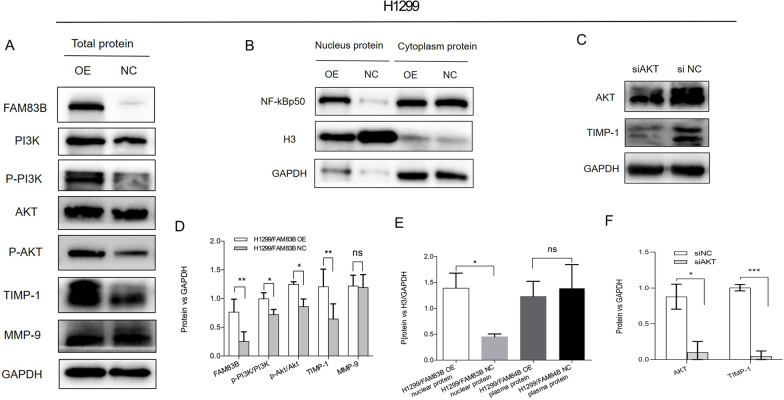
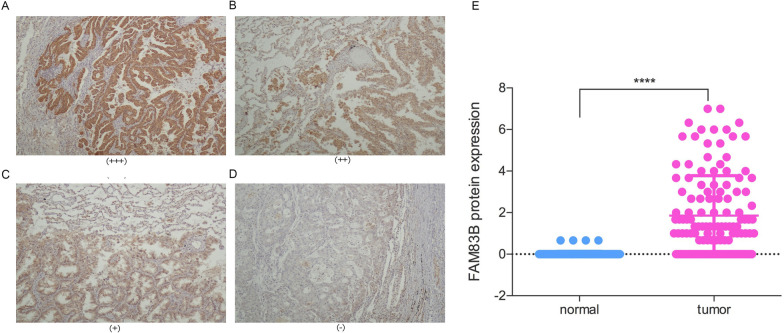
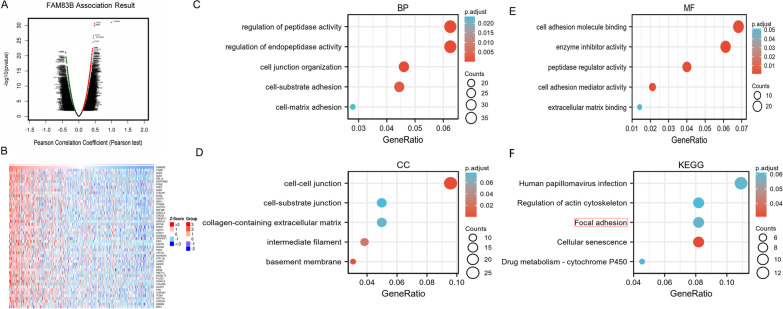
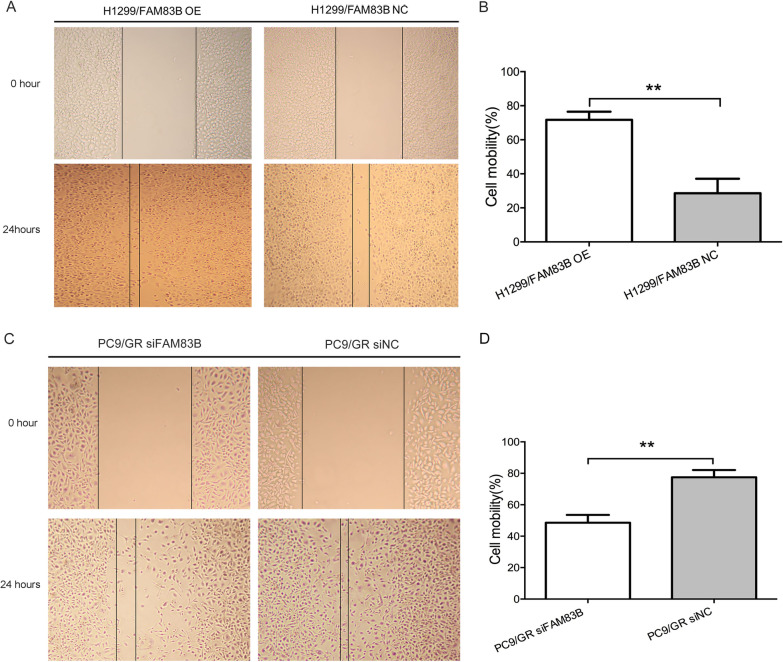
FAM83B was overexpressed in multiple types of carcinomas; The differential expression analysis revealed that the level of FAM83B was higher in LUAD than that in para-carcinoma; The patients with overexpression of FAM83B were with shorter overall survival (OS), disease specific survival (DSS) and progress free interval (PFI); Enrichment analysis suggested it was related to the focal adhesion of LUAD. Immunohistochemistry analysis demonstrated that higher FAM83B expression was positively related to lymph node metastasis in primary. Scratch assay and Borden chamber assay showed that the overexpression of FAM83B promoted migration and invasion activity in vitro. Furthermore, high level of FAM83B accelerated the tumorigenesis in vivo. Western blot showed that TIMP-1 was upregulated in H1299/FAM83B OE cells accompanying by the activation of PI3K/AKT/NF-κB pathway.
FAM83B was a marker for poor prognosis of LUAD and it might promote the expression of TIMP-1 by activating PI3K/AKT/NF-κB pathway and then affect the ECM balance, which resulted in the migration and invasion of LUAD.
家族与序列相似性 83B(FAM83B)是几种癌预后不良的标志物之一,但 FAM83B 在肺腺癌(LUAD)中导致恶性表型的表达和机制仍有待阐明。
从癌症基因组图谱(TCGA)数据库下载 LUAD 的 RNA-seq 数据进行差异表达和生存分析,并采用免疫组织化学法分析 126 例原发性 LUAD 中 FAM83B 的蛋白表达。收集 LUAD 细胞系,检测对迁移和侵袭的影响。然后,进行 Western blot 以测量组织抑制剂金属蛋白酶(TIMP)-1 的表达和 PI3K/AKT/NF-κB 通路的激活。
FAM83B 在多种类型的癌中过表达;差异表达分析显示,LUAD 中 FAM83B 的水平高于癌旁组织;FAM83B 过表达的患者总生存(OS)、疾病特异性生存(DSS)和无进展间隔(PFI)更短;富集分析表明,它与 LUAD 的焦点粘附有关。免疫组织化学分析表明,原发性高 FAM83B 表达与淋巴结转移呈正相关。划痕试验和 Borden 室试验表明,FAM83B 的过表达促进了体外迁移和侵袭活性。此外,高水平的 FAM83B 加速了体内肿瘤的发生。Western blot 显示,H1299/FAM83B OE 细胞中 TIMP-1 上调,同时激活 PI3K/AKT/NF-κB 通路。
FAM83B 是 LUAD 预后不良的标志物,它可能通过激活 PI3K/AKT/NF-κB 通路上调 TIMP-1 的表达,进而影响 ECM 平衡,从而导致 LUAD 的迁移和侵袭。