Shen Chao-Qin, Yan Ting-Ting, Liu Wei, Zhu Xiao-Qiang, Tian Xiang-Long, Fu Xue-Liang, Hua Rong, Zhang Jun-Feng, Huo Yan-Miao, Liu De-Jun, Yang Jian-Yu, Sun Yong-Wei, Fang Jing-Yuan, Chen Hao-Yan, Hong Jie
State Key Laboratory for Oncogenes and Related Genes, Key Laboratory of Gastroenterology &Hepatology, Ministry of Health, Division of Gastroenterology and Hepatology, RenJi Hospital, School of Medicine, Shanghai Jiao Tong University, Shanghai Cancer Institute, Shanghai Institute of Digestive Disease, 145 Middle Shandong Road, Shanghai 200001, China.
Department of Biliary-Pancreatic Surgery, Renji Hospital, Shanghai Jiao-Tong University School of Medicine, 1630 Dongfang Road, Shanghai 200127, PR, China.
J Cancer. 2017 Sep 12;8(16):3154-3165. doi: 10.7150/jca.20086. eCollection 2017.
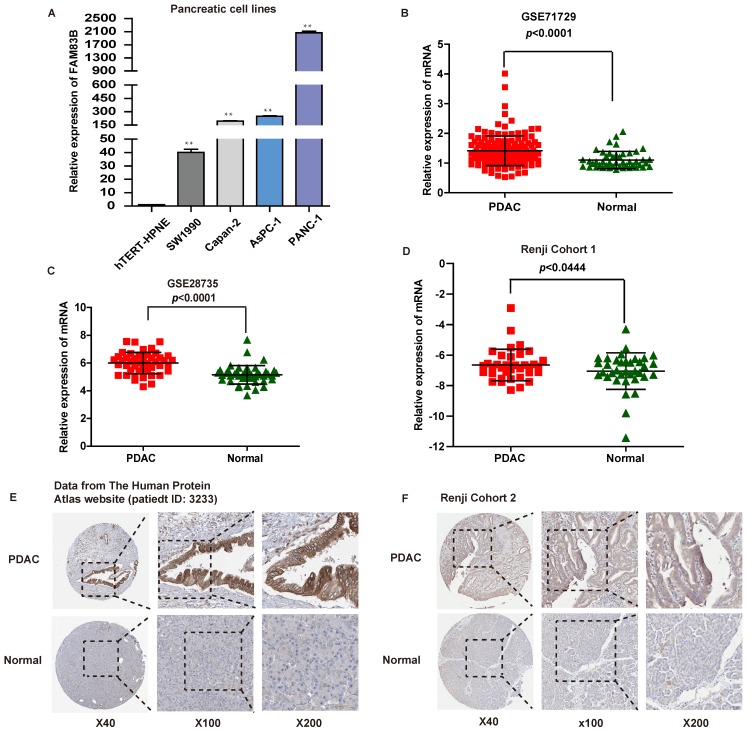
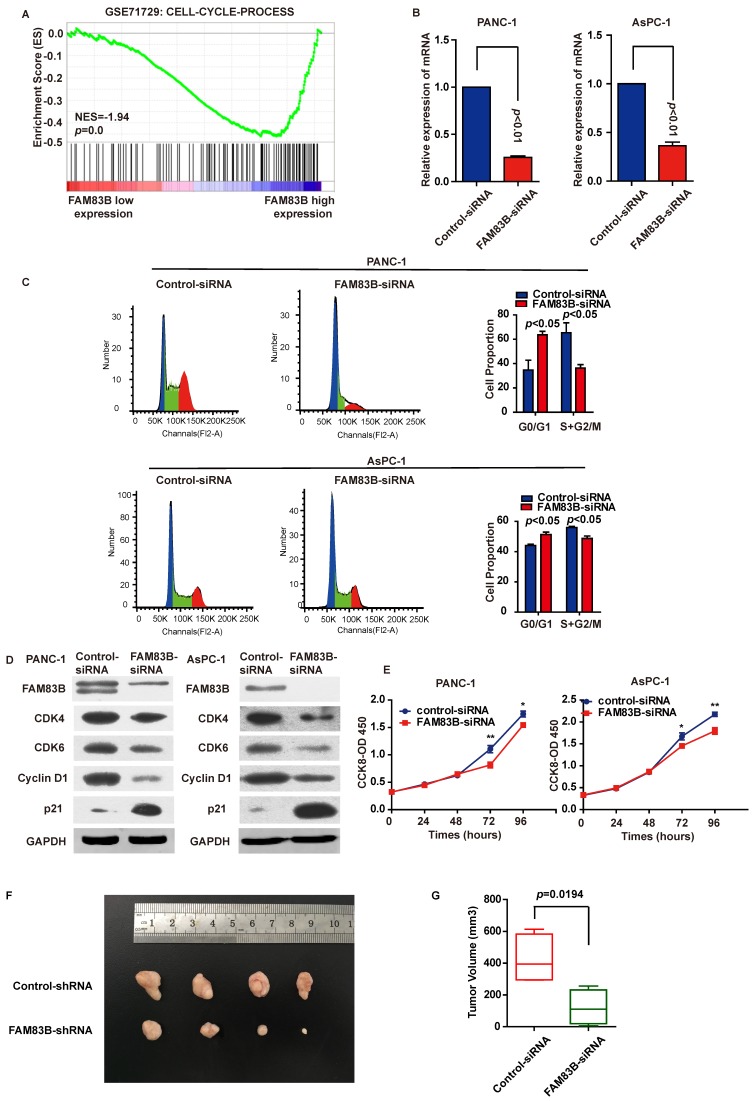
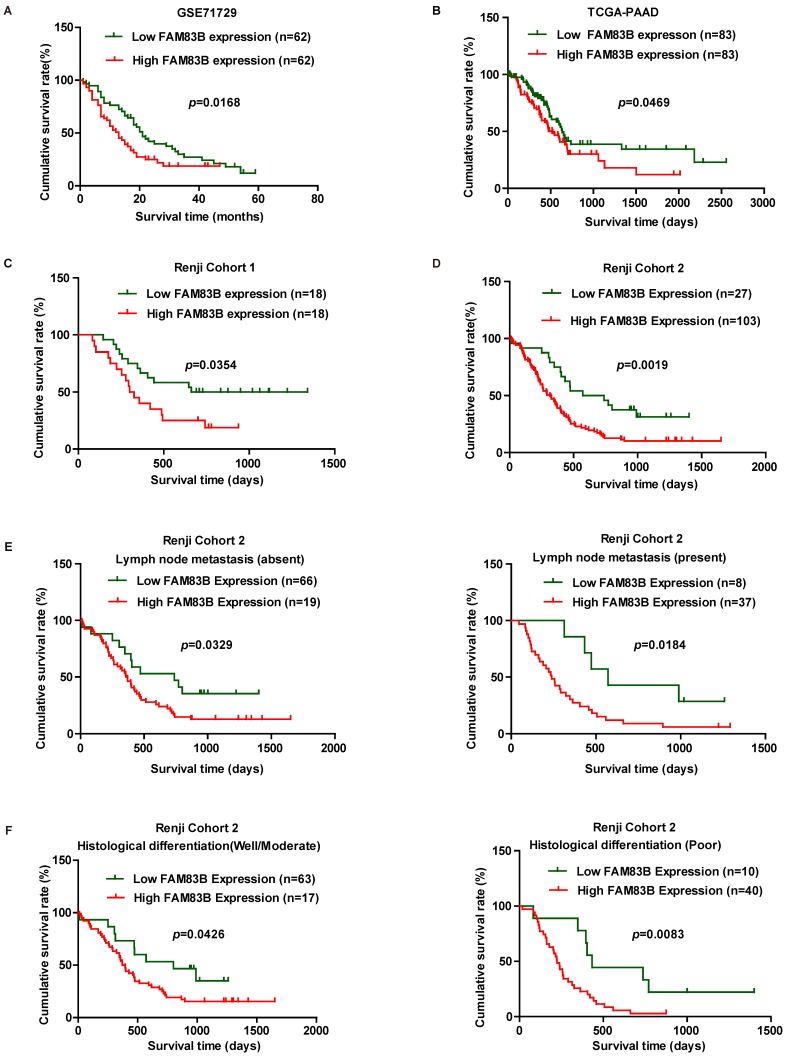
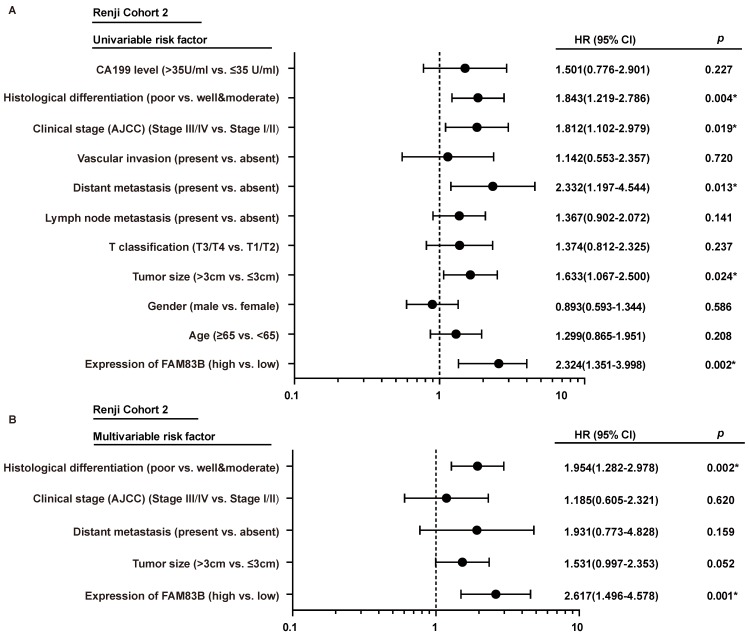
FAM83B (family with sequence similarity 83, member B) seems to emerge as a new class of players involved in the development of a variety of malignant tumors. Yet the molecular mechanisms are not well understood. The present study is intended to investigate the expression and function of FAM83B in pancreatic ductal adenocarcinoma (PDAC). In this study, we found that the expression of FAM83B was significantly increased both in PDAC cell lines and PDAC tumor tissues. FAM83B expression was positively related with advanced clinical stage and poor vital status. Higher FAM83B expression predicted shorter overall survival in PDAC patients, regardless of lymphatic metastasis status and histological differentiation. Actually, FAM83B may act as an independent prognostic indicator as well. What's more, down-regulation of FAM83B in PDAC cells contributed to G0/G1 phase arrest and inhibition of cell proliferation. Finally, a subcutaneous xenograft model indicated that knockdown of FAM83B significantly reduced the tumor volume . Our findings have provided supporting evidence for the potential molecular biomarker role of FAM83B in PDAC. It's of great interest and broad significance to target FAM83B in PDAC, which may conduce to develop a meaningful and effective strategy in the diagnosis and treatment of PDAC.
FAM83B(序列相似性家族83成员B)似乎成为参与多种恶性肿瘤发生发展的一类新角色。然而,其分子机制尚未完全明确。本研究旨在探讨FAM83B在胰腺导管腺癌(PDAC)中的表达及功能。在本研究中,我们发现FAM83B在PDAC细胞系和PDAC肿瘤组织中的表达均显著增加。FAM83B表达与临床晚期及不良生存状态呈正相关。较高的FAM83B表达预示着PDAC患者的总生存期较短,无论有无淋巴转移状态及组织学分化情况。实际上,FAM83B也可能作为一个独立的预后指标。此外,PDAC细胞中FAM83B的下调导致G0/G1期阻滞并抑制细胞增殖。最后,皮下异种移植模型表明,敲低FAM83B可显著减小肿瘤体积。我们的研究结果为FAM83B在PDAC中作为潜在分子生物标志物的作用提供了支持证据。靶向PDAC中的FAM83B具有极大的研究价值和广泛意义,这可能有助于制定有意义且有效的PDAC诊断和治疗策略。