Sato Yuya, Yamamoto Hideaki, Kato Hideyuki, Tanii Takashi, Sato Shigeo, Hirano-Iwata Ayumi
Research Institute of Electrical Communication, Tohoku University, Sendai, Japan.
Graduate School of Biomedical Engineering, Tohoku University, Sendai, Japan.
Front Neurosci. 2023 Jan 9;16:943310. doi: 10.3389/fnins.2022.943310. eCollection 2022.
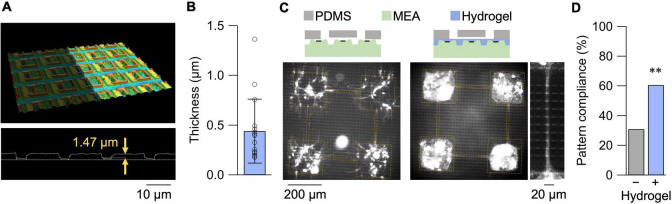
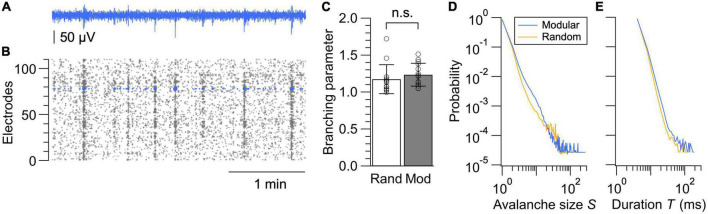
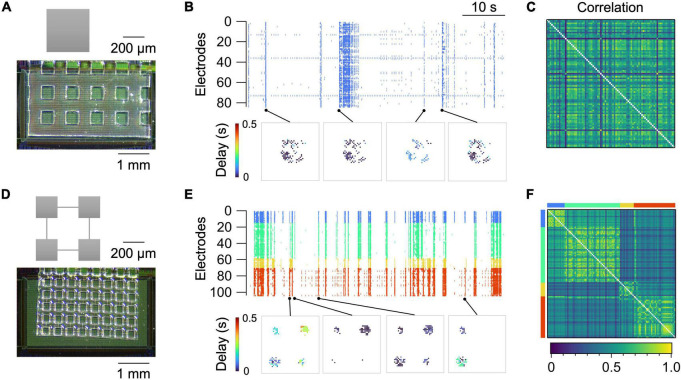
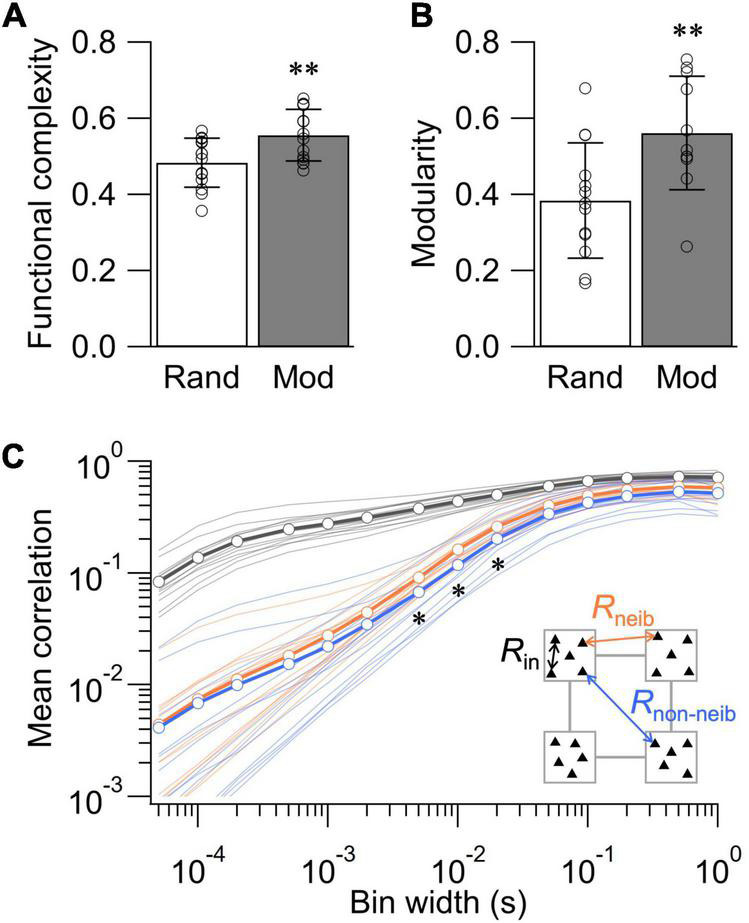
Neuronal networks in dissociated culture combined with cell engineering technology offer a pivotal platform to constructively explore the relationship between structure and function in living neuronal networks. Here, we fabricated defined neuronal networks possessing a modular architecture on high-density microelectrode arrays (HD-MEAs), a state-of-the-art electrophysiological tool for recording neural activity with high spatial and temporal resolutions. We first established a surface coating protocol using a cell-permissive hydrogel to stably attach a polydimethylsiloxane microfluidic film on the HD-MEA. We then recorded the spontaneous neural activity of the engineered neuronal network, which revealed an important portrait of the engineered neuronal network-modular architecture enhances functional complexity by reducing the excessive neural correlation between spatially segregated modules. The results of this study highlight the impact of HD-MEA recordings combined with cell engineering technologies as a novel tool in neuroscience to constructively assess the structure-function relationships in neuronal networks.
解离培养中的神经网络与细胞工程技术相结合,为建设性地探索活体神经网络中结构与功能之间的关系提供了一个关键平台。在此,我们在高密度微电极阵列(HD-MEA)上构建了具有模块化结构的特定神经网络,HD-MEA是一种用于以高空间和时间分辨率记录神经活动的先进电生理工具。我们首先建立了一种表面涂层方案,使用细胞允许性水凝胶将聚二甲基硅氧烷微流控膜稳定地附着在HD-MEA上。然后,我们记录了工程化神经网络的自发神经活动,这揭示了工程化神经网络的一个重要特征——模块化结构通过减少空间隔离模块之间过度的神经相关性来增强功能复杂性。这项研究的结果突出了HD-MEA记录与细胞工程技术相结合作为神经科学中一种新型工具的影响,用于建设性地评估神经网络中的结构-功能关系。