Department of Neuroscience, UF Scripps Biomedical Research, 130 Scripps Way #3C2, Jupiter, FL 33458, USA.
Department of Neuroscience, UF Scripps Biomedical Research, 130 Scripps Way #3C2, Jupiter, FL 33458, USA.
Cell Rep. 2023 Feb 28;42(2):112026. doi: 10.1016/j.celrep.2023.112026. Epub 2023 Jan 25.
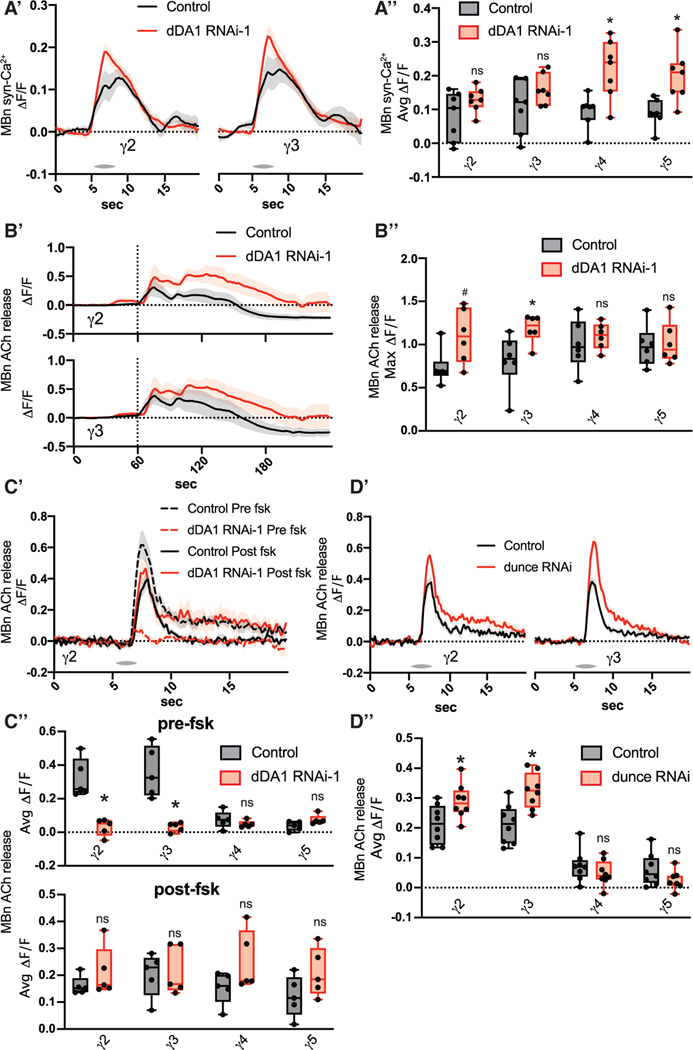
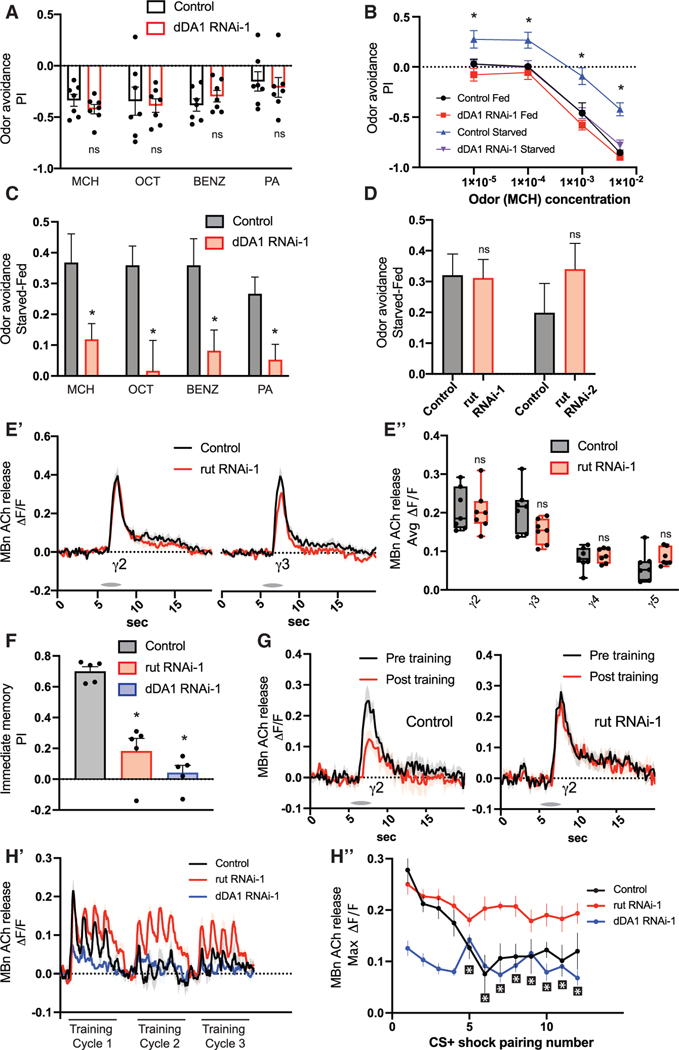
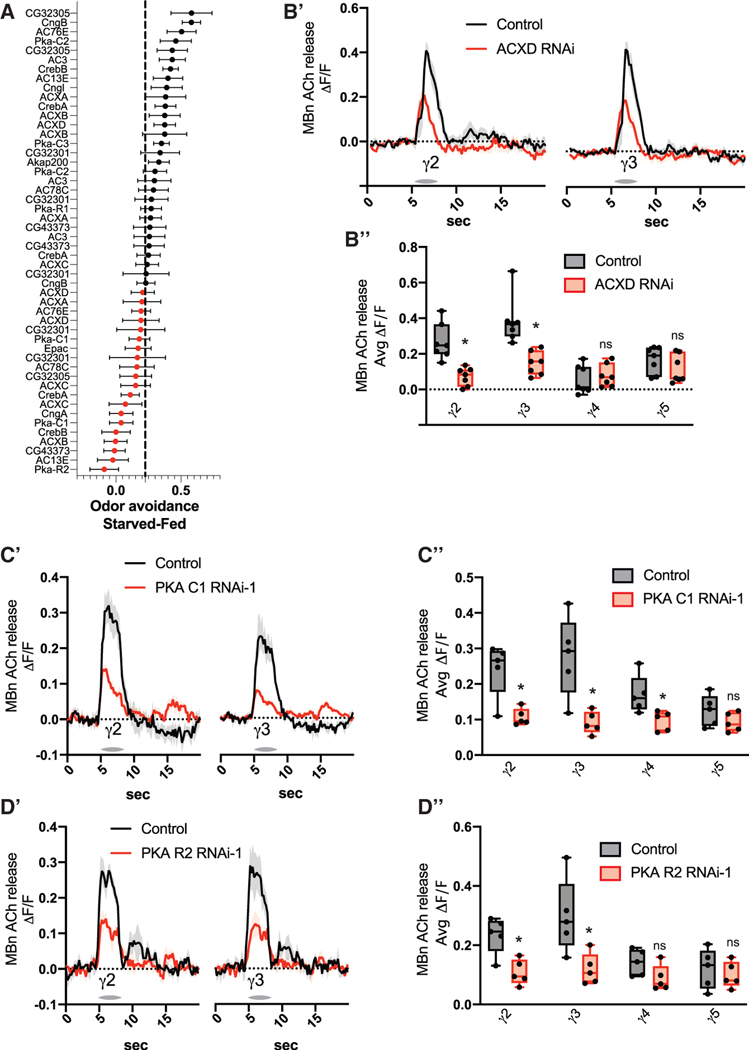
Odor-based learning and innate odor-driven behavior have been hypothesized to require separate neuronal circuitry. Contrary to this notion, innate behavior and olfactory learning were recently shown to share circuitry that includes the Drosophila mushroom body (MB). But how a single circuit drives two discrete behaviors remains unknown. Here, we define an MB circuit responsible for both olfactory learning and innate odor avoidance and the distinct dDA1 dopamine receptor-dependent signaling pathways that mediate these behaviors. Associative learning and learning-induced MB plasticity require rutabaga-encoded adenylyl cyclase activity in the MB. In contrast, innate odor preferences driven by naive MB neurotransmission are rutabaga independent, requiring the adenylyl cyclase ACXD. Both learning and innate odor preferences converge on PKA and the downstream MBON-γ2α'1. Importantly, the utilization of this shared circuitry for innate behavior only becomes apparent with hunger, indicating that hardwired innate behavior becomes more flexible during states of stress.
基于气味的学习和先天的气味驱动行为被假设需要独立的神经元回路。与这一观点相反,最近的研究表明,先天行为和嗅觉学习共享包括果蝇蘑菇体(MB)在内的回路。但是,单一回路如何驱动两种不同的行为仍然未知。在这里,我们定义了一个 MB 回路,该回路负责嗅觉学习和先天的气味回避,以及介导这些行为的不同的 dDA1 多巴胺受体依赖性信号通路。联想学习和学习诱导的 MB 可塑性需要 rutabaga 编码的腺苷酸环化酶在 MB 中的活性。相比之下,由幼稚的 MB 神经传递驱动的先天气味偏好与 rutabaga 无关,需要腺苷酸环化酶 ACXD。学习和先天气味偏好都集中在 PKA 和下游的 MBON-γ2α'1。重要的是,只有在饥饿时,这种用于先天行为的共享回路才会变得明显,这表明在压力状态下,固定的先天行为会变得更加灵活。